
Screens and children: few subjects cause as much concern, guilt, and debate among parents. Between alarmist headlines talking about a « sacrificed generation » and reassuring speeches about « digital children, » it’s hard to know what to think and, above all, what to do. What do studies really say about the effect of screens on children? Science is more nuanced than the headlines, and its conclusions, far from the extremes, offer precious benchmarks. Let’s take stock with lucidity, without dramatizing or minimizing, to help each parent guide their children in a world of screens, with common sense rather than with anxiety.
What studies (really) say
Research on screens and children is abundant but often misreported; here’s what they say, with the necessary nuances. A consensus on a few KEY points: despite the debates, several findings have broad consensus; AGE matters enormously (very young children are much more affected than adolescents); CONTENT and CONTEXT matter as much as time (passively watching or creating, alone or accompanied, is not the same); and EXCESS, especially at the expense of essential activities, is the real problem. Very YOUNG children (before 3 years old, especially): this is where recommendations are most cautious; studies and health authorities generally recommend AVOIDING or strongly limiting screens for very young children; at this age, the child needs human interactions, manipulation, real play to develop, and screens do not replace them (they can even harm language and attention development if they take up too much space). Older children and adolescents: the picture is more nuanced; screens are part of their lives (learning, socialization, leisure); the issue is less about banning them than about setting boundaries, balancing, and accompanying. What is LEGITIMATELY concerning: excessive screen time can be associated with effects on SLEEP, ATTENTION, physical activity (sedentary lifestyle), and, for older children, questions about social networks (comparison, self-esteem); these concerns are serious. Important NUANCES: studies show ASSOCIATIONS, but establishing cause-and-effect links is complex; much depends on the type of screen, the content, the family context, and what the screen REPLACES (sleep? playing outside? reading?); science calls for nuance, not simplistic conclusions. What is OVERSOLD or alarmist: catastrophic headlines (« screens destroy children’s brains ») often exaggerate nuanced results; the scientific reality is more measured; beware of spectacular claims. An evolving field: research progresses, technologies evolve; knowledge becomes more precise; humility is in order. The main idea: what studies really say about screens and children is more nuanced than the headlines: AGE is decisive (great caution is recommended before 3 years, where the child needs real interactions; a more flexible approach afterward), CONTENT and CONTEXT matter as much as time, and it’s the EXCESS, especially at the expense of sleep, physical activity, and relationships, that is problematic. Concerns (sleep, attention, sedentary lifestyle, social networks) are serious and legitimate, but science mainly establishes nuanced associations, far from catastrophism. The message is neither « screens are poison » nor « everything is fine, » but: balance, age, and common sense are the keys.
Concrete benchmarks for parents
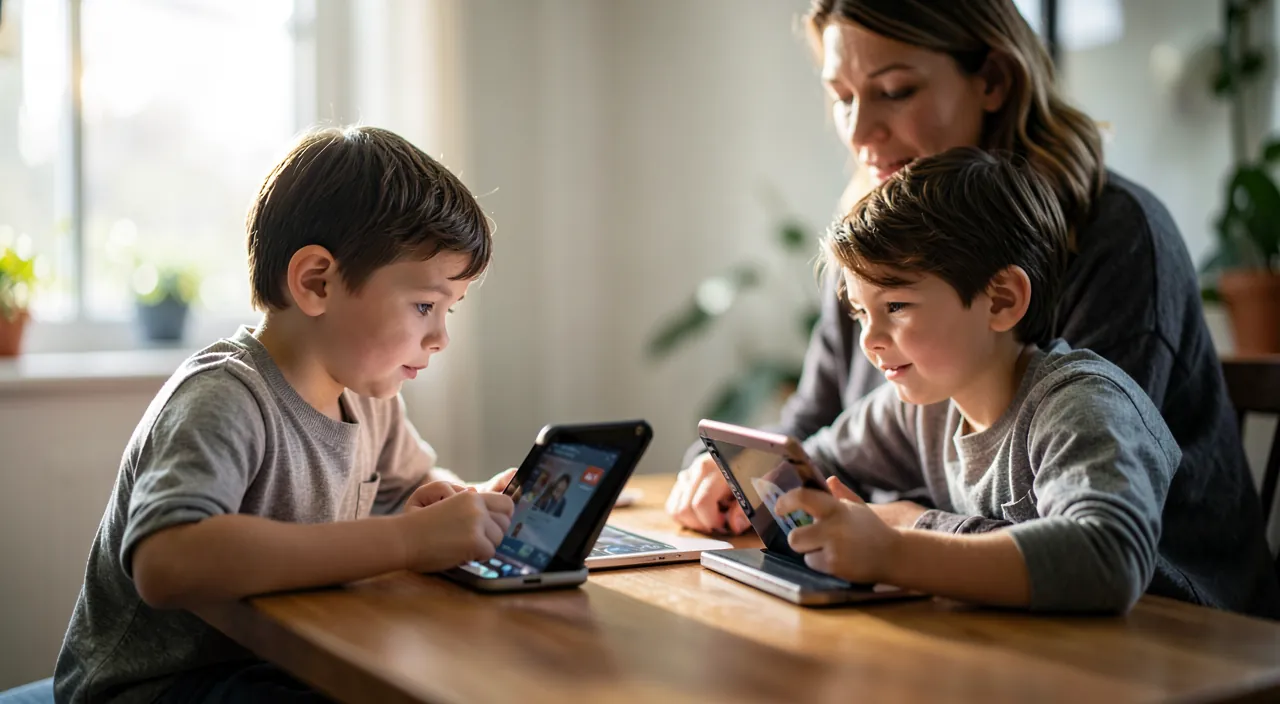
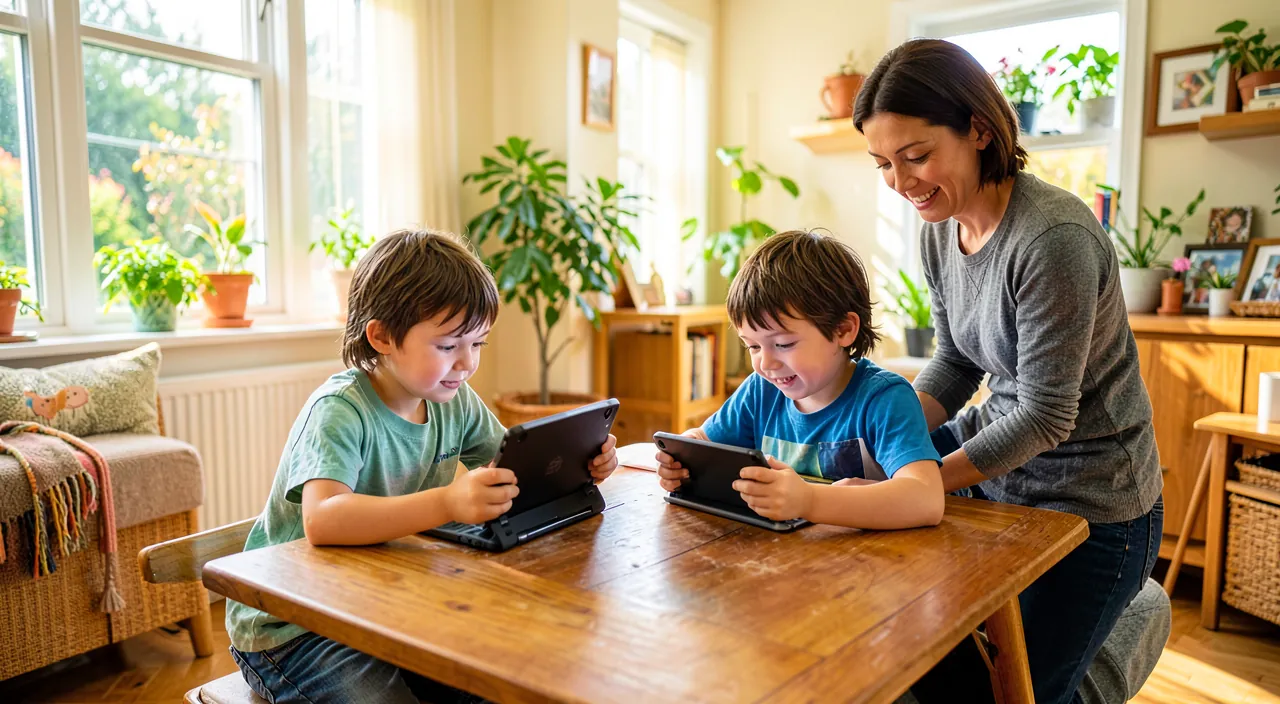
Beyond the studies, here are practical and common-sense benchmarks to guide your children with screens. Adapt to AGE: this is the first principle; for VERY YOUNG CHILDREN (before 3 years old), limit screens as much as possible, massively favor interactions, real play, manipulation; for children, set boundaries for time and content; for adolescents, guide them toward autonomy and responsible use; needs differ completely depending on age. Ensure BALANCE: the essential thing is not so much the number of minutes as preserving what matters; make sure screens do not encroach on SLEEP (crucial), physical activity, free play, RELATIONSHIPS, homework, meals; as long as these pillars are preserved, the screen has its place. Choose CONTENT carefully: not all screen time is equal; high-quality, educational, or creative content is better than passive scrolling; choose and verify what your children see; prioritize creating (drawing, coding, creating) over passively consuming. ACCOMPANY rather than leave them alone: shared screen time (watching, playing, talking together about what you see) is much richer than the « babysitter » screen; take an interest in what they do online; talk. Set CLEAR RULES and screen-FREE moments: simple and consistent rules (no screens at the table, not before bed, not in the bedroom at night) help; preserve moments and places without screens; a bedroom without screens protects sleep. Protect SLEEP: a crucial point; screens in the evening and in the bedroom harm sleep, which is essential for development; establish a cutoff before bedtime (our screen and sleep guides). Monitor online USAGE: for connected children (social networks, online games), ensure their safety, privacy, and risks (bad encounters, inappropriate content, cyberbullying); use parental control tools with dialogue (our guides to protecting children online). Set the EXAMPLE: children imitate; if parents are glued to their own screens, the message doesn’t get through; also question your own usage. Avoid GUILT and rigidity: neither laxity nor anxious bans; aim for a serene balance, adapted to your child and your family; no one is perfect, and reasonable use is nothing to worry about. Dialogue and EDUCATE: rather than banning, teach your children (especially as they grow) to have a critical and autonomous use of screens; it’s a lifelong learning process. ADAPT to each child: every child is different; observe YOURS (do screens make them irritable? Do they encroach on their activities?) and adjust; there is no one-size-fits-all rule. In summary, concrete benchmarks: adapt to AGE (very cautious before 3 years), ensure BALANCE (preserve sleep, physical activity, play, relationships), choose CONTENT (quality, creativity), ACCOMPANY rather than leave them alone in front of the screen, set clear rules and screen-free moments, protect sleep, monitor online usage, set the example, avoid guilt and rigidity, educate toward critical use, and adapt to your child. Common sense and balance, more than rigid rules, are your best guides.
Les écrans ne sont pas “bons” ou “mauvais” en soi. Le problème vient surtout de l’excès, surtout quand ça prend la place du sommeil, des jeux ou des relations. Pour les tout-petits (moins de 3 ans), il faut vraiment limiter car ils ont besoin de vraies interactions. Pour les plus grands, l’important est l’équilibre : choisir des contenus de qualité, regarder ensemble, et surtout protéger le sommeil et les moments sans écran.
Un enfant de 5 ans qui regarde 1h de dessin animé le matin en mangeant ses céréales, puis joue dehors toute la journée, fait ses devoirs et va se coucher à 20h, aura un usage bien plus équilibré qu’un autre qui passe 30 minutes devant des vidéos YouTube juste avant le coucher, sans activité physique ni interaction familiale. Le temps total est moins important que ce qui est remplacé et le contexte.
The right question is not « how much time? » but « what, when, how, and at the expense of what? » This is the most useful shift in perspective to approach the question of screens with your children calmly, and it will free you from many counting-related anxieties. We tend to reduce the problem to a duration— »how many minutes of screen time per day? »—and to feel guilty as soon as we exceed a number. Yet studies show: time is just one factor among others, and not always the most important. What really matters are four other dimensions. First, WHAT: the content. An hour spent creating, drawing, coding, learning something, or playing a stimulating game is nothing like an hour of passively scrolling through mindless videos; not all screen time is equal, and prioritizing quality content changes everything. Then, WHEN: the timing. A screen just before bedtime (which disrupts sleep) or during meals (which takes the place of family exchanges) is much more problematic than the same screen time at a neutral moment in the day; certain times and places (evening, bedroom, table) deserve protection. Next, HOW: the context. A screen watched ALONE, as a « babysitter, » does not have the same value as a screen SHARED, where you watch together, comment, and accompany; accompaniment transforms screen time into a moment of exchange and learning. Finally, and perhaps the most revealing criterion, AT THE EXPENSE OF WHAT: what does the screen replace? This is THE key question. If the screen encroaches on SLEEP, physical activity, FREE PLAY, RELATIONSHIPS, reading, or homework—these essential pillars of a child’s development—then it is problematic, no matter the number of minutes. But if these pillars are preserved and the screen occupies a reasonable « extra » time, then it has its place. Concretely, rather than anxiously timing, ask yourself these questions: is your child getting enough sleep? Do they move, play, see friends? Do they have varied activities outside of screens? Is the content they watch of quality? Are they in a good mood, or does the screen make them irritable? If these pillars are preserved and the child is thriving, you are probably in a good balance, even if the counter shows more than what you imagined was « ideal. » If, on the other hand, the screen nibbles away at sleep, activity, and relationships, that’s where you need to act—not by setting a number, but by rebalancing. Of course, particular caution is needed for VERY YOUNG CHILDREN (before 3 years old), where the recommendation is to strongly limit, as at this age, the child has a vital need for real interactions that screens do not replace. But for older children, this shift in perspective—from « how much » to « what, when, how, at the expense of what »—will allow you to guide your children with much more accuracy and serenity than an anxious race against the clock. The balance of life, not the counter, is the right indicator.

Neither dramatize nor minimize: keep your common sense
On this emotionally charged subject, the most useful attitude is balance; here’s why and how to avoid the two pitfalls. The pitfall of CATASTROPHISM: speeches that exaggerate (« screens are destroying our children, » « sacrificed generation ») often exaggerate science and generate guilt and anxiety that are not helpful; this dramatization can paralyze parents, or make them so rigid that the relationship suffers; the scientific reality is more nuanced. The pitfall of DENIAL: on the contrary, minimizing (« they are digital children, everything is fine, let it be ») neglects real and serious concerns (about very young children, sleep, excess, social networks); total carelessness is not wiser; there are real issues. The path of BALANCE: between these two extremes, wisdom lies in taking the subject SERIOUSLY without DRAMATIZING; recognizing real issues (age, balance, content) while keeping serenity and common sense; actively accompanying without giving in to panic. Beware of SOURCES and headlines: on this subject, sensational headlines and claims (in one direction or the other) are often misleading; prioritize recommendations from health authorities and serious sources, which are more nuanced; beware of simplistic speeches. Avoid PARALYZING GUILT: many parents feel enormous guilt; yet guilt does not help; no one is a perfect parent; aim for a reasonable balance, not the impossible ideal; imperfect but overall balanced use is fine. Each FAMILY, each child: there is no perfect universal rule; adapt to your situation, your child, your values; observe and adjust; trust your parental common sense. EDUCATION over banning: in the long run, teaching children to manage screens themselves in a critical and autonomous way is more effective than pure banning; it’s a lifelong learning process, in a world where screens are unavoidable. The ROLE of parents: accompany, set boundaries, dialogue, set the example, preserve the essential; it’s a long-term effort, made of adjustments, not a magic rule. Keep PERSPECTIVE: screens are part of our children’s world; the goal is not to cut them off (unrealistic and undesirable) but to help them grow with them, in a balanced and fulfilling way. In summary, on screens and children, keep your common sense by avoiding the two pitfalls: neither dramatize (catastrophism causes guilt and paralysis, and exaggerates science), nor minimize (denial neglects real issues). The wise path is balance: take the subject seriously without anxiety, rely on the nuanced recommendations of authorities rather than headlines, avoid paralyzing guilt (no one is a perfect parent; aim for a reasonable balance, not the impossible ideal), and adapt to your child, and prioritize education toward autonomous use rather than banning. Accompany your children in a world of screens, serenely and with common sense: that’s the real goal.
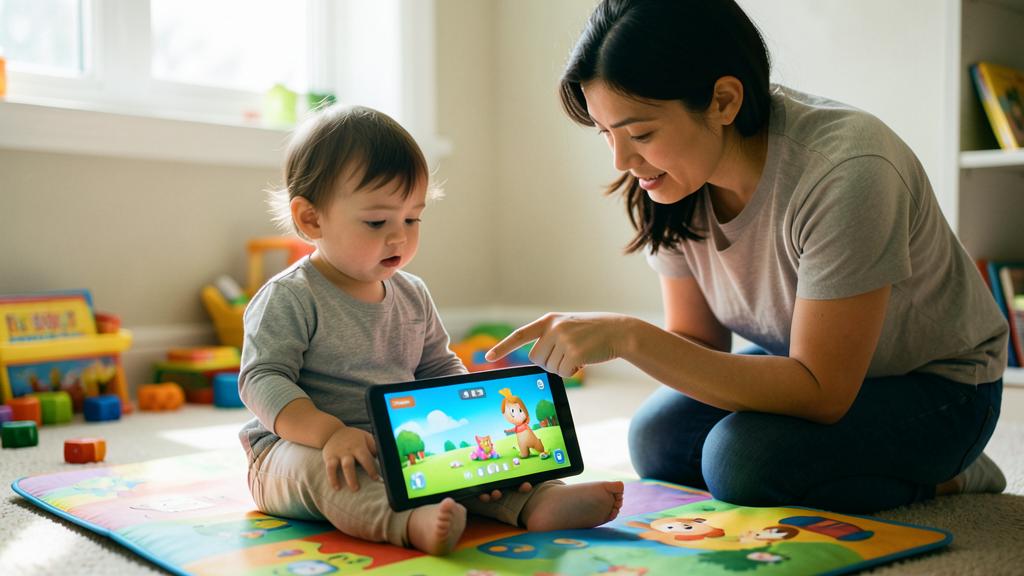
Warning for very young children (before 3 years old): this is the age where caution is most important—at this stage, the child needs real interactions that screens do not replace. If the approach to screens can be flexible and nuanced for older children, there is an age where recommendations are much firmer and convergent: that of VERY YOUNG CHILDREN, before about 3 years old. This is the most important point of vigilance in the entire subject, and it deserves to be well understood. Why this particular caution? Because the first years of life are a CRUCIAL and unique period of development, where the child’s brain is built at an extraordinary speed, and where what they need to grow well are RICH HUMAN INTERACTIONS, REAL PLAY, MANIPULATION of objects, movement, contact, and language exchanged with adults. A very young child learns about the world by touching, exploring, imitating, and interacting with the people around them: this is how their language, attention, motor skills, and social and emotional abilities develop. Yet the screen, no matter how « educational » it is presented, CANNOT replace these real interactions for a child of this age: it is passive, one-way, and does not respond to the child like a human being. That is why studies and health authorities generally recommend AVOIDING or strongly limiting screens before 3 years old. The risk of excessive screen time at this age is not just the time spent, but especially what it REPLACES: each hour in front of a screen is one less hour of interactions, play, and exploration that the very young child vitally needs; and excessive use can be associated with delays or difficulties, particularly in language and attention development. Also beware of a common trap: the « calming » or « occupying » screen, which is given to the very young child to keep them quiet (on transport, in a restaurant, to finish a meal); this is understandable and occasionally harmless, but it should not become a habit that deprives the child of learning to occupy themselves, to be patient, and to interact. Concretely, for very young children: massively prioritize play, interactions, stories read together, movement, and exploration of the real world; avoid screens as much as possible, especially alone; and keep in mind that at this age, nothing beats your presence, your voice, your attention. That said, a clarification to avoid unnecessary guilt: it’s not about panicking if a very young child occasionally sees a screen (a video call with grandparents, for example, which is actually interactive, or a one-off moment), but about avoiding the screen becoming a regular and important presence in their daily life at this sensitive age. The rule is clear for the youngest, more flexible for the older ones. For older children and adolescents, the approach becomes a matter of balance, content, context, and accompaniment, as we have seen; but for very young children, caution comes first, as this is the time when screens can most easily take the place of what is irreplaceable for their development: human relationships and real-world experience. Protect these precious early years: they don’t come back, and what the child builds there, by interacting and really playing, is the foundation of everything else.
Frequent questions
How much screen time per day for a child?
There is no universal magic number: the time varies greatly depending on age, and above all, it matters less than the content, context, and overall balance of the child’s life. Here’s how to approach this question. Why NO single number: we would like a simple answer (« X minutes per day »), but reality is more nuanced; the « good » screen time depends greatly on the child’s AGE, the CONTENT (creating is better than passively consuming), the CONTEXT (accompanied or alone, at what time), and what the screen replaces; the same amount of time can be problematic or perfectly acceptable depending on these factors; focusing on a single number is reductive. Age-based benchmarks: caution increases as the child is younger; for VERY YOUNG CHILDREN (before 3 years old), the recommendation is to avoid or strongly limit screens (they need real interactions); for school-aged children, a moderate and supervised time, while preserving essential activities; for adolescents, the focus is on balance, autonomy, and responsible use rather than a strict limit; health authorities issue age-based recommendations to consult as benchmarks. The real CRITERION: rather than timing, ask yourself if screens are encroaching on what matters—the SLEEP (essential), physical activity, PLAY, RELATIONSHIPS, homework; as long as these pillars are preserved and the child is thriving and balanced, screen time is probably reasonable, even if it exceeds an « ideal » number; if they are nibbled away, you need to rebalance. Practical benchmarks: beyond time, adopt common-sense rules—no screens before bed or in the bedroom at night (for sleep), not at the table (for exchanges), quality content, accompaniment; these rules matter more than a timer. Avoid GUILT: don’t turn this question into a permanent source of anxiety; aim for a reasonable balance, not perfection; observe your child and adjust. In summary, there is no universal number of minutes: the recommended screen time depends greatly on age (very limited before 3 years, more flexible afterward) and matters less than the content, context, and above all the overall balance of the child’s life. The best benchmark is not the timer but this question: do screens preserve your child’s sleep, activity, play, and relationships? Consult age-based recommendations from authorities as guides, preserve essential pillars, adopt common-sense rules, and adapt to your child without guilt. Balance, more than a number.
Are screens bad for children’s brains?
The answer is nuanced: screens in excess, especially for very young children and at the expense of essential activities, can be problematic, but categorical claims like « screens destroy the brain » exaggerate a more measured scientific reality. Let’s take stock calmly. What is CONCERNING: some concerns are serious and supported; for VERY YOUNG CHILDREN, excessive screen time can harm development (language, attention) by taking the place of real interactions they need; at any age, excess can affect SLEEP (crucial for the developing brain), promote sedentary lifestyle, and encroach on important activities; for older children, certain uses (social networks) raise questions; these effects, mainly linked to EXCESS and CONTEXT, deserve attention. What is EXAGGERATED: alarmist headlines claiming that « screens destroy children’s brains » or talking about irreversible damage oversimplify and dramatize much more nuanced results; science does not establish such categorical verdicts; it shows ASSOCIATIONS, under certain conditions, whose interpretation is complex; beware of this catastrophism. The scientific NUANCE: studies mainly establish statistical links (association between certain uses and certain effects), but demonstrating DIRECT CAUSALITY (« the screen causes such damage ») is difficult; much depends on the type of screen, content, duration, age, family context, and what the screen replaces; reality is therefore « it depends, » not « it’s bad » or « it’s neutral. » The DETERMINING factor: it’s not « the screen » itself that is good or bad, but its USE—the age, quantity, content, context, and above all what it replaces; excessive use at the expense of sleep, play, and interactions is problematic; a moderate, quality, and balanced use is much less so, or not at all. The right ATTITUDE: neither panic (catastrophism is exaggerated and guilt-inducing), nor neglect (the issues, especially for young children and in case of excess, are real); balance and common sense, guided by the nuanced recommendations of authorities; preserve the pillars of development (sleep, play, interactions), choose content carefully, adapt to age. In summary, screens are not « bad for the brain » in a simple and absolute way: excess, especially for very young children and at the expense of essential activities (sleep, play, interactions), can pose real problems, but catastrophic claims exaggerate a much more nuanced scientific reality, made up of associations whose interpretation depends on age, content, and context. What matters is not « the screen » itself but its use; the right attitude is balance, neither panic nor denial, while preserving what is essential for the child’s development. Science calls for nuance and common sense, not fear.
Should social networks be banned for adolescents?
Rather than banning outright, the most realistic and effective approach is to SET BOUNDARIES, ACCOMPANY, and EDUCATE; but vigilance is needed, as social networks raise real issues for adolescents. Let’s nuance this delicate question. The REAL issues of social networks for adolescents: concerns are legitimate; networks can expose them to SOCIAL COMPARISON and effects on self-esteem and body image; to ONLINE HARASSMENT; to INAPPROPRIATE content; to EXCESSIVE use and its effects (sleep, attention); to privacy issues and bad encounters; these risks are real and serious, especially at an age of vulnerability and self-construction; vigilance is justified. The limits of PURE BANNING: banning completely may seem tempting, but has limitations; networks are part of adolescents’ social lives (connection with friends, belonging); a strict ban can isolate, be circumvented in secret (which deprives the adolescent of your accompaniment), or create tensions; moreover, the adolescent must LEARN to manage these tools that they will use anyway; banning does not prepare them. The RECOMMENDED approach: rather than banning, most experts recommend SETTING BOUNDARIES and ACCOMPANYING; set a reasonable age to start (platforms have minimum ages, to respect; younger children should not be on them); set clear rules (time, moments, not in the bedroom at night); OPENLY DIALOGUE about uses, risks, what they experience; EDUCATE about critical use (spotting traps, misleading comparisons, protecting privacy, reacting to harassment); stay attentive to signs of distress; and adapt to the adolescent’s MATURITY. The role of ACCOMPANIMENT: the goal is to gradually make the adolescent AUTONOMOUS and capable of healthy use, rather than cutting them off from a world where they will have to evolve; it’s a supervised learning process. The NUANCE depending on age and child: for YOUNGER adolescents (or pre-teens), more caution and restriction are justified (respecting minimum ages); as they grow and mature, you guide them toward more autonomy; adapt to YOUR child, their maturity, their sensitivity. Neither laxity nor rigidity: between total laissez-faire (risky) and rigid banning (unrealistic and isolating), the path of well-meaning and educational boundaries is generally the wisest. In summary, rather than banning social networks for adolescents outright (an approach with real limits: isolation, circumvention, lack of preparation), it is generally more effective to SET BOUNDARIES (respect minimum ages, clear rules), ACCOMPANY (dialogue, attention to distress), and EDUCATE (critical use, self-protection)—while remaining vigilant, as the issues (comparison, harassment, content, excess) are real and serious at this age. For younger ones, more caution; toward autonomy as they mature. The goal: help the adolescent develop healthy and autonomous use, rather than cutting them off from a world where they will have to learn to navigate. Well-meaning boundaries and education, adapted to your child: that’s the way.
What to remember
On screens and children—a subject charged with concern and guilt—what studies really say is more nuanced than the headlines. Three findings have broad consensus: AGE is decisive, CONTENT and CONTEXT matter as much as time, and it’s the EXCESS, especially at the expense of essential activities, that is problematic. Concerns (sleep, attention, sedentary lifestyle, social networks) are serious and legitimate, but science mainly establishes nuanced associations, far from the catastrophism of alarmist headlines. The message is neither « screens are poison » nor « everything is fine, » but: balance, age, and common sense are the keys. The most useful shift in perspective: the right question is not « how much time? » but « WHAT, WHEN, HOW, and at the expense of WHAT? » The content (creating is better than passively consuming), the timing (protect evening, bedroom, meals), the context (accompanied rather than alone), and above all what the screen replaces matter much more than a number of minutes. The decisive criterion: do screens preserve the child’s SLEEP, physical activity, PLAY, and RELATIONSHIPS? If these pillars are preserved and the child is thriving, the balance is probably good; if they are nibbled away, you need to rebalance. One firm exception, however: VERY YOUNG CHILDREN (before 3 years old), where caution is most important; at this crucial age of development, the child needs real interactions, play, and exploration that screens do not replace; the recommendation is to avoid or strongly limit them. For older children and adolescents, the approach becomes a matter of balance, content, context, and accompaniment; and for social networks for adolescents (with real issues: comparison, harassment, excess), it’s better to set boundaries, accompany, and educate toward autonomous and critical use than to ban outright. Concretely: adapt to age, preserve essential pillars, choose content carefully, accompany rather than leave them alone in front of the screen, set clear rules and screen-free moments (protect sleep!), monitor online use, set the example, and educate toward critical use. Above all, keep your common sense by avoiding the two pitfalls: neither dramatize (catastrophism causes guilt, paralysis, and exaggerates science), nor minimize (denial neglects real issues). Rely on the nuanced recommendations of authorities rather than headlines, avoid paralyzing guilt (no one is a perfect parent; aim for a reasonable balance, not the impossible ideal), and adapt to YOUR child by observing them. The goal is not to cut children off from screens—unrealistic and undesirable—but to help them grow with them, in a balanced and fulfilling way, while preserving what is irreplaceable for their development. Accompany your children in a world of screens, serenely and with common sense: that’s the real challenge, and it is met with balance much more than with anxiety.

Want to understand and master the technologies that change your daily life? Our training programs will enlighten you.
Leave a Reply
You must be logged in to post a comment.