
Artificial intelligence is progressing at a rapid pace, and a question keeps coming up in all conversations, tinged with hope for some, concern for others: will AI transform our jobs, or even make them disappear? Between prophecies of mass unemployment and promises of a world freed from tedious tasks, it’s hard to separate fact from fantasy. As is often the case, reality is more nuanced than extreme discourses. Let’s take the time to see clearly: how AI is likely to change work, what falls under exaggerated fear or blindness, and how to approach this evolution with lucidity rather than fear.
What AI is already changing in the world of work
AI is not an abstract future threat: it is already transforming, concretely, many professions. Here’s how. AUTOMATION of tasks: AI excels at performing certain repetitive, predictable tasks, or those based on processing large amounts of information: writing standard texts, data processing, answering common questions, image analysis, translation; these tasks, present in many professions, can be partially automated. Assistance that ENHANCES the worker: more often than replacing, AI ASSISTS; it becomes a tool that helps the professional work faster or better—a doctor helped to analyze an image, a lawyer to explore documents, a creative to generate ideas, a craftsman to manage his administration; we speak of AI that « enhances » rather than replaces. Professions TRANSFORMED rather than eliminated: in many cases, it is not the profession that disappears, but its CONTENT that evolves; certain tasks are delegated to AI, while the professional refocuses on what the machine does not do (judgment, relationship, creativity, responsibility). New PROFESSIONS and skills: like every technological revolution, AI creates new needs, new professions (around its design, use, and oversight) and values new skills. Unequal EFFECTS depending on the professions: the impact varies enormously; professions with a high component of automatable tasks are more exposed; those based on human contact, physical dexterity in varied environments, creativity, complex judgment, or responsibility are less so; there is not ONE effect, but very diverse effects. An UNCERTAIN pace: no one knows exactly how fast or how far this transformation will go; predictions, in one direction or the other, should be taken with caution; history invites humility. The main idea: AI is already transforming the world of work, but in a more nuanced way than extreme discourses suggest: it automates certain tasks, assists many others (it often « enhances » the worker more than it replaces), transforms the content of professions more than it eliminates them en masse, and creates new needs; its effects are very unequal depending on the professions, and its pace remains uncertain. Neither an employment apocalypse nor a consequence-free revolution: a deep and progressive transformation, to be viewed with lucidity.
AI is already changing jobs, but it’s not replacing people wholesale. It’s taking over repetitive tasks, helping professionals in their work, and creating new jobs. Some professions will change more than others, and no one knows exactly how fast this will happen. The key is to adapt and focus on skills that machines can’t easily do, like creativity and human interaction.
In aviation, AI is already used to analyze flight data, predict maintenance needs, and even assist pilots with decision-making. For example, an airline like Delta might use AI to process thousands of flight logs, identifying patterns that could prevent engine failures. This doesn’t replace mechanics or pilots but enhances their work, allowing them to focus on more complex tasks.
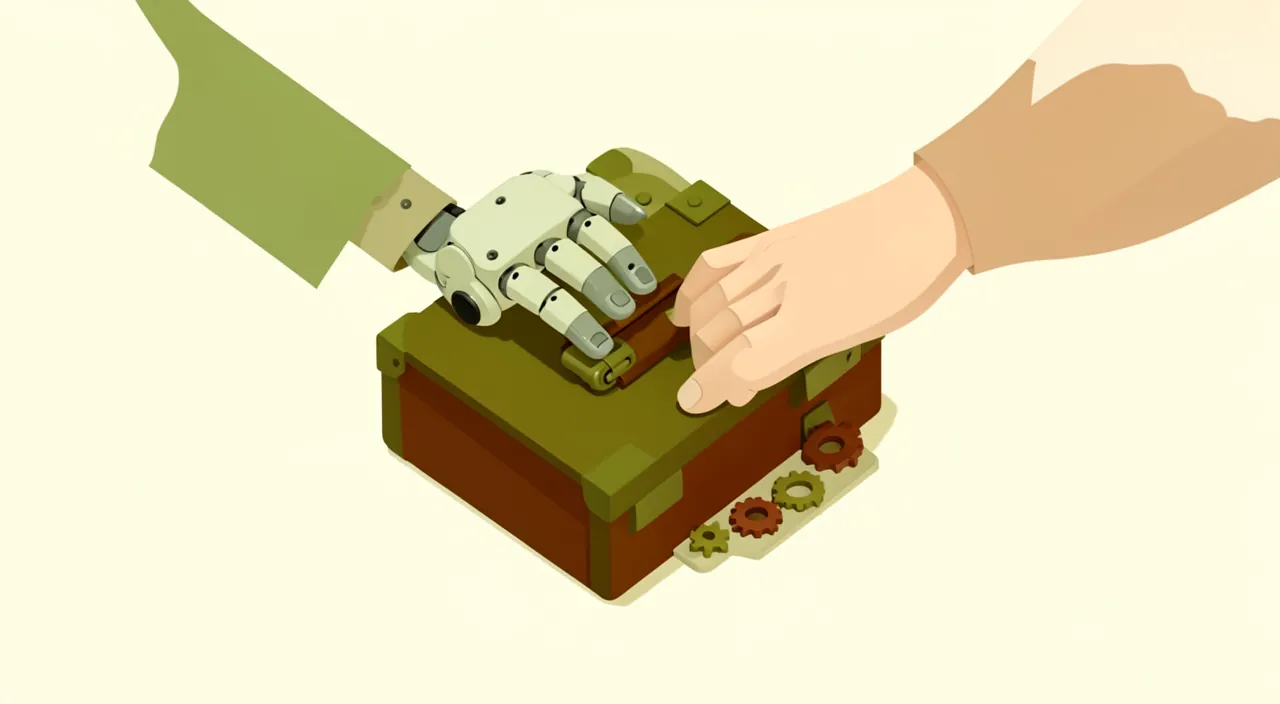
Between fear and fantasy: keeping a level head
Discourses on AI and employment oscillate between CATASTROPHISM and blind enthusiasm. Here’s how to keep a level head. CATASTROPHISM (« AI will destroy all jobs »): this fear, understandable, is probably exaggerated; history shows that major technological waves (mechanization, computing) have destroyed jobs but created others, often in greater numbers, by transforming the economy; there is no mechanical reason for work to « disappear »; it transforms. Moreover, many professions resist automation. But BLINDNESS (« everything will be fine, nothing will change ») is just as misleading: the transformation is real and serious; certain professions or tasks will be deeply affected; people will have to adapt, retrain; denying this would be irresponsible. The NUANCED truth: between these two extremes, reality is made up of deep but progressive transformation, unequal effects (winners and losers), and uncertainty about the exact scope; the subject must be taken seriously without giving in to panic. What sets AI apart from PAST revolutions: some point out that AI also affects « intellectual » tasks previously preserved, and at a rapid pace; this is a serious argument that calls for vigilance; no one can assert with certainty that « it will be like before »; humility is in order. The question of DISTRIBUTION: beyond the number of jobs, societal questions arise: who will benefit from productivity gains? How to support those affected? How to share the fruits of these advances? These are collective choices, not a technological inevitability. The role of HUMAN choices: the future of work with AI is not preordained by technology; it will depend on choices—by companies, policies, training, regulation; technology is a tool, the way it is used and the way its benefits are shared depends on human decisions. Beware of NUMERICAL predictions: studies that announce « X% of jobs at risk » vary enormously and have often been wrong; take these figures with a grain of salt; no one knows the future. In summary, let’s keep a level head between catastrophism and blindness: AI will probably not « destroy all jobs » (history invites nuance), but it will transform work in a real and serious way, with unequal effects and a degree of uncertainty that calls for vigilance without panic. Above all, the future is not dictated by technology alone: it will depend on our collective choices—training, support, distribution. That may be the most important message: neither rosy fatalism nor black fatalism, but a future to be built.
AI won’t destroy all jobs, but it will change many. Some jobs will disappear, but new ones will emerge. The key is to prepare for change, adapt, and make sure the benefits of AI are shared fairly. It’s not just about technology—it’s about the choices we make as a society.
In healthcare, AI is being used to analyze medical images, such as X-rays and MRIs, to detect diseases like cancer. For example, an AI system might help radiologists identify tumors faster and more accurately. This doesn’t replace the radiologist but helps them work more efficiently, allowing them to focus on more complex cases and patient care.
The right attitude: inform yourself and adapt, without giving in to panic or denial. Faced with an evolution as widely discussed and anxiety-inducing as AI and employment, the best attitude is neither to panic nor to close your eyes, but to adopt a lucid and active stance. First, RELATIVIZE the extreme discourses you hear. The media and social networks amplify spectacular prophecies— »half of jobs will disappear, » « AI will revolutionize everything in five years »—because they capture attention; but these categorical and numerical announcements have historically often been wrong, in one direction or the other. Reality is slower, more nuanced, more unequal depending on professions. So don’t set your anxiety to the most alarmist headlines; instead, seek out balanced, nuanced analyses that recognize both the real transformation and the uncertainty. Then, adopt an attitude of ADAPTATION rather than resignation or denial. If your profession is affected by these developments, the worst would be either to worry without acting or to bury your head in the sand; the most constructive approach is to find out how AI impacts your field, identify what in your work is difficult to replace (human relationships, judgment, creativity, responsibility, adaptability to the unexpected), and familiarize yourself with these tools rather than suffering them. For a clear lesson emerges: in many professions, the issue is not so much « will AI replace me » as « how will I work WITH it »; those who learn to use AI as a tool that enhances them will often be better positioned than those who ignore it. Training, maintaining your curiosity, developing skills that machines struggle with, staying open to change: that’s the best « insurance » against uncertainty, at any age. Finally, keep in mind that this transformation is not just an individual matter: it’s also a societal issue that calls for collective choices (training, support for retraining, regulation, distribution of gains). As a citizen, you have a say in these debates. The right attitude, in short: inform yourself seriously without getting alarmed, take the subject seriously without panicking, adapt and train rather than suffer or deny, and remember that the future of work will be built by human choices, not by technological inevitability. Neither fear nor blindness: lucidity and action.
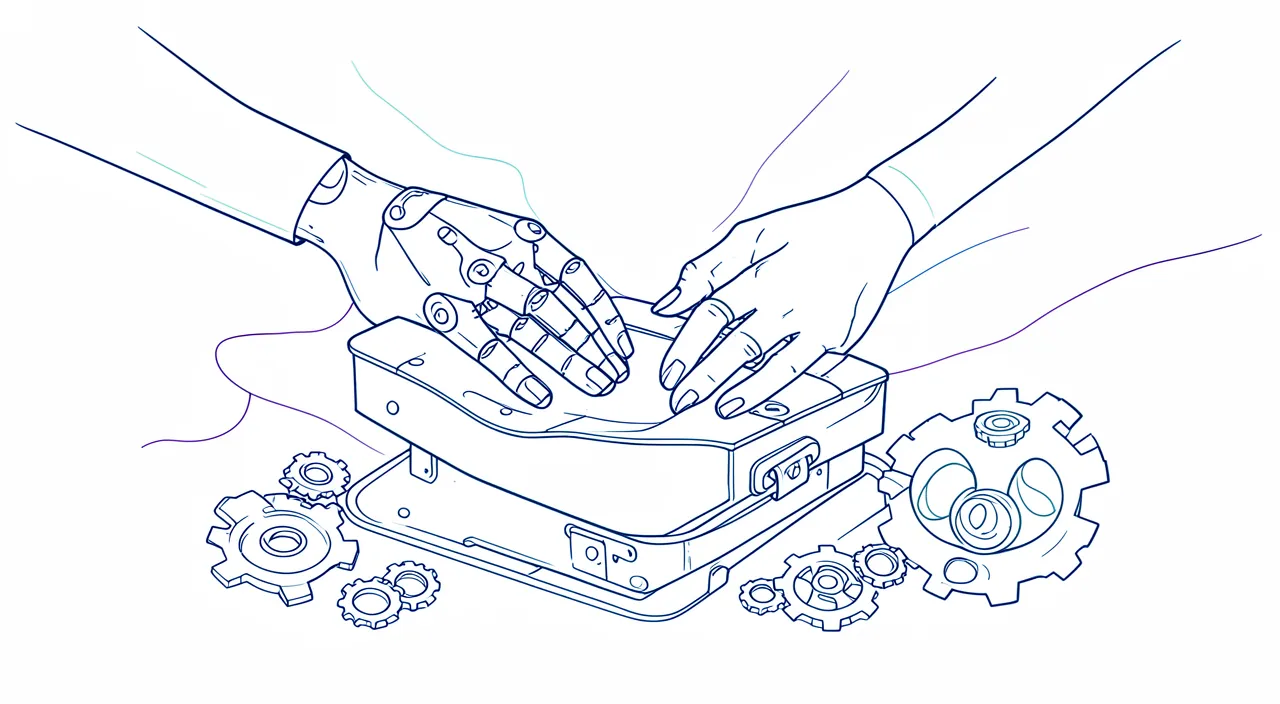
How to approach this evolution with lucidity
Beyond general debates, how can each of us concretely approach this evolution? Here are some common-sense guidelines. INFORM yourself seriously: seek to understand how AI impacts YOUR field, beyond the anxiety-inducing generalities; a balanced and concrete information is better than spectacular prophecies; consult reliable sources. Identify what is DIFFICULT to replace: reflect on what in your work relates to skills that AI struggles with: human relationships and empathy, judgment in complex or ambiguous situations, authentic creativity, responsibility, adaptability to the unexpected, physical dexterity in varied environments; these « human » dimensions retain and gain value. Learn to work WITH AI: in many professions, the issue is less about being « replaced » than about learning to use AI as a tool that enhances you; familiarizing yourself with these tools, rather than ignoring them, is often an asset; the one who knows how to leverage AI can be more effective. Maintain your ability to LEARN: in a rapidly changing world, the most valuable skill may be the ability to continue learning and adapting; cultivate your curiosity and agility, at any age. Don’t panic, don’t suffer: anxiety is bad advice, denial too; between the two, an active and serene attitude—inform, adapt, train—is the most constructive. Think COLLECTIVELY: this transformation raises societal issues (support for retraining, training, protection of affected workers, distribution of gains); as citizens, we have a voice in these choices; the future of work is also a political and collective question. Keep a BALANCED view of threatened AND created jobs: we talk a lot about jobs at risk, less about those that are being created or positively transformed; history shows that both coexist; keep a balanced perspective. Support the most EXPOSED: certain people and sectors will be more affected than others; a just society must support these transitions (training, support); it’s a matter of solidarity. Don’t BET everything on predictions: no one knows the exact future; prepare to adapt rather than bet on a specific scenario; flexibility is better than illusory certainty. In summary, to approach this evolution with lucidity: inform yourself seriously about your field, identify and cultivate what is difficult to replace (human skills), learn to work with AI rather than ignore it, maintain your ability to learn, keep a serene and active attitude (neither panic nor denial), and think collectively (as the future of work depends on societal choices). AI is transforming work; it’s up to us to prepare for it intelligently, individually and together, without fear but without naivety.
Beware of prophecies: beware of catastrophism (« AI will destroy everything ») as much as of blindness (« nothing will change »)—reality is nuanced, and the future depends on our choices. On this subject more than any other, extreme discourses abound, and we must be wary of both. CATASTROPHISM first: announcements of « mass unemployment, » « the end of work, » « X% of jobs destroyed within a few years » strike the imagination and generate real, sometimes paralyzing, anxiety. Yet these prophecies, however impressive, are based on very uncertain projections that have historically often proven false: each major technological wave (mechanization, electricity, computing) has sparked the same fears of massive job destruction, and each time, if some professions have indeed disappeared, the economy has transformed and created other jobs, often in greater numbers. Nothing mechanically guarantees that work « will disappear »; it transforms. Giving in to panic is therefore not only painful, but probably excessive, and above all unproductive: fear does not help adapt. But beware of the OPPOSITE trap, just as misleading: the reassuring blindness that consists of dismissing the subject with a « everything will be fine, it will be like previous revolutions, nothing will really change. » This carelessness is dangerous, because the ongoing transformation is indeed REAL and serious: certain professions and tasks will be deeply affected, people will have to adapt and retrain, and some rightly point out that AI also affects intellectual activities previously preserved, and at a rapid pace, which could distinguish it from past revolutions. Denying this reality, or promising that « nothing will move, » would be irresponsible and leave people unprepared for change. The truth lies, as so often, in NUANCE: a deep but progressive transformation, with very unequal effects (some professions spared, others upended; winners and losers), and surrounded by real uncertainty about its exact scope. Take the subject seriously without giving in to panic: that is the tightrope. And above all, remember this crucial point: the future of work with AI is NOT predetermined by technology itself. It will largely depend on HUMAN and collective choices—how companies deploy these tools, how those affected are trained and supported, how productivity gains are distributed, how these technologies are regulated and governed. Technology is a tool; its effects on our lives depend on how we decide to use it and share its benefits. Presenting AI as an inevitability—black or rosy—before which we can do nothing is precisely to give up this power of choice. So beware of prophets, in both camps: neither the end of the world, nor the automatic paradise, but an uncertain future to be built, where your lucidity, your adaptation, and your choices as a citizen have their place. That may be the most reassuring news: nothing is decided in advance.
Frequent questions
Will AI really eliminate many jobs?
The honest answer is: it will mostly TRANSFORM jobs, probably more than it will eliminate them en masse; but with unequal effects and real uncertainty, no one can predict it with certainty. Let’s nuance. What is LIKELY: in many cases, AI will modify the CONTENT of jobs (automating certain tasks, assisting others) rather than eliminating the jobs themselves; the professional will refocus on what the machine does poorly (judgment, relationships, creativity, responsibility); we therefore speak more of transformation than of pure elimination. Moreover, the history of technological revolutions suggests that if jobs disappear, others are created and the economy transforms; work does not « disappear » mechanically. What is UNCERTAIN and serious: certain professions or tasks, heavily composed of automatable activities, will indeed be affected, sometimes eliminated; people will have to retrain; and since AI also affects intellectual tasks at a rapid pace, we cannot rule out deeper upheavals than in the past; humility is in order. What to AVOID: categorical numerical predictions (« so many percent of jobs destroyed ») are very uncertain and have often been wrong; do not base your judgment on them. What is CERTAIN: the effects will be very UNEQUAL depending on the professions (some spared, others transformed, others threatened), and the future will depend on collective choices (training, support) as much as on technology. In summary, AI will deeply transform jobs and seriously affect some, but the idea of massive and generalized elimination is probably exaggerated: transformation dominates over elimination, the effects are unequal, and uncertainty is real. Rather than seeking an illusory numerical answer, it is better to prepare to adapt: identify what is difficult to replace in your job, learn to work with AI, and cultivate your ability to evolve. The future is not written; it depends in part on us.

Which professions are the most and least exposed?
In general, professions with a high component of repetitive and predictable tasks are more exposed, while those based on human interaction, complex judgment, or varied physical dexterity are less so; but these categories are indicative, not verdicts. Here are the main trends. The most EXPOSED professions (to their automatable tasks): those in which a significant part consists of repetitive, standardized, predictable tasks, or based on processing large amounts of information—for example, certain administrative tasks, data entry, data processing, standard writing, answering common requests; beware: often, it is TASKS within a profession that are automatable, not necessarily the entire profession, which is then transformed. The least EXPOSED professions: those based on skills that AI struggles with; human RELATIONSHIPS and empathy (care, support, education, professions of connection); JUDGMENT in complex, ambiguous, or highly responsible situations; authentic CREATIVITY; physical DEXTERITY and adaptation in varied and unpredictable environments (many manual, craft, and field professions, where each situation differs); these human and physical dimensions remain difficult to automate. Important NUANCES: first, no profession is totally « safe » or totally « doomed »; almost all will be transformed to varying degrees; then, exposure depends on the specific tasks and how AI is deployed, not just the job title; finally, an « exposed » profession can also be ENHANCED by AI (the professional becomes more effective) rather than eliminated. What to REMEMBER for yourself: rather than classifying professions as « doomed » and « saved, » think, for YOUR activity, about what is automatable and what relates to irreplaceable human skills; cultivate the latter, and learn to use AI for the rest. In summary, the most exposed professions are those with a high component of repetitive and predictable tasks; the least exposed are those based on human relationships, complex judgment, creativity, and varied physical dexterity; but these trends are indicative, almost all professions will be transformed, and the individual issue is mainly to identify and cultivate, in your own work, what is difficult to replace. It’s a framework for reflection, not a fixed prediction.
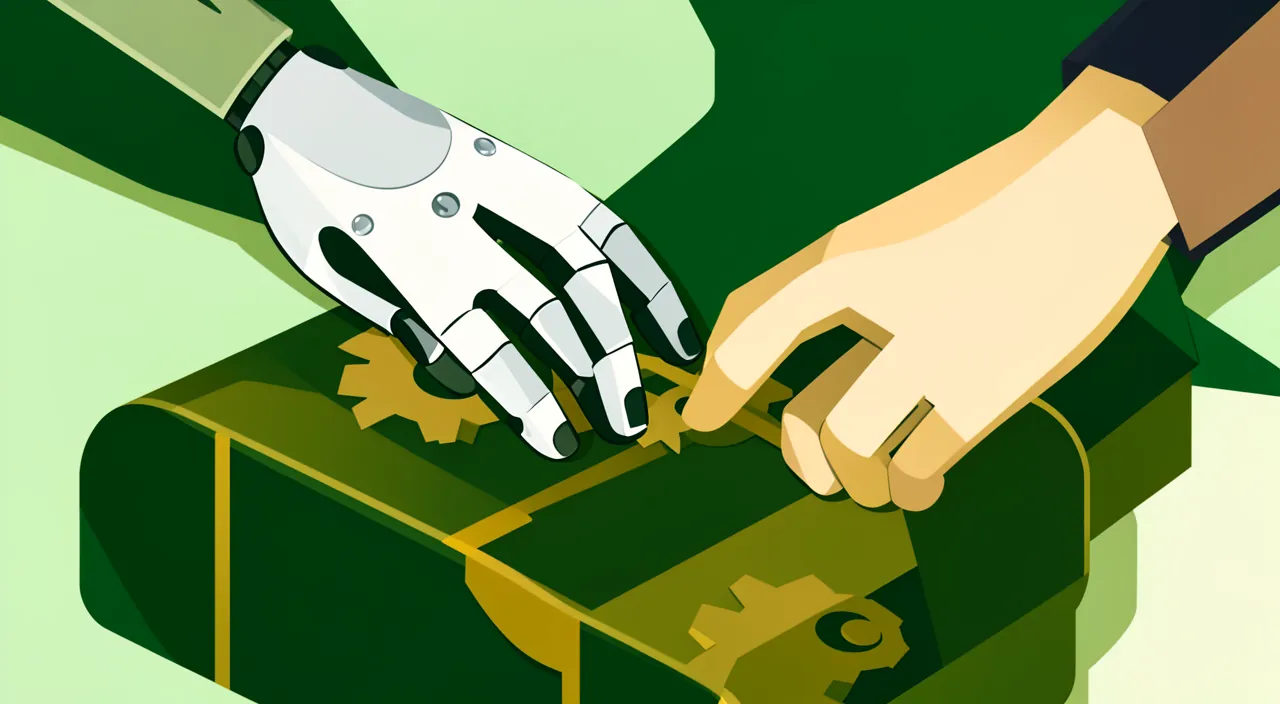
How to prepare for these changes?
The best preparation is not to guess the future, but to develop your ability to adapt: cultivate human skills, learn to use AI, and maintain your ability to learn. Here are some concrete tips. INFORM yourself about your field: find out, from reliable sources, how AI is impacting your sector; understanding concretely what is evolving is better than suffering from vague anxieties; this knowledge allows you to anticipate rather than suffer. Cultivate HUMAN skills: develop and value what the machine struggles with—the relationship, empathy, judgment, creativity, ability to manage the unexpected, sense of responsibility; these « human » skills gain value as the rest automates. Learn to work WITH AI: don’t avoid these tools, tame them; knowing how to use AI to be more effective in your work is becoming an increasingly valuable asset; the one who masters the tool is often better placed than the one who ignores it; experiment, train. Maintain your ability to LEARN: in a rapidly changing world, the key skill may be agility—the ability to continue learning, to question yourself, to evolve; cultivate this curiosity and flexibility, at any age; it’s your best protection against uncertainty. Train YOURSELF throughout life: continuous training becomes essential; stay open to acquiring new skills; find out about available training programs; it’s never too late to learn. Stay CALM and active: avoid both panic and denial; a balanced and proactive attitude—inform, train, adapt—is far more constructive than anxiety or blindness. Don’t bet on ONE scenario: no one knows the exact future; prepare to ADAPT rather than bet on a prediction; flexibility is better than illusory certainty. Think COLLECTIVELY: preparation is not just individual; as a citizen, be interested in societal choices (training, support for transitions, regulation); and know that supporting the most exposed is a solidarity issue that concerns you too. In summary, to prepare: inform yourself about your field, cultivate human skills that are difficult to replace, learn to use AI rather than fear it, and above all maintain your ability to learn and adapt, which is the best protection against uncertainty. Adopt a calm and active attitude, don’t bet on a single scenario, and think collectively. You don’t prepare by guessing the future, but by developing the agility to face it, whatever it may be.
What to remember
AI is already transforming the world of work, but in a far more nuanced way than extreme discourses suggest: it automates certain tasks, assists many others (it often « enhances » the worker more than it replaces), transforms the content of professions more than it eliminates them en masse, and creates new needs; its effects are very unequal depending on the professions, and its pace remains uncertain. On this subject, beware of both CATASTROPHISM (« AI will destroy everything ») and BLINDNESS (« nothing will change »). The first is probably exaggerated: the history of technological revolutions shows that work transforms more than it disappears, and giving in to panic is as painful as it is unproductive. But the second is just as misleading: the transformation is real and serious, certain professions will be deeply affected, people will have to retrain, and since AI also affects intellectual tasks at a rapid pace, it could distinguish itself from past revolutions. The truth lies in nuance: a deep but progressive transformation, with unequal effects, surrounded by uncertainty—to be taken seriously, without panicking. In general, professions with a high component of repetitive tasks are more exposed, those based on human relationships, judgment, creativity, and varied physical dexterity are less so; but almost all will be transformed, and the individual issue is to identify, in your own work, what is difficult to replace. The best preparation is not to guess the future, but to develop your ability to ADAPT: inform yourself about your field, cultivate human skills that the machine struggles with, learn to work WITH AI rather than fear it, and above all maintain your ability to learn—the best protection against uncertainty, at any age. Adopt a calm and active attitude, between panic and denial. And remember the crucial point: the future of work with AI is not predetermined by technology; it will largely depend on HUMAN and collective choices—how these tools are deployed, how those affected are trained and supported, how gains are distributed, how they are regulated. Technology is a tool; its effects on our lives depend on how we decide to use it and share its benefits. Neither black fatalism nor rosy fatalism: an uncertain future to be built, where your lucidity, your adaptation, and your choices as a citizen have their place. That may be the most reassuring news—nothing is decided in advance.
Want to understand and master the technologies that are changing your daily life? Our training programs will enlighten you.
Leave a Reply
You must be logged in to post a comment.