
Computer code is all around our children: in the apps they use, the games they love, and the connected devices that surround them. Introducing them to the basics isn’t about turning them into future programmers, but giving them keys to understand the digital world they’re growing up in, and developing valuable skills: logic, problem-solving, creativity, perseverance. Good news: today, there are apps and games designed to introduce children to coding in a fun, age-appropriate, and often free way. They program by moving colored blocks, guiding a character, or creating animations. Let’s see how to introduce your children to coding with these apps, and how to do it in a balanced and beneficial way.
Why and how to introduce a child to coding
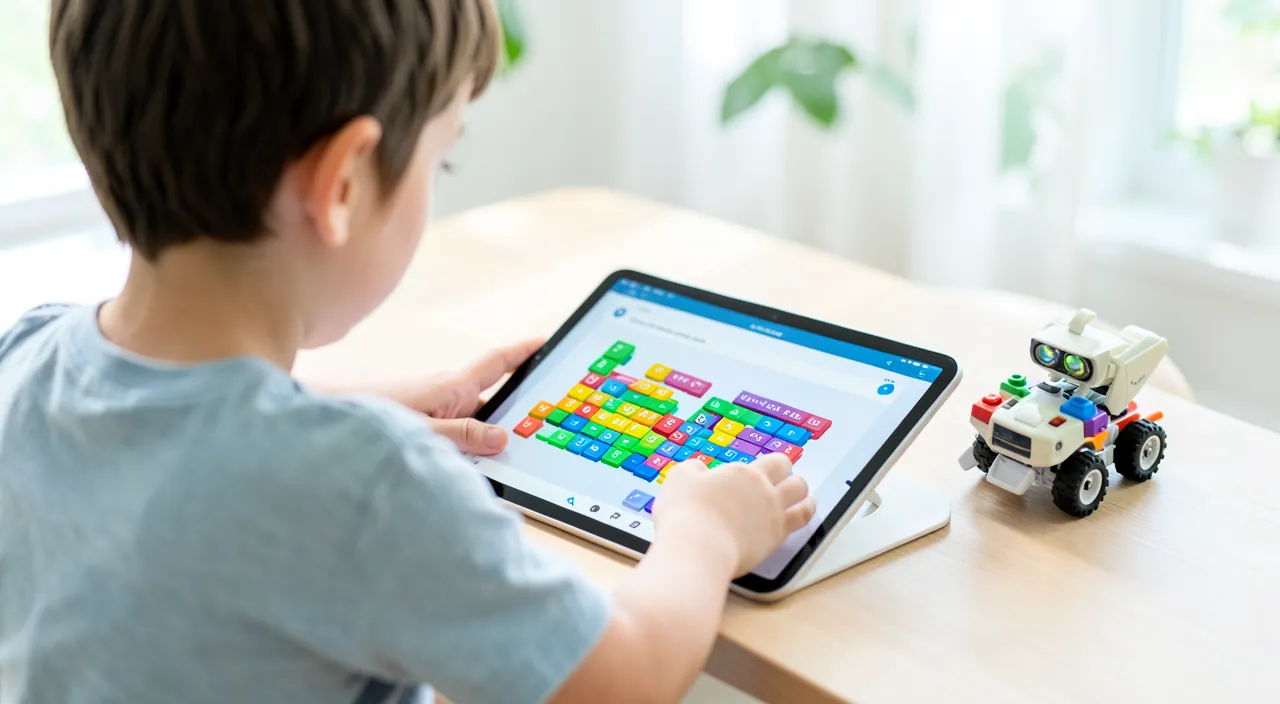
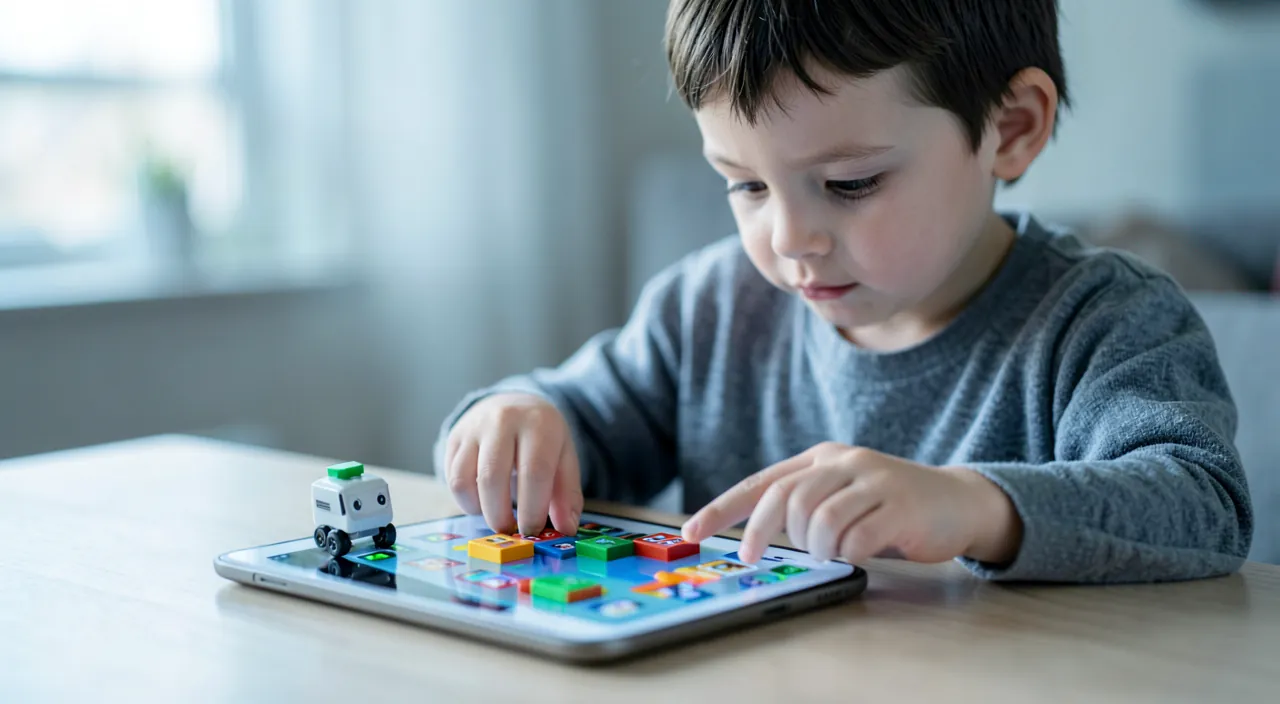
Discovering code brings much more than technical skills; here’s what it develops and how it works. What coding DEVELOPS in a child (beyond the technical) : LOGIC and reasoning (breaking down a problem, chaining steps) ; PROBLEM-SOLVING (trying, making mistakes, correcting — a lifelong skill) ; CREATIVITY (creating their own games, animations, stories) ; PERSEVERANCE (persisting until it works) ; and an UNDERSTANDING of the digital world (understanding that behind screens, there are instructions, which demystifies technology and forms more informed users). This isn’t to turn them into programmers: the goal isn’t to train future computer scientists, but to awaken these cross-cutting skills and this understanding, useful no matter the child’s future. How apps MAKE this accessible: they use BLOCK programming — instead of writing complex code, the child assembles colored blocks (like puzzle pieces) representing actions (« move, » « turn, » « repeat ») ; it’s visual, intuitive, with no syntax errors possible ; the child sees the result immediately (a moving character, an animation) ; they learn by PLAYING and CREATING. Adapted to each AGE: there are apps for the youngest (guiding a character in a maze, without even knowing how to read) to the oldest (creating real small games and animations) ; they progress according to age and interest. The FUN side: everything is presented as a game, an adventure, a challenge ; the child learns without realizing it, while having fun. What it SERVES: to DEVELOP valuable skills (logic, creativity, perseverance) ; to UNDERSTAND the digital world ; to STIMULATE the mind actively and creatively (creating rather than consuming!) ; and to discover a field that may or may not become a passion. The key idea: introducing a child to coding with an app is to make them discover, in a fun and age-appropriate way, the basics of programming — not to turn them into a computer scientist, but to develop valuable skills (logic, problem-solving, creativity, perseverance) and understand the digital world they’re growing up in. Thanks to block programming, the child learns by playing and creating, without technical difficulty. It’s an enriching activity that places them as CREATORS rather than mere screen consumers — a great way to make digital time constructive.
Coding teaches kids to think logically, solve problems, and be creative. It shows them that technology isn’t magic—it’s something they can control. Apps make it easy with colorful blocks that turn into games or animations, so kids learn while having fun. The goal isn’t to make them programmers, but to give them useful skills for life.
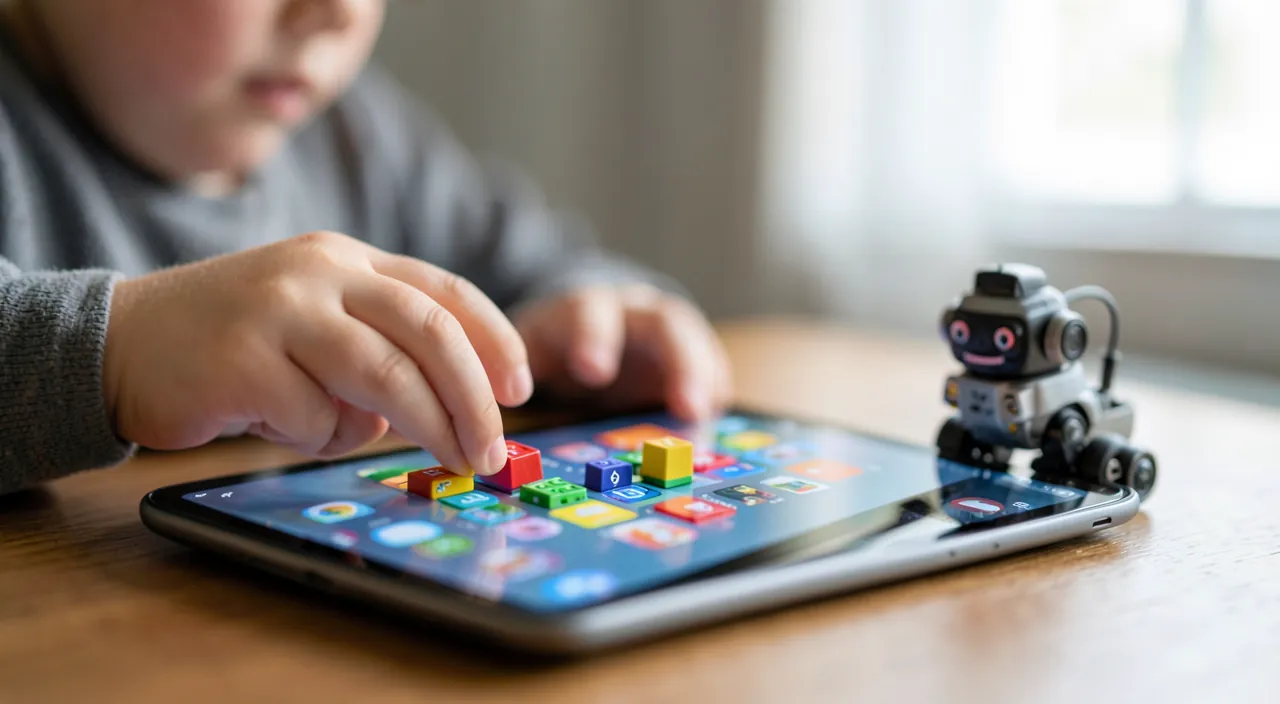
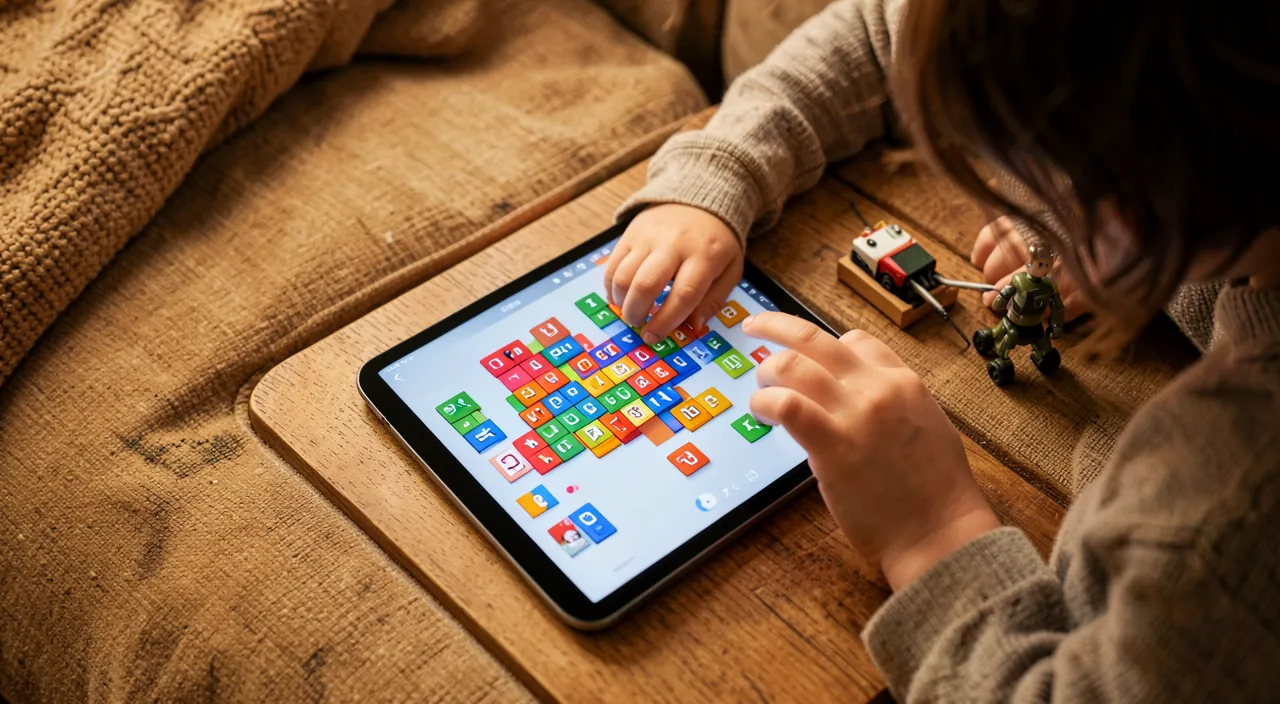
With an app like ScratchJr, a 6-year-old can create a simple animation where a cat chases a mouse. They drag and drop blocks that say “move forward” or “play sound.” When they run the program, the cat moves on screen. This teaches them how sequences work in coding—just like following steps in a recipe!
How to properly introduce your child to coding
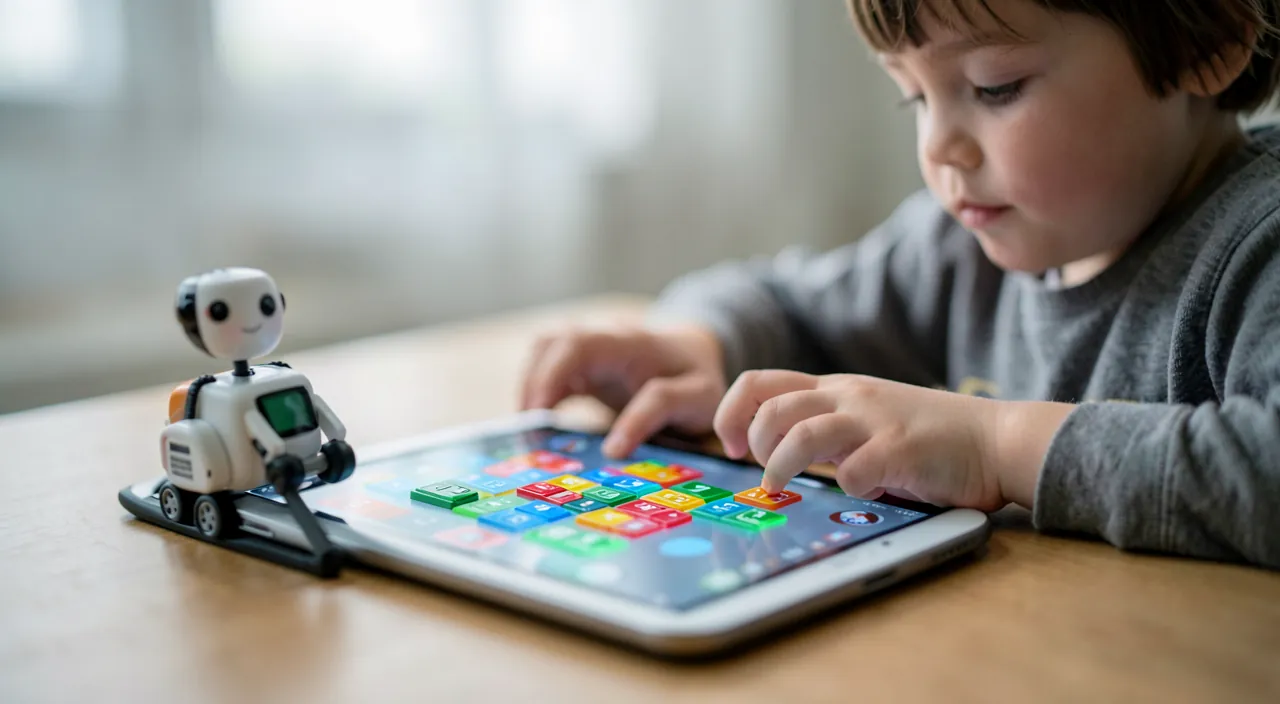
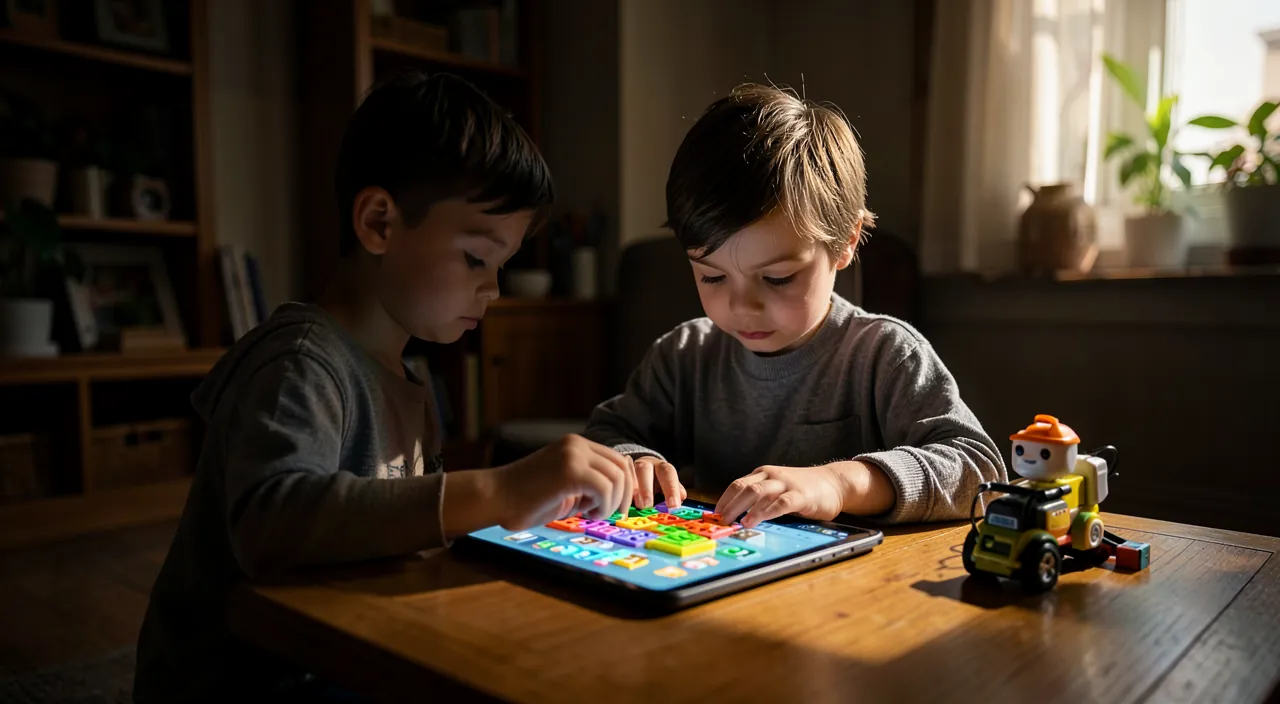
For this discovery to be successful and beneficial, here’s how to proceed. Choose an app suited to their AGE — it’s essential: there are apps for very young children (from kindergarten, guiding a character without knowing how to read), for children (creating animations, small games), and for older ones (more elaborate projects) ; choose according to age and level, many are free and recognized, often designed by serious educational actors (our guides install an app safely). ACCOMPANY them, especially at the beginning — rather than leaving them alone in front of the screen, discover together ; your presence makes the activity richer and more convivial, and turns a solitary screen time into a shared moment ; you don’t need to know how to code : you learn with them! Let them EXPERIMENT and make mistakes — the heart of learning: trying, seeing that it doesn’t work, understanding why, correcting ; don’t give the solution too quickly ; let them search (that’s where they develop logic and perseverance) ; the mistake is a friend, not a failure. Value CREATION — beyond the proposed challenges, encourage them to CREATE their own projects (a game, an animated story, a moving drawing) ; that’s where creativity flourishes and the child becomes an actor. Follow their PACE and pleasure — go at their pace ; if they’re hooked, let them explore ; if they’re not, don’t insist heavily (coding isn’t mandatory) ; pleasure must come first. Celebrate their SUCCESS — when their character finally reaches the goal, when their animation works, congratulate them ; these small victories nourish motivation and confidence. Frame SCREEN time — even an educational activity remains screen time ; integrate it within reasonable limits and a balance with other activities (our guides manage children’s screen time). Connect to the REAL world — show them that coding is everywhere (in their games, their apps) ; there are also « unplugged » coding activities (without screens, with cards, games) and programmable robots ; vary the approaches. Don’t put PRESSURE — the goal is discovery and pleasure, not performance ; don’t turn this fun activity into academic pressure ; let it come naturally. In summary: choose an app suited to their age, accompany them (especially at the beginning, without needing to know how to code), let them experiment and make mistakes (that’s how they learn), value creation more than simply completing challenges, follow their pace and pleasure, celebrate their successes, frame screen time, connect to the real world, and without pressure. Thus, the introduction to coding becomes a shared pleasure and a true enrichment.
The real benefit: making the child a creator, not a consumer. Here’s the idea that gives all its meaning to the introduction to coding, and that should guide your support. Our children spend a lot of time in front of screens, and most of that time is PASSIVE: they watch videos, play games designed by others, scroll through content ; they CONSUME digital media. The introduction to coding brings a precious reversal: it places the child on the side of CREATORS. Instead of passively experiencing technology, they create it ; instead of playing someone else’s game, they create their own ; instead of watching an animation, they animate it themselves. This shift from consumption to creation profoundly changes the nature of screen time: it becomes active, constructive, and empowering. The child discovers that they have POWER over technology, that it’s not an inaccessible magic but a tool they can master and adapt to their liking ; it’s extraordinarily empowering and confidence-building. That’s also what makes this activity so formative: creating requires thinking, planning, trying, making mistakes, and starting over — much more stimulating for the mind than passively consuming. To cultivate this benefit, always guide your child toward CREATION, beyond the simple challenges to solve. Once they’ve understood the basics with guided exercises, encourage them to imagine and realize THEIR own projects: « What if you created a small game? An animated story with your favorite characters? A moving greeting card for grandma? » That’s where the magic happens: the child invests their creativity, appropriates the tool, and experiences the immense pride of seeing something born from THEM. Celebrate these creations, show them to the family, encourage them to improve them ; this creator’s pride is the most powerful of engines, and the most beautiful of gifts that this activity can offer. An additional tip: support them in this approach (sharing makes creation even more rewarding), and don’t worry about not knowing how to code yourself — on the contrary, learning TOGETHER, discovering side by side, will put you both in the shoes of creators, and will make this moment a shared memory far more precious than yet another solitary screen session. Making your child a creator of digital media rather than a simple consumer: that’s the real treasure of the introduction to coding, far beyond any technical skill.
The balance to maintain and the precautions
The introduction to coding is beneficial, but it must be part of a balance and respect a few precautions; here they are. It’s still SCREEN time: even if educational and creative, this activity takes place on a screen ; it shouldn’t be added without limit to the rest, but integrated into a reasonable overall screen time and balanced with essential activities (free play, outdoor time, reading, sleep, relationships) ; « educational » screen time is still screen time (our guides manage children’s screen time). Not an OBLIGATION or pressure: coding is a great discovery, not a must ; not all children are hooked, and that’s normal ; don’t turn this fun activity into a performance pressure or a « they absolutely must code » ; let them discover without forcing ; if they like it, great ; otherwise, other activities also develop logic and creativity. Adapt to the AGE: an app that’s too advanced will frustrate a young child, one that’s too simple will bore an older one ; the age match is crucial for pleasure and benefit. SECURITY and data: choose RECOGNIZED educational apps adapted to children ; beware of apps that collect data or contain inappropriate advertising ; prefer those designed by serious educational actors, and check the settings (our guides protect children online) ; if the activity involves an online community (sharing creations), supervise it. PURCHASES and subscriptions: some apps have paid versions or in-app purchases ; many excellent resources are free ; monitor in-app purchases (beware of children who might trigger purchases) and prefer quality free options. Don’t EXPECT everything from coding: coding develops great skills, but it’s not the only path ; many activities (construction games, board games, crafts, music, sports, free play) also develop logic, creativity, and perseverance, often without screens ; coding is ONE enriching activity among others, not a magic wand. Vary with « UNPLUGGED » approaches: there are ways to introduce coding WITHOUT screens (logic games, cards, « unplugged » programming activities, programmable robots) ; these approaches are excellent and limit screen time ; alternate. ACCOMPANIMENT rather than screen-nanny: the benefit is much greater when you accompany the child than when they’re alone in front of the app ; don’t make coding a pretext to « park » them in front of a screen. Keep the FUN: if the activity becomes a chore or a source of frustration, take a break ; pleasure is the key to learning. In summary, the balance to maintain: coding is still screen time (to be integrated within reasonable limits), shouldn’t become an obligation or a pressure, must be adapted to the age, secured (recognized apps, protected data, monitored purchases), and complemented by other activities and « unplugged » approaches ; accompaniment and pleasure make all the difference. Well-framed, the introduction to coding is a true enrichment ; turned into an obligation or a screen-nanny, it loses its meaning. As always, moderation and presence make the difference.
Warning: as educational as it may be, coding is still screen time — it must be integrated into a balance, without becoming an obligation, and without replacing free play and the real world. This is the essential nuance to keep in mind so that this great activity remains beneficial. The « educational » label has something reassuring, even guilt-free: we tell ourselves that a child who codes on a tablet is doing something smart and constructive, unlike one who watches videos. It’s true — the introduction to coding is much more enriching than passive consumption —, but it shouldn’t make us forget a simple reality: it’s still SCREEN TIME, with all that implies (static posture, eye strain, lack of movement, virtual activity). The trap would be to let this « virtuous » activity be added without limit to the rest of screen time, thinking that « since it’s educational, it’s not a problem » : a child can very well spend too much time in front of a screen, even coding. Coding must therefore be INTEGRATED into the child’s overall screen time, within reasonable and age-appropriate limits, and not added on top. And above all, it must never encroach on what is ESSENTIAL to a child’s development and that nothing can replace: FREE PLAY (inventing, imagining without screens), physical activity and fresh air, RELATIONS with others, reading, creative boredom, and good sleep. These pillars always take precedence over any screen activity, no matter how educational. Second point of vigilance: never make it an OBLIGATION or a source of pressure. Driven by the (right) idea that coding is a skill for the future, some parents may be tempted to « push » their child, to make it a must, to worry if they don’t get hooked. It’s counterproductive: the introduction to coding only has value if it remains a PLEASURE and a free discovery ; turned into a performance pressure or an extra duty, it loses all its interest and can even discourage the child. Not all children will like coding, and that’s perfectly normal — many other activities develop logic, creativity, and perseverance, often without screens (construction games, board games, crafts, music, sports). Offer, accompany, but don’t force. Two practical precautions complete these warnings: prefer RECOGNIZED educational apps adapted to children (beware of collected data, advertising, and in-app purchases that the child might trigger), and think of « UNPLUGGED » approaches (logic games, coding activities without screens, programmable robots) that offer the same benefits without additional screen time. Finally, always prefer ACCOMPANIMENT: coding shared with you is infinitely better than « screen-nanny » coding that serves to occupy the child alone. Well-dosed, well-framed, and experienced with pleasure and sharing, the introduction to coding is a real enrichment that makes the child a creator ; but it never dispenses with the fundamental balance between screens and the rest of life. Coding, yes ; but in its right place, without excess or pressure, and never at the expense of the real world, which remains, for a child, the most formative of all.
Frequently asked questions
At what age can you introduce a child to coding?
You can start surprisingly early — from kindergarten for very simple activities — provided you choose apps adapted to each age ; the important thing is the match between the activity and the child’s developmental stage. Here are the main stages. From 4-5 YEARS OLD (kindergarten) : there are coding apps for very young children, designed to be used BEFORE even knowing how to read ; the child guides a character (for example in a maze) by assembling very simple symbols or arrows ; it’s a first introduction to sequential logic (« to go there, you have to move, then turn ») in the form of a game ; at this age, sessions must be very short, accompanied, and remain purely fun. Around 6-8 YEARS OLD (beginning of elementary school) : children can use richer block programming apps, create small animations, solve logic challenges, guide characters in adventures ; they understand notions like repetition, chaining actions ; it’s an ideal age for a fun and creative introduction. Around 8-12 YEARS OLD: children can go further ; create real small games and animations, carry out their own projects, understand more elaborate concepts ; some very popular and free tools allow them to create and share creations ; it’s often the age where coding can become a true creative passion. Beyond (adolescence) : those who are hooked can move on to more ambitious projects, or even discover « textual » programming (writing real code) ; but nothing is mandatory. The principles to respect at any age: choose an app SUITED to the child’s stage (neither too difficult nor too simple) ; accompany, especially the youngest ; keep sessions of reasonable duration ; prioritize pleasure and play ; and never force. There’s no « mandatory » age to start: some will discover coding young, others later, others not at all, and that’s all fine. In summary, you can introduce a child to coding from kindergarten (4-5 years) with very simple and accompanied activities, then gradually enrich the experience in elementary school (block programming, game creation) and beyond ; the key is to choose apps adapted to each age, to accompany, to keep the pleasure, and to never force. There’s no single ideal age: follow your child’s interest and pace.
Do you need to know how to code yourself to introduce your child?
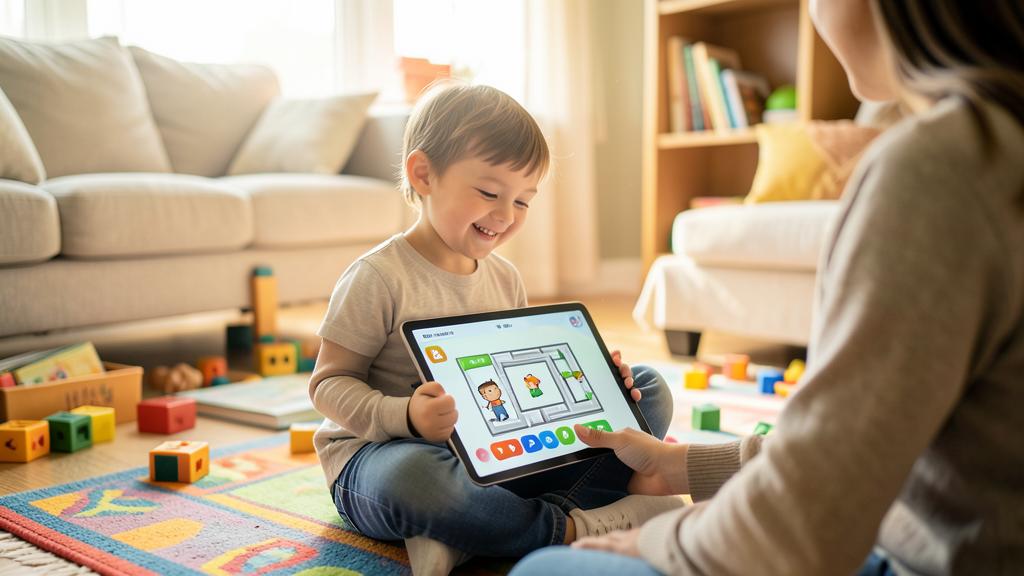
No, absolutely not: apps are designed for parents and children to discover together, without prior knowledge ; not knowing how to code is in no way an obstacle, and can even be an advantage. Reassure yourself on this point. Apps are MADE for this: coding initiation tools for children are designed to be accessible to everyone, including novice parents ; block programming is intuitive, visual, without jargon or technical difficulty ; activities are guided, explained step by step ; you therefore don’t need any prior skills to accompany your child : you just have to discover with them, following the app. Learning TOGETHER, an advantage: not knowing how to code can even be a good thing ; by discovering side by side, you both become explorers, you search together, you marvel at the same successes ; this shared discovery complicity is precious, and often richer than if you « already knew » ; your child will see you learning, making mistakes, persevering — a great example. Your role IS NOT to teach: you don’t have to « give lessons » or know everything ; your role is to ACCOMPANY — be present, encourage, share the pleasure, help not to get discouraged, celebrate successes, and let the child experiment ; the app takes care of the « content, » you bring the presence and support. What you can DO concretely: install a suitable app, start together, let the child try and make mistakes (without giving the solution too quickly), ask questions (« what happens if…? ») , marvel at their creations ; and if you’re both stuck, search together — that’s also the coding approach! If you prefer them to be AUTONOMOUS: for slightly older children, apps often allow autonomous discovery ; your accompaniment remains beneficial (at least to launch, frame the time, and be interested in their creations). In summary, no, you don’t need to know how to code to introduce your child: apps are designed to be accessible to novice parents, and discovering TOGETHER, without prior knowledge, is even an advantage that creates a beautiful complicity. Your role is not to teach but to accompany: be present, encourage, share the pleasure, and let the child explore. Dive in without fear: you’ll learn with them, and it will be all the more precious.
Will coding really help my child in their future life?
Yes, but not necessarily in the way we imagine: introducing coding helps mainly by developing valuable cross-cutting skills and an understanding of the digital world, much more than by turning the child into a future programmer. Let’s nuance this important question. What NOT to expect: the goal of introducing coding isn’t to turn your child into a computer scientist, or to « guarantee them a job » ; most children who discover coding won’t make it their profession, and that’s fine ; seeing this introduction as a bet on a career would be reductive and put unnecessary pressure. What coding REALLY brings for the future: CROSS-CUTTING skills, useful no matter the life path ; LOGIC and structured thinking (breaking down a problem into steps) ; PROBLEM-SOLVING through trials and corrections (a lifelong skill, in all areas) ; PERSEVERANCE (continuing until it works, not giving up in the face of difficulty) ; CREATIVITY (imagining and carrying out projects) ; and RIGOR (the computer does exactly what you tell it, which teaches precision). These skills serve in studies, work, and daily life, in any field. An UNDERSTANDING of the digital world: our children grow up in a world saturated with technology ; understanding, even roughly, how « it works » behind the screens makes them more INFORMED and more AUTONOMOUS in the face of the digital world — less impressed, less passive, more critical ; at a time when technology occupies an immense place, this understanding is a true form of general culture and digital citizenship. A POSSIBLE awakening: for some children, coding will reveal a real taste, a passion, or even a vocation ; the introduction opens this door, up to them to see if they want to go through it. The right PERSPECTIVE: see coding not as an investment in a career, but as an ENRICHMENT — of logic, creativity, perseverance, and an understanding of the digital world — that will benefit your child no matter what they become, exactly like learning music, playing chess, or doing sports develop useful qualities far beyond these activities themselves. In summary, yes, coding will help your child in their future life, but mainly through the cross-cutting skills it develops (logic, problem-solving, perseverance, creativity) and the understanding of the digital world it brings, much more than by destining them to computer science ; it’s a precious enrichment no matter their future, to be approached as an enriching discovery and not as a bet on a career. And if they find a passion in it, that will be a beautiful bonus.
What to remember
Introducing a child to coding with an app is to make them discover, in a fun and age-appropriate way, the basics of programming — not to turn them into a computer scientist, but to develop valuable skills (logic, problem-solving, creativity, perseverance) and help them understand the digital world they’re growing up in. Thanks to intuitive and technically easy block programming, the child learns by playing and creating, from kindergarten for the simplest to real small games for the oldest. The real benefit, the one that gives all its meaning to this activity: it makes the child a CREATOR rather than a mere screen consumer ; instead of passively experiencing technology, they create it, discover that they have power over it, and experience the pride of seeing their own creations come to life ; therefore always guide your child toward the creation of THEIR projects, beyond the guided challenges, because that’s where the magic happens. To properly accompany them: choose an app suited to their age, discover with them (without needing to know how to code — learning together is even an advantage that creates a beautiful complicity), let them experiment and make mistakes (that’s how they develop logic and perseverance), celebrate their successes, and follow their pace and pleasure. But always keep the essential balance: as educational as it may be, coding is still SCREEN TIME, to be integrated within reasonable limits without being added endlessly under the pretext that it’s « virtuous, » and never at the expense of what is fundamental for a child and that nothing can replace: free play, physical activity, relationships, reading, sleep. Never make it an OBLIGATION or a pressure: coding only has value when experienced as a pleasure and a free discovery ; not all children will be hooked, and that’s normal — many other activities develop the same qualities, often without screens. Think of « unplugged » approaches (logic games, robots, screen-free activities) that offer the same benefits, choose recognized and child-adapted apps (beware of data and in-app purchases), and always prefer accompaniment over screen-nanny. Finally, about the future: coding will help your child not by destining them to computer science, but through the cross-cutting skills it develops and the understanding of the digital world it brings — a precious enrichment no matter their path, like music or chess. Well-dosed, shared, and experienced with pleasure, the introduction to coding is a true gift: it awakens the mind, makes the child an actor of the digital world, and offers them keys for their time — in its right place, without excess or pressure, and always in the service of their fulfillment.
Want to go further with your phone and your apps? Our practical training is made for you.
Leave a Reply
You must be logged in to post a comment.