
Do you enjoy taking photos but find your shots disappointing? Would you like to improve without taking expensive courses? Artificial intelligence (AI assistants you chat with) can become a patient and available photography teacher: it explains basic concepts, analyzes your difficulties, suggests exercises, gives composition and lighting advice, and answers all your questions without ever getting tired. **Warning**: AI helps you **UNDERSTAND** and progress, but it won’t take the photos for you, and nothing replaces field practice. It’s an excellent complement for learning theory, unlocking a concept, or finding ideas; it’s by photographing, again and again, that you’ll truly progress. Well used, it democratizes photography learning. Let’s see how AI can help you progress, what it does well, and its limits.
How AI can help you progress in photography
AI is an accessible photography teacher; let’s look at its concrete uses. **EXPLAIN** the basics: AI explains fundamental concepts (framing, lighting, sharpness, major settings) in simple terms; an on-demand basic course; pedagogical; accessible. Answer **YOUR** questions: ask any question (« why are my photos blurry? », « what is the rule of thirds? ») a patient and available teacher; no judgment; reassuring. Diagnose your **DIFFICULTIES**: describe your problem (dark, blurry, dull photos) and AI suggests causes and solutions; a diagnostic to progress; targeted; useful. **COMPOSITION** tips: AI teaches composition principles (rule of thirds, lines, framing, foreground); the key to impactful photos; learn to compose; essential. Understand **LIGHT**: it explains the importance of light (golden hour, avoiding failed backlight, soft light); light makes the photo; understand it; central. Suggest **EXERCISES**: ask for exercises to progress (daily theme, creative constraint); practice with a goal; AI structures training; motivating. Adapt to your **EQUIPMENT**: specify if you shoot with a smartphone or dedicated camera; AI tailors its advice; custom; relevant. Give **IDEAS**: out of inspiration? AI suggests subjects, themes, photo projects; reignite creativity; inspiring; useful. Explain **VOCABULARY**: technical terms (aperture, exposure, etc.) explained simply; demystify jargon; understand to progress; clear. Go at your **PACE**: AI adapts to your level (beginner, intermediate) and pace; personalized learning; no pressure; at your own pace. In summary, AI can be a true **TEACHER** of photography, patient and available: it **EXPLAINS** basic concepts (framing, lighting, sharpness, settings) in simple terms, answers all **YOUR** questions without judgment (« why are my photos blurry? », « what is the rule of thirds? »), and **DIAGNOSES** your difficulties (dark, dull photos) by suggesting causes and solutions. It teaches **COMPOSITION** (rule of thirds, lines, foreground: the key to impactful photos) and the importance of **LIGHT** (golden hour, soft light: it makes the photo), suggests **EXERCISES** to practice with a goal, **ADAPTS** its advice to your equipment (smartphone or dedicated camera) and level, gives **IDEAS** when inspiration is lacking, and demystifies technical **VOCABULARY**. All at your pace, in personalized learning. An accessible teacher who democratizes photography learning — provided you keep in mind that theory alone is not enough.
AI helps you learn photography by explaining concepts, diagnosing problems, and suggesting exercises. But it won’t take the photos for you – you still need to practice regularly to improve.
If you’re struggling with blurry photos, ask AI: “Why are my indoor photos blurry?” It might explain that your shutter speed is too slow for the available light and suggest practicing with a tripod or increasing your ISO. Then go test these solutions with your camera.
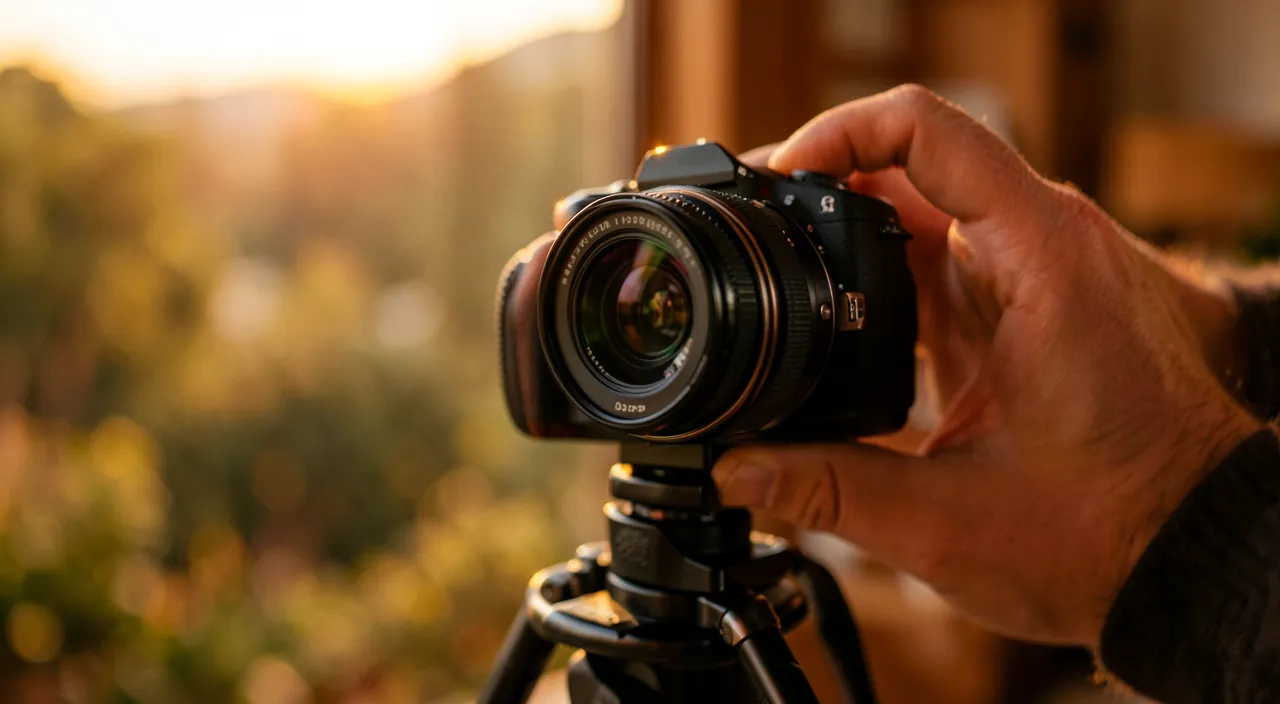
How to use AI effectively to learn photography
To truly progress with AI, a few good habits; here’s how. Start with **YOUR** photos: describe a photo that disappoints you (what you wanted, the result); AI targets your real difficulties; start with the concrete; effective. Ask **PRECISE** questions: « how to avoid blurry photos indoors? » is better than « how to take beautiful photos? »; be precise; target; relevant. Learn **STEP BY STEP**: one concept at a time (first composition, then lighting, then settings); don’t drown; progress in stages; structured. Ask for **EXAMPLES**: ask for concrete examples, situations (« how to photograph a sunset? »); the concrete anchors learning; illustrate. **PRACTICE** immediately: after an explanation, go shoot to apply; theory without practice is useless; apply quickly (we’ll come back to this); act. Ask for **EXERCISES**: « give me an exercise to work on composition »; practicing with a goal makes you progress; train; motivating. **RETURN** with your results: after practicing, come back to describe your results; AI adjusts its advice; a learning loop; dialogue. Adapt to your **EQUIPMENT**: specify smartphone/camera, what you can adjust; AI adapts; applicable advice; relevant. **CHECK** through practice: test the advice in the field (you’ll see what works for you); practice validates; experiment; concrete. Keep the **FUN**: photograph what you enjoy, progress without pressure; fun maintains motivation; have fun; essential. In summary, to learn photography well with AI: start with **YOUR** photos (describe a shot that disappoints you precisely; AI targets your real difficulties), ask **PRECISE** questions (« how to avoid blur indoors? » rather than « how to take beautiful photos? »), and learn **STEP BY STEP** (one concept at a time: composition, then lighting, then settings). Ask for concrete **EXAMPLES** and targeted **EXERCISES** (« an exercise to work on composition »), then — and this is essential — **PRACTICE** immediately: theory without practice is useless. Then come back to describe your **RESULTS** so AI can adjust its advice (a real learning loop), while specifying your **EQUIPMENT** for applicable advice. **CHECK** everything through practice (you’ll see what works for you), and above all keep the **FUN**: photograph what you enjoy, without pressure. It’s this alternation of theory (with AI) / practice (in the field) that will truly make you progress.
The right method: learn a concept with AI, then go practice it immediately — theory and field together. The secret to truly progressing in photography with AI lies in a simple principle: alternate **THEORY** (understanding with AI) and **PRACTICE** (shooting in the field). One without the other doesn’t work: theory alone remains abstract and is forgotten; practice alone, without understanding, goes in circles. Together, they work wonders. Here’s a concrete method. Step 1: choose **ONE** concept to work on. Don’t try to learn everything at once: target one thing (for example, the rule of thirds, evening light, depth of field, or a recurring problem like blur). Ask AI to **EXPLAIN** it simply, with examples of situations. Step 2: ask for a concrete **EXERCISE**. « Give me an exercise to work on [the concept] this week. » AI will propose a clear goal (for example: « take ten photos placing your subject on a third line, » or « photograph the same subject at different times to observe the light »). A clear goal makes practice much more educational than random shooting. Step 3: **GO SHOOT**. This is the irreplaceable step. Apply what you’ve understood, do the exercise, experiment, fail, try again. It’s by manipulating your camera or smartphone, observing real light, framing again and again that the concept truly anchors and becomes a reflex. No AI can do this step for you. Step 4: **RETURN** to analyze with AI. Describe your results (« I tried the rule of thirds but my photos still lack dynamism, » « my evening photos are too dark »); AI will help you understand what worked or not, and adjust. This loop — understand, practice, analyze, repeat — is the engine of progress. Step 5: move on to the next concept, and so on, building your skills brick by brick. A few tips to make it work: practice **REGULARLY** (even 15 minutes of targeted photography is better than a long session once a month), photograph what you **ENJOY** (motivation is key), and be **PATIENT** (progress takes time, it’s normal). In summary, the winning method is **ALTERNATION**: learn a concept with AI (explanation + targeted exercise), **GO** practice it immediately in the field (the irreplaceable step where theory becomes reflex), then **RETURN** to analyze your results with AI to adjust — and repeat with the next concept. Practice regularly, photograph what you enjoy, and be patient. It’s this back-and-forth between understanding (with AI) and experience (in the field) that transforms a beginner into a progressing photographer: AI lights the way, but you walk, camera in hand.
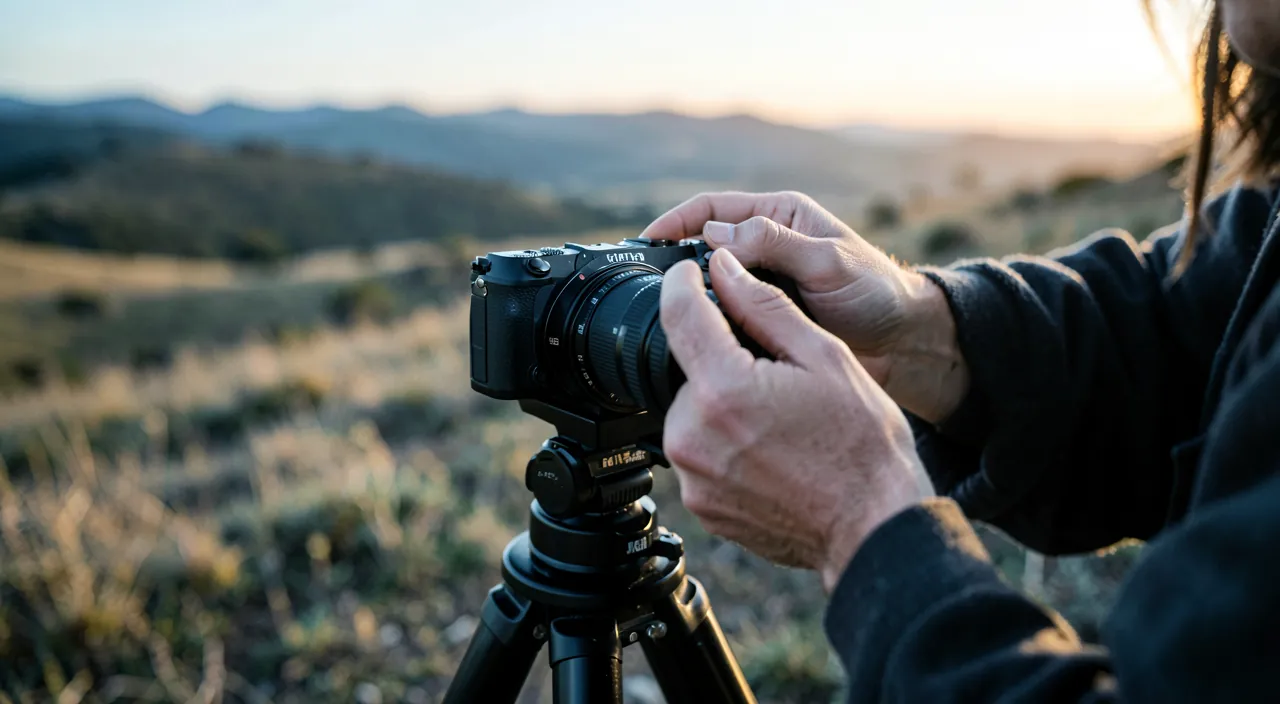
Useful questions to ask AI about photography
To progress, know what to ask; here are concrete and effective questions. « Why are my photos **BLURRY**? »; describe the context (indoors, movement); AI explains the causes (camera shake, focus, light) and solutions; solve a common problem; useful. « What is the **RULE OF THIRDS**? »; AI explains this key composition principle; simple and transformative; improve your framing; essential. « How to take advantage of **LIGHT**? »; golden hour, soft light, avoiding pitfalls; light makes all the difference; learn to see it; central. « An **EXERCISE** for this week? »; AI proposes a targeted challenge; practice with a goal; train; motivating. « How to photograph [SUBJECT]? »; portrait, landscape, sunset, animals; advice by photo type; concrete; practical. « Improve my **SMARTPHONE** photos? »; specific phone tips; progress with what you have; accessible; useful. « What is [TERM]? »; aperture, exposure, ISO; demystify jargon; understand the basics; clear. « Photo project **IDEAS**? »; themes, series, challenges; reignite inspiration; creative; stimulating. « How to **IMPROVE** overall? »; a progress plan, priorities; a roadmap; structured; guiding. **USE** the answers: turn each answer into practice (go test); learning happens in the field; apply; concrete. In summary, to progress, ask AI useful and varied questions: about your **PROBLEMS** (« why are my photos blurry? »; causes and solutions), about key **PRINCIPLES** (« what is the rule of thirds? », « how to take advantage of light? »), about exercises to do (« a photo challenge for this week? »), about specific **SUBJECTS** (« how to photograph a portrait, a landscape, a sunset? »), about your **EQUIPMENT** (« improve my smartphone photos? »), about **VOCABULARY** (« what is aperture, exposure? »), about project **IDEAS**, and about an overall **PLAN** of progress. But the most important: **USE** each answer by turning it into practice — go test immediately, because it’s in the field that learning comes to life. Good questions open understanding; practice transforms it into know-how.
Warning: AI teaches theory but won’t take the photos for you, and doesn’t replace practice or your eye. As useful as it may be for learning, AI has limits you need to understand to avoid disappointment or wasting time. First point: AI teaches **THEORY**, but **PRACTICE** makes the photographer. You can perfectly understand the rule of thirds, light, and exposure by chatting with AI — and yet not know how to take a good photo, simply because photography is a **DOING** skill that’s acquired by doing. Manipulating your camera or smartphone, framing in the moment, reacting to real light, anticipating the decisive moment, developing your eye: all this is learned by photographing, again and again. Don’t fall into the trap of « a lot of reading and discussion, little practice »; theory is only useful if it feeds practice. Consider each exchange with AI as an invitation to go shoot, not as an end in itself. Second point: AI will never take photos **FOR YOU**, and can’t see through your eyes. It won’t be there at the decisive moment, won’t feel the light or the emotion of a scene, won’t frame for you. The **PHOTOGRAPHER’S EYE** — that sensitivity that makes you see a beautiful image where others pass — is deeply personal and can’t be delegated to a machine. AI can give you principles, but your style, your sensitivity, your way of seeing the world belong to you and are cultivated through experience and observation (looking at beautiful photos, getting inspired, experimenting). Third point: AI can **MAKE MISTAKES** or give overly general advice. Like on any subject, an AI can state an inaccurate explanation or an approximate piece of advice with confidence; and its advice, often general, doesn’t always fit your specific situation (your equipment, your style, the real scene). Keep your critical mind: test the advice in the field (it’s practice that determines what works for **YOU**), cross-check with other sources (photographer tutorials, books, communities), and don’t blindly apply a « rule » — in photography, you learn the rules to better know when to break them. Finally, don’t confuse learning photography (the subject here) with AI that **GENERATES** or edits images: these are different tools, and progressing in photography is about developing **YOUR** ability to capture reality, not to have a machine produce images. In summary, AI teaches **THEORY** but doesn’t make the photographer (only **PRACTICE**, by photographing again and again, develops know-how; don’t read instead of shooting), it won’t take photos for you or replace your **EYE** (personal, cultivated by experience), and it can be wrong or too general (keep your critical mind, test in the field, cross-check). Used as a theory teacher that pushes you toward practice, AI is precious; expected as a shortcut that would make you a photographer without effort, it will disappoint. You progress in photography with a camera in hand — AI lights the way, but you photograph.
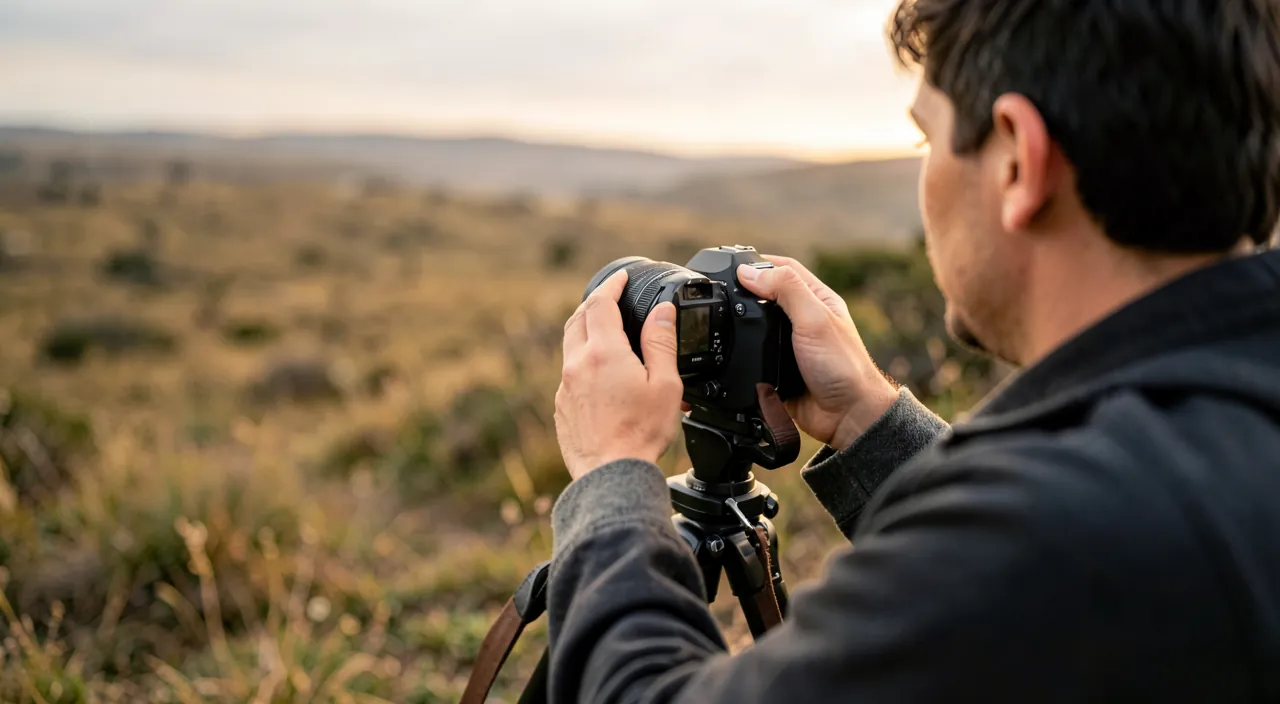
Frequent questions
Can AI really teach me photography?
It can very well teach you **THEORY** (concepts, composition, light, settings) and guide you, but it doesn’t replace practice: you truly learn photography by photographing; AI is an excellent theory teacher and a complement, not a substitute for experience. Let’s see. **THEORY**, very well: AI teaches theory remarkably (basic concepts, composition, light, vocabulary, settings); a real on-demand course; solid on this point; useful. An **AVAILABLE** teacher: patient, available, non-judgmental, adapted to your level; an ideal teacher for the theoretical part; accessible; precious. But **PRACTICE** is indispensable: you truly learn photography by **PHOTOGRAPHING** (manipulating, framing, reacting to light); theory alone isn’t enough; practice; essential. **KNOW-HOW** is built: photography is a know-how acquired through experience; understanding isn’t enough to know how to do; build through practice; unavoidable. AI **GUIDES**, you walk: AI lights the way (explains, suggests exercises, analyzes), but you photograph; it guides, you progress; complementary. The **PERSONAL EYE**: your eye, your sensitivity are cultivated through experience and observation; AI doesn’t give you an eye; develop yours; personal. A powerful **COMPLEMENT**: as a complement to practice, AI is very powerful (theory, diagnosis, exercises, motivation); combined with practice, it accelerates progress; use it this way. Not a **SUBSTITUTE**: it doesn’t replace practice, experience, or your eye; don’t expect it as a magical shortcut; its limits are real; be lucid. The right **FORMULA**: theory with AI + intensive practice in the field; it’s this combination that makes you progress; alternate; winning. The **ADVICE**: yes, AI can teach you the theory of photography (and very well: concepts, composition, light), guide you and motivate you; but you truly learn by photographing; use it as an excellent theory teacher, in addition to regular practice in the field. In summary, yes and no, depending on what you mean by « learn photography ». AI can very well teach you all the **THEORY** — the basic concepts, composition, light, settings, vocabulary — and do it like an ideal teacher: patient, available at any time, non-judgmental, and adapted to your level. On this point, it’s a remarkable tool that democratizes access to knowledge once reserved for courses or books. BUT — and this is fundamental — photography is above all a **KNOW-HOW**, and know-how is only acquired by practicing it. You truly learn photography by **PHOTOGRAPHING**: by manipulating your camera, framing in the moment, reacting to real light, failing and trying again, gradually developing your eye and sensitivity. No discussion with an AI replaces this field experience, nor will it give you your **PERSONAL EYE** (which is cultivated through practice and observation of beautiful images). The right way to see things: AI is a powerful **COMPLEMENT** to practice, not a substitute. It lights the way (it explains, diagnoses your difficulties, suggests exercises, motivates), but you must walk, camera in hand. The winning formula is therefore **ALTERNATION**: learn theory with AI, then practice intensively in the field, come back to analyze, and repeat. Used this way, AI can truly accelerate your progress — provided you never forget that the most important happens with your eye in the viewfinder, not in front of the screen.
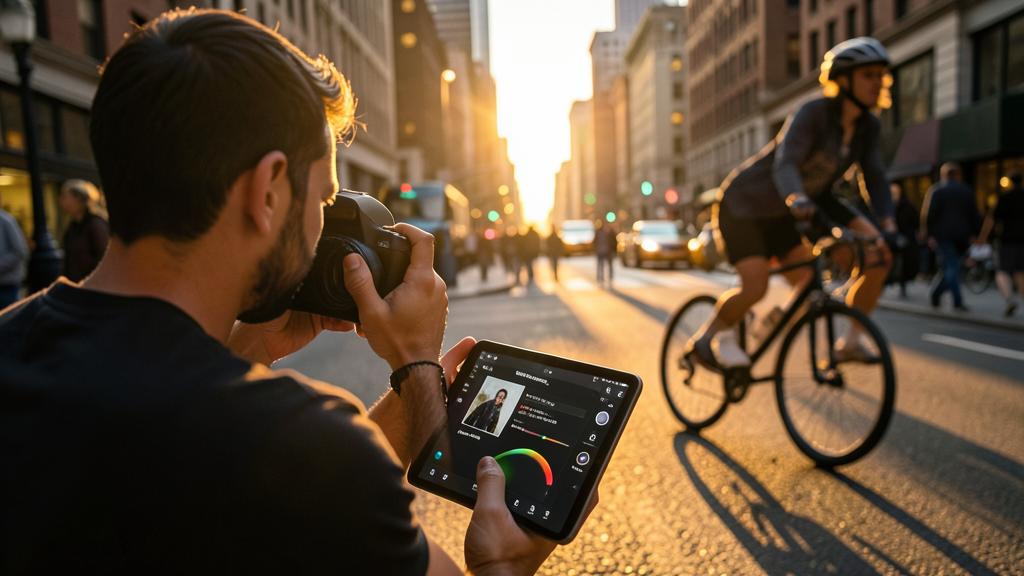
Is it better to learn photography with AI or with tutorials and courses?
Both are complementary: AI excels at answering your precise questions and personalizing, tutorials and courses at showing visually and structuring; the ideal is to combine them, and above all to practice a lot. Let’s see. Each has its **STRENGTHS**: AI and tutorials/courses have different and complementary strengths; not one **AGAINST** the other; combine them; the best of both. AI for **PERSONALIZATION**: AI answers **YOUR** precise questions, diagnoses **YOUR** difficulties, adapts to your level; custom interactive; that’s its strength; interactive. Tutorials for **SHOWING**: video tutorials show visually (gestures, settings, results on screen); photography is visual, seeing helps; their strength; demonstrative. Courses for **STRUCTURING**: a course (online or in person) offers a structured progression, a framework, sometimes a trainer who corrects; structuring; useful to advance methodically. AI, **INTERACTIVE**: AI dialogues, bounces back, answers instantly; tutorials are fixed; interactivity is an AI asset; reactive. Tutorials, **VISUAL**: seeing a photographer do is worth a thousand written explanations; AI explains in text, video shows; complementary; combine. The **IDEAL** combination: watch tutorials to see, use AI for your questions and diagnosis, follow a course to structure; combine according to your needs; complete. The **COMMON POINT**: all require **PRACTICING** (none makes you progress without photographing); practice is the common denominator; practice; essential. According to your **STYLE**: some prefer reading/dialoguing (AI), others watching (video), others a framework (course); follow what suits you; adapt; personal. The **ADVICE**: both are complementary (AI for personalizing and answering your questions, tutorials/courses for showing and structuring); combine them according to your preferences, and above all practice a lot — that’s the common point that truly makes you progress. In summary, it’s not « AI **OR** tutorials and courses », but « AI **AND** tutorials and courses »: these approaches are **COMPLEMENTARY**, each with its strengths. AI excels at **PERSONALIZING** learning: it answers **YOUR** precise questions instantly, diagnoses **YOUR** particular difficulties, adapts to your level, and dialogues interactively (whereas a tutorial is fixed). Video **TUTORIALS**, on the other hand, have a major asset in photography: they **SHOW** visually the gestures, settings, and results on screen — and photography is a visual art, where seeing a photographer do often beats a thousand written explanations. **COURSES** (online or in person), finally, provide a **STRUCTURED** progression, a framework, and sometimes a trainer who corrects your work. The ideal is therefore to **COMBINE** according to your needs and preferences: watch tutorials to see techniques, use AI to ask your questions and diagnose your difficulties, and optionally follow a course to structure your progression. Also know that everyone has their **LEARNING STYLE** (some prefer dialoguing with AI, others watching videos, others the framework of a course): follow what motivates you the most. But whatever the combination chosen, keep in mind the **COMMON POINT** to all these methods: none will make you progress without **PRACTICING**. Theory (by AI, tutorials, or courses) enlightens, but it’s by photographing a lot, regularly, that you’ll get better.
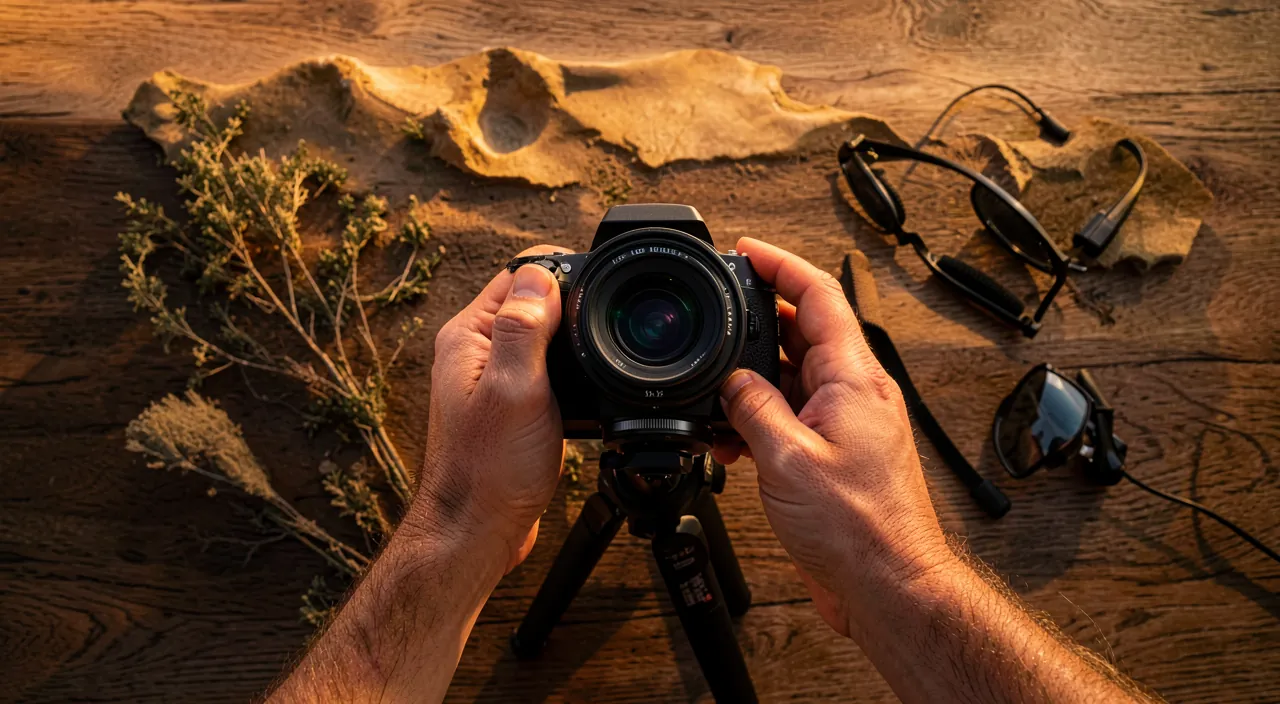
Do you need a good camera, or can AI help me progress with my smartphone?
No need for a good camera to progress: AI can perfectly help you take beautiful photos with your smartphone, because the essentials (composition, light, eye) don’t depend on the equipment; it’s the photographer who makes the photo, not the camera. Let’s see. **NO** need for a good camera: you can progress and take beautiful photos with a smartphone; equipment isn’t essential; start with what you have; reassuring. The **ESSENTIAL** is equipment-independent: composition, light, eye, moment; these fundamentals don’t depend on the camera; they apply to smartphones; universal. The **PHOTOGRAPHER** makes the photo: it’s the eye and know-how that make the photo, not the camera’s price; a good photographer takes beautiful photos with a smartphone; humans first. AI helps with **SMARTPHONES**: specify that you shoot with a smartphone; AI gives tailored advice (tips, phone settings, composition); custom; applicable. **SMARTPHONES** are powerful: modern smartphones take excellent photos; more than enough to progress and enjoy; sufficient to learn; capable. Learn the **FUNDAMENTALS**: learn composition and light with your smartphone; these bases will serve you on any camera later; invest in knowledge; durable. Don’t **HIDE** behind equipment: « I’d do better with a good camera » is often an excuse; progress first with what you have; equipment will come later; no excuses. Equipment **LATER**: if passion grows, a better camera can follow; but after learning the basics; in this order; progressive. **SMARTPHONE** tips: ask AI for specific tips (light, stability, clean the lens, composition, avoid digital zoom); exploit your phone; practical. The **ADVICE**: no need for a good camera to progress; AI helps you very well take beautiful photos with your **SMARTPHONE** (the essentials — composition, light, eye — don’t depend on equipment); learn the fundamentals with what you have, the best equipment will come later if passion grows. In summary, no, you absolutely don’t need a good camera to progress in photography: AI can perfectly help you take beautiful photos with your **SMARTPHONE**. The reason is essential to understand: the **ESSENTIAL** of photography — composition, light, eye, sense of the moment — doesn’t **DEPEND** on the equipment. These fundamentals make a beautiful photo, and they apply just as much to a smartphone as to a professional camera. It’s the **PHOTOGRAPHER** who makes the photo, not the camera’s price: a good photographer will make beautiful images with a simple phone, while an excellent camera will never suffice to make beautiful photos if the eye isn’t there. Good news: modern smartphones take excellent photos, more than enough to learn, progress, and enjoy. Just specify to AI that you photograph with a smartphone: it will give you **ADAPTED** advice (light and stability tips, available phone settings, importance of cleaning the lens, composition, pitfalls to avoid like digital zoom). Learning the fundamentals with your smartphone is even a great strategy: these bases will serve you later on any camera. Beware of the reflex « I’d do better with a good camera », which is often an excuse not to progress: start by exploiting to the fullest what you already have in hand. If your passion grows, better equipment can follow later — but in this order: first know-how and eye (with your smartphone and AI’s help), then, optionally, the gear. Equipment doesn’t make the photographer; you do.
What to remember
Artificial intelligence can become a formidable **TEACHER** of photography, patient, available, and non-judgmental: it explains basic concepts (composition, light, sharpness, settings) in simple terms, answers all your questions, diagnoses your difficulties (blurry, dark, dull photos), teaches the rule of thirds and the art of light, suggests targeted exercises, adapts to your equipment and level, and gives ideas when inspiration is lacking. It thus democratizes access to knowledge once reserved for courses and books — and without needing a good camera, since the essentials (composition, light, eye) don’t depend on the equipment: AI helps you progress very well with your simple smartphone. To use it well: start with **YOUR** photos, ask **PRECISE** questions, learn one concept at a time, ask for **EXAMPLES** and **EXERCISES**, and adapt to your equipment. But the key to progress lies in a principle: the **ALTERNATION** between theory and practice. Learn a concept with AI, then **GO** practice it immediately in the field (the irreplaceable step where theory becomes reflex), come back to analyze your results with AI, and repeat. Because you must keep in mind AI’s **LIMITS**: it teaches **THEORY**, but it’s **PRACTICE**, by photographing again and again, that makes the photographer (don’t read instead of shooting); it will never take photos for you or replace your **EYE** (personal, cultivated by experience and observation); and it can be wrong or too general (keep your critical mind, test in the field, cross-check with tutorials and courses, which are complementary to AI). Used as a theory teacher that pushes you toward practice, AI truly accelerates your progress; expected as a magical shortcut, it will disappoint. The winning formula: theory with AI (and tutorials, courses), and a lot, a lot of practice in the field — camera or smartphone in hand. Photograph what you enjoy, be patient and regular, and have fun: that’s how you truly progress in photography. AI lights the way, but you photograph.
Want to master AI and make it a real asset in your daily life? Our training programs support you at your own pace.
Leave a Reply
You must be logged in to post a comment.