
« Congratulations ! You have won 500 000 euros ! » — except you never played in this lottery. You receive an email, SMS, or call announcing a huge win, an unexpected inheritance, or an exceptional gift. Excitement rises: what if it were true? That’s exactly the trap. The lottery and fake win scam is one of the oldest and most widespread, precisely because it plays on a powerful trigger: the desire to believe in good news. The rule is simple and uncompromising: you NEVER win a lottery you didn’t play in. Behind the fake good news always hides an attempt to extort money or your data. Let’s see how this scam works, how to recognize it for sure, and how to react.
How the lottery scam works
Understanding the mechanism helps to avoid falling for it; let’s see how this scam works. The PRINCIPLE: you are told you have WON (a lottery, a draw, a gift) or inherited an amount, while you haven’t played or have nothing to expect; the fake good news is the bait; the win doesn’t exist. The real GOAL: behind the fake win, the objective is to EXTRACT money from you (so-called “fees” to pay to unlock the win) or your PERSONAL/banking DATA; the “win” is just a lure; it’s you who loses. The FALSE FEES: the classic trap; to “receive your win,” you are asked to pay “fees” (processing, customs, transfer, tax); you pay, the win never arrives; that’s the core of the scam (we’ll come back to it). The DATA THEFT: you are asked for your personal and banking details “to transfer the win”; these data are stolen (and used to further scam you); the win serves as bait for collection; beware. The VARIANTS: winning lottery, raffle, exceptional gift, INHERITANCE from a stranger, win in a game, unexpected refund, “you are the 1000th visitor”; a thousand pretexts, one single goal; the forms vary, the trap is the same. The CHANNELS: by EMAIL, SMS, phone call, message on social networks, paper mail, fake pop-up on a website; the scam comes through all channels; multi-platform; stay vigilant everywhere. The PSYCHOLOGICAL TRIGGER: the scam plays on the DESIRE to believe in good news, the excitement of winning, hope; these emotions dull suspicion; it’s a powerful trigger; you WANT to believe; hence its effectiveness. The URGENCY and exclusivity: often, urgency (“claim within 48h”) and exclusivity (“you are the lucky one”) are added; to push you to act quickly without thinking; pressure accompanies the bait; beware. An OLD and widespread scam: it’s one of the oldest scams, still current because it works; it has many victims; its longevity proves its effectiveness; don’t underestimate it. The UNCOMPROMISING RULE: you NEVER win a lottery you didn’t play in; this simple rule exposes the entire scam; no game = no possible win; remember it (we’ll come back to it). What’s the POINT of understanding: knowing that the “win” is a lure to extract money or data helps to not be blinded by excitement; lucidity foils the trap. The main idea: the lottery and fake win scam tells you that you have WON (lottery, draw, gift) or inherited an amount — while you haven’t played or have nothing to expect. The fake good news is just a BAIT: the real goal is to EXTRACT money from you (via fake “fees” to pay to “unlock” the win) or to steal your PERSONAL and banking DATA (requested “to transfer the win”). It takes a thousand forms (lottery, inheritance from a stranger, gift, “1000th visitor”) and comes through all channels (email, SMS, call, networks, mail). Its effectiveness comes from a powerful psychological trigger: it plays on the DESIRE to believe in good news, often reinforced by urgency and exclusivity. It’s one of the oldest scams, still current because it has victims. But a simple and uncompromising rule exposes it for sure: you NEVER win a lottery you didn’t play in. Understanding that the win is a lure is the best defense against the blindness of excitement.
Ce scam fonctionne en vous faisant croire que vous avez gagné de l’argent alors que vous n’avez jamais participé à un tirage. Le but est de vous faire payer des “frais” imaginaires ou de voler vos informations bancaires. La règle d’or : vous ne gagnez jamais à une loterie à laquelle vous n’avez pas joué.
Un senior reçoit un email prétendant qu’il a gagné 500 000€ à la loterie EuroMillions. Il n’a jamais acheté de ticket. Le message demande 500€ de “frais de transfert”. C’est un scam typique : pas de participation = pas de gain.

How to recognize the scam for sure
This scam is easily recognizable thanks to clear signals; here’s how to expose it. The GOLDEN RULE: you didn’t PLAY: the absolute signal; if you are told about a win in a lottery/a game you didn’t PARTICIPATE in, it’s a 100% scam; you don’t win without playing; this single rule is enough to expose it; remember it. They ask you to PAY to receive: massive signal; if you are asked to PAY “fees” (processing, tax, customs, transfer) to “unlock” your win, it’s a scam; a real win doesn’t cost money to receive; the requested payment betrays everything (we’ll come back to it). They ask for your BANKING DATA: if you are asked for your banking details “to transfer the win,” beware; a legitimate organization doesn’t collect data this way; it’s an attempt at theft; don’t give them. An UNEXPECTED win: you weren’t expecting anything (no game, no known inheritance, no draw); a win out of nowhere is suspicious; why you? The unexpected is suspect; question it. An ENORMOUS sum: astronomical amounts (hundreds of thousands of euros, an inheritance from an unknown relative); the too-good-to-be-true is the sign of a scam; if it’s disproportionate, it’s fake; beware of huge sums. The URGENCY to claim: “claim within 48h or you lose everything”; urgency pushes you to act without thinking; a real win doesn’t disappear so fast; the pressure is a signal; beware. A DUBIOUS SENDER: strange email address, unknown number, organization you’ve never heard of, or impersonating a known name; the sender betrays; check who contacts you; the dubious alerts. MISTAKES and a grandiloquent tone: spelling errors, pompous or awkward phrasing, excessively enthusiastic tone; scams often contain these marks; a serious organization writes correctly; the mistakes alert. A SEPARATE CONTACT: you are asked to contact an “agent,” a “notary,” a specific number/email to “claim”; this contact is the scammer; they will guide you to paying the “fees”; don’t contact them. The REQUESTED CONFIDENTIALITY: sometimes, you are asked to “keep the secret”; it’s to isolate you and prevent a loved one from warning you; the requested secrecy is a scam signal; beware. Cross-check the SIGNALS: unplayed win + requested payment + urgency + dubious sender = certain scam; these signals together don’t deceive; look at the whole; the evidence confirms. In summary, to recognize this scam for sure, one signal often suffices: you didn’t PLAY (you never win without playing — 100% scam). The other signals confirm: you are asked to PAY “fees” to receive the win (a real win doesn’t cost money), they demand your BANKING DATA, the win is UNEXPECTED and the sum ENORMOUS, they create URGENCY to claim, the SENDER is dubious, the message contains MISTAKES and a grandiloquent tone, you are directed to an “agent” or “notary” to contact, and sometimes they ask for SECRECY. Cross-check these signals: together, they leave no doubt. This scam is actually easy to expose; the rule “no game, no win” and the request for payment to receive are the infallible indicators.
The infallible rule: you NEVER win a lottery you didn’t play in — and a real win is never paid for to be received. Faced with the excitement a win announcement can provoke, keep in mind two simple, absolute rules that expose the scam for sure — no matter its form, no matter how convincing it may seem. First rule, the most fundamental: YOU NEVER WIN A LOTTERY YOU DIDN’T PLAY IN. It’s uncompromising common sense: to win a draw, a game, a lottery, you must have PARTICIPATED (bought a ticket, played). If you receive a win announcement for a lottery you never played in, a draw you never participated in, a game you don’t even know — it’s a SCAM, 100%, without exception. The same principle applies to “inheritance” from a distant unknown relative, “exceptional gifts” unsolicited, or being the “lucky winner” or “1000th visitor”: if you did nothing to deserve this win, it means it doesn’t exist. This rule is your best shield: applied systematically, it protects you from the vast majority of these scams, as they all rely on a win you did nothing to obtain. As soon as you are told about a win “fallen from the sky,” ask yourself: “did I really play, participate, or expect something?” If the answer is no, the matter is settled: it’s fake. Second rule, just as uncompromising, which finishes exposing the scam: A REAL WIN IS NEVER PAID FOR TO BE RECEIVED. That’s the core of the scam: after putting you at ease and exciting you with the win announcement, you are asked to PAY “fees” to “unlock,” “release,” or “transfer” the win — processing fees, customs, tax, notary, bank transfer. It’s absurd and it’s the trap: if you had really won an amount, these eventual fees would be deducted, you would never be asked to take money out of your pocket BEFORE. The logic of the scam is precisely there: the “win” doesn’t exist, and the “fees” you pay are the money the scammer steals from you. Worse, once you have paid once, they will often demand other fees (a “last obstacle,” an “additional tax”), to extract more from you, as long as you believe in the upcoming win. Therefore, remember absolutely: NEVER a legitimate organization will ask you to PAY to receive a win, nor to communicate your banking details “to transfer the win.” Any request for payment or banking data in exchange for a win is the definitive proof of the scam. By combining these two rules — “no game, no win” and “a real win doesn’t cost money” —, you have an infallible and immediate test: as soon as a win announcement fails one of these two rules (you didn’t play, OR they ask you to pay/give your data), you know for sure it’s a scam, and you can delete it without hesitation, without being disturbed by excitement or doubt. These two simple rules are worth all the speeches: keep them in mind, and no fake win announcement will trap you.

How to react and protect yourself
Faced with this scam, the reaction is simple; here are the right steps. DO NOT RESPOND: the first reflex; don’t respond to the message, don’t contact the “agent” or the indicated number; any interaction engages you in the scam; silence is the best response; ignore. NEVER PAY: never pay “fees” to “unlock” a win; it’s lost money, given to the scammer; a real win doesn’t cost money; the payment is the trap; absolutely refuse. DO NOT GIVE your DATA: never communicate your personal or banking details “to receive the win”; these data would be stolen and used; keep them; don’t give them. DELETE the message: delete the email/SMS, hang up the call; don’t keep the trap; cut short; deleting prevents you from coming back to it; get rid of it. REPORT the scam: report the message (spam, “report” option), and the scam to the competent authorities (reporting platforms); you help to fight and protect others; reporting is useful; participate. DO NOT CLICK nor open: don’t click on the links, don’t open the attachments of the message; they can also be trapped; don’t give any hold; abstain from any click. BEWARE of excitement: recognize that the excitement of winning dulls suspicion; take a step back, apply the rules (“did I play? am I asked to pay?”); lucidity against emotion; keep a cool head. TALK about it around you: if you have a doubt, talk to a loved one; an outside look quickly confirms the scam; that’s precisely what the “secret” is meant to avoid; break the isolation; ask for advice. PROTECT VULNERABLE LOVED ONES: the elderly or isolated are privileged targets; warn them about these scams, explain the rules; look after them; awareness protects the most fragile (we’ll come back to it). React if you ALREADY paid/gave: if you paid or gave your data; contact your bank immediately, make a stop payment, change your passwords, report, file a complaint; act quickly to limit the damage; it’s not too late to react. DO NOT BE ASHAMED: these scams are designed to deceive; if you fell into the trap, don’t feel guilty; react and report; the important thing is to act, not to blame yourself; talk about it without shame. In summary, to react to this scam: DO NOT RESPOND and don’t contact the indicated “agent,” NEVER PAY “fees,” NEVER GIVE your personal or banking data, don’t click on any link, DELETE the message, and REPORT the scam. Beware of excitement (apply the rules coldly), talk to a loved one in case of doubt (the scam precisely demands “secrecy” to isolate you), and protect vulnerable loved ones (elderly, privileged targets). If you already paid or gave your data, react quickly (bank, stop payment, passwords, reporting, complaint) and without shame. The reaction is simple: give nothing, delete, report; total abstention and lucidity in the face of excitement are the keys.
Beware: never pay “fees” for a win, and protect vulnerable loved ones, privileged targets of these scams. Two points of vigilance deserve particular insistence. The first concerns the HEART of the scam, the one that costs you money: never pay “fees” to receive a supposed win, and never communicate your banking details for this purpose. It’s the central trap of this scam, and you must understand the mechanism to never yield. The scammer first put you at ease and excited you with the announcement of a wonderful win. Then comes the fatal request: to “unlock,” “release,” “transfer,” or “clear” this win, you would have to pay “fees” — often presented as modest compared to the amount to win (“a few hundred euros to unlock half a million”), which makes the request all the more tempting. THAT’S THE TRAP: these fees are the money the scammer steals from you, and the win doesn’t exist. A real win NEVER works this way: you will never be asked to take money out of your pocket to receive money; any real fees would be deducted from the win, not demanded in advance. Worse, the mechanism is often progressive and endless: once you have paid once, the scammer invents a new obstacle (“an additional tax,” “a last fee,” “an administrative problem”) to extract more from you, exploiting the fact that you have already invested and that you believe the win is near. Some victims pay large sums, again and again, before understanding. The rule is therefore absolute and without exception: as soon as you are asked to PAY anything to receive a win, or to give your banking details “for the transfer,” STOP EVERYTHING — it’s a scam, pay nothing, give nothing. The second point of vigilance is human and important: protect VULNERABLE LOVED ONES, who are the privileged targets of these scams. ELDERLY or ISOLATED people are particularly targeted, for several reasons: they are sometimes less aware of these traps, more sensitive to the hope of a win (especially in case of financial difficulties or loneliness), more inclined to trust, and easier to isolate (the scammer asks them to “keep the secret,” which prevents them from asking the opinion of a loved one who would have sounded the alarm). These scams can cost them savings painstakingly accumulated, with dramatic consequences. If you have elderly parents, grandparents, or isolated loved ones, take the time to RAISE THEIR AWARENESS: simply explain these scams and the two golden rules (“you don’t win without playing,” “a real win is never paid for”), tell them to NEVER pay nor give their details for a win, and above all, encourage them to TALK TO YOU (or to a trusted loved one) as soon as they receive a win announcement, an unexpected inheritance, or a payment request — precisely because the scammer seeks to isolate them with the “secret.” Break this isolation by instilling the reflex “in case of doubt, we talk about it in the family.” Your vigilant benevolence can save them from a costly scam. In summary: never pay fees and never give your banking details for a win (it’s the central trap that steals your money, often repeatedly), and watch over vulnerable loved ones (elderly and isolated), privileged targets: raise their awareness of the rules and encourage them to talk rather than keep the “secret.” These two vigilances avoid the most serious financial losses of this scam.

Frequent questions
I received an email announcing a win: how to be sure it’s a scam?
Ask yourself one question: did you REALLY play in this lottery or participate in this draw? If not, it’s a scam for sure; and if they ask you to pay to receive, it’s the absolute confirmation. Let’s see. The DECISIVE QUESTION: “did I really PLAY in this lottery, participate in this draw, or expect this inheritance?” If NO, it’s a 100% scam (you don’t win without playing); this single question settles it; ask yourself. The REQUESTED PAYMENT: if you are asked to PAY “fees” to receive the win, it’s the absolute confirmation of the scam; a real win is never paid for; this single sign is also enough to conclude; two infallible rules. The REQUESTED BANKING DATA: if they demand your banking details “to transfer the win,” scam confirmed; a legitimate organization doesn’t collect data this way; the request betrays the theft; refuse. The UNEXPECTED win: you weren’t expecting anything, the sum is enormous, you don’t know the organization; all this confirms; the unexpected and the disproportionate are suspicious; the evidence converges. The other SIGNALS: urgency to claim, dubious sender, mistakes, grandiloquent tone, “agent” to contact, request for secrecy; these signals add up; together, no doubt; cross-check them. Not to be TROUBLED: even if the email seems “official” (logo, neat formatting), the rules prevail; scammers imitate well; don’t rely on appearance, apply the rules; the content counts, not the form. VERIFY yourself: if a tiny doubt remains, don’t contact via the email; research independently about the organization (does it exist? this lottery?); you will quickly confirm the scam; verify independently. In case of DOUBT, talk about it: talk to a loved one; an outside look immediately confirms; don’t stay alone with the doubt; mutual aid dispels the illusion. The CONCLUSION: in the vast majority of cases, the answer is clear from the first question (didn’t play = scam); no need to look further; delete and report; certainty is quick. The ADVICE: to be sure, ask yourself if you really played/participated (if not, it’s a scam); the request for payment or banking data confirms; don’t rely on the “official” appearance, apply the rules, and in case of doubt talk about it. In summary, to be certain that an email announcing a win is a scam, ask yourself ONE decisive question: “did I REALLY play in this lottery, participate in this draw, or expect this inheritance?” If the answer is NO — and that’s almost always the case —, it’s a 100% scam, because you never win a lottery you didn’t play in. This single question suffices in the vast majority of cases. Two other signs confirm it absolutely: if you are asked to PAY “fees” to “unlock” the win (a real win is never paid for), or to communicate your BANKING DETAILS “for the transfer” (a legitimate organization doesn’t proceed this way). The other signals add up: an unexpected win, an enormous sum, the urgency to claim, a dubious sender, mistakes, a grandiloquent tone, an “agent” to contact, a request for secrecy. Above all, don’t be troubled by an “official” appearance (neat logo, beautiful formatting): scammers perfectly imitate real organizations, so never rely on the form, but apply the fundamental rules. If a tiny doubt remains, don’t respond via the email: research independently (does the organization and the lottery exist?) and talk to a loved one, who will immediately confirm the scam. But in most cases, the answer is clear from the first question: no game, no win — delete and report without hesitation.
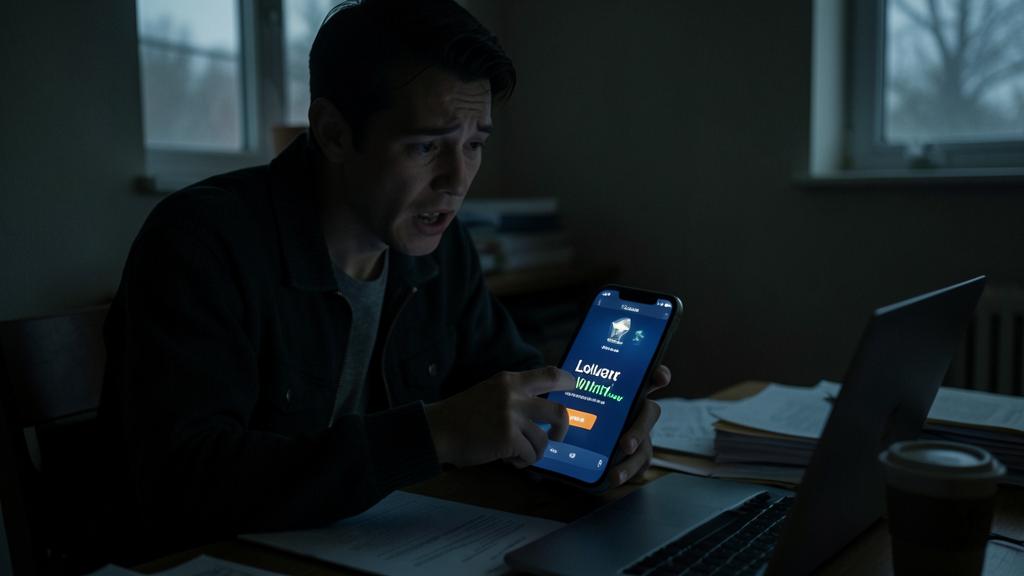
What to do if I already paid or gave my information?
React quickly: immediately contact your bank (stop payment, monitoring), change your passwords, report the scam and file a complaint; and above all, don’t pay anything else. Quickness limits the damage. Let’s see the steps. NO MORE payments: first, STOP all payments; don’t pay any more “fees” (the scammer will demand others); cut short; don’t throw more money into the trap; stop immediately. Contact your BANK: if you paid or gave your banking details, IMMEDIATELY contact your bank (official number); report, ask for advice, make a stop payment/monitor or block the card if needed; the bank can sometimes act; act quickly. MONITOR your accounts: closely monitor your bank statements; watch for any suspicious withdrawal or operation; report them to the bank; post-incident vigilance limits losses; stay attentive. CHANGE your passwords: if you gave login details or information allowing access to accounts, change these passwords; secure your accounts; activate two-factor authentication; protect what can be. REPORT and file a COMPLAINT: report the scam to the competent authorities and platforms, and file a complaint; this can help (investigation, possible refund) and protects others; the official procedure makes sense; declare. KEEP the PROOFS: keep the messages, emails, payment proofs, exchanges; they will serve for the complaint and the bank; don’t delete everything before having the proofs; document the scam. BEWARE of “recoverers”: attention to a second scam; scammers contact victims promising to “recover” the lost money (for payment); it’s a new scam; don’t fall into a second trap; beware. TALK about it, don’t be ashamed: talk to a loved one, your bank, the authorities; these scams deceive even the cautious, don’t feel guilty; shame prevents action; the important thing is to react, not to blame yourself. PROTECT the future: learn from it; beware of future solicitations (you could be retargeted, scammers share victim lists); strengthen your vigilance; experience protects for the future. The ADVICE: if you paid or gave your info, stop all payments, quickly contact your bank (stop payment, monitoring), change your passwords, report and file a complaint (keeping the proofs), beware of fake “recoverers,” and don’t be ashamed to talk about it. In summary, if you already paid or gave your information, don’t panic but react QUICKLY, because quickness limits the damage. First, STOP all payments: don’t pay any more “fees” (the scammer will always demand others). Then, IMMEDIATELY contact your bank (via its official number) if you paid or communicated your banking details: report the situation, make a stop payment or monitor/block your card if necessary, and closely monitor your statements in the following days. If you gave login details, CHANGE the concerned passwords and activate two-factor authentication. REPORT the scam to the competent authorities and platforms, and FILE A COMPLAINT: keep all PROOFS (messages, emails, payment proofs) that will serve for these procedures. Beware of a FREQUENT SECOND SCAM: scammers contact victims promising to “recover” the lost money for payment — it’s a new trap, don’t fall for it again. Finally, don’t BE ASHAMED: these scams are designed to deceive and trap even cautious people; talk to your loved ones and the authorities, the important thing is to act. And stay vigilant for the future, as victims are often retargeted (scammers share their lists). A quick and methodical reaction, without shame, is the best way to limit the consequences.

Why do these scams often target the elderly?
Because they are perceived as more vulnerable: sometimes less aware of these traps, more sensitive to the hope of a win, more trusting, and easier to isolate; hence the importance of raising their awareness and staying in touch. Let’s explain. Perceived as more VULNERABLE: scammers target the elderly because they consider them easier to deceive; a “profitable” target in their eyes; it’s a cynical but real targeting; hence the need to protect them. Sometimes less AWARE: some elderly people know less about these modern scams (email, SMS); they don’t always have the reflexes of suspicion; awareness fills this gap; explain the traps to them. More SENSITIVE to hope: the hope of a win can touch more in case of financial difficulties, loneliness, or desire to help loved ones; emotion is stronger; the scam exploits this sensitivity; a powerful trigger. More TRUSTING: a generation sometimes more inclined to trust (an “official” letter, a polite interlocutor on the phone); this trust is exploited; scammers play politeness and seriousness; trust becomes a flaw. Easier to ISOLATE: lonely people have fewer loved ones to alert them; the scammer asks for “secrecy” to reinforce this isolation; without an outside look, the illusion holds; isolation is exploited (we’ll come back to it). The STAKES of SAVINGS: the elderly may have savings; the financial stake for the scammer is real; the losses can be dramatic (lifetime savings); protection is all the more important. RAISE THE AWARENESS of your loved ones: the best protection; explain to your elderly loved ones these scams, the golden rules, tell them to never pay nor give their info, and to TALK TO YOU; awareness prevents; talk to them about it. STAY in TOUCH: keep regular contact; isolation is the breeding ground for these scams; a loved one to talk to breaks the illusion; social bond protects; be present. Instill the REFLEX to talk: encourage them to ask your advice as soon as they receive a win announcement, a strange call, a payment request; “in doubt, we talk about it”; this reflex foils the isolation sought by the scammer; instill it. Help without INFANTILIZING: protect with respect, without infantilizing; explain, dialogue, value their vigilance; benevolent protection is more effective than reproaches; accompany with tact. The ADVICE: the elderly are targeted because perceived as more vulnerable (less aware, more sensitive, more trusting, more isolated); protect them by raising their awareness of the rules, staying in touch, and instilling the reflex to talk. In summary, these scams often target the elderly because they are perceived as more VULNERABLE targets, for several reasons that combine: they are sometimes less AWARE of these modern traps (and don’t always have the reflexes of suspicion); they can be more SENSITIVE to the hope of a win (especially in case of financial difficulties, loneliness, or desire to help their loved ones); they are often more TRUSTING (towards an “official” letter or a polite interlocutor, a trust that scammers exploit); and they are easier to ISOLATE (lonely people have fewer loved ones to alert them, and the scammer reinforces this isolation by demanding “secrecy”). The stake is all the more serious as they may have savings, and the losses can represent a lifetime’s savings. The best protection is therefore double: RAISE THE AWARENESS of your elderly loved ones (simply explain these scams and the golden rules — “you don’t win without playing,” “a real win is never paid for” —, tell them to never pay nor give their details, and to talk to you), and STAY IN TOUCH with them (isolation is the breeding ground for these scams: a loved one to talk to breaks the illusion). Instill the reflex “in doubt, we talk about it in the family,” which directly foils the isolation sought by the scammer. Do it with respect and benevolence, without infantilizing: by dialoguing and valuing their vigilance, you protect them much better than by worrying or scolding them. Your attention can save them from a scam with sometimes dramatic consequences.
What to remember
The lottery and fake win scam is one of the oldest and most widespread, and it remains effective because it plays on a powerful trigger: the DESIRE to believe in good news. Its principle: you are told about a win (lottery, draw, gift) or an unexpected inheritance, while you didn’t play or have nothing to expect; but this fake good news is just a BAIT. The real goal is to EXTRACT money from you (via fake “fees” to pay to “unlock” the win) or to steal your PERSONAL and banking DATA. It takes a thousand forms and comes through all channels (email, SMS, call, networks, mail). Fortunately, two simple and uncompromising rules expose it for sure, no matter its form: first, YOU NEVER WIN A LOTTERY YOU DIDN’T PLAY IN (if you didn’t participate, it’s a 100% scam; same for an “inheritance” from a stranger or an “unsolicited gift”); second, A REAL WIN IS NEVER PAID FOR TO BE RECEIVED (as soon as you are asked to pay “fees” or give your banking details to “receive” a win, it’s the trap — the “fees” are the money they steal from you, and the win doesn’t exist). These two rules constitute an infallible test: apply them systematically, and no fake win announcement will trap you, no matter how convincing and “official” it may seem in appearance (scammers perfectly imitate real organizations: rely on the content, not the form). The reaction is simple: don’t respond, don’t contact the indicated “agent,” NEVER PAY, never give your data, don’t click on any link, delete the message and report the scam. Beware of the excitement that dulls suspicion (apply the rules coldly), and talk to a loved one in case of doubt — because the scammer precisely demands “secrecy” to isolate you and prevent someone from warning you. An essential human point of vigilance: protect VULNERABLE LOVED ONES (elderly and isolated), privileged targets of these scams because perceived as easier to deceive and isolate, and for whom the losses can represent a lifetime’s savings. Raise their awareness of the golden rules, tell them to never pay nor give their details, stay in touch with them, and instill the reflex “in doubt, we talk about it in the family” — all with benevolence, without infantilizing. Finally, if the damage is done (you paid or gave your information), react QUICKLY and without shame: stop all payments, contact your bank, change your passwords, report and file a complaint (keeping the proofs), and beware of fake “recoverers” who promise to recover the lost money (a second scam). In short, this scam, despite its ability to make you dream, is actually easy to foil: keep in mind that if it’s too good to be true, it’s fake, apply the two golden rules, never pay anything for a win, and protect your most fragile loved ones. Lucidity in the face of excitement is your best defense.


Doubt about your security, a device to check or clean? Our assistance service guides you step by step.
Leave a Reply
You must be logged in to post a comment.