
Artificial Intelligence (AI) is making a notable entry into healthcare and medicine: diagnostic assistance, medical image analysis, research acceleration, tools for doctors, patient assistants. The promises are immense — earlier detection, better treatment, relief for caregivers. But the healthcare field, where the stakes are vital, also calls for caution: reliability, errors, medical data privacy, the place of the human. Let’s take stock of AI in healthcare: its real promises and the necessary precautions, with discernment.
AI in healthcare: what are we talking about?
Let’s clarify what AI covers in the healthcare field. The PRINCIPLE: AI (programs capable of analyzing huge amounts of data, recognizing patterns, “predicting”) is applied to medicine to assist with various tasks; it does not “think” like a doctor, but it can process large amounts of information and detect things difficult to see for humans (see our guides to understanding AI). USAGES in healthcare: DIAGNOSTIC assistance (analyzing data to help identify a disease); medical IMAGE analysis (X-rays, scans, MRIs: AI can help detect anomalies, lesions, sometimes earlier or more precisely); RESEARCH acceleration (drug discovery, scientific data analysis); TOOLS for caregivers (assistance, decision support, administrative task relief); PATIENT monitoring (connected health devices, vital sign monitoring); PATIENT assistants (information, guidance — with caution); PERSONALIZED medicine (adapting treatments to patient data); prevention (identifying risks). What CHANGES: AI does not replace the doctor, but can ASSIST (as an additional tool), save time, help detect or decide; it can also give the general public access to health information (with the limits that implies). The PROMISES: detect diseases EARLIER (thus treat them better), analyze more PRECISELY, relieve overburdened caregivers, accelerate research, personalize care, improve information access; these promises are real and hopeful. The NECESSARY CAUTION: but healthcare is a field where the stakes are VITAL; errors can be serious; hence the need for caution: AI is not infallible (it can make mistakes, “hallucinate”), medical data is extremely sensitive (privacy), and the place of the HUMAN (the doctor, the care relationship) remains essential; you cannot apply AI to healthcare as you would to a trivial field. The CURRENT STATE: AI in healthcare is developing rapidly; some applications are already in use (image analysis, in particular), others are in research or emerging; it’s a field in full evolution, between real advances and necessary caution. What to remember to start: AI in healthcare covers many uses (diagnostic assistance, image analysis, research, tools for caregivers, patient monitoring and information); its promises are immense (earlier detection, better treatment, caregiver relief), but the field, with its vital stakes, calls for caution (reliability, errors, sensitive data, the place of the human); approach this with discernment, between hope and vigilance.
The real promises of AI in healthcare
AI holds real hope for healthcare; here are its most promising contributions. EARLY detection and IMAGE analysis: one of the most advanced uses; AI can help analyze medical images (X-rays, scans, MRIs, screening images) and DETECT anomalies, sometimes earlier, more precisely, or by assisting the doctor’s eye; detecting a disease EARLIER often means treating it better; this is a concrete and promising contribution, like a “second opinion” that helps the specialist. DIAGNOSTIC assistance: by analyzing many data points (symptoms, tests, medical history), AI can HELP the doctor consider leads, spot signs, cross-reference information; a decision-support tool, in support of medical judgment. Acceleration of MEDICAL research: AI can analyze vast amounts of scientific data, assist in drug discovery, disease understanding; it speeds up research, with hopes for new treatments. RELIEF for caregivers: AI can lighten tasks (administrative, repetitive analyses), allowing caregivers to focus on patients; in a context of overburdened healthcare systems, this is precious. PERSONALIZED medicine: adapting treatments and follow-up to each patient’s specific data; more targeted care. MONITORING and prevention: tools (connected health devices, apps) can help monitor vital signs, spot risks, encourage prevention; useful for chronic diseases, remote monitoring. ACCESS to information: AI can give the general public easier access to health information, guide (with great precautions: this is not a diagnosis — see below). ASSISTANCE in underserved areas: AI could help where access to doctors is limited (assisted telemedicine, screening aid). The IMPORTANT POINT: in all these uses, AI is a TOOL at the service of caregivers and healthcare, not a doctor replacement; it assists, accelerates, detects, but the decision and care remain human; it’s like a very powerful instrument in the hands of professionals. MEASURED HOPE: these promises are real and hopeful (better detection, accelerated research, relieved caregivers, personalized care), and some are already being realized; but not all are yet mature, and caution accompanies the advances. In summary: AI in healthcare holds real promises — early detection and fine analysis of medical images (the most advanced use), diagnostic assistance, research acceleration, caregiver relief, personalized medicine, monitoring and prevention, better access to information; in all these uses, AI is a POWERFUL tool at the service of professionals and patients, not a doctor replacement; these hopes are real, some are being realized, but come with necessary caution.
AI helps doctors by analyzing data and images faster than humans, but it’s not perfect. Think of it like a super-smart assistant that can spot patterns in X-rays or suggest possible diagnoses, but the doctor still makes the final decisions. It’s like having a calculator that helps with math but doesn’t replace your teacher.
In 2023, an AI system called Lunit INSIGHT detected early-stage lung cancer in CT scans with 97% accuracy, matching the performance of experienced radiologists. This helped doctors identify tumors that might have been missed in busy hospitals, showing how AI can be a valuable second pair of eyes.
The right framework: AI as a TOOL at the service of caregivers, not as a doctor replacement. To understand AI in healthcare without fantasy or excessive fear, keep the right framework in mind: AI is a TOOL, powerful, at the SERVICE of caregivers and patients; it does NOT replace the doctor, human judgment, or the care relationship. This is the key to properly situating its role. What AI does WELL: analyze huge amounts of data, spot patterns or anomalies difficult to see for the human eye (for example on medical images), cross-reference information, speed up tasks; on these points, it can provide REAL ASSISTANCE: a “second opinion” for the radiologist, decision support for the doctor, time savings on repetitive tasks, research acceleration. But it’s the DOCTOR who interprets, decides, treats, and accompanies the patient; AI proposes, humans dispose; clinical judgment, listening, empathy, and responsibility remain human. This framework is ESSENTIAL for several reasons: AI is not infallible (it can make mistakes; in healthcare, an unchecked error can be serious); medicine is not just about data (it involves the patient in their entirety, the context, the relationship); and the RESPONSIBILITY for care must remain human. The best use of AI in healthcare is therefore COLLABORATIVE: AI assists the professional, who retains control and judgment; this is how we get the best of AI’s power (detection, analysis, speed) while keeping human safeguards (verification, judgment, responsibility, relationship). For the general public, this framework has an important practical consequence: AI health information tools (chatbots, online symptoms) can INFORM or guide, but do NOT diagnose and do NOT replace a medical consultation; do not self-diagnose or self-treat based solely on AI; consult a professional (see the warning). By keeping this framework — AI as a powerful tool at the service of caregivers, never as a doctor replacement — we properly situate the promises (real) and limits (important) of AI in healthcare; this is the condition for reaping the benefits without the dangers; neither technophobia that would deprive us of its contributions, nor blind trust that would neglect human safeguards; the balance is in human-machine collaboration, for the patient’s benefit.
Precautions: reliability, data, the place of the human
The healthcare field, with its vital stakes, calls for particular precautions; let’s examine them. RELIABILITY and ERRORS: AI is NOT infallible; it can MAKE MISTAKES, “hallucinate” (produce false information with confidence — see our guides on AI limits), overlook things, or reflect BIASES (if trained on biased data, it may make more mistakes on certain populations); in healthcare, an error can have SERIOUS consequences; hence the need for AI to be VERIFIED and validated by humans (caregivers), and to serve as ASSISTANCE, not as the final decision-maker; medical AI tools are (or should be) rigorously evaluated and regulated before use. MEDICAL DATA PRIVACY: MAJOR issue; health data is among the most SENSITIVE (it touches on the intimate, can have consequences if disclosed: insurance, employment, discrimination); AI in healthcare often requires huge amounts of data; their protection, confidentiality, and regulated use are CRUCIAL; strict guarantees are needed on who accesses what and how; for the patient: be attentive to what happens to your health data (see our guides on protecting your health data). The place of the HUMAN: medicine is not just about data and algorithms; it involves LISTENING, empathy, the trust relationship, considering the patient in their entirety and context, clinical judgment; AI does not replace this HUMAN dimension of care, which is essential; we must ensure that AI remains a tool that SUPPORTS caregivers, without dehumanizing care or distancing the patient from their doctor. RESPONSIBILITY: in case of error, who is responsible? This question (the professional, the tool, the manufacturer?) is complex and important; the responsibility for care must remain clearly human and regulated. REGULATION and oversight: AI in healthcare must be RIGOROUSLY evaluated, validated, and regulated (before being used on patients); this is not a field where unverified tools can be deployed; regulatory frameworks exist and are developing; this is reassuring, but vigilance remains necessary. The general public and SELF-DIAGNOSIS: public AI tools (health chatbots, symptom searches) can inform, but DO NOT replace a doctor; they can make mistakes, unnecessarily alarm, or falsely reassure; do not SELF-DIAGNOSE or self-treat based solely on them; always consult a professional for a real health issue (see the warning). BALANCE: we must welcome the real contributions of AI in healthcare (detection, research, caregiver assistance) WITHOUT naivety (reliability, biases, errors), while protecting sensitive data, keeping the human at the center, and with rigorous oversight; neither technophobia nor blind trust; discernment. In summary: the essential precautions concern RELIABILITY (AI makes mistakes: it must be verified by humans and remain an aid, not a decision-maker), PRIVACY of health data (extremely sensitive: crucial protection), the place of the HUMAN (care is not just about data; listening and medical judgment remain essential), RESPONSIBILITY, RIGOROUS oversight; and for the general public, never self-diagnose based solely on AI (consult a professional); these precautions are indispensable in a field with vital stakes.
Warning: never self-diagnose based solely on AI — AI is not infallible and does not replace a doctor. The MOST important point for the general public: never REPLACE a medical opinion with AI. Public AI tools (health chatbots, online symptom searches, assistants) can provide general information, but they DO NOT provide a reliable diagnosis and DO NOT replace a medical consultation: they can be WRONG, “hallucinate” (provide false information with confidence), unnecessarily ALARM you (make you believe you have a serious illness when it’s nothing), or falsely REASSURE you (downplay a real problem); relying on AI to self-diagnose or self-treat is DANGEROUS; for any real health problem, a concerning symptom, or doubt, CONSULT a healthcare professional (doctor); AI can, at best, provide general information or encourage you to consult, but never replace a doctor’s diagnosis and follow-up. Never FOLLOW a “treatment” or important health advice based solely on AI (or the internet in general); consult. AI is NOT INFAILLIBLE, even in professional use: it can make mistakes, reflect biases; that’s why, in healthcare, it must be a TOOL verified and validated by humans (caregivers), not the final decision-maker; serious medical AI tools are rigorously evaluated and regulated; beware of unverified tools. Protect your HEALTH DATA (extremely sensitive): your health data is among the most sensitive (possible consequences if disclosed: insurance, employment, discrimination); be attentive to what happens to your data when you use health apps or services (what do they collect? with whom do they share?); only trust your data to serious and regulated actors; beware of dubious health apps that might collect and exploit these sensitive data (see our guides on protecting your personal data). Beware of FALSE health information and scams: the internet and AI also spread medical misinformation, “miracle cures,” scams; in healthcare, misinformation can be dangerous; trust reliable medical sources and your doctor, not just any online information (see our guides on informing yourself and recognizing false information). Keep the place of the HUMAN and the care relationship: AI is a tool, but the relationship with your doctor, listening, and clinical judgment remain essential; don’t let technology dehumanize your approach to health; your doctor knows you, in your entirety. In case of EMERGENCY or serious symptom: don’t waste time with AI, contact the appropriate medical services. In summary: never self-diagnose or self-treat based solely on AI (consult a professional); AI is not infallible (it must be verified by humans); protect your health data (extremely sensitive); beware of medical misinformation; and keep the human (your doctor) at the center of your health; these precautions are vital in a field where the stakes are too.
Frequent questions
Will AI replace doctors?
No: AI is a TOOL at the service of doctors, not a replacement. This is a common fear (or fantasy), but reality is different: AI can HELP caregivers (analyze images, cross-reference data, spot anomalies, lighten tasks, accelerate research), like a powerful instrument; but it does NOT replace the doctor, for several fundamental reasons. Medicine is not just about DATA and algorithms: it involves LISTENING to the patient, empathy, the trust relationship, considering the person in their entirety (their history, context, feelings), clinical judgment, shared decision-making; AI cannot replace this HUMAN dimension of care, which is essential. AI is not INFAILLIBLE: it can make mistakes, “hallucinate,” reflect biases; in healthcare, where the stakes are vital, its results must be VERIFIED and validated by humans; it’s the doctor who interprets, decides, and assumes responsibility. The RESPONSIBILITY for care must remain human and regulated. Therefore, the role of AI is to ASSIST the doctor (diagnostic aid, “second opinion” on an image, time savings), not to replace them; AI proposes, the doctor disposes; this is a HUMAN-MACHINE collaboration, where the human retains control and judgment. That said, AI will probably TRANSFORM certain medical practices (help caregivers, change certain tasks, improve detection), like any powerful tool; but “transform” is not “replace”; the doctor will remain at the center of care, with AI as an aid. For the patient: this means you will continue to be followed by a doctor (human), possibly assisted by AI tools; and you must NOT replace your doctor with AI (don’t self-diagnose based solely on a tool: consult a professional). In summary: no, AI will not replace doctors; it is a powerful tool that helps them (detection, analysis, time savings), but judgment, listening, responsibility, and the care relationship remain human; the future lies in collaboration between AI and caregivers, for the patient’s benefit, not in replacing the doctor.
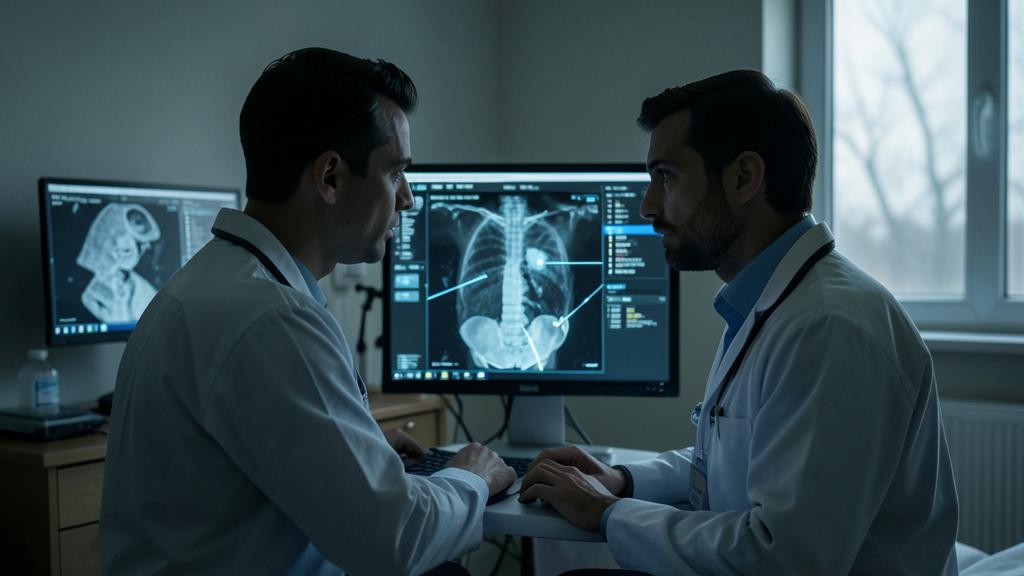
Can I trust AI for a health problem?
No, not for a real health problem: always consult a professional. Public AI tools (health chatbots, online symptom searches, assistants) can provide GENERAL INFORMATION, but they do NOT replace a doctor, and you must not rely on them to diagnose or treat a health problem. Why? AI can be WRONG: it can “hallucinate” (provide false information with confidence), overlook things, misinterpret; in healthcare, an error can be serious. It does NOT KNOW you: a medical diagnosis requires an examination, your history, your context, a professional’s judgment; an AI to which you describe symptoms cannot examine you or grasp your overall situation. It can unnecessarily ALARM you (make you believe you have a serious illness for a minor symptom) or falsely REASSURE you (downplay a real problem); both are dangerous. What can AI do, then? At best, provide general information on a health topic (for reference), or ENCOURAGE you to consult; it can be a starting point for information, but NEVER a substitute for a doctor’s diagnosis and follow-up. What you must DO: for any real health problem, concerning symptom, doubt, or health decision, CONSULT a healthcare professional (your doctor); do not self-diagnose and do not self-treat based solely on AI or the internet; never FOLLOW a “treatment” or important advice found online without medical advice. In case of EMERGENCY or serious symptom: do not waste time with AI, immediately contact the appropriate medical services. Also beware of MEDICAL MISINFORMATION and “miracle cures” (AI and the internet spread them; in healthcare, this is dangerous); trust reliable sources and your doctor. In summary: no, do not trust AI for a real health problem; it can inform or guide, but does not diagnose or treat; it is not infallible and does not know you; for your health, always consult a professional; AI never replaces your doctor.

Are my health data protected with AI?
This is a MAJOR issue: health data is extremely sensitive and their protection is crucial, but depends on the seriousness of the actors. Your health data is among the most SENSITIVE: it touches on your privacy, and its disclosure could have consequences (on your insurance, employment, privacy, even discrimination); it is therefore essential that they be well protected. The problem: AI in healthcare often requires huge amounts of data; hence the CRUCIAL importance of their protection, confidentiality, and strictly regulated use (who accesses what, for what purpose, with what guarantees). In the OFFICIAL MEDICAL framework (hospitals, healthcare professionals, validated tools): health data are normally subject to strict protection and confidentiality rules (medical secrecy, regulations on health data, such as the GDPR reinforced for these sensitive data); serious medical AI tools are (or should be) rigorously regulated on this point; this is reassuring, even if vigilance remains necessary. The risk mainly comes from PUBLIC APPS and services: when you use health, wellness, monitoring apps, or health chatbots, be ATTENTIVE to what they do with your data: what do they collect? with whom do they share? do they sell them? these sensitive data can be commercially exploited by unscrupulous actors; only trust your health data to SERIOUS and transparent actors; beware of dubious health apps; read what you agree to; check the permissions and privacy policies (see our guides on protecting your personal data / checking permissions). Your RIGHTS: you have rights over your health data (access, protection); inform yourself. What to do concretely: in the official medical framework, trust professionals and regulatory frameworks (while being informed of your rights); for public apps, be prudent and selective (serious actors, verification of what is collected). In summary: the protection of your health data is a major issue, as they are extremely sensitive; in the official medical framework, they are normally well regulated (medical secrecy, strict regulations); the risk mainly comes from public apps: be attentive to what they do with your data, and only trust them to serious actors; vigilance over your health data is essential with AI as with any health technology.
What to remember
AI in healthcare covers many uses: DIAGNOSTIC assistance, medical IMAGE analysis (X-rays, scans: the most advanced use; detecting anomalies, sometimes earlier), RESEARCH acceleration, tools to RELIEVE caregivers, personalized medicine, monitoring and prevention, better access to information. Its PROMISES are immense and real: detect earlier (thus treat better), analyze more precisely, relieve overburdened caregivers, accelerate research; some are already being realized. The RIGHT FRAMEWORK to understand: AI is a POWERFUL TOOL at the SERVICE of caregivers, NOT a doctor replacement; it assists, accelerates, detects, but clinical judgment, listening, decision-making, responsibility, and the care relationship remain HUMAN; the future lies in human-machine collaboration (AI proposes, the doctor disposes), for the patient’s benefit. But the field, with its VITAL stakes, calls for MAJOR PRECAUTIONS: RELIABILITY (AI is not infallible: it makes mistakes, “hallucinates,” can reflect biases; it must be verified by humans and remain an aid, not a decision-maker; serious medical tools are rigorously regulated); PRIVACY of HEALTH DATA (extremely sensitive: their protection is crucial; in the official medical framework they are regulated, but beware of public apps that might collect these data); the place of the HUMAN (care is not just about data; do not dehumanize). VITAL POINT for the general public: never self-diagnose or self-treat based solely on AI (health chatbots, online symptoms); they can inform or guide, but do not diagnose, can be wrong (unnecessarily alarm or falsely reassure), and do not replace a doctor; for any health problem, CONSULT a professional; in case of emergency, contact medical services, not AI. Beware of MEDICAL MISINFORMATION and “miracle cures” (dangerous in healthcare: trust reliable sources and your doctor), and protect your health data. Approach AI in healthcare with DISCERNMENT: neither technophobia (which would deprive us of its real contributions), nor blind trust (which would neglect human safeguards); the balance is in AI as a tool at the service of caregivers, with the human at the center, protected data, and rigorous regulation; this is how we reap the benefits of its promises (detection, research, caregiver assistance) while preserving the safety and humanity of care.
Want to understand and master the technologies changing your daily life? Our training programs will enlighten you.
Leave a Reply
You must be logged in to post a comment.