
In some areas — remote countryside, mountains, places poorly served by ADSL or fiber — accessing decent internet remains a challenge. A solution has developed: SATELLITE INTERNET. Thanks to satellites, you can receive internet almost anywhere, including where no other solution works. But who is it really for, how does it work, and what are the limitations (cost, installation, performance)? Let’s take stock, without preconceived ideas, of satellite internet: who it is for and why.
How does satellite internet work?
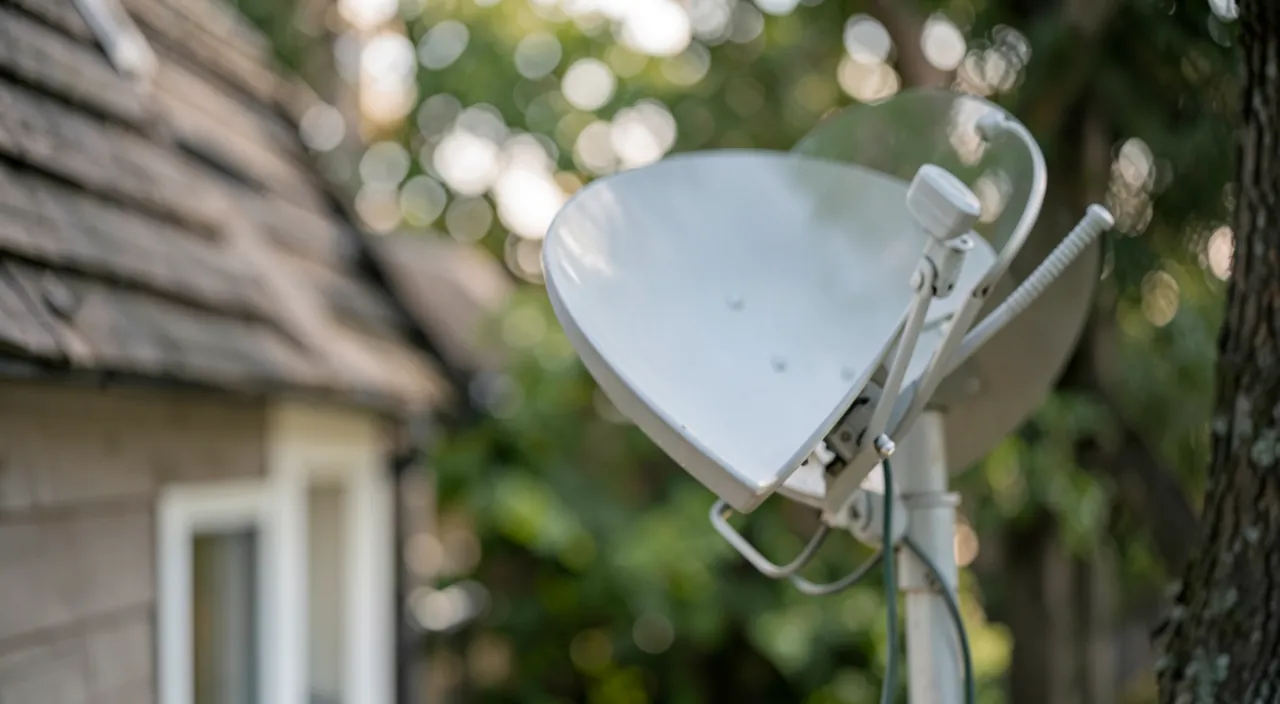
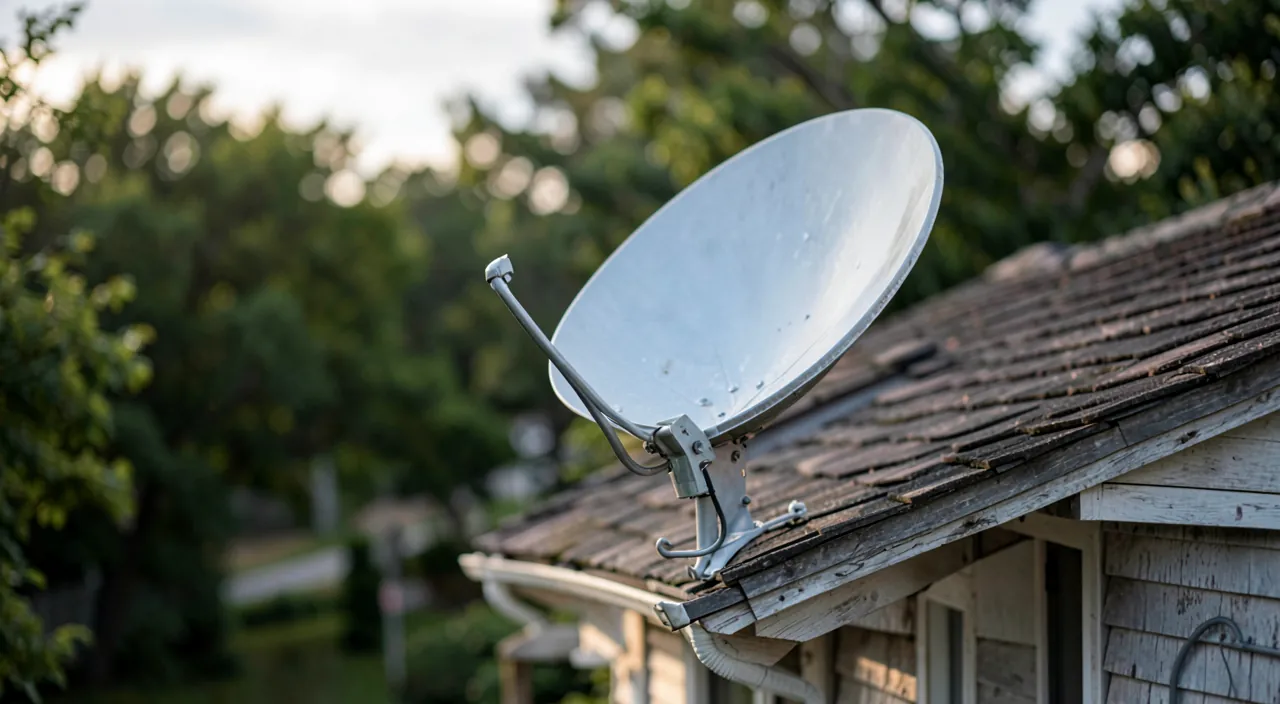
Let’s understand the PRINCIPLE of this technology that brings the internet where others fail. The PRINCIPLE: instead of going through cables (ADSL, fiber) or mobile networks, satellite internet routes your connection through SATELLITES in orbit; you install an ANTENNA (a special dish) that communicates with the satellites; this connects to a box in your home, which provides you with WiFi/internet like a classic box. The MAJOR INTEREST: it works almost EVERYWHERE, including in areas without decent ADSL, without fiber, and sometimes without good mobile coverage; where no other solution provides decent internet, the satellite can; that’s its great strength. What has CHANGED: satellite internet has existed for a long time but was historically slow, expensive, and with a lot of « latency » (response delay); new generations of satellites (in lower orbit, more numerous) have greatly IMPROVED things: much better speeds, reduced latency; modern satellite internet has become a real option for everyday use where there was no other; it’s this recent evolution that brings it back to the forefront. Who is it FOR? Mainly for those who do NOT have access to good internet otherwise: inhabitants of RURAL or remote areas poorly served (no fiber, too slow or absent ADSL), mountain areas, ISOLATED places, secondary residences in white zones; but also: MOBILE or nomadic uses (camping-car, boat, construction sites, events in the middle of nature), professionals in uncovered areas, BACKUP solutions in case of failure of a wired connection; in short: where wired and mobile are not enough. What it allows: functional internet for everyday use (browsing, emails, video, video calls, remote work) in places that were deprived of it; for many white zones, it’s a real digital unplugging. What to remember to start: satellite internet routes your connection through satellites (via an antenna installed at your home), and works almost EVERYWHERE, including where ADSL, fiber, and mobile are not enough; new generations have greatly improved it (speed, latency); it is mainly for those who do not have good internet otherwise (rural/remote areas, mobile uses, backup); it’s an unplugging solution, with its advantages and limitations that we examine.
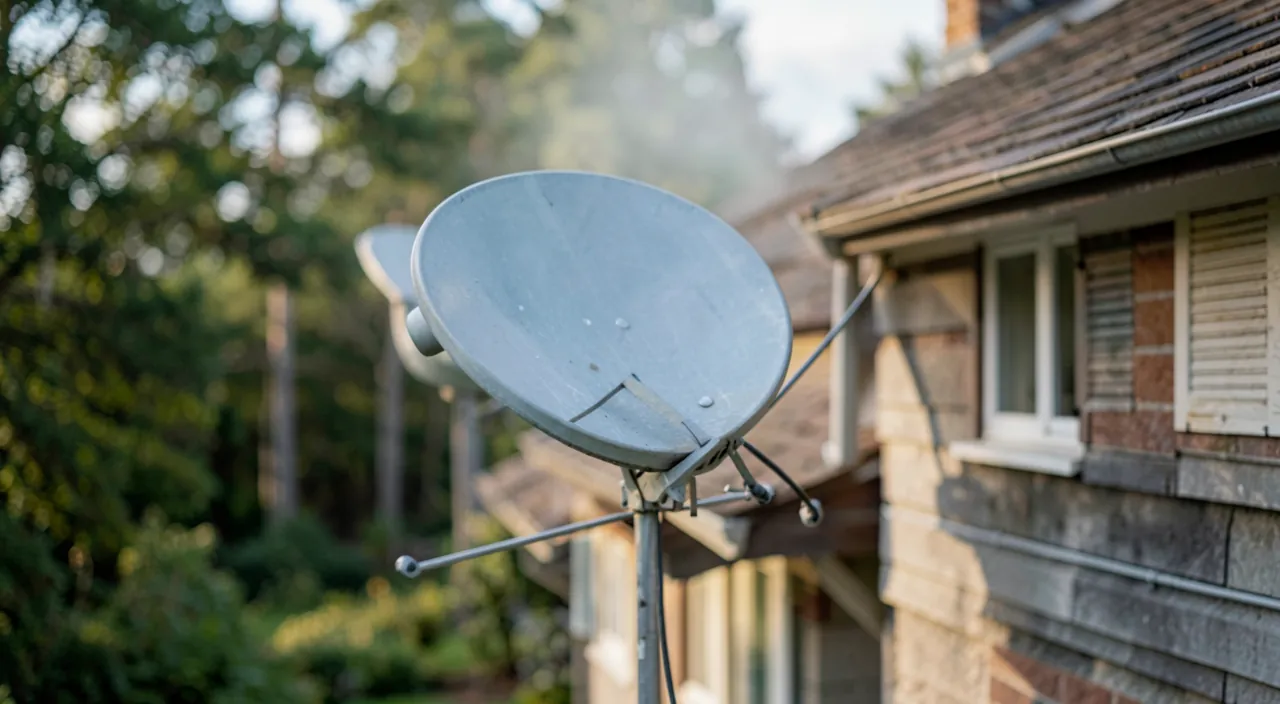
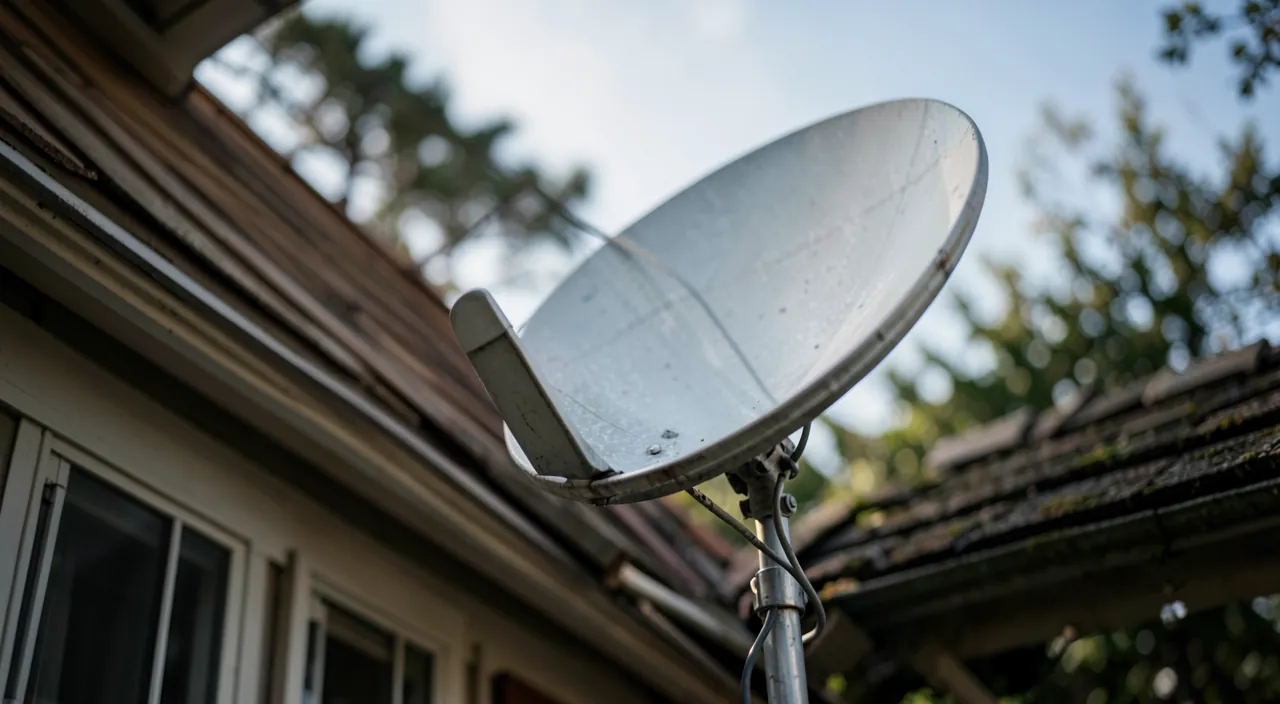
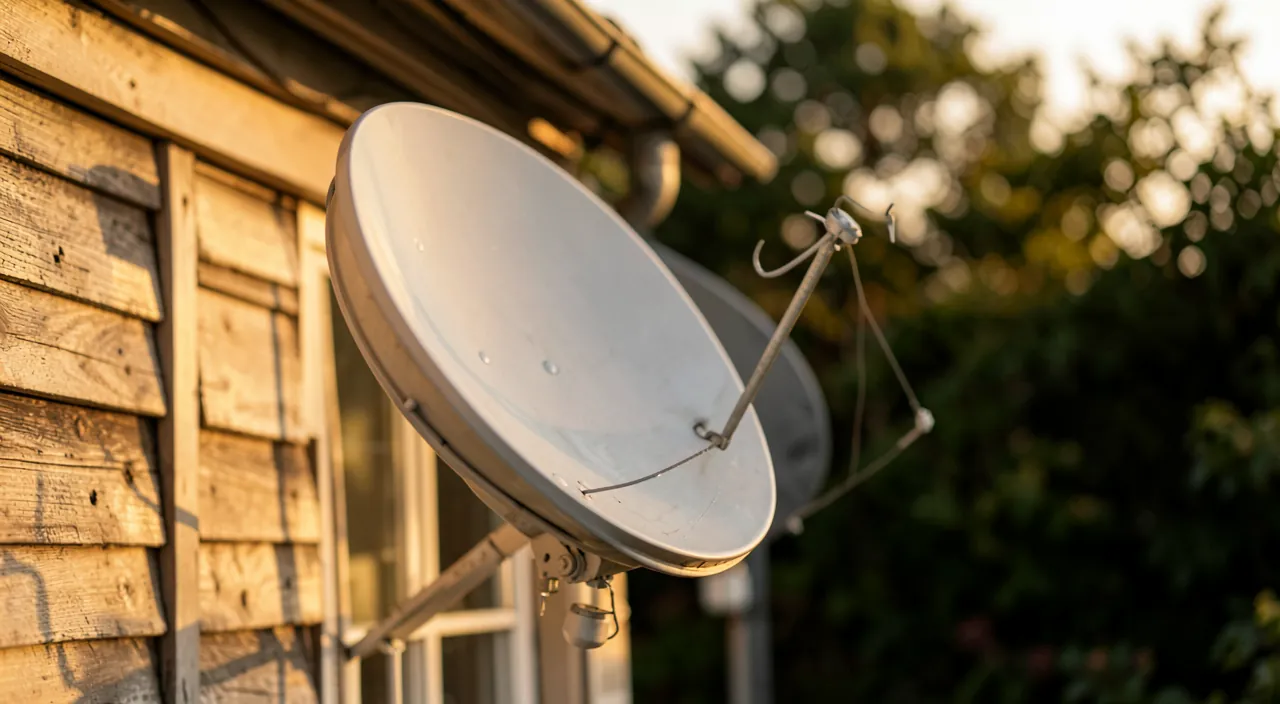
Satellite internet uses satellites to send internet signals to a dish on your roof. This lets you get internet almost anywhere, even in remote areas. It’s great for places where regular internet (like fiber or mobile) doesn’t work well, but it costs more and can be slower in bad weather.
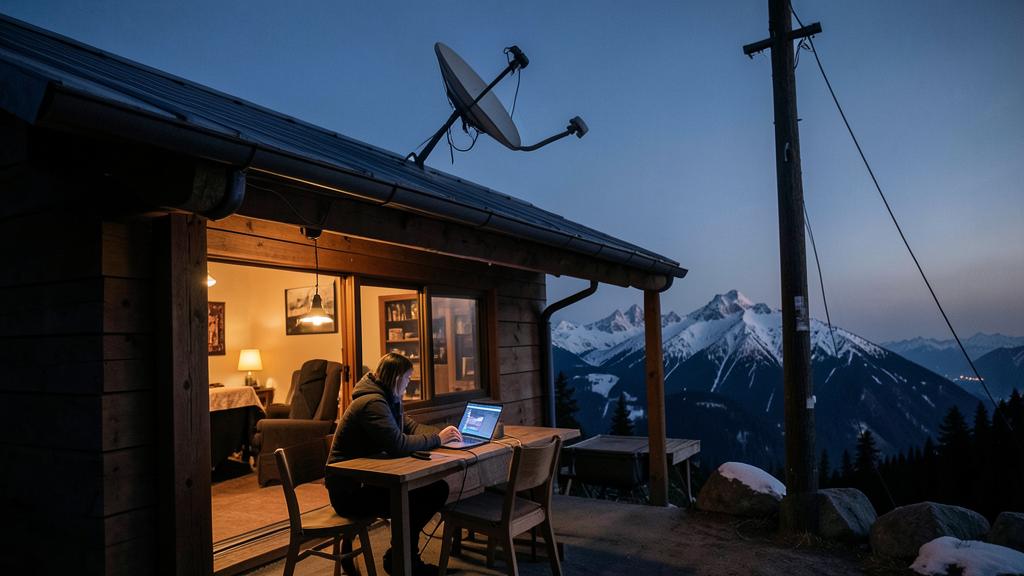
In a small village in the Alps with no fiber or mobile coverage, a family installs a satellite dish. They get speeds of 50 Mbps down and 10 Mbps up, enough for streaming and video calls, but sometimes the connection slows down during heavy snow. The total cost is €200 for the dish and €60/month for the subscription, which is more than fiber but the only option available.
For whom, and at what price? Advantages and limitations
Satellite internet has advantages and constraints that need to be weighed according to your situation. The ADVANTAGES: almost universal AVAILABILITY (works where nothing else does: that’s the BIG advantage; for a white zone, it’s often the only solution for decent internet); PERFORMANCES that have become decent (with the new generations: speeds allowing everyday use, including video and video calls, acceptable latency for many uses); relatively FAST installation (no need to pull cables: an antenna is enough); possible MOBILITY (some offers allow nomadic use). The LIMITATIONS and disadvantages: the COST — it is generally MORE EXPENSIVE than a classic wired connection: you have to buy/rent the equipment (the antenna and the box, an initial investment), and the monthly subscription is often higher than ADSL/fiber; to be evaluated according to your budget. The INSTALLATION: you have to install an antenna with a CLEAR view of the sky (no major obstacles: buildings, trees that block); the installation is generally simple, but requires a good location. The LATENCY: even reduced with the new generations, the latency (response delay) can remain a bit higher than wired; for most uses (browsing, video, video calls), it’s acceptable; for uses very sensitive to latency (some competitive online games, demanding real-time applications), it may be noticeable. The WEATHER: heavy weather (heavy rain, abundant snow) can sometimes temporarily disrupt the satellite connection (the signal passes through the atmosphere); effect generally limited, but existing. The DATA CONSUMPTION: some offers have data limits or usage rules; check. The DEPENDENCY on electricity: like any box, the equipment needs power. For WHOM is it the right choice? It is RELEVANT if: you are in a POORLY served area (no fiber, insufficient ADSL, poor mobile) and satellite is the best (or only) option for decent internet; you have a NOMADIC use in uncovered areas; you want a BACKUP solution. It is LESS RELEVANT if: you already have access to fiber or good ADSL (cheaper and often better: no need for satellite); the cost is a major obstacle and you have other options; your use is very sensitive to latency. How to DECIDE? First evaluate your ALTERNATIVES: do you have access (or soon) to fiber, to decent ADSL, to good mobile internet (sometimes a 4G/5G box is enough and costs less)? If so, prefer them; satellite is only relevant when other options are lacking or insufficient. In summary: satellite internet is mainly for those who do not have a good alternative (remote areas, nomadic uses, backup); its advantages: almost universal availability, performances that have become decent, fast installation; its limitations: higher cost (equipment + subscription), need for a clear view, slightly higher latency, weather sensitivity; evaluate your alternatives first: if you have fiber or good ADSL, stay with it; satellite shines when there’s nothing better.
The right question: do you have a better alternative than satellite? Before considering satellite internet, ask yourself the KEY question: « do I have access to a better alternative? ». Because satellite is an excellent solution WHEN there’s nothing better, but rarely the first choice if other options exist. Evaluate your alternatives in this order: 1) FIBER: if it is available (or soon) at your address, it is generally the BEST option (fast, reliable, cheaper than satellite); check its eligibility at your address; if you have fiber, no need for satellite. 2) DECENT ADSL: if you have sufficient ADSL for your uses, it may be suitable (and costs less than satellite); but in remote areas, ADSL is often too slow or absent. 3) MOBILE INTERNET (4G/5G box): often overlooked — if you have good mobile coverage (4G/5G) at your address, a « mobile box » (which uses the mobile network to provide home internet) can be an excellent alternative, often CHEAPER than satellite and sufficient; check the mobile coverage at your address; it’s an option to consider before satellite. 4) SATELLITE: if none of the above options work or are sufficient (no fiber, insufficient ADSL, poor mobile), THEN satellite becomes relevant: it’s often the only solution for decent internet in a white zone; that’s where it makes sense. In other words: satellite is the FALLBACK when wired and mobile are lacking, not the first choice. This approach avoids paying more (satellite generally costs more than a fiber or even mobile box) for a solution you may not need. If you live in a well-served area: fiber or ADSL is enough; satellite is of no interest to you. If you are in a POORLY served area: first check the 4G/5G box (if you have mobile coverage), then satellite if mobile is not enough; compare costs and performances. For NOMADIC use (camping-car, boat, isolated places) or BACKUP: satellite (or mobile depending on the case) has a specific interest. In summary: evaluate your alternatives BEFORE satellite (fiber > good ADSL > 4G/5G box if good mobile > satellite as a last resort); satellite is a great solution for white zones and nomadic uses, but not necessary if you have better; ask yourself the question of the alternative, compare costs and performances, and choose the most suitable and most economical solution for YOUR situation. Satellite shines by its availability where nothing else works: that’s where it’s worth its price.
Making the decision and equipping yourself properly
If satellite internet seems relevant to you, here’s how to make the right decision and equip yourself. CHECK that it’s the right option: first confirm that you don’t have a better alternative (fiber, decent ADSL, 4G/5G box if you have good mobile coverage — see above); satellite is mainly relevant in the absence of better. EVALUATE the location: check that you can install the antenna with a CLEAR view of the sky (no major obstacles: tall trees, buildings that would block the signal); this is essential for proper functioning. COMPARE the OFFERS and COSTS: find out about the available satellite internet offers; compare: the cost of the EQUIPMENT (antenna + box: purchase or rental; an initial investment), the MONTHLY SUBSCRIPTION (often higher than wired), the announced performances (speed, latency), any data limits, the conditions (commitment, etc.); evaluate all this according to your budget and needs. The INSTALLATION: it is generally RELATIVELY simple (install the antenna in the right place, connect it, configure); some offers are designed for user installation (with a guide), others offer professional installation; choose according to your comfort; the key point is the orientation of the antenna towards the clear sky. TEST your uses: once installed, check that the connection suits YOUR uses (browsing, video, video calls, remote work); for most everyday uses, modern satellite internet is suitable; for uses very sensitive to latency, check that it’s acceptable. Plan for SPECIAL CASES: weather (heavy weather can temporarily disrupt; effect generally limited), dependence on electricity (like any box); anticipate if you have critical needs. For NOMADIC use: some offers are designed for mobility (camping-car, boat); check that the offer allows it and the conditions. The BACKUP solution: satellite can serve as a backup connection if your main connection fails; useful for those who cannot afford a cut-off. Compare with the EVOLUTION of the network: in some areas, fiber or better solutions are gradually arriving; find out about deployment projects at your address; if a better option is coming soon, it may influence your choice (commitment, investment). The EVOLUTION of satellite itself: technology is progressing (speed, latency, price); what is true today will improve. In summary, to decide and equip yourself: first confirm that satellite is your best option (no fiber/good ADSL/good mobile); check the location (clear view of the sky); compare offers (cost of equipment, subscription, performances, data limits); manage the installation (often simple, or professional); test that it suits your uses; anticipate special cases (weather, electricity); and find out about the evolution of alternatives at your address; thus, you will make an informed and adapted choice.
Warning: higher cost, alternatives to check, and constraints (location, latency, weather). Satellite internet is a precious solution for poorly served areas, but a few points of vigilance avoid disappointments. The COST is generally HIGHER than a wired connection: you have to count the EQUIPMENT (antenna + box: an initial investment, for purchase or rental) AND a MONTHLY SUBSCRIPTION often higher than ADSL or fiber; evaluate this cost in relation to your budget and the value you get from it; don’t start without having compared the total cost (equipment + subscription + possible commitment). CHECK your ALTERNATIVES first: satellite is mainly relevant in the ABSENCE of better; if you have (or can have) FIBER, decent ADSL, or a 4G/5G box (if you have good mobile coverage at your address — often cheaper and sufficient option, not to be forgotten), these alternatives are generally preferable (cheaper, sometimes better); don’t pay for satellite if you have a better option; also find out about fiber deployment projects at your address (a better solution may be coming soon). The LOCATION of the antenna: you need a CLEAR view of the sky (no major obstacles: tall trees, buildings that block the signal); check that it’s possible at your address BEFORE committing; a bad location degrades the connection. The LATENCY: even reduced with the new generations, it can remain a bit higher than wired; for most uses (browsing, video, video calls, remote work), it’s acceptable; but for uses very sensitive to latency (some competitive online games, demanding real-time applications), it may be noticeable; if you have such uses, check that satellite is suitable. The WEATHER: heavy weather (heavy rain, abundant snow) can sometimes temporarily disrupt the connection (the signal passes through the atmosphere); effect generally limited, but to be aware of if you have critical continuity needs. The DATA LIMITS: some offers have data caps or usage rules (slowdown beyond a certain volume); check the conditions according to your consumption. The DEPENDENCY on electricity: like any box, the equipment needs power; in case of power outage, no internet (think about it if it’s critical). The COMMITMENT and conditions: read the conditions (duration of commitment, termination, cost of equipment in case of stop); beware of long commitments if you’re not sure. Beware of SCAMS and dubious solicitations: choose SERIOUS and recognized offers and operators; beware of offers that are too good or aggressive solicitations. Finally, keep in mind that technology EVOLVES (speed, latency, price improve); what is true today will change. By checking your alternatives (fiber, ADSL, mobile box) before satellite, comparing the total cost, confirming the location (clear view), and knowing the constraints (latency, weather, data, electricity, commitment), you will make an informed choice: satellite internet is an excellent solution WHEN there’s nothing better, provided you know the cost and limitations, and do not resort to it if a better alternative exists.
Frequent questions
Who is satellite internet for?
Mainly for those who do NOT have access to good internet otherwise: that’s where satellite really shines. The main people concerned: inhabitants of RURAL or remote areas poorly served (no fiber, too slow or absent ADSL, « white zones »); mountain or ISOLATED places; secondary residences in uncovered areas; for these situations, satellite is often the BEST, or even the ONLY solution for decent internet; it’s a real digital unplugging. Other audiences: NOMADIC or mobile uses in uncovered areas (camping-car, boat, construction sites, events in the middle of nature); professionals working in underserved locations; and as a BACKUP solution for those who cannot afford a cut-off of their main connection. In short, satellite is for those for whom wired (fiber, ADSL) and mobile are not enough or do not exist. ON THE OTHER HAND, it’s NOT the right choice if: you have access to FIBER (better and cheaper); you have sufficient decent ADSL for your uses; or you have good MOBILE coverage at your address (a 4G/5G box may then be enough, often cheaper than satellite); in these cases, these alternatives are preferable; satellite would be paying more without necessity. How to know if it’s for you: first check your alternatives (fiber eligibility at your address, ADSL quality, mobile coverage for a possible 4G/5G box); if none provide decent internet, satellite becomes a serious option to consider. In summary: satellite internet is for those who do not have a good alternative — poorly served rural/remote areas, mountains, isolated places, nomadic uses, backup; it’s a precious unplugging solution where nothing else works; but if you have fiber, decent ADSL, or good mobile, these options are preferable; check your alternatives first, and reserve satellite for situations where it is really the best (or only) solution.
Is it expensive and complicated to install?
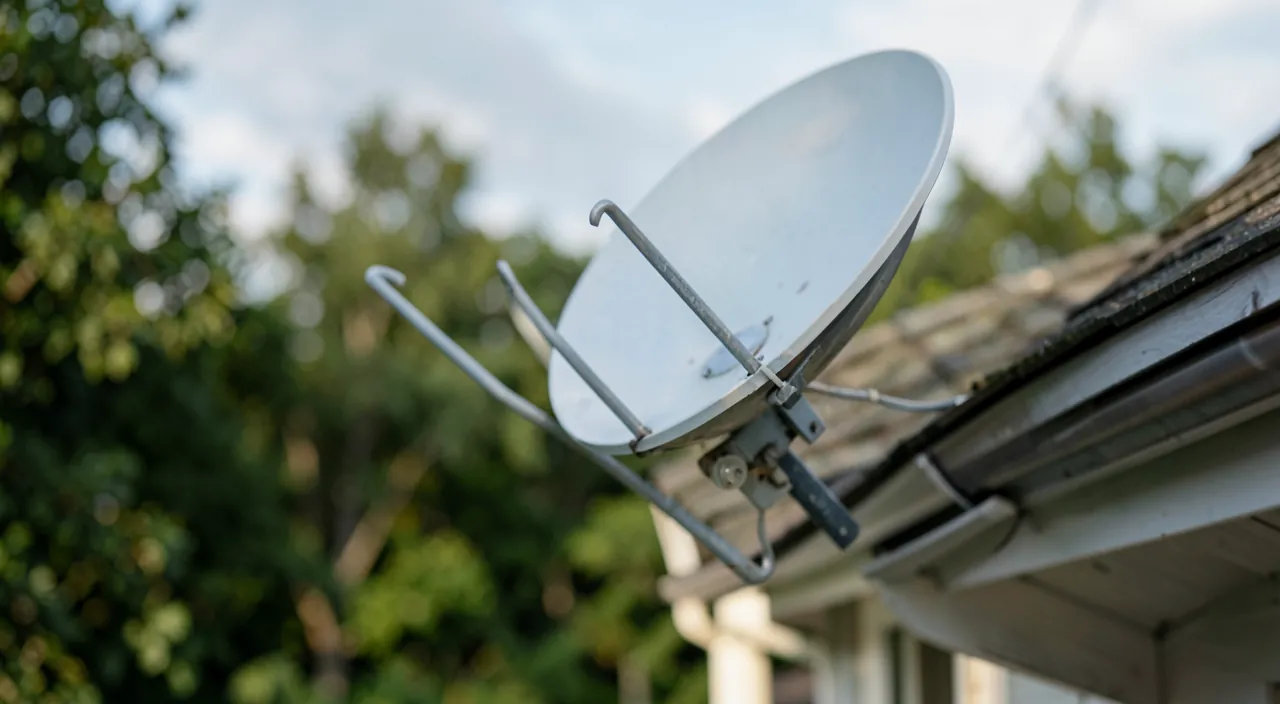
It is generally more expensive than a classic connection, but the installation is relatively simple. COST side: yes, satellite internet is generally MORE EXPENSIVE than a wired connection (ADSL, fiber); you have to count two things: the EQUIPMENT (the antenna and the box: an initial investment, for purchase or rental depending on the offers) and the MONTHLY SUBSCRIPTION (often higher than ADSL or fiber); that’s the main disadvantage of satellite; to be evaluated according to your budget; this extra cost is explained by the technology (satellites), and is justified mainly when there is no cheaper alternative that works. Compare the TOTAL COST (equipment + subscription + possible commitment) before deciding, and in relation to your alternatives. INSTALLATION side: it is generally RELATIVELY SIMPLE, and much faster than a wired connection (no need to pull cables; no work); it involves installing an ANTENNA (dish) with a CLEAR view of the sky (key point: no major obstacles like tall trees or buildings that would block the signal), connecting it to the box, and configuring; some offers are designed for USER INSTALLATION (with a clear guide, rather accessible), others offer PROFESSIONAL INSTALLATION; choose according to your comfort; the essential is the good location of the antenna (clear view). It’s therefore not very complicated technically (much less than fiber work), but it requires finding a good location and following the installation steps. In summary: yes, satellite internet is more expensive than a classic connection (initial equipment + higher monthly subscription: that’s its main disadvantage), but the installation is relatively simple and fast (an antenna with a clear view of the sky, often installable by yourself or by a professional); compare the total cost to your alternatives before committing, and check that you can install the antenna with a good view of the sky; the cost is the real obstacle, the installation less.
Is the satellite connection reliable and fast?
The new generations have become decent for everyday use, with a few nuances. PERFORMANCES: satellite internet was long slow, expensive, and with a lot of latency; but the NEW generations of satellites (in lower orbit, more numerous) have greatly IMPROVED things: speeds have become decent, allowing everyday use (browsing, emails, VIDEO streaming, VISIO, remote work), and latency has been reduced; for most everyday uses, modern satellite internet works well; it’s no longer the slow technology of the past. RELIABILITY: the connection is generally reliable for normal use; BUT a few nuances: the LATENCY (response delay), even reduced, can remain a bit higher than wired; acceptable for most uses, but may be noticeable for uses VERY sensitive to latency (some competitive online games, demanding real-time applications); the WEATHER: heavy weather (heavy rain, abundant snow) can sometimes temporarily disrupt the connection (the signal passes through the atmosphere); effect generally limited and occasional, but existing; the DATA LIMITS: some offers cap the volume or slow down beyond a certain usage; check the conditions. Compared to wired: a good FIBER remains generally superior (faster, more reliable, lower latency, cheaper); satellite is not meant to compete with fiber where it exists, but to provide DECENT internet where there was none; compared to insufficient ADSL or lack of connection, modern satellite is often much better. In summary: yes, modern satellite internet has become sufficiently FAST and RELIABLE for everyday use (browsing, video, video calls, remote work), thanks to the new generations of satellites; it still has a few nuances (slightly higher latency: to check for very demanding uses; occasional weather sensitivity; possible data limits); it does not equal good fiber, but provides decent internet where there was nothing better; for poorly served areas, it’s a real functional solution; test that it suits your specific uses (especially if you have needs very sensitive to latency).
What to remember
Satellite internet routes your connection through SATELLITES (via an ANTENNA installed at your home), and works almost EVERYWHERE — including where ADSL, fiber, and mobile are not enough; that’s its great advantage: digital unplugging of white zones. The new generations of satellites have greatly IMPROVED it (decent speeds, reduced latency): it is now suitable for everyday use (browsing, video, video calls, remote work). It is mainly FOR those who do NOT have a good alternative: poorly served RURAL/remote areas, mountains, isolated places, NOMADIC uses (camping-car, boat), or BACKUP solution. The RIGHT QUESTION before choosing: « do I have a better alternative? » — check in order: FIBER (the best and cheapest if available), decent ADSL, a 4G/5G box (if you have good mobile coverage: often cheaper than satellite — not to be forgotten), and SATELLITE as a last resort if nothing else works; satellite is the fallback when wired and mobile are lacking, not the first choice. Its ADVANTAGES: almost universal availability, performances that have become decent, fast installation (no cables to pull). Its LIMITATIONS: the HIGHER COST (initial equipment + monthly subscription higher than wired — its main disadvantage); the need for an antenna with a CLEAR view of the sky; slightly higher LATENCY (to check for very sensitive uses like some games); occasional WEATHER sensitivity; possible DATA limits; dependence on electricity. To DECIDE: confirm that satellite is your best option, check the location (view of the sky), compare offers and total cost, manage the installation (often simple), test that it suits your uses, and find out about the evolution of alternatives at your address (fiber may be coming). Choose SERIOUS operators, read the conditions (commitment), and beware of dubious solicitations. In summary: satellite internet is a great solution where there’s nothing better (white zones, nomadic uses); it provides decent internet where others fail; but it costs more and has constraints; always check your alternatives first, and reserve it for situations where it is really the best (or only) solution; that’s where it’s fully worth its price.

Want to understand and master the technologies that change your daily life? Our training courses will enlighten you.
Leave a Reply
You must be logged in to post a comment.