
Looking up at the starry sky has always been awe-inspiring — but you quickly feel lost: what is that bright star? Where is the Big Dipper? Is that light a planet? Astronomy apps turn this confusion into guided wonder: point your phone at the sky, and it names the stars, planets, and constellations in real time. Accessible to everyone, they turn each of us into amateur astronomers, without any equipment or prior knowledge. Here’s how to observe the sky with astronomy apps and rediscover the magic of the starry vault.
What astronomy apps allow
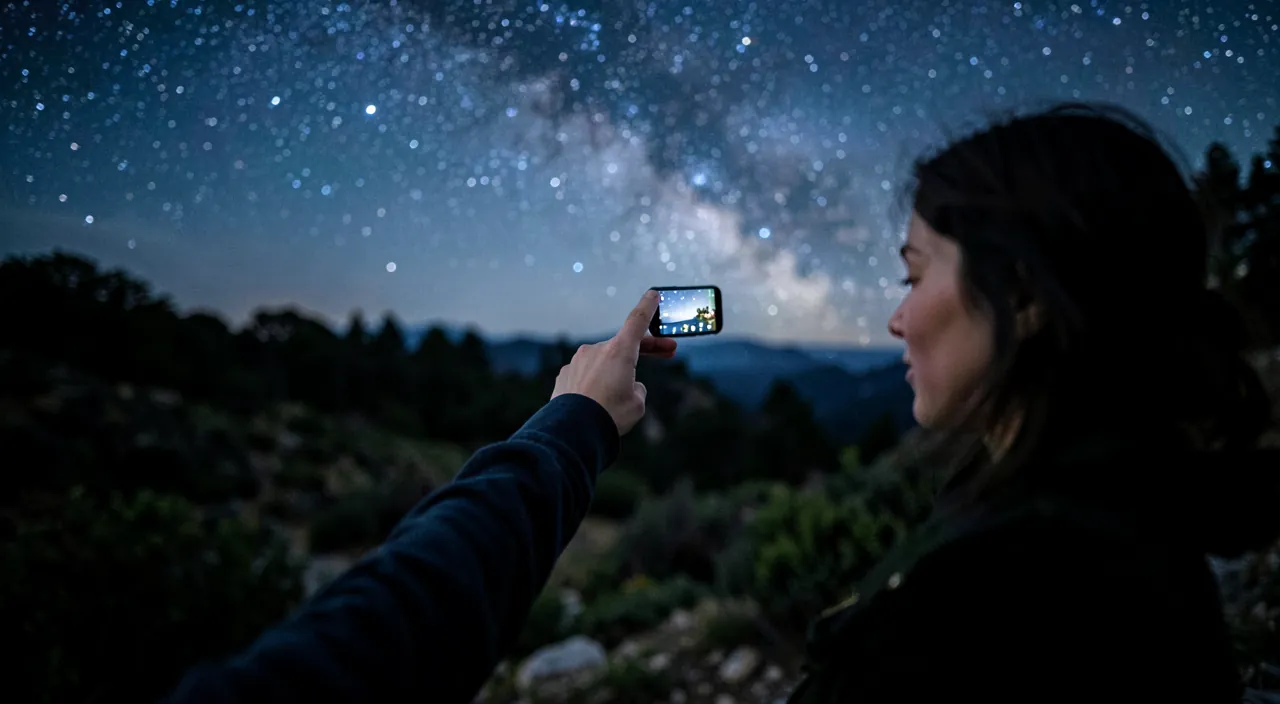
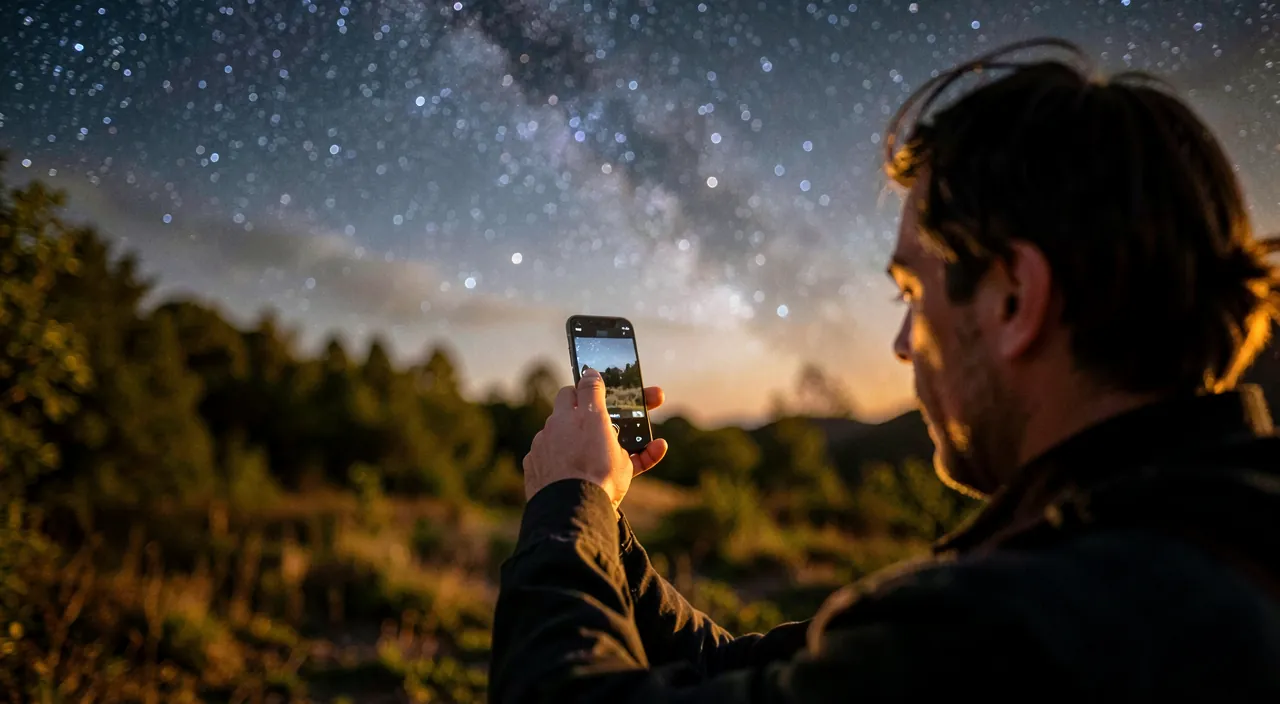
Astronomy apps use your phone to help you UNDERSTAND and EXPLORE the sky. Their most magical feature: the REAL-TIME sky map. You POINT your phone at the sky (day or night), and the app displays what’s in that direction: stars, planets, constellations, the Moon, sometimes satellites — named and identified, overlaid on reality. Thanks to your phone’s sensors (location, compass, tilt), the app knows where you are and where you’re looking, and shows you the corresponding sky. What this allows in practice: IDENTIFY what you see: that bright star, that “star” that doesn’t twinkle (often a planet!), that shape in the sky; the app names it for you. FIND an object: looking for a planet, a specific constellation? The app guides you to spot it in the sky. RECOGNIZE constellations: they draw the figures of the constellations on the stars, to help you learn them. Follow CELESTIAL events: the apps highlight phenomena to observe (shooting stars, planetary conjunctions, eclipses, space station passes, lunar phases). LEARN: information about celestial bodies, the solar system, stars; a treasure trove of knowledge. EXPLORE: some apps let you “travel” through the sky, zoom in on objects, see the sky from elsewhere or another time. FOR WHO? FOR EVERYONE, and without equipment: no telescope or prior knowledge needed; just a phone and a sky (even from a city balcony, you can identify the Moon, planets, and brightest stars). It’s ideal for: curious minds who finally want to understand what they see, families (amazing children, learning together), and of course, enthusiasts. What to understand: these apps DEMOCRATIZE astronomy; they turn a “confusing” sky into an open book you learn to read; they make wonder accessible and guided. The key idea: astronomy apps turn your phone into a window on the sky: point it at the stars, and it names and shows you the celestial bodies, planets, and constellations in real time. Accessible to everyone, without equipment or knowledge, they turn the confusion of the starry sky into guided wonder, and make each of us an amateur astronomer. A magical tool to rediscover the starry vault.
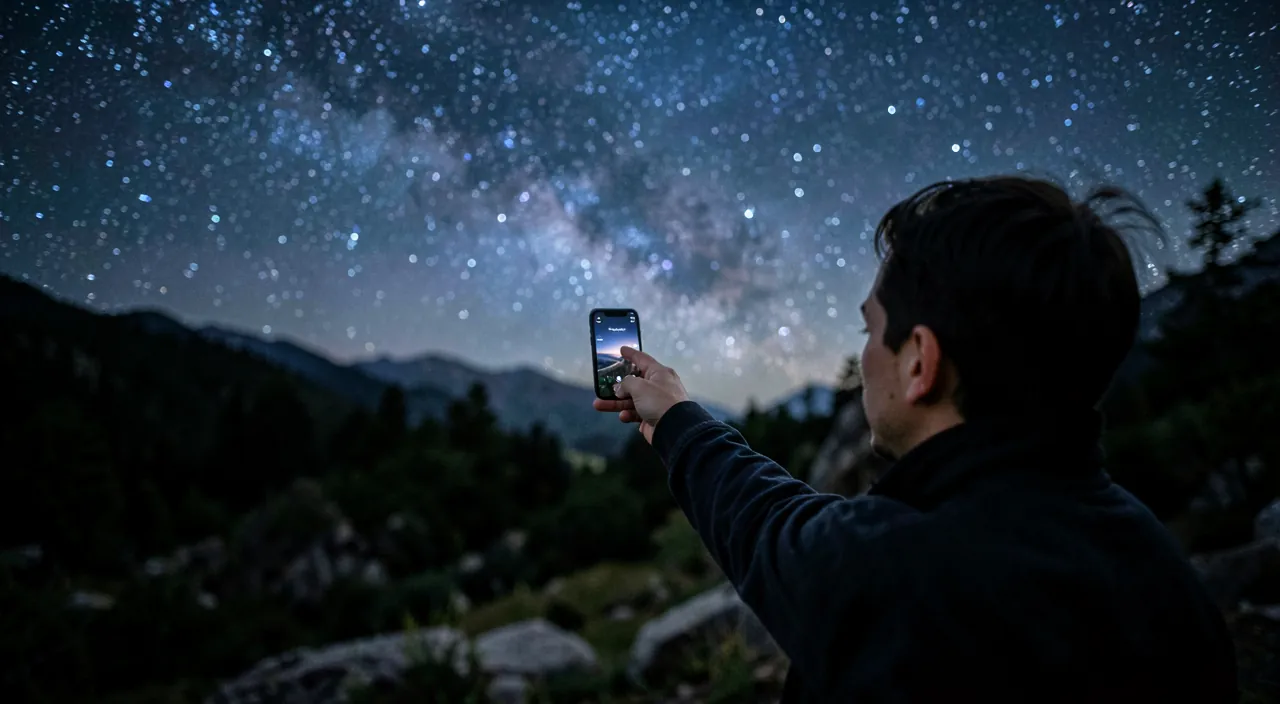
Astronomy apps use your phone’s sensors to show you exactly what’s in the sky above you, in real time. They can identify stars, planets, and constellations just by pointing your phone at them. You don’t need any special equipment or knowledge to start enjoying the night sky.
On a clear night in Paris, you point your phone at a bright object in the sky. The app identifies it as Jupiter, shows its position in the solar system, and tells you when it will be most visible. Later, you spot a cluster of stars and the app reveals it’s the Orion constellation, with its famous belt of three bright stars.
Observing the sky properly with your phone
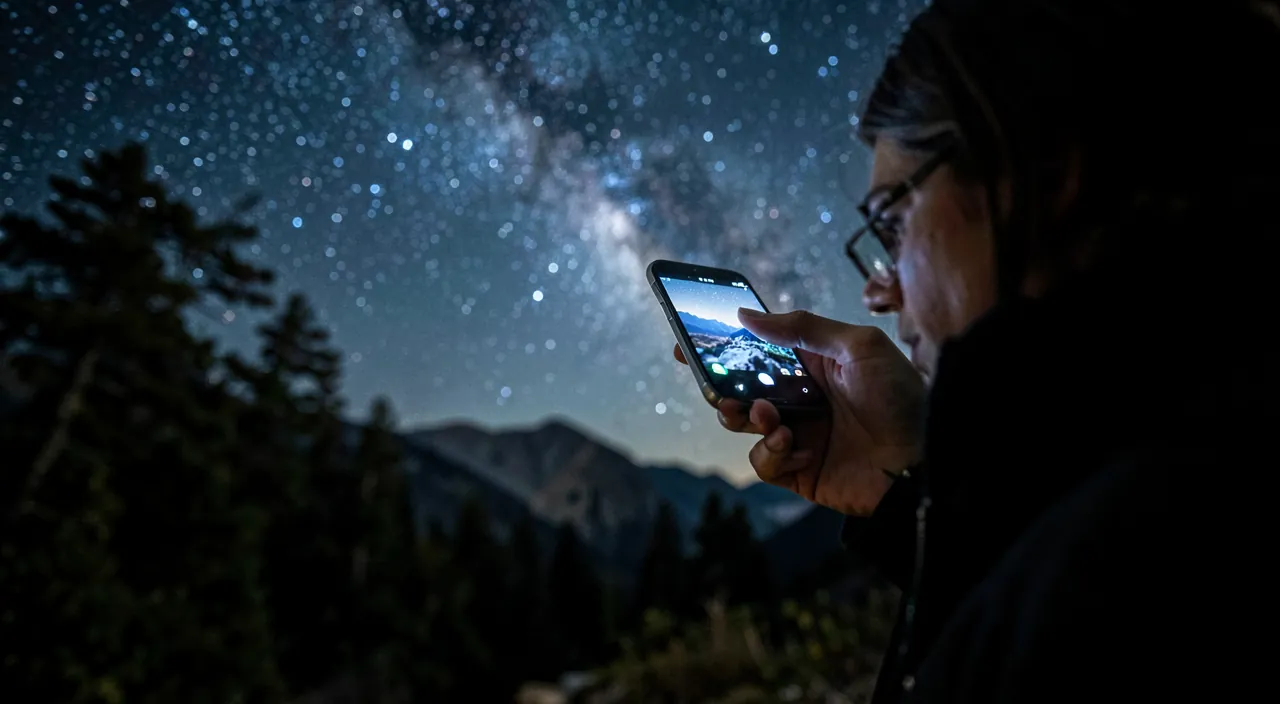
Here’s how to get the most out of astronomy apps to observe the sky. Use REAL-TIME pointing — the flagship feature: raise your phone to the sky and move it; the app displays the celestial bodies in the direction you’re pointing in real time; move it around to explore, identify what’s shining, find a planet or constellation. Enable LOCATION and calibrate — the app needs to know where you are (to show the right sky) and the compass (for orientation); enable location, and calibrate the compass if the app asks (often by moving the phone in a “8”), for precise pointing. IDENTIFY what you see — a light intrigues you? Point at it: is it a planet (very bright Venus, Jupiter, reddish Mars?), a star, a satellite? The app answers. Spot the constellations — learn to recognize the figures (the Big Dipper, Orion…) thanks to the app’s drawings; little by little, you’ll find them with the naked eye. Follow events — check out the phenomena not to miss (shooting stars, eclipses, space station passes, beautiful Moon) and plan your observations. Observe in good CONDITIONS — to see the sky well: move away from lights (city light pollution hides the stars; the countryside offers a much richer sky), let your eyes adjust to the darkness (about ten minutes), and choose a clear night without clouds or a too-bright full Moon to see the faint stars. Use NIGHT MODE — many apps have a “red” mode that preserves your night vision (a white screen blinds and ruins your eyes’ adaptation to darkness); activate it to observe. A few TIPS: start SIMPLE (identify the Moon, bright planets, a large constellation); observe as a FAMILY (it’s a wonder to share, ideal with children); get out of the city when you can (a country sky is a revelation); and don’t forget to LOOK UP from the phone to see the real sky (the app guides, but the beauty is up there!). A PRACTICAL point: no telescope is needed to start; with the naked eye and the app as a guide, you already discover a lot (planets, constellations, Moon, shooting stars); the telescope or binoculars will come later if the passion grows. In short, to observe the sky well with your phone: use real-time pointing (enable location, calibrate the compass), identify celestial bodies, spot constellations, follow celestial events, and observe in good conditions (away from lights, eyes adapted to darkness, app’s night mode). Start simple, share with family, and above all: look up at the real sky. The app guides the wonder, it doesn’t replace it.
The right reflex. The magic works in one gesture: raise your phone to the sky and move it; the app displays IN REAL TIME the celestial bodies in the direction you’re pointing — stars, planets, constellations, named in overlay with reality. For the pointing to be precise, enable LOCATION (so the app shows the right sky based on where you are) and calibrate the compass if the app asks (often by moving the phone in a “8”). You can then identify everything that intrigues you: that very bright light that doesn’t twinkle is often a PLANET (Venus, Jupiter, reddish Mars); those stars form a constellation that the app shows you (the Big Dipper, Orion…). Also check out the CELESTIAL events signaled (shooting stars, eclipses, space station passes, beautiful Moon) to not miss anything. To observe well, take care of the CONDITIONS: move away from lights (city light pollution hides the stars; a country sky is a revelation), let your eyes adjust to the darkness for about ten minutes, and choose a clear night. Activate the app’s NIGHT MODE (a red display that preserves your night vision; a white screen blinds and ruins your eyes’ adaptation to darkness). Start SIMPLE (the Moon, bright planets, a large constellation), and observe as a FAMILY: it’s a wonder to share, ideal for children. No telescope needed: with the naked eye and the app as a guide, you already discover a lot; the equipment will come if the passion grows. And above all, don’t forget to LOOK UP from the phone to contemplate the REAL sky: the app guides the wonder, but the beauty is up there. Point, identify, learn to recognize, in good conditions and by looking up: this is how these apps turn a confusing sky into an open book, and make you an amazed amateur astronomer.
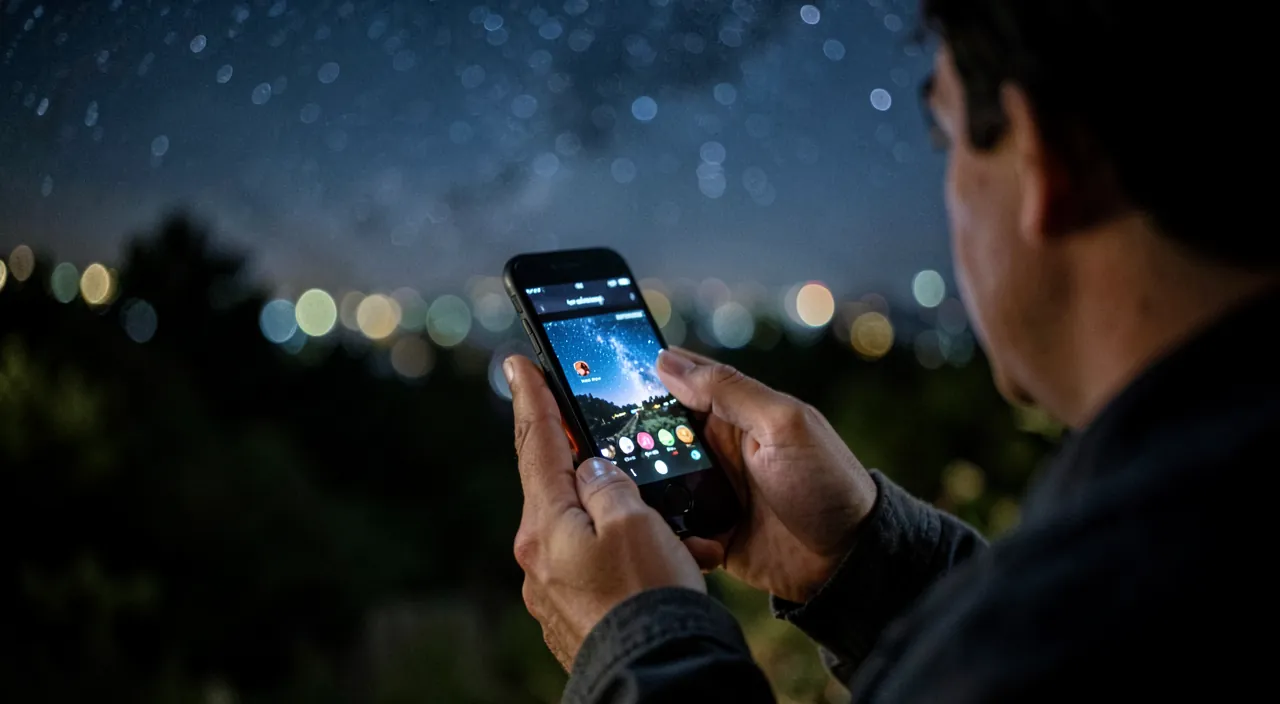
Rediscovering the wonder of the sky
Beyond the practical aspect, astronomy apps reopen a door to an ancient wonder: that of contemplating the sky and understanding what you see. A few reflections. ACCESSIBLE wonder: the starry sky fascinates, but its “illegibility” was discouraging; these apps make it COMPREHENSIBLE, and the wonder doubles when you put names on what you see (knowing you’re looking at Jupiter, or a millennia-old constellation, changes everything). JOYFUL learning: you learn astronomy without effort, through curiosity and pleasure; identifying, understanding, following celestial events; knowledge that grows with each observation. SHARING as a family: observing the sky together, amazing children, teaching them about planets and constellations; a precious, educational, and magical moment, away from screens (paradoxically guided by a screen!). CONNECTION to the cosmos: looking up at the immensity, becoming aware of our place in the universe; it’s an experience that does good, puts things in perspective, nourishes the imagination. REDISCOVERING the sky: many, especially in cities, never look at the sky anymore; these apps give the desire to go out, look up, and rediscover this free and permanent spectacle above our heads. SCREEN/SKY balance: the important thing is that the app serves to BETTER look at the real sky, not to replace it; use it to identify and learn, then look up and contemplate; night mode helps (preserving your vision). In short, astronomy apps turn your phone into a window on the sky: point it, and it names and shows you the celestial bodies, planets, and constellations in real time; accessible to everyone, without equipment or knowledge, they turn the confusion of the starry sky into guided wonder. To enjoy them: use real-time pointing, identify celestial bodies, learn constellations, follow celestial events, and observe in good conditions (away from lights, night mode activated). Start simple, share with family, get out of the city when you can, and above all: look up at the real sky. At the bottom, these apps give everyone an ancient and free wonder — that of contemplating the starry vault while understanding what you see. They democratize astronomy, make us amateur astronomers, and reopen a door to the immensity above our heads. A magical tool, at the service of a spectacle that is even more so: it’s up to you to look up and let yourself be amazed.
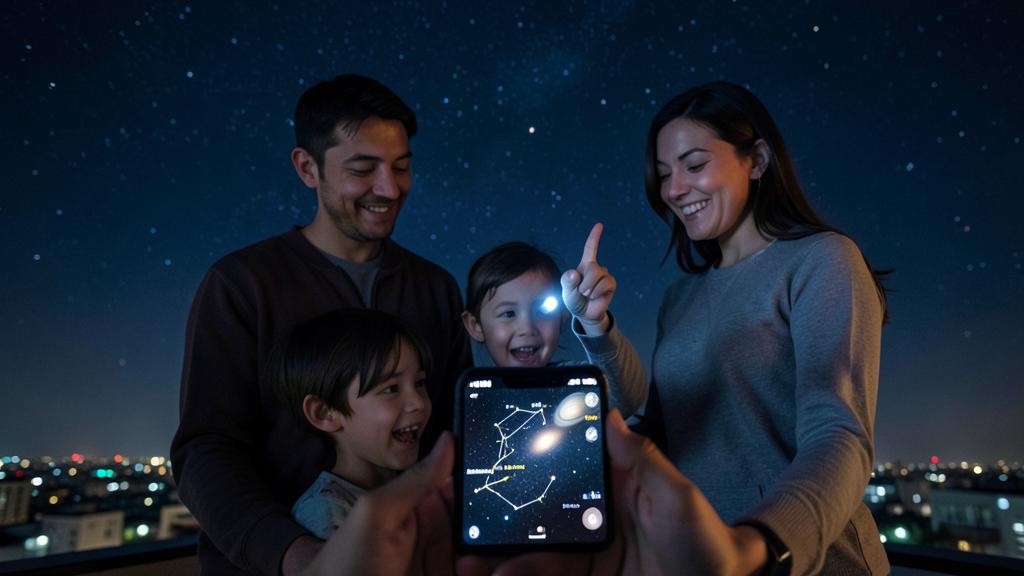
Warning: light pollution limits observation, preserve your night vision, and don’t stay glued to the screen. A few points to enjoy the sky well. LIGHT POLLUTION — in cities, lighting hides most of the stars; don’t be disappointed to see little from an urban center (you’ll mainly distinguish the Moon, a few planets, and the brightest stars); for a true spectacle, move away from lights (the countryside, a dark place) — the difference is striking; the app, however, shows everything that IS there, even if invisible due to lights, which can create a gap with what you actually see. NIGHT VISION — a bright phone screen BLINDS and ruins your eyes’ adaptation to darkness (which takes about ten minutes); after looking at a white screen, you won’t see the faint stars for a while; activate the app’s NIGHT MODE (red display) to preserve your vision, and avoid looking at other bright screens during observation. STAYING GLUED TO THE SCREEN — the trap would be to spend the evening with your nose on the phone instead of looking at the sky; the app is a GUIDE to identify and learn, but the beauty is UP THERE; use it from time to time, then look up and contemplate the real sky. Other points: the phone’s COMPASS can be imprecise (calibrate it, and stay away from metal or magnetic objects that disrupt it), some apps offer paid purchases or features (the free basic functions often suffice to start), and to observe comfortably, dress warmly (observation nights are cool!) and think about your safety if you move away in a dark place. Finally, don’t be discouraged if you don’t find everything right away: spotting celestial bodies is learned, and the pleasure grows with practice. Astronomy apps are a wonderful gateway to the sky, provided you keep the essential in mind: they serve to better look at the REAL sky, not to replace it. Good observation conditions, preserved night vision, and eyes raised to the stars: this is how you fully savor the wonder they make accessible.
Frequently asked questions
How does an astronomy app work?
Its magical feature: the REAL-TIME sky map. You point your phone at the sky, and the app displays what’s in that direction — stars, planets, constellations, Moon — named and identified, overlaid on reality. It achieves this thanks to your phone’s sensors: location (to know where you are and thus what sky you see) and compass with tilt (to know in what direction you’re pointing). You must therefore enable location and sometimes calibrate the compass for precise pointing. In practice, this allows you to identify what you see (is that bright light a planet?), find a specific celestial body or constellation, learn to recognize the sky’s figures, and follow celestial events (shooting stars, eclipses). No equipment or knowledge needed: a phone and a sky suffice. That’s what makes these apps so accessible: they turn a confusing sky into an open book you learn to read, simply by pointing your phone at the stars.
Do you need a telescope to observe the sky?
No, not to start: with the naked eye and an app as a guide, you already discover a lot. Without any equipment, you can identify the Moon and its phases, spot the bright planets (Venus, Jupiter, Mars, Saturn), recognize the major constellations, observe shooting stars, and see the space station pass by. The app guides you for all of this. It’s even the best way to start: learn to “read” the sky with the naked eye before investing in equipment. If the passion grows, you can add BINOCULARS (they already reveal a lot: Moon’s craters, star clusters, Jupiter’s moons) and, eventually, a telescope. But nothing is mandatory to start being amazed. The most important factor isn’t the equipment, but the OBSERVATION conditions: move away from city lights (light pollution hides the stars), choose a clear night, and let your eyes adjust to the darkness. With a phone, a clear sky, and a bit of patience, the universe already offers itself to you: the telescope is an additional pleasure, not a prerequisite.
Do these apps work in the city?
Yes, but with an important limitation: LIGHT POLLUTION. The app works everywhere (it shows you the sky wherever you are), but in the city, urban lighting hides most of the stars: you’ll mainly see the Moon, the brightest planets, and a few notable stars — far fewer than what the app displays (since it shows everything that IS there, even if invisible due to lights). So it’s not disappointing if you know what to expect: even in the city, identifying the Moon, spotting Venus or Jupiter, recognizing a major constellation is a real pleasure accessible from a balcony or window. But to discover the sky’s richness (the Milky Way, a multitude of stars), you must MOVE AWAY from lights: a trip to the countryside or a dark place is a revelation — the contrast with the urban sky is striking. In short: start in the city to get the hang of it and identify the main celestial bodies, and take advantage of a getaway away from lights to discover the full splendor of the starry vault. The app will guide you in both cases.
What to remember
Astronomy apps turn your phone into a magical window on the sky: point it at the stars, and it NAMES and SHOWS you the celestial bodies, planets, and constellations in real time, overlaid on reality (thanks to location and compass). They allow you to IDENTIFY what you see (is that bright light a planet?), FIND a specific celestial body, recognize constellations, follow CELESTIAL events (shooting stars, eclipses, space station passes), and LEARN. Accessible to EVERYONE, without equipment or knowledge (a phone and a sky suffice), they turn the confusion of the starry sky into guided wonder, and make each of us an amateur astronomer — ideal for curious minds, families, and enthusiasts. To observe well: use real-time pointing (enable location, calibrate the compass), identify celestial bodies, learn constellations, follow events, and take care of the CONDITIONS — move away from lights (city light pollution hides the stars; a country sky is a revelation), let your eyes adjust to the darkness, and activate the app’s NIGHT MODE (red display that preserves your night vision). Start SIMPLE (the Moon, bright planets, a large constellation), share as a FAMILY (a wonder to pass on to children), and know that a telescope isn’t necessary to start (with the naked eye and the app as a guide, you already discover a lot). Above all, don’t forget to LOOK UP from the phone to contemplate the real sky: the app is a GUIDE to identify and learn, but the beauty is up there — it serves to better look at the real sky, not to replace it. At the bottom, these apps give everyone an ancient and free wonder: that of contemplating the starry vault while understanding what you see. They democratize astronomy, reopen a door to the immensity above our heads, and give the desire to go out and look up. A magical tool at the service of a spectacle that is even more so: it’s up to you to point your phone, learn to read the sky, and let yourself be amazed by the stars.
Want to go further with your phone and apps? Our practical training is made for you.
Leave a Reply
You must be logged in to post a comment.