
Accompanying your children in the digital world is a challenge: you want to protect them from inappropriate content, bad encounters, and excessive screen time, without spying on them or betraying their trust. Parental controls are a valuable tool — but they must be a means of PROTECTING and ACCOMPANYING, not secretly monitoring. When used properly, with dialogue and transparency, they help the child grow safely while developing their autonomy. Here’s how to set up age-appropriate parental controls without resorting to spying.
Protecting without spying: the right approach
Parental controls include the tools and settings that help FRAME a child’s digital use: filtering content, limiting screen time, managing apps and purchases, etc. Their legitimate goal is to PROTECT the child (from inappropriate content, dangers, excesses) and ACCOMPANY them in a healthy, age-appropriate usage. But there’s a fundamental distinction between PROTECTING and SPIING. PROTECTING means: setting age-appropriate safeguards (content filters, time limits, purchase restrictions), guiding the child, and helping them gradually develop their digital autonomy and common sense. SPIING means: secretly monitoring everything the child does (reading their messages, tracking their every move) without transparency or dialogue — an approach that betrays trust and often proves counterproductive. The RIGHT approach is that of ACCOMPANIED protection: age-appropriate safeguards, implemented with TRANSPARENCY (the child knows what’s in place and why) and accompanied by DIALOGUE. Why avoid spying? Because it: BETRAYS trust (essential in the parent-child relationship); is COUNTERPRODUCTIVE (a child secretly monitored learns to bypass and hide, rather than trust); teaches the child NOTHING (true long-term protection is that they develop their own discernment, not that they’re policed); and raises questions of RESPECT (as the child grows, they’re entitled to some privacy). What to understand: parental controls are a TOOL, whose value depends on how you use it. Age-ADAPTED (more restrictive for a young child, more flexible for a teenager), TRANSPARENT (the child is aware), and accompanied by DIALOGUE, it protects and educates. Used to spy secretly, it damages trust without teaching the child. The key idea: parental controls should serve to PROTECT and ACCOMPANY, not to spy; the goal isn’t to monitor everything, but to set age-appropriate safeguards, with transparency and dialogue, to help the child grow safely and develop their autonomy. Trust and education matter as much as the tools: good parental controls accompany, they don’t police.
Parental controls should help protect your child from dangers online while teaching them good habits. The key is to set rules they understand (like time limits or content filters) and talk openly about why they exist. Spying secretly breaks trust and doesn’t teach them anything. The goal is to guide them toward responsible digital use, not just police their every move.
For a 10-year-old, you might set up iOS Screen Time to limit app usage to 1.5 hours per day, block mature content, and require parental approval for app downloads. You’d explain these rules together, so the child understands why they’re in place. As they grow, you’d gradually increase their allowed screen time and discuss online safety topics like recognizing scams or handling cyberbullying.

Setting up balanced parental controls
Here’s how to set up useful and respectful parental controls. Adapt to the child’s AGE — the fundamental principle: a young child needs stricter safeguards (filtered content, limited time, supervised use); a teenager needs more autonomy and less surveillance (the goal is that they learn to manage themselves); adjust as they grow. Use the built-in TOOLS — devices and systems offer parental control functions: content filters (blocking inappropriate material), screen time limits (daily, per app, time slots), app and purchase management (« ask to buy » to validate downloads), age-appropriate restrictions; they’re often centralized (e.g., via family sharing — our family sharing guides). Create a child’s OWN account suited to their age (rather than an adult account) — this allows appropriate supervision settings. Adjust what matters — prioritize: filtering inappropriate content (especially for young children), screen time limits (against excess), purchase management (against impulsive spending), and supervised interactions (who the child communicates with, depending on age). Do it with TRANSPARENCY — explain to the child what’s in place and WHY (to protect, not police); a child who understands the rules accepts them better and learns; transparency maintains trust. Accompany with DIALOGUE — the most important: talk with your child about digital use (their habits, dangers, good behaviors); parental controls are a support, not a substitute for education; a child who’s explained things develops their own discernment. Evolve with the child — gradually relax the rules as they grow and mature; the final goal is AUTONOMY (a young person capable of managing themselves), not eternal surveillance. Some TIPS:
- Involve the child in the rules (depending on age)
- Set the EXAMPLE (your own screen habits matter)
- Prioritize TRUST over policing (better a child who comes to you with a problem than one who hides everything)
- Remember that the best « control » long-term is an EDUCATED child, who has internalized good habits (our guides on accompanying children in the digital world)
An IMPORTANT point on SECURITY: parental controls also protect the child from real dangers (shocking content, malicious contacts, scams); this is legitimate and necessary protection, distinct from intrusive surveillance of their private life; protect against real dangers, without spying on their privacy. In summary, for balanced parental controls: adapt to age (stricter for a young child, more flexible for a teen), use built-in tools (filters, screen time, purchases), create a child’s own account, do it transparently, accompany with dialogue, and relax as they grow. The tool protects; dialogue educates; trust and autonomy are the goal.
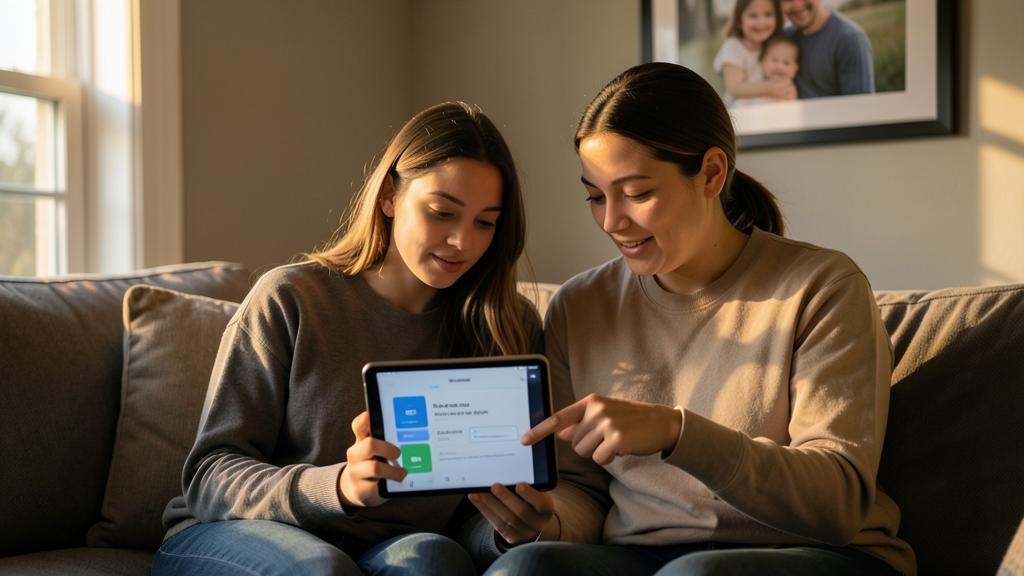
The right reflex. See parental controls as a tool to PROTECT and ACCOMPANY, never to spy: the goal isn’t to monitor everything, but to set age-appropriate safeguards, with transparency and dialogue. Adapt to AGE, that’s the fundamental principle: a young child needs strict safeguards (filtered content, limited time, supervised use); a teenager needs more autonomy and less surveillance, as the final goal is that they learn to manage themselves. Use the built-in TOOLS (often centralized via family sharing): filters for inappropriate content (especially for young children), screen time limits (against excess), purchase management (« ask to buy » to validate downloads — against impulsive spending), age-appropriate interaction supervision. Create a child’s OWN account suited to their age (not a borrowed adult account). But above all, do all this with TRANSPARENCY and DIALOGUE: explain to your child what’s in place and WHY (to protect, not police); a child who understands the rules accepts them better and learns; and regularly talk with them about the digital world (their habits, dangers, good behaviors). Parental controls are a SUPPORT, not a substitute for education: the best « control » long-term is an EDUCATED child who has internalized good habits and developed their own discernment. Evolve with them: gradually relax the rules as they grow and mature, toward AUTONOMY (the goal, not eternal surveillance). Set the example (your own screen habits matter), and prioritize TRUST over policing: better a child who comes to you with a problem than one who learns to hide everything to escape intrusive surveillance. Protect against real dangers (shocking content, malicious contacts) without spying on their privacy. Age-appropriate, transparent parental controls, accompanied by dialogue, and evolving toward autonomy: that’s how they truly protect your child while preserving trust and preparing them to manage themselves.

Toward autonomy and trust
The ultimate goal of accompanying a child in the digital world isn’t to monitor them for life, but to make them AUTONOMOUS and responsible; parental controls are just a step toward that. Some guidelines. The BALANCE between protection and autonomy: overprotecting (blocking everything, monitoring everything) prevents the child from learning; leaving them to their own devices exposes them; the right balance evolves with age, from the young child’s supervision to the teenager’s responsible freedom. TRUST as the foundation: a trusting relationship protects better than surveillance; a child who knows they can talk to you about a problem (shocking content, a bad encounter, bullying) without being punished or policed will come to you; spying destroys this precious bond. EDUCATION before the tool: parental controls filter and limit, but it’s DIALOGUE and example that shape the child’s discernment; explain, discuss, rather than just forbid (our guides on accompanying children). RESPECT for privacy: as the child grows, they’re entitled to some privacy; distinguish legitimate protection against real dangers (shocking content, predators, bullying, scams) from intrusive surveillance of their private life; spying on a teenager is rarely the right answer. EVOLUTION: regularly review the rules as the child grows; what’s right for an 8-year-old isn’t right for a 14-year-old; gradual relaxation is a sign of trust that empowers. PARENTAL example: your own digital habits influence your child; showing healthy use is better than rules you don’t follow yourself. PROTECTION against real dangers: let’s remember that some dangers are real (shocking content, predators, bullying, scams); parental controls and especially dialogue arm the child against them; this is a necessity, not an intrusion. In summary, parental controls should serve to PROTECT and ACCOMPANY the child, not to spy: set age-appropriate safeguards (filters, screen time, purchases), with TRANSPARENCY (they know what’s in place and why) and DIALOGUE (talk about the digital world with them), gradually relaxing toward autonomy. Avoid spying, which betrays trust, is counterproductive, and doesn’t educate. True long-term protection is an EDUCATED, autonomous child who has internalized good habits and feels confident to talk to you about a problem. Tools help (and protect against real dangers), but TRUST and EDUCATION matter just as much, if not more. Accompanying a child in the digital world means protecting them today while preparing them to fly on their own tomorrow: age-appropriate, transparent, and benevolent parental controls, in service of their autonomy and your trusting relationship, are the best approach.
Warning: spying is counterproductive, adapt to age, and don’t forget dialogue and example. Key points. COUNTERPRODUCTIVE SPIING — secretly monitoring everything the child does (reading their messages, tracking their every move) without transparency betrays trust and backfires: a child secretly monitored learns to BYPASS and HIDE, rather than trust you; they learn nothing for themselves, and the bond is damaged; prefer transparent, accompanied protection to intrusive surveillance. THE SAME SETTINGS FOR ALL AGES — age-inappropriate parental controls fail: too strict for a teenager, it pushes them to bypass and strains the relationship; too lax for a young child, it doesn’t protect them; always adapt to age and maturity, and evolve the rules (what’s right for a young child isn’t right for a teen — gradually relax toward autonomy). FORGETTING DIALOGUE — the worst would be to rely entirely on the tool while neglecting conversation: parental controls filter and limit, but it’s DIALOGUE (explaining dangers, good behaviors, listening) that shapes the child’s lasting discernment; the tool is a support, not a substitute for education. Other pitfalls: NOT setting the example (screen rules you impose on the child but don’t follow yourself lose all credibility), CONFUSING protection and intrusion (protecting against real dangers — shocking content, predators, scams — is legitimate; spying on a teen’s privacy isn’t), and PUNISHING instead of accompanying (a child who fears punishment will hide problems instead of talking to you — cultivate trust so they come to you). Parental controls are a good tool if they serve PROTECTION and EDUCATION, are age-appropriate, transparent, and accompanied by dialogue and example. Misused as spying, they betray trust without educating the child, and prove counterproductive. The goal isn’t to police, but to accompany your child toward autonomous and responsible digital use, protecting them from real dangers while preserving your trusting relationship.

Frequently asked questions
Is parental control spying on your child?
No, provided you use it properly: there’s a fundamental distinction between PROTECTING and SPIING. Protecting means setting age-appropriate safeguards (content filters, screen time limits, purchase management), with TRANSPARENCY (the child knows what’s in place and why) and dialogue, to protect them from real dangers and accompany them toward autonomy — this is legitimate and necessary. Spying means secretly monitoring everything they do (reading their messages, tracking their every move) without transparency — which betrays trust and proves counterproductive (the child learns to bypass and hide). Parental controls are a tool whose value depends on their use: employed to protect and accompany with transparency, they’re useful and benevolent; misused as intrusive and secret surveillance of private life, they damage the relationship without educating. The right approach is ACCOMPANIED protection: age-appropriate safeguards, explained, and dialogue; protecting against real dangers without spying on privacy.
How to set up appropriate parental controls?
Adapt them to AGE (stricter for a young child: filtered content, limited time; more flexible for a teenager, toward autonomy), evolving the rules as they grow. Use the TOOLS built into devices and systems (often via family sharing): filters for inappropriate content, screen time limits, app and purchase management (« ask to buy »). Create a child’s OWN account suited to their age. Prioritize the important settings: content filtering (especially for young children), screen time limits (against excess), purchase management, interaction supervision depending on age. But above all, do it with TRANSPARENCY (explain what’s in place and why) and accompany it with DIALOGUE (talk about the digital world with your child): the tool protects, but education shapes their discernment. Set the example with your own habits, involve the child in the rules depending on their age, and gradually relax toward autonomy. Age-appropriate, transparent, and dialogued parental controls protect while preserving trust.

Until what age keep parental controls?
There’s no hard cutoff: parental controls must EVOLVE and gradually RELAX as the child grows and matures, until they disappear when the child is autonomous. A young child needs strict safeguards; a pre-teen, a gradually opening framework; a teenager, much more autonomy and far less surveillance — as the final goal is that they manage themselves. Maintaining strict controls on a teenager is often counterproductive: it pushes them to bypass and strains the relationship; at this age, dialogue and trust protect better than restrictions. The idea is to accompany the child toward autonomy: reduce safeguards as they demonstrate maturity, like gradually letting go of a child learning to walk. The goal isn’t eternal surveillance, but a young person capable of responsible and autonomous digital use. The best « control » long-term isn’t a tool, but an educated child who has internalized good habits: that’s what all the accompaniment should aim for.
What to remember
Parental controls should serve to PROTECT and ACCOMPANY the child, not to SPY: the goal isn’t to monitor everything, but to set age-appropriate safeguards, with transparency and dialogue, to help them grow safely and develop their autonomy. There’s a fundamental distinction between PROTECTING (age-appropriate, transparent safeguards, accompanied by education — legitimate and necessary) and SPIING (secretly monitoring everything the child does — which betrays trust, is counterproductive, and doesn’t educate). For balanced parental controls: adapt to AGE (stricter for a young child, more flexible for a teenager — toward autonomy), use built-in TOOLS (content filters, screen time limits, app and purchase management, often via family sharing), create a child’s own account, and do it with TRANSPARENCY (explain what’s in place and why) accompanied by DIALOGUE (regularly talk about the digital world with them). The tool protects, but dialogue and example shape the child’s lasting discernment: parental controls are a support, not a substitute for education. Evolve the rules as the child grows, gradually relaxing toward AUTONOMY (the goal, not eternal surveillance). Cultivate TRUST rather than policing: better a child who comes to you with a problem (shocking content, bad encounter, bullying) than one who learns to hide everything. Distinguish protection against REAL dangers (shocking content, predators, scams — legitimate) from intrusive surveillance of privacy (to avoid, especially with a teen). Set the example with your own habits. The best « control » long-term is an EDUCATED and autonomous child who has internalized good habits and feels confident to talk to you: tools help and protect against real dangers, but trust and education matter just as much, if not more. Accompanying a child in the digital world means protecting them today while preparing them to fly on their own tomorrow — with age-appropriate, transparent, and benevolent parental controls, in service of their autonomy and your trusting relationship.


Concerned about your security, need to check or clean a device? Our support service guides you step by step.
Leave a Reply
You must be logged in to post a comment.