
« Will AI take our jobs? » This is one of the most anxiety-inducing questions of our time. Between catastrophic predictions (millions of jobs destroyed) and reassuring discourses (AI will create more jobs than it destroys), it is difficult to form a just idea. The reality, as often, is more nuanced: AI will transform work more than it will simply destroy it. Without catastrophism or naivety, let’s take stock of the real impact of AI on employment, what will change, and how to prepare calmly.
Transformation rather than pure destruction
To understand the impact of AI on employment, we must get out of the binary debate of « total destruction » versus « no impact ». The history of technological revolutions (mechanization, computing) teaches a nuanced lesson: technologies transform work — they eliminate certain tasks, create others, and modify most professions — more than they simply destroy employment. AI is likely to follow this pattern, but with a particularity: it touches tasks that have been spared so far (some intellectual tasks, writing, analysis), and not only manual or repetitive tasks. What is most likely: AI will mainly AUTOMATE TASKS within professions, more than replace entire professions at once. Many professions will see some of their tasks assisted or automated by AI, which will transform the profession without necessarily making it disappear: the professional will focus on what AI does not do (judgment, human relations, creativity, supervision). Some jobs very exposed to automation may decrease; others will emerge (around AI itself, but also in areas where human value becomes more precious). The honest truth: no one knows precisely the extent or pace, and numerical predictions should be taken with caution (our guides for reliability of predictions). But the consensus leans towards a DEEP transformation of work — how work is done, which skills count — more than an collapse of employment. This does not minimize the stake: a deep transformation requires adaptation, and can be difficult for the most exposed professions and trades.
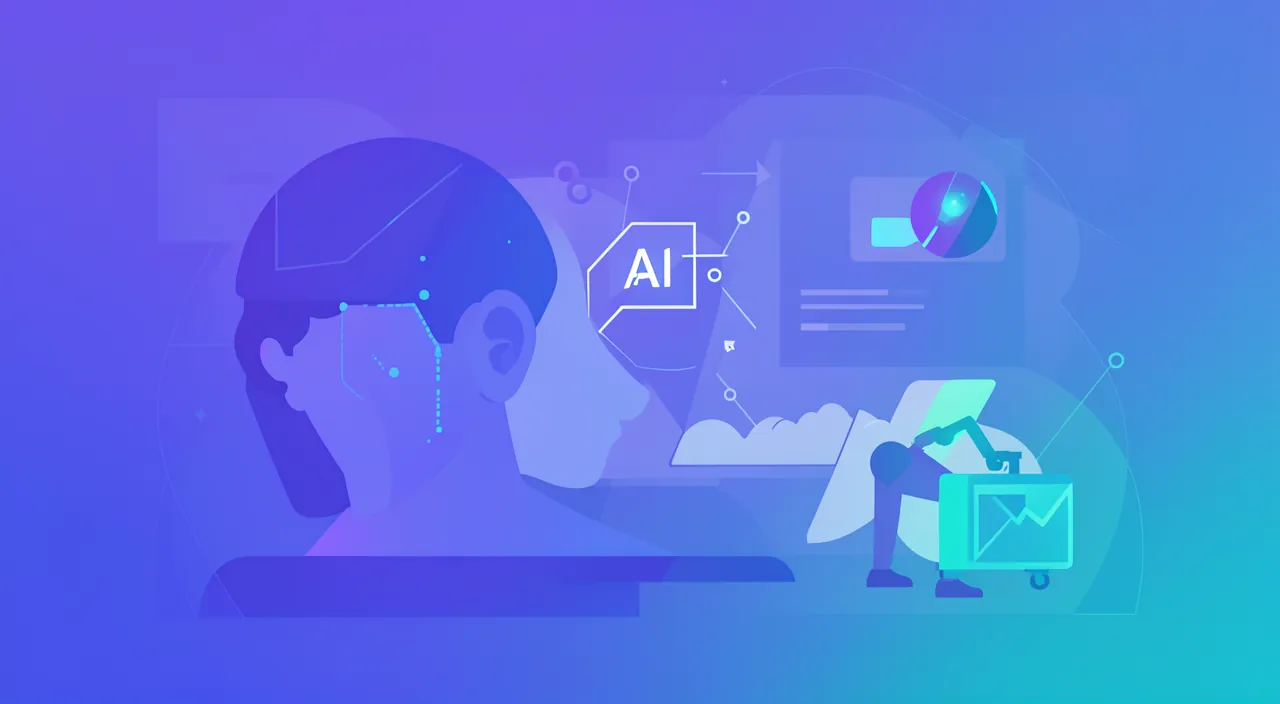
AI won’t just wipe out jobs. It will change how we work by taking over some tasks, especially repetitive or routine ones. But humans will still be needed for things like making decisions, being creative, and building relationships. The key is learning to use AI as a tool, not fearing it as a replacement.
A radiologist might use AI to quickly analyze X-rays for obvious issues, freeing up time to focus on complex cases that require human judgment. The AI doesn’t replace the doctor but helps them work faster and more accurately.
What changes, and how to prepare
Concretely, how does AI transform work? Repetitive and automatable tasks (some administrative tasks, standardized writing, basic analysis) are the most exposed; human skills that are difficult to automate gain in value: judgment, creativity, emotional intelligence, human relations, critical thinking, adaptability, and the ability to WORK WITH AI (knowing how to use it as a tool). This last point is perhaps the most important for the future: in many professions, the challenge will not be « being replaced by AI » but « knowing how to work WITH AI » — those who master these tools will be favored over those who ignore them. To PREPARE calmly: develop your understanding and use of AI (it becomes a work tool like computing has become — familiarizing yourself with it is an investment, our daily AI guides); cultivate the human skills that AI does not replace (relationships, judgment, creativity, adaptability); stay in a continuous LEARNING logic (as professions evolve, the ability to learn and adapt becomes central — our daily learning guides); and keep a DISTANCE from extreme discourses (neither panic nor denial). A reassuring point: AI is also a formidable TOOL that can make your work more efficient, relieve you of tedious tasks, and allow you to focus on what has the most value (our daily AI guides, AI for the resume and job interview preparation if your professional situation changes). Seeing AI not only as a threat but as a tool to master changes the perspective: rather than passively endure the transformation, one can take advantage of it. The key is not to resist change (illusory) nor to fear it passively, but to actively ADAPT: understand AI, use it, develop what remains human, and continue to learn. This is how one approaches this transformation not as a fate to be endured, but as an evolution to be accompanied.
The right reflex. Rather than passively fear AI, familiarize yourself with it and learn to use it as a tool: in many professions, the challenge of tomorrow will not be « being replaced by AI » but « knowing how to work WITH AI » — and those who master these tools will be favored over those who ignore them. Spend some time understanding what AI can do in your field, test it, integrate it into your tasks when relevant (our daily AI guides): you will see it less as a threat and more as an assistant that relieves you of tedious tasks and makes you more efficient. Meanwhile, cultivate the human skills that AI does not replace (judgment, relationships, creativity, adaptability), and stay in a continuous learning logic. This dual approach — mastering the AI tool AND developing what remains deeply human — is the best preparation for a transforming world of work. Rather than passively endure or deny the change, actively adapt: this transforms anxiety into an opportunity to remain relevant and work better.
Collective issues and individual attitude
Beyond individual preparation, the transformation of work by AI raises COLLECTIVE societal issues: how to support the people and professions most exposed (training, reorientation, protection)? how to distribute productivity gains? how to regulate the use of AI at work? These questions go beyond the individual and involve public debate, employment and training policies, and societal choices: they are legitimate and important, as even a broadly positive transformation can be painful for those who bear its cost without support. It is healthy to follow this debate and not reduce it to « AI is good » or « AI is bad »: like any powerful technology, its impact will depend largely on how society chooses to regulate and support its effects. At the INDIVIDUAL level, the right attitude is a balance between clarity and serenity: recognizing that work will transform (clarity) without succumbing to paralyzing panic (serenity), and acting on what you can master — training, adapting, mastering tools, cultivating human skills. An important point: beware of EXTREME discourses and sensational predictions (in either direction): the topic generates a lot of alarmist or naive content, often more designed to provoke a reaction than to inform accurately (our guides for critical thinking). Reality is nuanced and uncertain: no one knows precisely the future, and humility is appropriate in the face of predictions. In summary, AI is unlikely to « take all jobs, » but it will deeply TRANSFORM work: automating tasks, valuing human skills and the ability to work with AI, evolving most professions. Facing this, the winning attitude is neither panic nor denial, but active adaptation: understanding and mastering AI as a tool, cultivating what remains human, and continuing to learn. Individually, we prepare; collectively, society must support this transformation. Addressed with clarity and serenity, the evolution of work by AI is a challenge to be met rather than a fate to be endured.
Be wary of extreme predictions and fear paralysis. Two pitfalls in front of this anxiety-inducing question: beware of EXTREME discourses and sensational predictions, in one direction (AI will destroy millions of jobs tomorrow) as in the other (AI will have no impact at all); the topic generates a lot of alarmist or naive content, often more designed to provoke a reaction than to inform accurately, and precise numerical predictions should be taken with caution — no one really knows the extent or pace of the transformation (our guides for critical thinking). Reality is nuanced and uncertain: humility is appropriate in the face of the future. Second pitfall: do not succumb to FEAR paralysis; passive anxiety prepares nothing. The right attitude is ACTIVE adaptation: act on what you can master (train, master AI tools, cultivate human skills, continue learning), rather than passively endure or deny. Also recognize that even a broadly manageable transformation can be difficult for the most exposed professions and people — this is a real collective issue (training, reorientation, support) that involves societal debate, not just individual responsibility. Between clarity (work will change) and serenity (without panic), active adaptation is the best response to an uncertain but real evolution.
Frequently asked questions
Will AI really replace jobs?
The reality is more nuanced than a simple « yes » or « no »: AI will mainly TRANSFORM work — automate certain TASKS within professions, more than replace entire professions at once. Many professions will see some tasks assisted or automated, which will transform the profession without necessarily making it disappear (the professional focusing on what AI does not do: judgment, relationships, creativity). Some jobs very exposed may decrease, others will emerge. No one knows precisely the extent or pace, and numerical predictions should be taken with caution. The consensus leans towards a deep transformation of work more than an employment collapse: an adaptation challenge, not necessarily a catastrophe.
How can I prepare for the impact of AI on my profession?
Through active adaptation: familiarize yourself with AI and learn to use it as a tool (in many professions, the challenge will be to know how to work WITH AI — our daily AI guides), cultivate human skills that it does not replace (judgment, relationships, creativity, adaptability, critical thinking), and stay in a continuous learning logic (the ability to learn and adapt becomes central). Seeing AI as a tool to master rather than just a threat changes the perspective: it can relieve you of tedious tasks and make you more efficient. The key is neither to resist change (illusory) nor to fear it passively, but to adapt: master the tool, develop what remains human, and continue to learn.

Should we be worried about the future of work?
Be clear without being paralyzed: work will transform deeply (clarity), but succumbing to panic prepares nothing (serenity). Act on what you can master: train, master AI tools, cultivate human skills. Recognize that the transformation can be difficult for the most exposed professions — this is a real collective issue (training, reorientation, support) that involves societal debate. Beware of extreme discourses (alarmist or naive) and sensational predictions: reality is nuanced and uncertain. Between clarity and serenity, active adaptation is the best response: a challenge to be met with preparation, not a fate to be endured in fear.
What to remember
« Will AI take our jobs? » The reality is more nuanced than extreme discourses. AI will mainly TRANSFORM work — automate tasks within professions more than replace entire professions at once; many professions will evolve (some tasks assisted or automated) without disappearing, the professional focusing on what AI does not do (judgment, relationships, creativity, supervision). Some jobs very exposed may decrease, others will emerge. No one knows precisely the extent or pace: the consensus leans towards a deep transformation more than a collapse, which remains an adaptation challenge. What changes: repetitive tasks are the most exposed, human skills (judgment, creativity, relationships, adaptability) gain in value, and especially the ability to WORK WITH AI becomes a major asset. To prepare calmly: familiarize yourself with AI and master it as a tool (our daily AI guides), cultivate what remains human, stay in a continuous learning logic, and keep a distance from extreme discourses. The transformation also raises COLLECTIVE issues (support for the most exposed, training, reorientation) that involve societal debate. The winning attitude: neither panic nor denial, but active ADAPTATION, between clarity (work will change) and serenity (without succumbing to panic). Addressed this way, the evolution of work by AI is a challenge to be met, not a fate to be endured.

Want to understand and master the technologies that change your daily life? Our training programs enlighten you.
Leave a Reply
You must be logged in to post a comment.