
The TV for €400 which would cost €600: the difference is you – your viewing habits collected, your home screens sold to advertisers, cross-referenced data with the entire household – the connected TV has become an advertising medium that lives as much on your data as on your purchase. Understand the model (the ACR, this content recognition that almost no one knows), take back control of the settings, choose your next TV with knowledge – the living room guide that watches TV without being watched in return.
The business model: why your TV is an advertising billboard
The retail aisle has tipped: the material margins have collapsed (the screen sold at cost or nearly – competition has crushed the margins – the low price of your TV is subsidized by the future), and the platform as the real source of revenue – manufacturers have become ad agencies – the home screen SOLD (the placement of apps, banners, sponsored content “recommended” – the first row of your home screen is a supermarket aisle), the free channels integrated funded by targeted ads (the manufacturer’s FAST bundles – the return of free TV, boosted by data), commissions on subscriptions signed via TV, and especially the data – the heart of the reactor: the ACR (Automatic Content Recognition – the embedded technology that RECOGNIZES what’s on screen – the image analysis in real-time – all sources combined – the streaming, the DTT, the console, your DVD player, the brother’s HDMI key – the TV knows WHAT YOU ARE WATCHING, independent of who broadcasts it), cross-referenced with the household’s ad identifier and sold to advertiser ecosystems (the living room’s viewing profile – the audience measured individually, the old advertising dream realized) – the ACR is activated by default or consented to quickly in the installation tunnel (the consent screens flashed in a rush on the unboxing night – the fatigue consent – the next chapter fixes it).
Your TV’s low price is paid for by your data. It tracks everything you watch (even DVDs or games) and sells that info to advertisers. The “free” channels and home screen recommendations are actually paid for by your attention.
A Samsung QLED TV with ACR enabled might track 20 hours of viewing per week, recognizing shows from Netflix, YouTube, and even a DVD player. That data could be sold to advertisers for €50/year per household, effectively subsidizing the TV’s price.
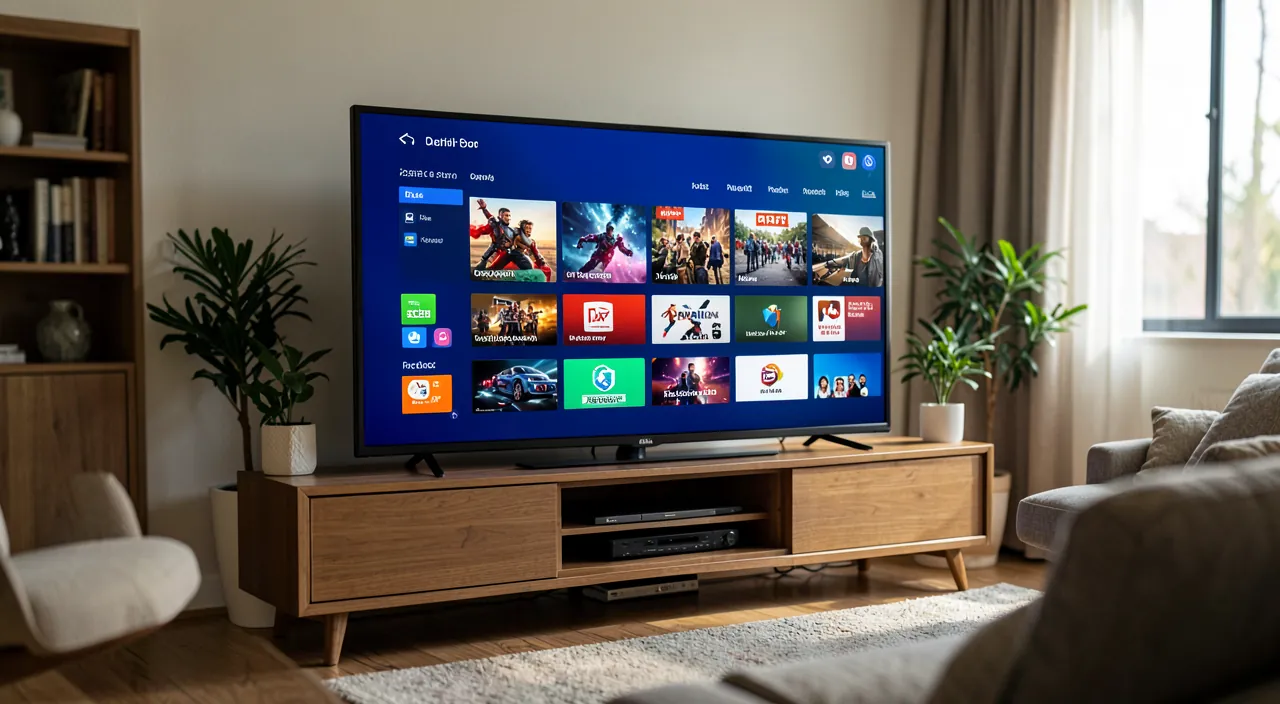
Take back control: the half-hour of settings that change the living room
The big clean-up, brand by brand (labels vary, the logic is constant) – the ACR disabled – the top priority setting (look for in privacy/terms of use: “viewing information”, “watching service”, “content recognition” – uncheck – the TV functions THE SAME, it just stops spying on the screen), the personalized ads cut off (the ad identifier limited or reset – the ads remain, profiling stops), the consents revisited (the installation tunnel re-runs in settings – the checkboxes checked on unboxing night are unchecked on a quiet Sunday – our guides – and each major update warrants a re-check – the consents “evolve”), the microphone managed (voice command of the TV remote on demand – the hands-free microphone of the TV disabled if its use does not serve you – our guides assistants), and the TV apps audited (permissions, pre-installed sponsored apps removed – our guides TV installation) – and the structural solution for the determined – the external box as a control layer (our guides – the TV relegated to a screen role – never connected to Wi-Fi, or disconnected after setup – and the chosen box for its policy – actors who do NOT live off advertising sell a different living room – the architecture that solves the problem at the root, and revives the aging TVs) – the TV-screen + the simple box is the configuration of living rooms that have chosen.
The right reflex. Do the five-minute test on the living room TV – three questions that say it all: 1) is the ACR active? (check the privacy settings – if you’ve never looked for it, it’s active) 2) does the home screen belong to you? (the first row = your apps or placements? – our guides re-arrangement) 3) who watches through the TV? (the connected accounts, the profiles – our guides audit) – then the three settings from the chapter – and do the test with the parents (the TV of the elders, installed “all accepted” by the installer, is a champion of default collection – the half-hour is worth the trip – our guides family visits).
Free TV returns: understanding the deal of FAST channels
The phenomenon to read clearly – the FAST channels (Free Ad-supported Streaming TV – the hundreds of thematic free channels integrated into TVs and boxes – the reinvented zapping, the catalog of streams – series from yesterday, documentaries, single-theme channels) – the explicit deal – free content in exchange for ads (the historical TV model – accepted, it is honest – our streaming guides see it as a legitimate complement to the thrifty household), and the implicit deal to watch – targeted ads based on your viewing data (the FAST on a TV with active ACR is the maximum collection combo – the more you are profiled, the more the free is profitable – the settings from the previous chapter rebalance – the FAST watched WITHOUT profiling becomes the old TV – ads, but for everyone the same) – the right use of the free – the assumed use of FAST as a supplement (the background zapping, the niches – not the replacement of choices – our paradox of choice guides also apply here – the infinite zapping is the anti-watchlist), the public service replays always at the head of the quality free – our guides – the real treasure without comparable data counterpart, and the family equation posed – the household that cuts a paid subscription for FAST + replays makes a rational trade-off – knowing the invisible price, and having reduced it with the settings. Free TV is neither a trap nor a gift – it’s a contract – the only requirement is to read it.
Buying your next TV: privacy enters the criteria
The TV aisle is now chosen based on this as well: the criteria that matter – the data policy by brand (comparative associations note – some TV ecosystems are notoriously more voracious – check before buying, the gap is real), the ability to REFUSE without degrading (the TV usable with consented refusals – the loyalty criterion – that which limits its functions by refusal signals), the software longevity (our guides – the security updates of a connected TV count – the screen of ten years with abandoned system becomes a network sieve – and the external box argument resurfaces), and the “simple screen” mode available (the TV that accepts being just a screen – minimal respect) – the assumed trade-offs – the slashed price of brand-agencies pays in data (the transparent equation – the household that knows chooses – and the external box corrects even the chatty TVs – the middle path accessible) – the inherited second-hand TV is REINITIALIZED (the previous user’s accounts – our guides), and the domestic network protects in the last layer (the TV on the guest network for paranoid organizers – our Wi-Fi guides – the chatty object contained) – the TV remained the simplest piece of furniture in the home for thirty years – it has become its largest connected object – the reflexes follow, and the market follows the buyers who have them.
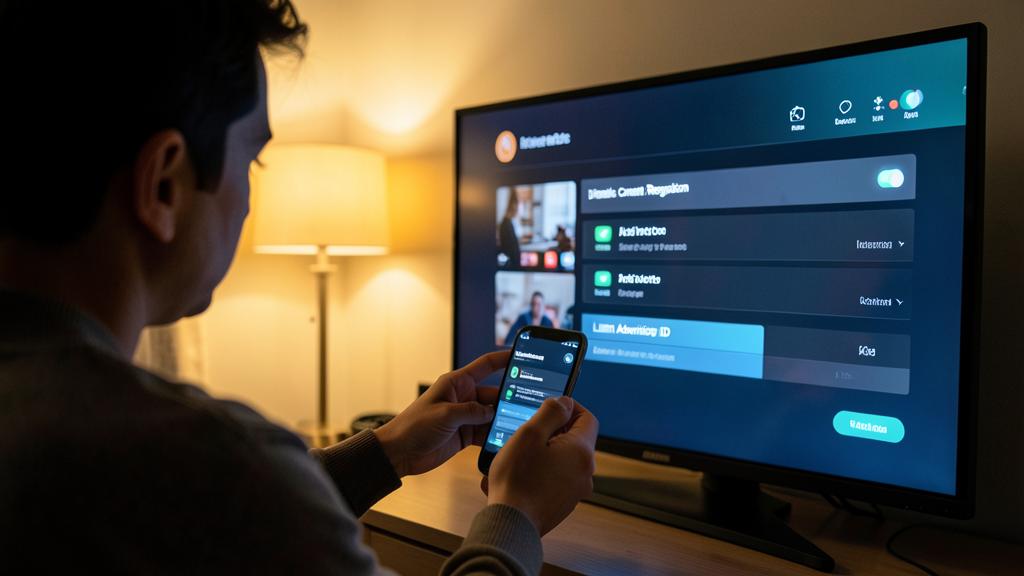
Be wary of TVs that listen and children profiled. Two sensitive areas of the connected living room: the microphones – the hands-free voice command implies the listening of the wake-up word in the LIVING ROOM (the place of family conversations – our assistant guides – the settings apply to the TV, the microphone is physically cut on some models, and the vocal history is purged) – the old issue of a manufacturer’s terms of use warning “not to discuss sensitive topics in front of the TV” remains the founding warning of the genre; and the children – the household viewing profile includes cartoons (the advertising targeting of minors is strictly regulated – but the household profile captures their habits by extension – the children’s profiles of apps – our guides – AND the ACR cut protect together) – and the ads targeting them via the living room are limited (advanced regulations are advancing – parental vigilance remains – the living room TV is the first advertising screen of childhood – let it be as little as possible). The living room is the most intimate space ever connected – set it up as such.
Frequently asked questions
Does turning off the ACR degrade recommendations or functions?
Not for the most part – the TV and apps function identically (the recommendations from the streaming apps continue – they rely on YOUR app profiles, not the ACR – our guides) – you lose the “suggestions” from the manufacturer’s home screen (no loss – it was the sponsored aisle) and ads become generic. The ACR service/data ratio is the worst in the living room – all cost, almost zero user benefit – the most profitable TV setting.
Does my non-Wi-Fi connected TV still collect data?
No – without a network, nothing leaves (the TV-screen is waterproof by design – the radical solution that works – the box ensuring the connected) – just make sure it doesn’t catch a forgotten network (the neighbor’s Wi-Fi from a past installation, the shared connection) and accept the compromise (TV updates will pass via USB or never – where the box, it updates – the consistent architecture).
Are operator boxes less intrusive than connected TVs?
Differently – the operator sees your traffic anyway (the ISP is structurally informed – bound by its obligations), and its TV box has its own ad consents (the settings tour of the decoder is the same as the TV – the targeted TV ads exist and are refused) – no connected screen is exempt from the audit – the good news being that EVERYWHERE, the settings exist – it’s the legacy of European regulations – use them.
What to take away
The connected TV is a placed advertising agency in the living room – the slashed price subsidized by your data – the ACR that recognizes everything that passes on screen (all sources), the home screen sold, the household viewing profile monetized. Taking back control takes half an hour – the ACR disabled (the best setting ratio in the living room – no loss of function), personalized ads cut off, consents re-run cold, microphone managed, children doubly protected (profiles + dead ACR) – and the structural solution of the simple box on a TV-screen for the determined. The FAST free is watched with a read contract (ads, yes – profiling, no thank you), and the next TV is bought based on its data policy. The living room has the right to watch TV in peace – it was even the original idea – a half-hour of settings restores it.
Want to understand and master the technologies that change your daily life? Our training programs enlighten you.
Leave a Reply
You must be logged in to post a comment.