
Proving age for adult websites, soon for a social network, maybe one day for the bulk of the online world for minors: online age verification has gone from a recurring issue to an active regulatory effort – France as the controversial pioneer, Europe structuring, platforms deploying. Between real protection of children (the objective that no one contests) and risks for everyone’s anonymity (the file of each consultation: the nightmare no one wants), the subject deserves more than slogans: what is being put in place, how it works technically, and what families and citizens need to know.
What is being put in place (and why now)
The regulatory landscape: France in the lead – the obligation to verify age for pornographic sites (the technical reference framework published, effective blocking of recalcitrant ones – the legal saga gave birth to a real system), and the laws on the digital majority of social networks (the principle voted – the application being built); Europe setting the standards – the regulation on digital services (the very large platforms held responsible for protecting minors – audits and fines behind), age verification guidelines, and the European identity portfolio (our guides – the technical brick that is coming: age proof is its announced use case); the global movement (British, Australian, American legislations – age restrictions on networks voted here and there: the wave is general, the recipes diverge); and why now – the documented conjunction: the early exposure to adult content (the alarming average age of first exposure studies), network-teenager concerns (our mental health guides – the nuanced scientific debate, the clear political pressure), and new TECHNICAL MATURITY (anonymized age proofs possible – the « how » that unlocks the « why »: the next chapter). The movement is launched – the question is no longer « if » but « how, and at what cost to freedoms ».
Governments are now requiring age checks for adult websites and some social networks. The goal is to protect kids, but the challenge is doing it without creating a system that tracks everyone’s online activity. New technology makes it possible to verify age without revealing identity, which is key to balancing safety and privacy.
In France, a 16-year-old trying to access a pornographic website would be blocked by a trusted third-party system (like their bank or phone provider). The site only gets a “yes, adult” signal, not the user’s name or personal details. Meanwhile, a 17-year-old using a VPN to bypass the check might still get through, showing that no system is perfect.

How to prove age without revealing who you are (the technical core)
The heart of the matter – the methods, from worst to best: the ID sent to the site (the scanned card transmitted to the platform – the WORST model: the file of identities linked to consultations, the leak waiting – our guides documents: this model is rejected, and serious frameworks exclude it); facial estimation (the camera that estimates age – without identity but with its flaws: margins of error around majority, documented biases, and the banalized biometrics – the interim solution regulated); and the double anonymity trusted third party – the model promoted by the French framework and European architecture: a THIRD PARTY verifies your age (your bank, your operator, the digital identity – who already know you) and delivers an ANONYMOUS proof (« major: yes ») that the site receives WITHOUT knowing who you are – while the third party ignores FOR WHICH site: the double blindness (the site knows the age without the identity, the verifier knows the identity without the destination – selective disclosure applied by our guides: modern cryptography knows how, it’s the decisive progress); the honest limits of the whole edifice – circumvention (the VPN that relocates, sites beyond jurisdiction, sharing of proofs: no system is watertight – the realistic objective is the friction that protects the younger masses, not absolute tightness), and dependence on the QUALITY of implementations (a poorly implemented protective principle becomes the feared file: regulators and researchers vigilance – our guides – remains the living guarantee).
The best way to verify age is through a trusted third party (like your bank) that confirms you’re an adult without sharing your identity with the website. This keeps your privacy safe while still blocking minors. However, no system is perfect—some people will always find ways around it.
- ID sent to the site: Bad. Creates a database linking identities to website visits.
- Facial estimation: Okay for now. Can be biased and isn’t perfect, but doesn’t store your face.
- Double anonymity trusted third party: Best. Your bank or phone company confirms you’re an adult, but the website never sees your name or personal details.
The right reflex. When a service asks for an age proof, apply the citizen’s alert grid: does the system pass through a RECOGNIZED third party with anonymous proof (the good model – the official verifier’s window) or does it require YOUR ID directly (the bad – and often the SCAM: fake age controls have become a document hook – our guides: no legitimate site collects IDs itself for age); the unknown site asking for a card scan « to verify your age » closes – the compliant system resembles an online payment: a third-party window, validation, no documents left behind. The difference is clear – learn it and teach it to teens: they will face it first.

For families: what changes (and what doesn’t)
The clear domestic impact: what verification will bring – real friction on accidental and early exposure (the playground click that hits a wall – the mass protection of the youngest: the achievable goal), from social networks to better managed sign-ups (the falsely declared age tricked in three clicks sees its last years – age thresholds will regain meaning: our guides first phone); what it will not change – adolescent motivated circumvention (the VPN is quickly learned – friction deters, it doesn’t stop: the conversation remains the underlying protection), problematic contents OUTSIDE the perimeter (violence, harassment, challenges – age walls don’t filter everything: our guides); and the parental stance that follows – technical tools COMBINED (home parental controls remain the first line – site age walls become the second: both layers are better than one), conversation on the WHY (the teen who understands the protection logic circumvents less – and discovered circumvention is handled in conversation, not confiscation: our guides); and exemplary content handling (the eternal free lever). The law does its part – the family keeps its: it was true before, it remains.
Everyone’s freedoms: the debate that must remain open
The other side of the balance – legitimate concerns: the consultation anonymity – the web consulted without justifying one’s identity is a founding freedom (the press, health, sexuality, opinion – the major who legally consults does NOT have to be filed): double anonymity is the technical red line – any system that crosses it (verifier leaks, crossable logs, stored biometrics) merits public alarm (precedents of leaks elsewhere in the world document the risk – the file of intimate consultations is one of the worst imaginable leaks); the perimeter creep – the age wall designed for pornography that spreads step by step (networks, then sensitive contents, then… – each extension fights – the slope of generalized web identification is monitored: our guides identity – « voluntary and alternatives maintained » are the words to defend); the exclusion – the major without digital identity or bank (multiple methods are an equity requirement – facial estimation as an option, not as the sole gate); and the citizen’s role – informed (public reference frameworks and audits are read – freedom defense associations do this work: their vigilance deserves an audience), demanding (a compliant system stands out from the makeshift – the grid above), and clear on the balance: protecting children AND adult anonymity are not opposing camps – it’s the REQUIREMENT, and the technique now knows how to fill it: demanding both is the only serious position.
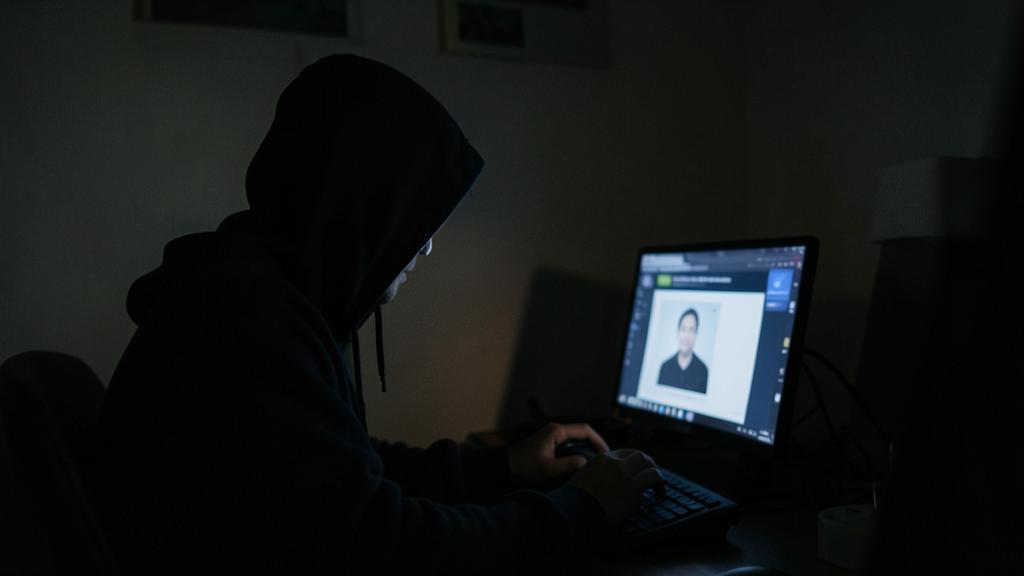

Be wary of dangerous circumventions – a topic to discuss with teens. Age walls shift flows – and motivated teens migrate to WORSE: the non-compliant sites (jurisdiction-free, no walls – and no moderation at all: extreme and illegal contents thrive – the circumvented wall often leads further than the wall), the suspect VPs (the free one that spies – our guides: the teen who installs a circumvention VP often installs a spy), the fake verifiers (the phishing with the ID already mentioned – minors who tinker with proofs share documents that leak), and the market of « verified » accounts (buying major accounts – the scam AND exposure): the defense is pre-emptive conversation (the WHY of walls, the real risks of circumvention – the informed teen navigates better than the blocked teen): technical protection without the conversation creates circumventers – with it, it creates delay and discernment: that’s exactly what they ask for.
Frequently asked questions
Will I soon have to show my ID for the whole web?
No, in the current state – the legal perimeter targets adult content and (under construction) social network thresholds – general web access remains free, and European safeguards (voluntary digital identity, alternatives) write it – perimeter creep is the point of citizen vigilance, not the present reality – the distinction deserves to be known to defend the line at the right place.

Is camera age estimation reliable – and what happens to my photo?
Reliable to a few years (sufficient to distinguish 12 from 30 – fragile around 18: margins compensate by prudent thresholds) – and compliant systems HANDLE WITHOUT KEEPING (on-the-fly estimation, image deleted – the framework requires it: check the mention, it distinguishes the serious from the biometric siphon); the option has its place as an alternative – not as a unique model.
Could platforms not just verify at minors’ sign-ups?
This is the ongoing movement (age verified at network entry – thresholds regain meaning) – with the same mechanism of anonymous proof desired, and the same limit – verified sign-up does not moderate CONTENTS (protecting minors on platforms is a full-scale project: age + design + moderation + default settings – European regulations tackle all four: the entry wall is just one door of the building).

What to retain
Online age verification is settling in – France as the pioneer, Europe structuring: the good technical model exists (double anonymity trusted third party – the site knows the age without the identity, the verifier knows the identity without the destination) and distinguishes from the bad (ID sent to the site – refuse it, and often it’s a scam: the citizen’s alert grid is taught to teens first). For families: real friction that protects the younger masses, which doesn’t stop the motivated teen (the conversation on the dangers of circumvention remains the underlying protection) and adds to parental controls without replacing them. For freedoms: consultation anonymity of majors is the red line, perimeter creep the point of citizen vigilance, exclusion the blind spot – and the serious demand boils down to one phrase: protecting children AND adult anonymity, because the technique now knows how to do both. The web is growing – let’s monitor that it grows in the right direction.


Want to understand and master the technologies changing your daily life? Our training programs enlighten you.
Leave a Reply
You must be logged in to post a comment.