
Thirty euros to never lose your keys again: the AirTag might be the object with the highest serenity/price ratio in the entire Apple catalog. The small locatable tag turns the question « where are my… » into a five-second answer — keys, checked luggage, bike in the parking lot, school bag, car in the giant parking lot. How it works (and why it works so well), the uses worth it, the honest limits — including trackers and privacy — and the tips from a seasoned user.
How it works: the genius of the Find My network
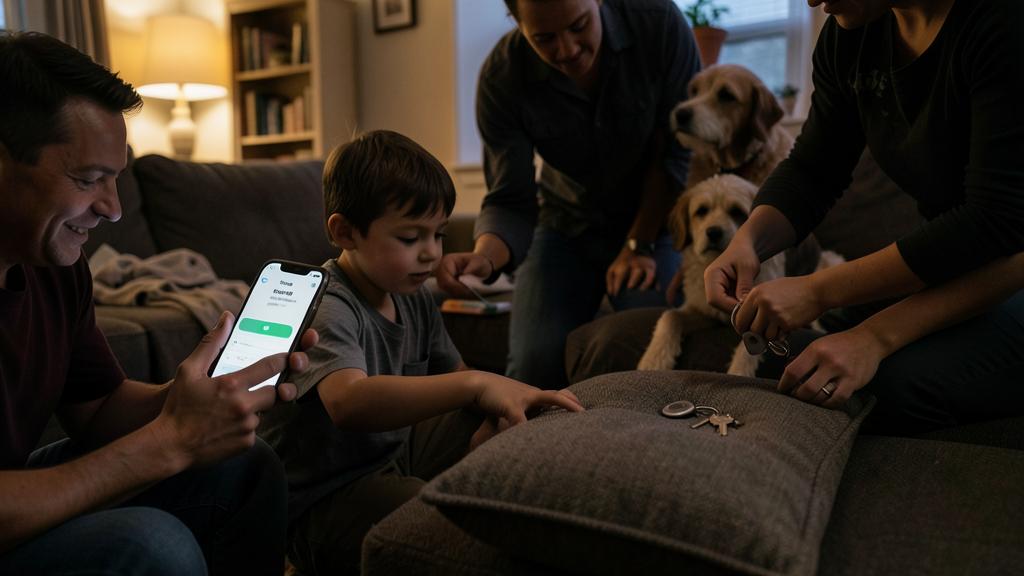
Understanding the mechanism sheds light on the uses: the AirTag has NEITHER GPS NOR its own connection — it emits an anonymous Bluetooth signal picked up by… all nearby Apple devices: every iPhone in the crowd discreetly and securely relays the position to the owner (the « Find My » network: hundreds of millions of willing devices — coverage is simply everywhere there are people): result — the suitcase located at the connecting airport, the bike tracked in the city, without subscription or network recharge; at SHORT RANGE, your iPhone takes over in real time: the PRECISE LOCATION (the arrow that guides to the meter and centimeter — « 3 meters to your left »: the keys in the couch are found with the arrow) and the SOUND ALERT (the cushion that rings); the BATTERY — a standard button battery (CR2032) that lasts about a year and is replaced in two gestures (the app warns — and the bitter-tasting batteries protect children: some coated brands resist the mechanism, take the classics); and the SETUP — just bring it close to the iPhone (the name, the emoji, it’s done): total simplicity, including to equip the objects of an elderly parent from THEIR account (the AirTag belongs to an identifier — sharing now exists for the family: see the tips).
The AirTag doesn’t use GPS or its own network. Instead, it sends a Bluetooth signal that nearby iPhones pick up and relay to you. This means it works almost everywhere people are, but only shows the last known location in remote areas. Close up, your phone can pinpoint it to the centimeter and even make it beep.
You leave your suitcase at Paris Charles de Gaulle Airport. The AirTag inside it gets picked up by other iPhones as it moves through the terminal. When you check the app, you see its last known location was near Gate 23, 15 minutes ago. If it’s in a crowded area, the position updates in real time.
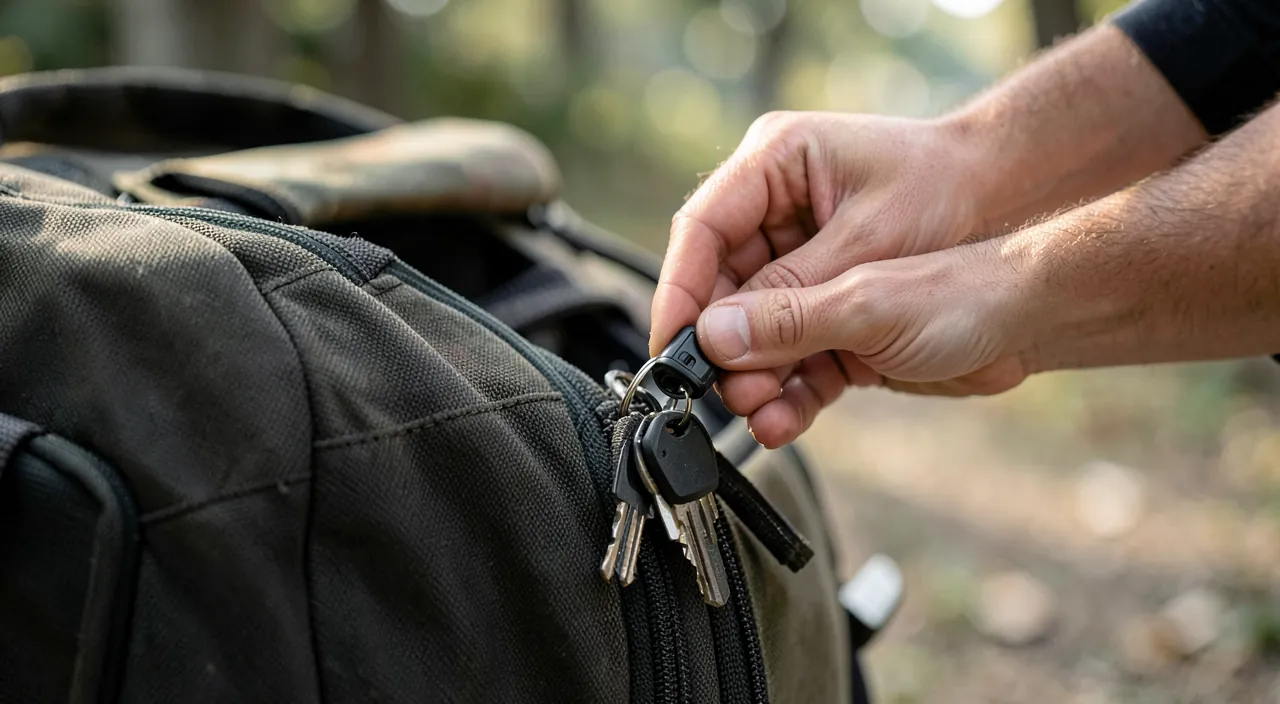
Uses worth their thirty euros
The field ranking: the KEYS — the obvious (the dedicated keychain — and the beep that settles the morning ritual); the SUITCASE while traveling — the king use since luggage gets lost: the suitcase VISIBLE on the map while the company « searches » (the magic lever for claims: « it’s in Frankfurt, terminal 2 » changes the conversation — companies now officially accept tracker locations), and the relief of seeing it boarded BEFORE takeoff; the BIKE and objects that get stolen — hidden in the bell, under the saddle, in the frame: the trail in case of theft (with the limits of the box — we do NOT play the vigilante); the CAR — finding your spot in the giant parking lot (and the artisan’s van monitored at night); the SCHOOL BAG and the stuffed animal — the forgotten backpack at sports is located (the child themselves is NOT tracked with an AirTag — see the box: children’s watches do this well and legitimately); the PAPERS and WALLETS (the card format of compatible competitors goes in the wallet); the REMOTE, the camera, the borrowed toolbox; and the CAT — the semi-official use (adapted collar: the position relayed when the cat crosses humans with iPhones — imperfect in the countryside, precious in the city; the wandering dog with a large perimeter deserves a real GPS collar with a subscription). The simple buying grid: any object whose loss would cost more than 30€ in money OR in hassle deserves its tag — the pack of four finds its place in a dinner of reflection.
THE GOOD REFLEX. Activate the « object left behind » NOTIFICATIONS — THE preventive function: the iPhone alerts you when you LEAVE without the object (« AirTag Keys left at the restaurant »): the umbrella on the train, the bag at the café — warned BEFORE the drama, not after (in Find My → the object → Notify if forgotten — with trusted locations excluded: leaving your keys at home is normal). The tracker that finds is good; the one that prevents loss is better — and it’s a setting, not an accessory.
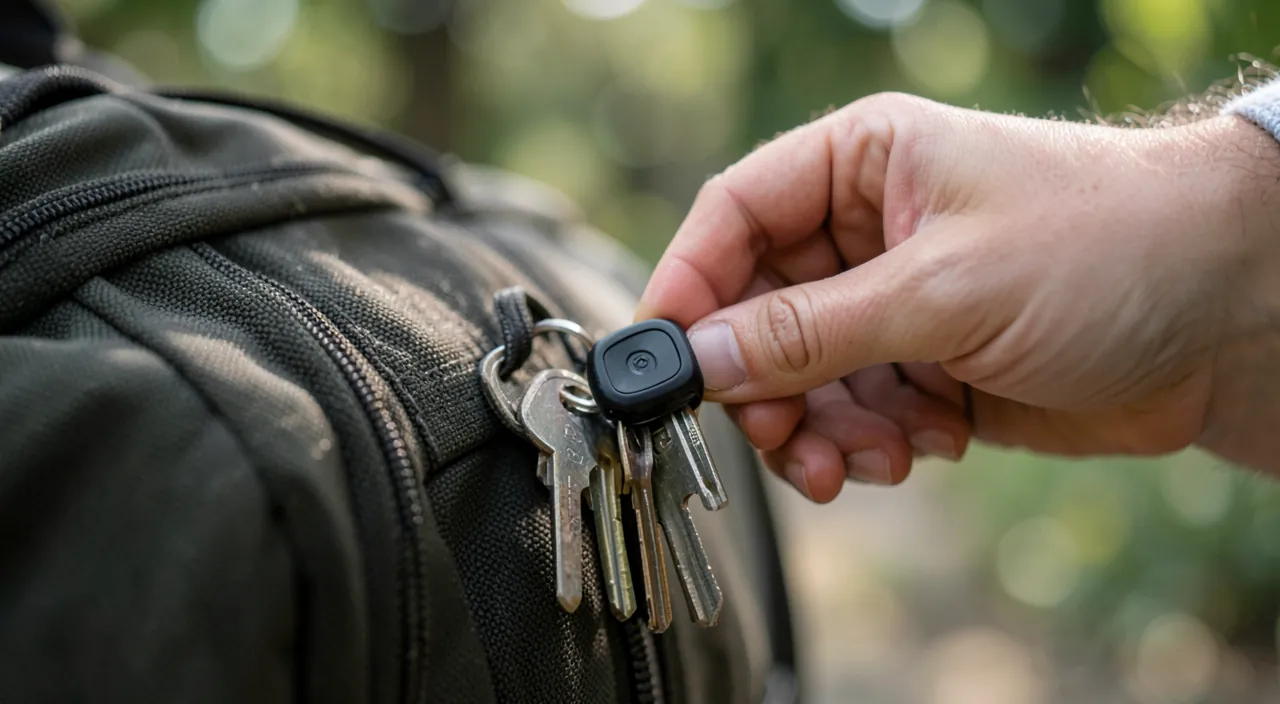
Privacy: the most regulated tracker on the market (and the good reflexes)
The serious subject, treated seriously: the misuse of a tracker to FOLLOW a person is the risk of the genre — and the AirTag is paradoxically the most protective, BECAUSE the problem surfaced early: the ANTI-HARASSMENT protections built in — the iPhone of the person being followed DETECTS the unknown AirTag traveling with them (the « AirTag detected near you » notification — now standardized ALSO on Android via a common standard), the tracker separated from its owner starts to BEEP on its own, and the app guides to find and neutralize it (battery removed) — with the serial number traceable by authorities (the AirTag is nominative: the dumbest harassment tool on the market, which is exactly the point); the GOOD REFLEXES if the alert appears on your device — do not ignore it: search (the app helps, the beep too), check the likely innocence (the AirTag of a carpooler’s suitcase, the one from the borrowed keychain — context often explains), and in case of real doubt — photos, battery removed, and the police with the serial number (cases are resolved — it’s documented); and FAMILY ETHICS — you do NOT track a PERSON without their knowledge, never: no AirTag in the teen’s bag (the trust of our first phone guides — consented position sharing exists for this), nor in a spouse’s belongings (it’s legally harassment); the small child is geolocated by tools MADE for it (children’s watch, family sharing — transparent and adapted). The OBJECT TRACKER is a serenity tool; the PERSON TRACKER is a red line — the AirTag is designed so that the second one sounds, literally.
Tips from a seasoned user
Level two: the FAMILY SHARING of AirTags (shared common objects — the car, the house keys — with relatives: everyone locates them, no more « unknown AirTag » alerts on the shared keychain); the LOST MODE — the marked lost object displays YOUR contact details to whoever scans it (any NFC phone reads the found AirTag — the good Samaritan calls you: put the number you want to expose, our privacy guides), and the notification when the location is found; the ACCESSORIES that make the use (the sturdy keychain, the suitcase case, the hidden bike mount, the card for the wallet — the naked AirTag slips out of pockets: the accessory is not optional); the EXPANDED ECOSYSTEM — the Find My network welcomes CERTIFIED THIRD-PARTY objects (bikes with built-in trackers, suitcases, cards — the « Works with Find My » logo: same app, same protections) and your Apple devices themselves (the headphones that are located — the case under the car seat found: our guides); the FINE READING of the map — the timestamp counts (the « 3 min ago » position is fresh; « 6 hours ago » just shows the last iPhone passage — the deserted countryside locates poorly: the structural limit of the network); and the TRAVEL INVENTORY — the checklist of our suitcase guides crossed with the tags: suitcase, cabin bag, camera bag — three AirTags, zero transfer anxiety (and the return to the market: the bag left at the restaurant rings on your phone before dessert is finished).
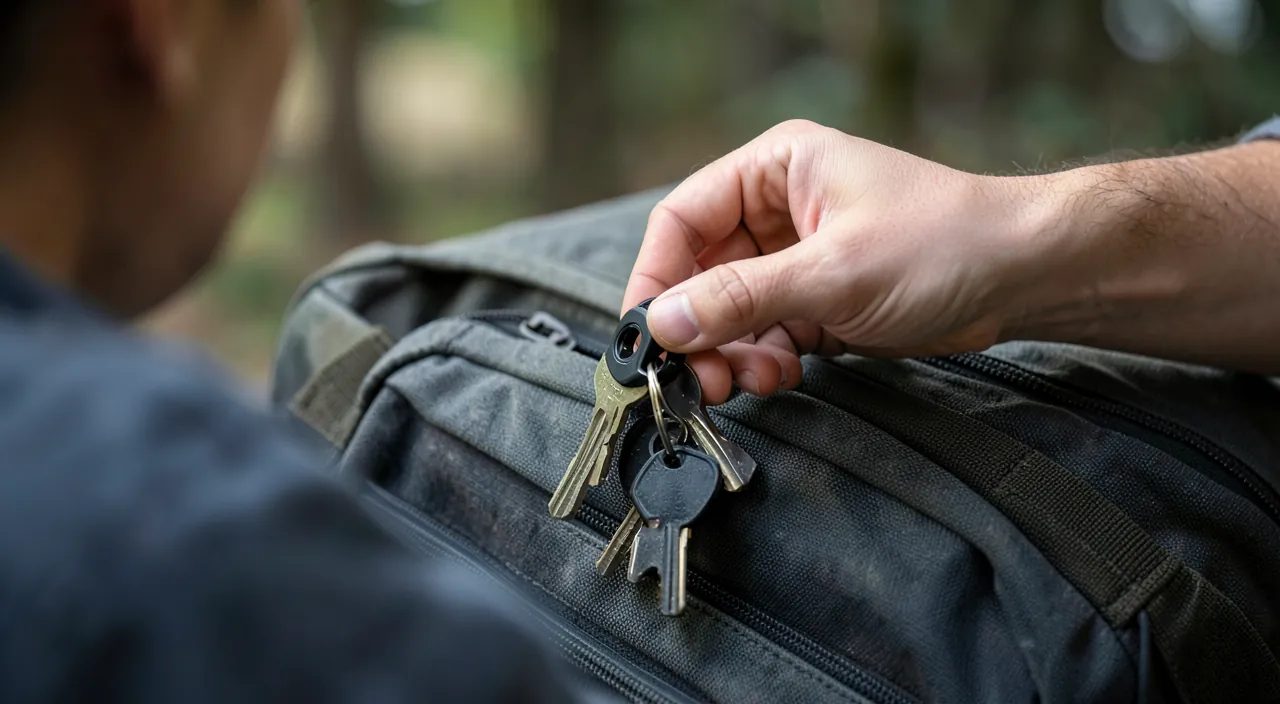
WARNING: the AirTag finds, it does not recover. The stolen bike located at the fence’s, the suitcase « at someone’s »: the address on the map AUTHORIZES YOU TO DO NOTHING — you do not ring at a thief’s door (confrontations go badly, and address errors exist: the approximate location that points to the innocent neighbor): the way is the COMPLAINT with the location as evidence (law enforcement acts on this basis — documented recoveries go through them). Same sangfroid while traveling: the suitcase located in a warehouse is not « gone to get »: it is argued at the counter, position on screen. The tracker provides the information — recovery remains a matter of procedure: it’s frustrating and that’s how it is; the alternative (the face-to-face with a thief for 30€ of tag and a bike) is never worth the risk.
Frequently asked questions
AirTag or subscription GPS tracker: which one to choose?
The AirTag wins everywhere humans pass (cities, transportation, places of life — 90% of object uses) without recurring fees; the subscription GPS wins guaranteed real-time and remote areas (the dog in the forest, the truck in rural areas, the boat): the question is « where will the object live? ». And for the Android family: equivalent network trackers (the common standard now protects in both directions).
Can an airline refuse an AirTag in checked luggage?
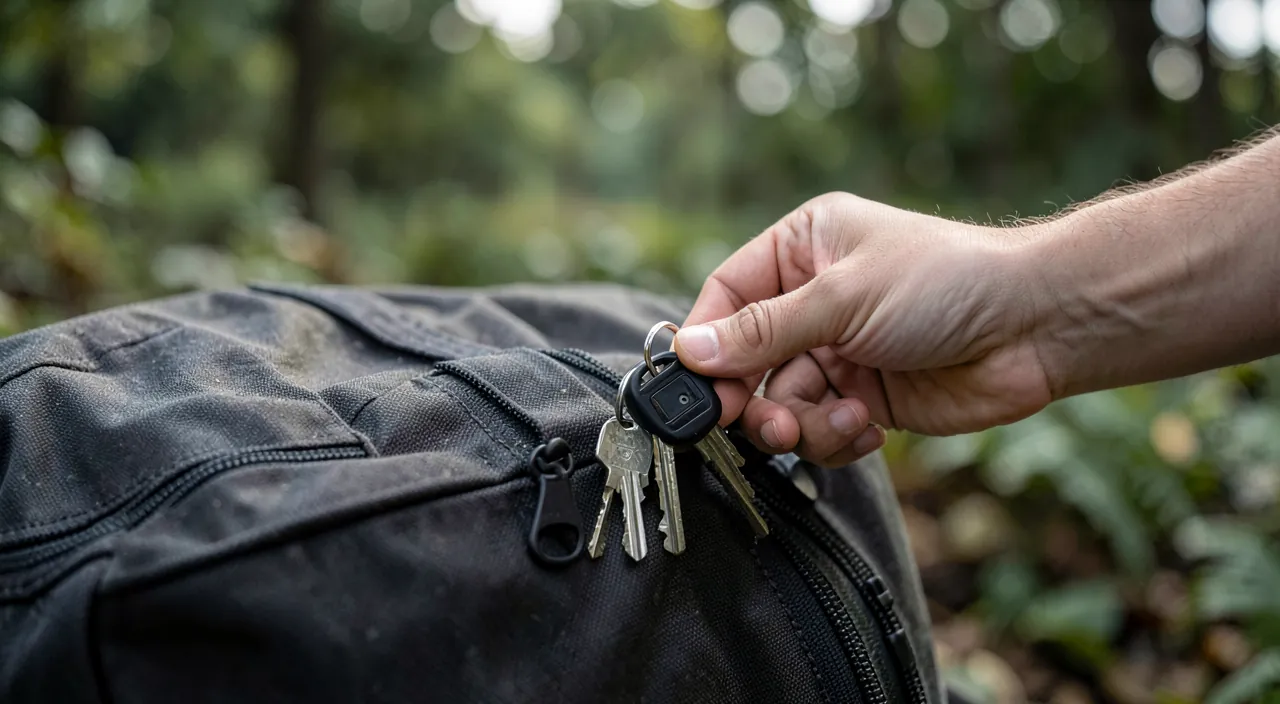
No — the question is settled: button battery trackers are allowed in checked luggage by regulators and airlines (initial hesitations are over). Leave it in the suitcase, notifications activated — and the position during layovers is worth all the claim counters.
Can I put an AirTag in my child’s backpack?
In the BACKPACK (the object — found in the gym), yes and it’s smart; to FOLLOW THE CHILD, no — the AirTag is not made for that (anti-following alerts with others, no guaranteed real-time) and a child’s geolocation deserves transparent and consented tools: the children’s watch, family sharing of the phone when the age comes (our guides). The object/person nuance is THE tracker rule — teach it at the same time as you equip.
What to remember
The AirTag solves an age-old problem: the subscription-free tag, relayed by the global Find My network, guides to the centimeter (the arrow, the beep), warns BEFORE forgetting (the « left behind » notification — the setting that changes everything), travels in checked luggage legally and transforms baggage claims. Gold uses: keys, suitcase, bike, car in the parking lot, school bag (the object — never the person: anti-following protections make the AirTag the worst harassment tool on the market, on purpose, and the « unknown AirTag » alert is taken seriously). The Lost Mode exposes your contact details to the good Samaritan, family sharing covers shared objects, the accessory makes it stick — and the map FINDS without ever authorizing self-recovery: the localized complaint does it better and without risk. Thirty euros to end a universal anxiety — the morning ritual just lost its suspense.
Want to unlock the full potential of your iPhone, iPad, or Mac? Our Apple training courses take you to the next level.
Leave a Reply
You must be logged in to post a comment.