
A headset on your eyes, and you’re transported elsewhere: VIRTUAL REALITY (VR) immerses the user in a 3D world where they can look around, move, and interact. It is first associated with video games, but its uses go far beyond: training, virtual tours, healthcare, relaxation, creation… After years of promises, where are we really? Is it mature, accessible, useful? Let’s take stock of virtual reality and its concrete uses, beyond gaming, without hype or excessive skepticism.
Virtual reality: what is it?
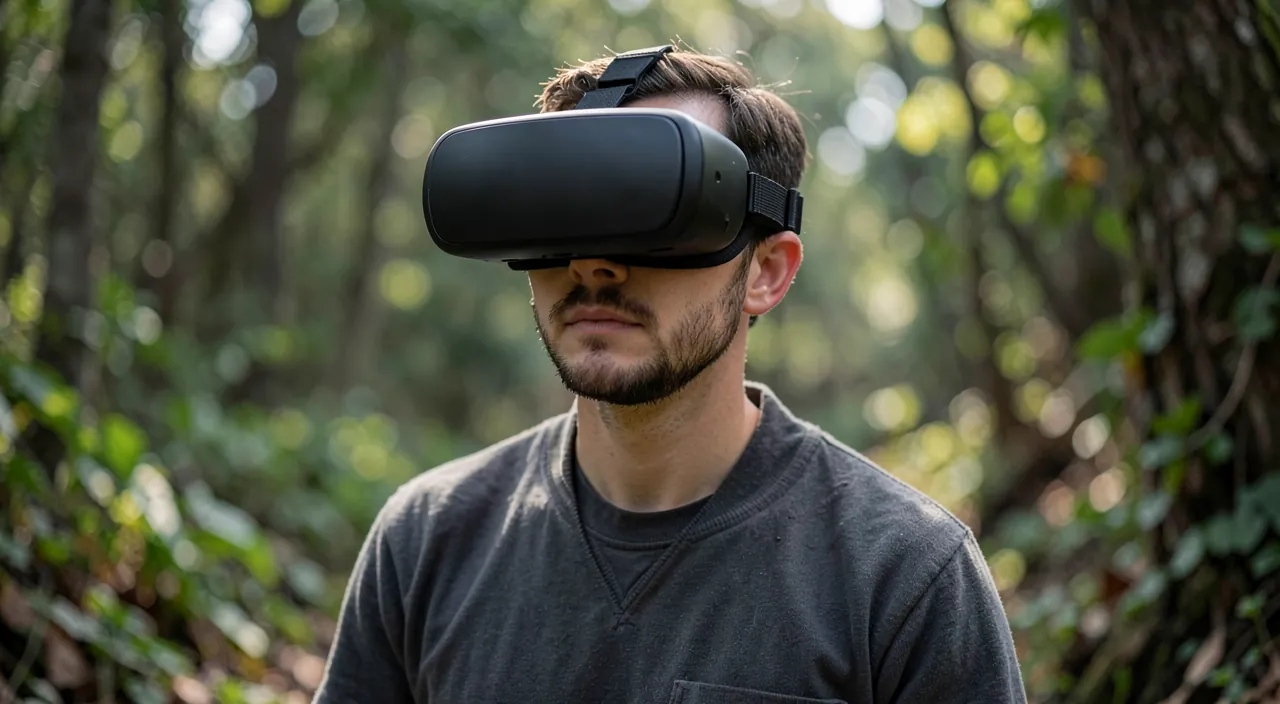
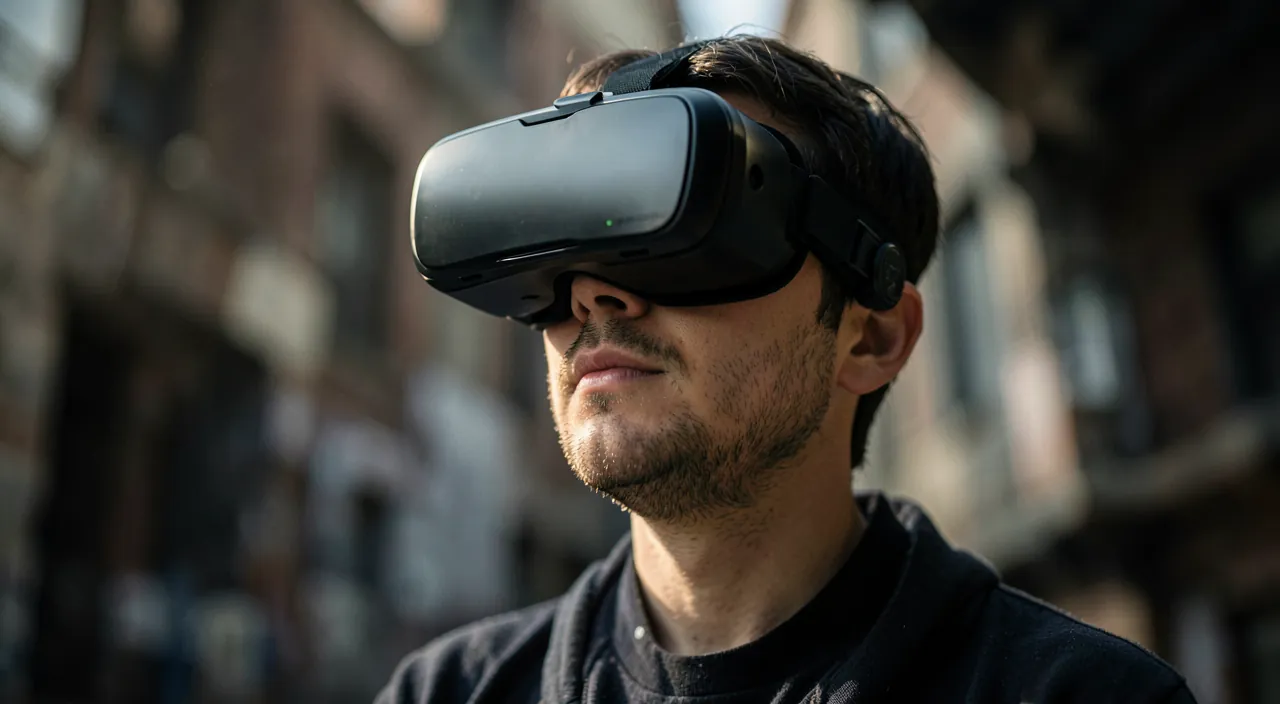
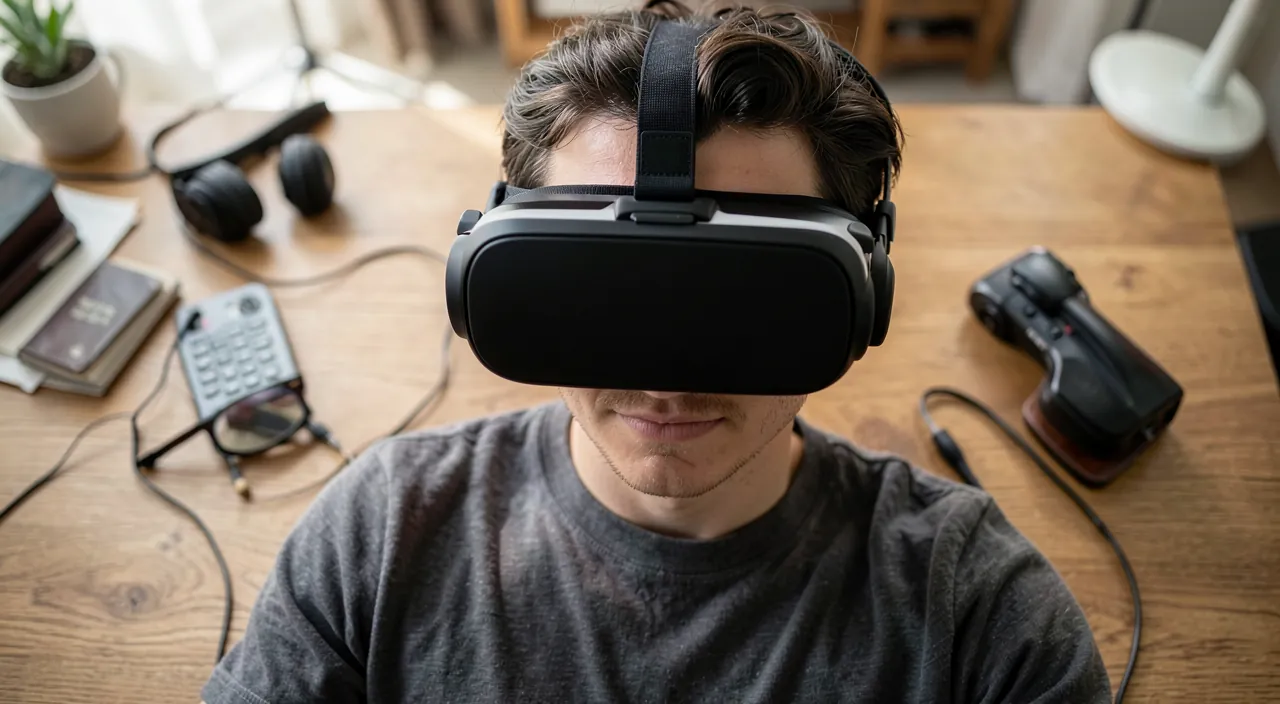
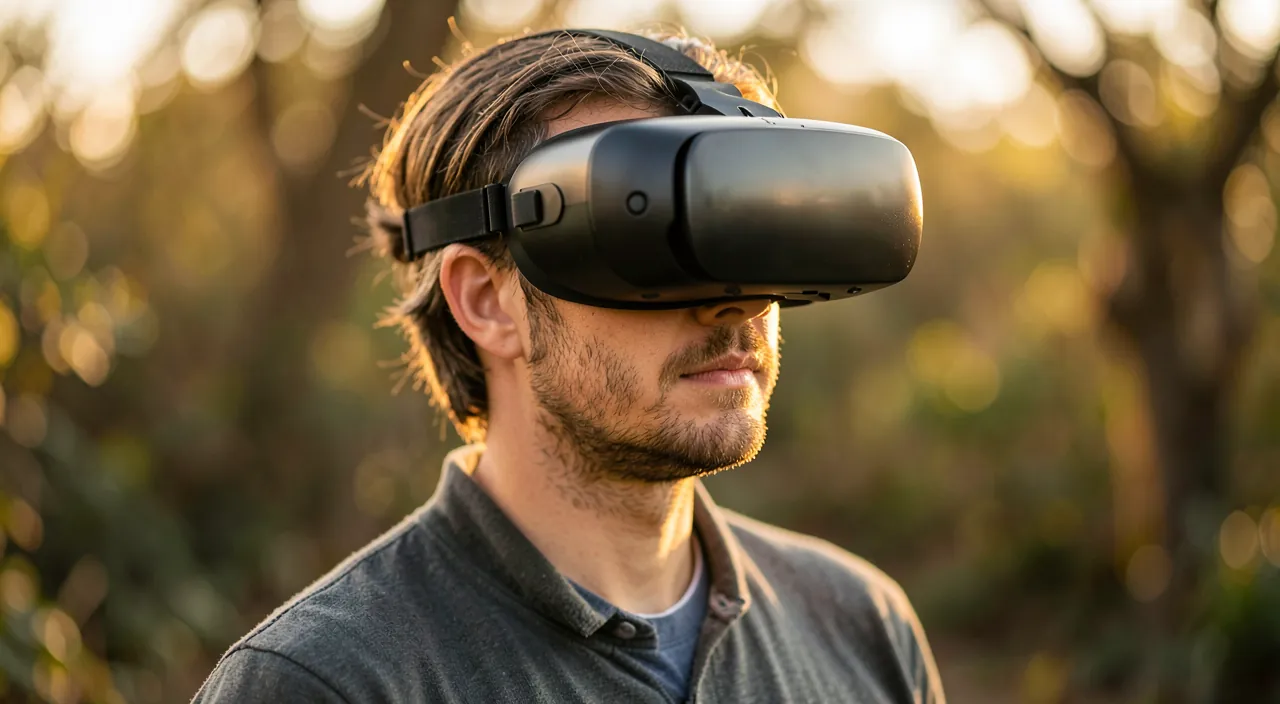
Let’s understand what virtual reality is and related concepts. The PRINCIPLE: virtual reality (VR) uses a HEADSET (worn on the eyes) that displays a 3D environment completely surrounding you; when you turn your head, you look around in this virtual world as if you were there; it’s IMMERSION: you are no longer in front of a screen, you are « in » the image; often, controllers allow you to interact (grab, point), and you can sometimes move. The sense of PRESENCE: the brain « believes » a bit to be in this environment; that’s what makes VR stunning and different from a classic screen. Related CONCEPTS to distinguish: VIRTUAL REALITY (VR) immerses you in a completely virtual world (you no longer see the real world); AUGMENTED REALITY (AR) SUPERIMPOSES virtual elements onto the real world you continue to see (for example, virtual information or objects displayed over your environment, via a phone or glasses); « mixed » reality blends the two; people also sometimes talk about « metaverse » (shared virtual worlds); these terms overlap; here, we mainly talk about VR (total immersion via a headset). What VR ALLOWS: IMMERSIVE video games (the most known use); but also: TRAINING and learning (practicing in a virtual situation: technical gestures, professions, simulations); VIRTUAL tours (museums, places, travel, real estate); HEALTH (therapies, rehabilitation, pain or phobia management); RELAXATION and meditation (soothing environments); CREATION (3D drawing/sculpting); remote collaborative work; EDUCATION (exploring the human body, space, history in an immersive way). Where are we REALLY? VR has made a lot of PROGRESS (more accessible, more autonomous, better quality headsets); it has REAL and promising uses (especially in training, healthcare, some leisure activities); BUT it has not (yet?) exploded in the general public as some announced; it remains a niche market for many uses, with obstacles (price, comfort, content, physical discomfort for some); the promise sometimes exceeds the current reality. What to remember to start: virtual reality immerses the user, via a headset, in an immersive 3D world where they can look around and interact; beyond gaming, its uses are varied (training, tours, healthcare, relaxation, creation, education); it has progressed and has real applications, but remains still in development for the general public, with obstacles; let’s approach its concrete uses and limits with discernment.
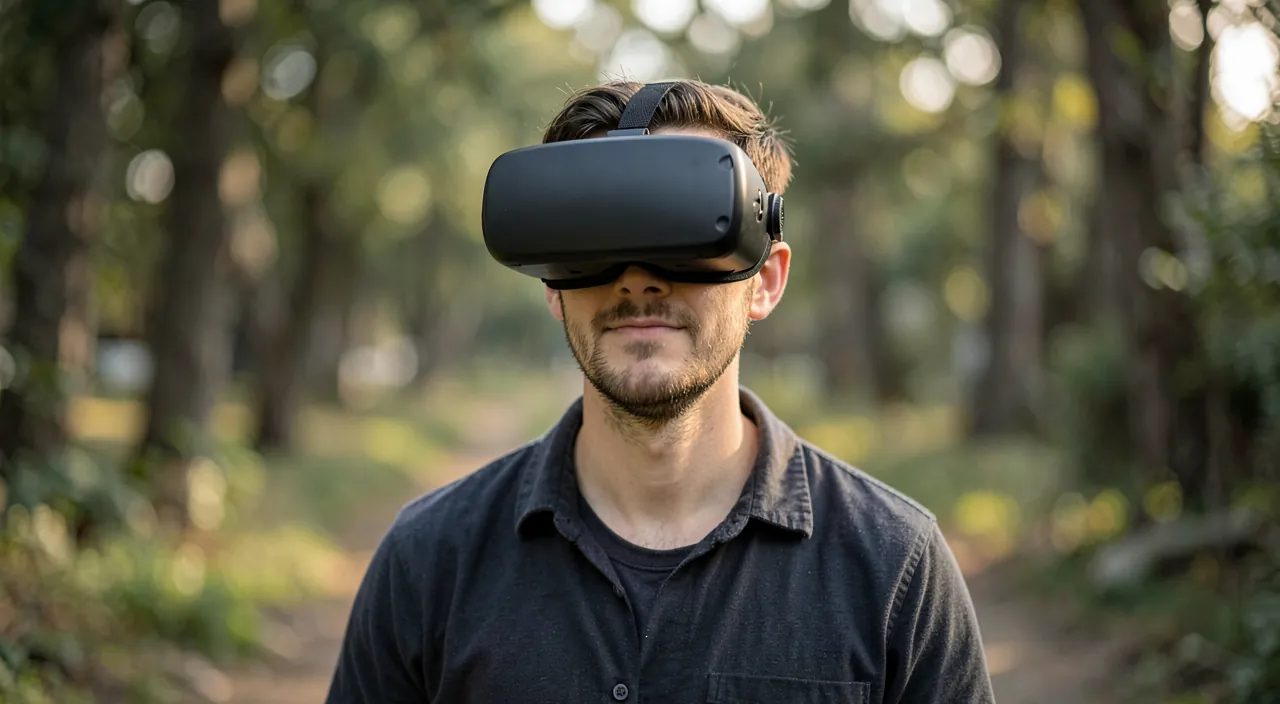
Concrete uses, beyond gaming
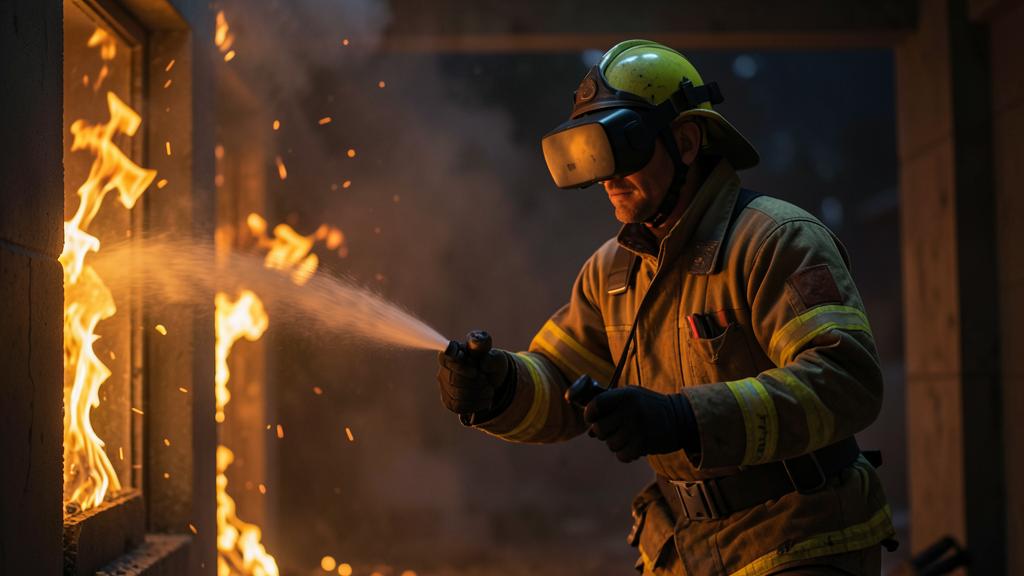
VR is not limited to entertainment; here are its most promising and concrete uses. TRAINING and practice: this is one of the most useful uses; VR allows you to PRACTICE in a virtual situation, without risk and in a repeatable way: learning technical gestures (surgery, manual trades, maintenance), training for dangerous or costly situations to reproduce in real life (firefighters, industry, aviation), practicing public speaking; immersion makes learning more concrete and memorable; many professional sectors are adopting it. HEALTH and therapy: promising uses; VR is used for REHABILITATION (immersive and motivating exercises), pain management (immersive distraction during care), treatment of PHOBIAS and anxiety (gradual and controlled exposure to what is feared, in a safe setting), relaxation; real medical applications are developing. VIRTUAL tours: exploring a MUSEUM, a monument, a city, a distant place, without moving; visiting a REAL ESTATE property remotely; discovering inaccessible places; useful for culture, tourism, real estate; a great opportunity, especially for people who cannot travel. EDUCATION: learning in an IMMERSIVE way: exploring the human body from the inside, traveling in space or through history, manipulating 3D objects; immersion can make learning more engaging, especially for difficult-to-visualize concepts. RELAXATION and well-being: escaping into SOOTHING environments (nature, landscapes), meditating in immersion; a relaxation use that is developing. ARTISTIC creation: DRAWING or SCULPTING in 3D space, creating immersive works; new tools for creatives. REMOTE collaborative work: « meeting » in a shared virtual space (immersive meetings); still emerging, with questions about its real usefulness vs. classic videoconferencing. SOCIAL connection: meeting other people in shared virtual worlds (the « metaverse »); a more uncertain use, highly publicized but not yet massively adopted. SPORTS and fitness: VR fitness applications (moving while having fun in physical games); fun and motivating for some. What to REMEMBER: beyond gaming, VR has CONCRETE and promising uses, particularly in TRAINING (practicing without risk), HEALTH (rehabilitation, phobias, pain), VIRTUAL tours (culture, real estate, accessibility), and EDUCATION; other uses (work, social, creation) are more emerging or uncertain; these applications show that VR is much more than a gaming gadget; but not all are yet mature or widespread in the general public. In summary: the most solid and useful uses of VR today are professional training, healthcare applications, virtual tours, and education; gaming and relaxation are accessible to the general public; other uses (metaverse, immersive work) remain more promising than established; VR opens real possibilities beyond entertainment.
VR is about putting you inside a virtual world where you can interact as if you were really there. This is useful for training (like practicing surgery without real risks), therapy (helping with phobias or pain), and education (exploring places or concepts you couldn’t see otherwise). It’s not just for games—it can be a powerful tool for learning and healing.
A hospital uses VR to help patients overcome their fear of flying. They put on a headset and are virtually placed on an airplane, starting with calm skies and gradually introducing turbulence. This controlled exposure helps them manage their anxiety in a safe environment before facing a real flight.
The true value of VR: immersion to learn, train, and discover. If the general public mainly knows VR through gaming, its deepest value lies in IMMERSION: the ability to place you « in » a situation or place, which no classic screen allows; this immersion is particularly precious for three things. LEARNING and TRAINING: VR allows you to practice IN SITUATION, without risk and as many times as you want; you learn better by « doing » than by watching; hence its success in PROFESSIONAL training: learning technical gestures (manual trades, surgery), training for dangerous or costly situations to reproduce (firefighters, industry, piloting), practicing public speaking; immersion makes learning concrete and memorable; this is perhaps the use where VR brings the most. DISCOVERING what you could not see otherwise: visiting a museum, a monument, a distant city, an inaccessible place, without moving; exploring the human body from the inside, space, a historical period, in an immersive way (powerful EDUCATIONAL use); this is a great opportunity, especially for people who CANNOT travel (reduced mobility, distance); VR allows them to « travel » and discover. HEALING and relaxing: in HEALTH, immersion is used for rehabilitation (motivating exercises), pain management (immersive distraction), treatment of phobias and anxiety (gradual and controlled exposure in a safe setting); and for RELAXATION, escaping into soothing environments; these therapeutic and well-being uses are promising and developing. What makes VR different from a screen is this sense of PRESENCE: the brain « believes » a bit to be there, which makes training more effective, discovery more impactful, and therapy more effective. If you are interested in VR, look beyond gaming: these « useful » uses (training, discovery, healthcare) are what make it a truly promising technology, not just entertainment. That said, keep a DISTANCE: not all these uses are equally mature or accessible to the general public; some are mainly deployed in professional or medical settings; for an individual, the accessible uses are mainly gaming, relaxation, some virtual tours, and fitness applications; professional and medical uses, on the other hand, show the full potential of the technology. Immersion is the key to VR’s value: it transforms learning, discovery, and care—far beyond simple gaming.
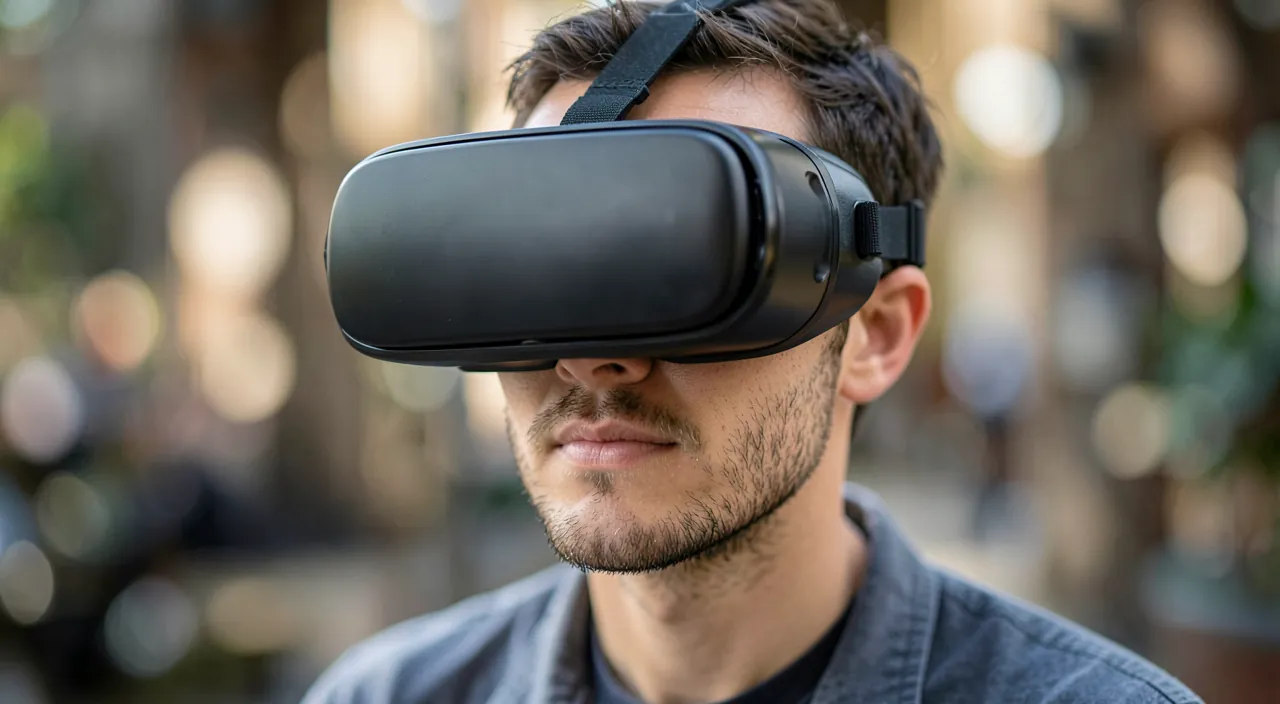
Where are we really: maturity, obstacles, and discernment
Let’s honestly assess the state of VR today, between potential and reality. REAL PROGRESS: VR has come a long way; headsets are more ACCESSIBLE (lower prices for some), more AUTONOMOUS (all-in-one wireless headsets without a computer), better QUALITY (image, comfort, motion tracking); content has become richer; the technology is much more mature than at its inception. But PERSISTING OBSTACLES: PRICE (a good headset remains an investment, and some uses require powerful hardware); PHYSICAL COMFORT (wearing a headset for a while can be uncomfortable; some experience « motion sickness » / nausea in VR—the « cybercinetosis »—eye strain, heat, weight); the ISOLATING aspect (you are cut off from the real world, alone in your headset); the lack of « must-have » public content for some uses; and slower-than-announced public adoption. Reality vs. HYPE: VR (and the « metaverse ») has been highly publicized, sometimes oversold as the « imminent future »; reality is more nuanced: VR has real uses (especially professional, medical, educational) and is progressing, but has not (yet?) transformed the daily life of the general public as some predicted; beware of excessive HYPE as well as total skepticism; the truth lies in between: a promising technology, truly useful in certain areas, but still in development for the general public. Should you BE INTERESTED / equip yourself? For a CURIOUS individual: VR can offer stunning experiences (immersive gaming, tours, relaxation, fun fitness); it’s an interesting hobby if the budget and desire are there; but it is not (yet) a « must-have »; consider it as a hobby/a discovery, not a necessity; you can test before investing (experiences in dedicated places). For PROFESSIONAL or medical uses: this is where VR brings the most concrete value (training, healthcare); these sectors adopt it for good reasons. FUTURE EVOLUTION: VR (and augmented reality) continues to evolve; augmented reality glasses (overlaying virtual elements on the real world, without isolation) could eventually be more adopted than immersive VR headsets for daily life; the future will tell how these technologies will integrate into our lives; stay curious without rushing. In summary: VR has made real progress (accessible, autonomous, quality headsets) and has concrete and promising uses (training, healthcare, tours, gaming), but it remains hindered (price, comfort, isolation, slow adoption) and has not transformed the general public as announced; approach it with DISCERNMENT: neither excessive hype nor rejection; it’s a promising technology, truly useful in certain areas, an interesting hobby for the curious, but still in development for widespread general public use.
Warning: comfort and health (nausea, fatigue), children, isolation, and hype to relativize. Virtual reality is fascinating, but a few points of caution deserve attention. COMFORT and HEALTH: wearing a VR headset can cause discomfort; some people experience a « virtual motion sickness » (nausea, dizziness, discomfort—the « cybercinetosis, » due to the mismatch between what the eyes see moving and what the body feels); others experience eye strain, headaches, or discomfort (weight, heat); these effects vary depending on the person and the experience; tips: start with SHORT sessions, take REGULAR BREAKS, stop if you feel unwell, and gradually increase; don’t force it if your body doesn’t tolerate it; in case of health issues (balance disorders, epilepsy, etc.), seek medical advice before. CHILDREN: special caution; VR is generally NOT recommended for young children (manufacturers often indicate a minimum age: possible effects on developing vision, comfort, content); respect age recommendations, limit time, monitor content, and supervise (our guides on how to supervise children on screens). ISOLATION and physical safety: in VR, you are CUT OFF from the real world (you no longer see around you); risk of bumping into furniture, walls, or tripping while moving; clear a SAFE SPACE around you, be aware of your environment; do not leave someone in VR unsupervised in a dangerous space; isolation can also be disorienting (you don’t see who enters the room). Relativize the HYPE: VR and the « metaverse » have been highly publicized and sometimes OVERSOLD as the « imminent future »; reality is more nuanced: promising and truly useful technology in certain areas, but which has not (yet) transformed the daily life of the general public; don’t be carried away by marketing; it is not (as of today) a « must-have »; consider it as an interesting hobby/a discovery, not a necessity; TEST before investing (comfort and interest vary depending on the person). PRICE: a VR headset (and hardware for some uses) represents an investment; assess the real use you will make of it before buying (many headsets end up little used). CONTENT and platform dependency: experiences depend on available content and platforms/manufacturers; check what exists for the use that interests you. PRIVACY: VR headsets collect data (movements, sometimes the environment via sensors, usage); as with any connected device, be attentive to what the manufacturer collects. Finally, keep BALANCE: VR is a powerful immersive experience, but it does not replace the real world, physical interactions, outdoor activity; to be consumed in moderation, like any screen. By taking into account comfort and health (short sessions, breaks, stopping if unwell), caution for children, physical safety (cleared space, isolation from reality), and relativizing hype (interesting hobby, not a necessity; test before investing), you will enjoy virtual reality serenely, knowing its limits.
Frequently asked questions
Is virtual reality used for anything other than gaming?
Yes, for much more: gaming is the most known use by the general public, but VR has many « useful » uses, often more promising. TRAINING and practice: this is one of the most solid uses; VR allows you to practice IN SITUATION, without risk and in a repeatable way: technical gestures (manual trades, surgery), dangerous or costly situations to reproduce (firefighters, industry, piloting), public speaking; many professional sectors adopt it because immersion makes learning concrete and effective. HEALTH: promising and real uses—rehabilitation (immersive and motivating exercises), pain management (distraction during care), treatment of phobias and anxiety (gradual and controlled exposure in a safe setting), relaxation. VIRTUAL tours: exploring a museum, a monument, a distant city, a real estate property, without moving; valuable for culture, tourism, and especially for people who cannot travel. EDUCATION: learning in an immersive way (exploring the human body, space, history; manipulating 3D objects); immersion brings to life difficult-to-visualize concepts. RELAXATION and well-being: escaping into soothing environments, meditating in immersion. CREATION: drawing or sculpting in 3D. FITNESS: moving while having fun in physical applications. COLLABORATIVE work and social connection (immersive meetings or shared virtual worlds) are more emerging. So yes, VR is much more than a gaming tool; its most solid and promising uses are professional training, healthcare, virtual tours, and education; gaming, relaxation, and fitness are accessible to the general public; other uses are still in development. These applications show that VR has real value beyond entertainment, driven by its unique IMMERSION capability (placing you « in » a situation or place). That said, not all these uses are equally mature or accessible to an individual; some are mainly deployed in professional or medical settings; but they illustrate the full potential of the technology, far beyond gaming.
Should you equip yourself with a virtual reality headset?
It depends on your curiosity, your budget, and the use you would make of it; it is not (yet) a must-have. For an INDIVIDUAL, VR can offer stunning and pleasant experiences: immersive gaming, virtual tours, relaxation in soothing environments, fun fitness; it’s an interesting hobby and a great discovery IF you are curious and the budget allows it. BUT some reservations: it is NOT a « must-have » of daily life (unlike a smartphone); consider it as a hobby/a discovery, not a necessity; the PRICE is an investment (a good headset costs, and some uses require powerful hardware); COMFORT varies depending on the person (some experience nausea, fatigue; others do not); and many headsets end up little used after the novelty effect. THE ADVICE: before investing, TEST if possible (some places offer VR experiences; or try a friend’s headset); this allows you to see if you tolerate the headset well (comfort, no nausea) and if the experience really pleases you; also assess the REAL use you will make of it (will you really use it regularly?); check the available content for what interests you. If you are CURIOUS, have the budget, and the test is conclusive: why not, it’s a unique and immersive experience. If you hesitate or the budget is tight: no rush; the technology evolves and becomes more affordable; you can wait. For PROFESSIONAL or specific uses (training, certain applications), it’s different: there, VR can have real value justifying the equipment. In summary: equipping yourself with a VR headset is a choice of HOBBY/curiosity, not a necessity; it’s interesting if you are curious, have the budget, tolerate the headset well, and will make real use of it; TEST before investing (comfort and interest vary), and don’t buy on a whim; it is not (yet) a must-have for the general public, but a discovery that can be stunning for those interested.
Does virtual reality present any risks?
Some risks and discomforts to be aware of, mainly physical; nothing dramatic with the right precautions. The main discomfort: PHYSICAL DISCOMFORT; some people experience a « virtual motion sickness » in VR (nausea, dizziness, discomfort—due to the mismatch between the movement seen by the eyes and the immobility felt by the body); others experience eye strain, headaches, or discomfort related to the weight/heat of the headset; these effects vary greatly depending on the person and the experience; to limit them: start with SHORT sessions, take BREAKS, STOP if you feel unwell (don’t force it), and gradually increase; some people get used to it, others tolerate VR poorly (that’s just how it is). PHYSICAL SAFETY: in VR, you are CUT OFF from the real world (you no longer see around you); risk of bumping into furniture/walls or tripping if you move; CLEAR a safe space around you, stay aware of your environment, and do not leave a VR user unsupervised in a dangerous space. CHILDREN: VR is generally not recommended for young children (manufacturers often indicate a minimum age: possible effects on developing vision, comfort, content exposure); respect age recommendations, limit time, monitor content, supervise. In case of HEALTH issues (balance disorders, epilepsy/sensitivity to images, specific vision problems): seek medical advice before using VR. PRIVACY: headsets collect data (movements, sometimes your environment via sensors, usage); as with any connected device, be attentive to what the manufacturer collects. ISOLATION and moderation: VR isolates you from the real world and can be very immersive/captivating; to be consumed in MODERATION (like any screen); it does not replace real interactions, physical outdoor activity, life outside the headset; keep balance. None of this is dramatic with common sense: short sessions and breaks (against discomfort), cleared space (against collisions), caution for children, moderation, and medical advice if in doubt. In summary: yes, VR presents risks and discomforts, mainly physical (nausea, fatigue; collisions if cut off from reality), plus caution for children and moderation; these risks are easily managed with the right precautions (short sessions, breaks, stopping if unwell, safe space, respecting ages); by following them, VR remains a safe and pleasant experience for most people.
What to remember
Virtual reality (VR) immerses the user, via a HEADSET, in an IMMERSIVE 3D world where they can look around and interact; this immersion (the brain « believes » to be there) distinguishes it from a classic screen. Not to be confused with AUGMENTED REALITY (which overlays virtual elements on the real world you continue to see). Beyond GAMING (its most known use), VR has CONCRETE and promising uses: TRAINING and practice (practicing in situation, without risk: technical gestures, professions, simulations—the most solid use), HEALTH (rehabilitation, pain management, phobias, relaxation), VIRTUAL tours (museums, places, real estate; valuable for those who cannot travel), EDUCATION (learning in an immersive way), relaxation, creation, fitness; other uses (collaborative work, « metaverse »/social) are still emerging. The true VALUE of VR lies in immersion: learning/practicing by « doing, » discovering what you could not see otherwise, and healing (health). WHERE ARE WE? VR has progressed a lot (more accessible, autonomous, quality headsets) and has real applications; BUT it remains hindered (PRICE, PHYSICAL COMFORT—nausea, fatigue—, ISOLATION from reality, slower-than-announced public adoption); it has not (yet) transformed daily life as HYPE predicted. Approach it with DISCERNMENT (neither enthusiasm nor rejection): promising technology, truly useful in certain areas (especially professional, medical, educational), interesting hobby for the curious, but not (yet) a must-have for the general public. Should you equip yourself? It’s a choice of hobby/curiosity, not a necessity; TEST before investing (comfort and interest vary a lot; many headsets end up little used); assess real use and budget; don’t buy on a whim. POINTS OF CAUTION: COMFORT and HEALTH (short sessions, breaks, stopping if nausea/discomfort; medical advice if in doubt), CHILDREN (respect minimum age, limit, supervise), PHYSICAL SAFETY (you are cut off from reality: clear a safe space against collisions), MODERATION (like any screen; does not replace the real world), and privacy (collected data). VR opens real possibilities beyond gaming; it’s a promising and immersive technology, to be discovered with curiosity and discernment, knowing its useful uses as well as its current limits.
Want to understand and master the technologies that change your daily life? Our training programs will enlighten you.
Leave a Reply
You must be logged in to post a comment.