
You share a beautiful photo, but in front of the « caption » field, it’s empty: what to write to accompany the image without falling into the banal? A quote? A pun? A sentence that captures the mood? Finding the right caption can be surprisingly difficult. Artificial intelligence can give you a helping hand: based on the description of your photo or its atmosphere, it suggests caption ideas—poetic, funny, understated, according to the desired tone. It’s a way to get unstuck and save time, provided you keep your personal touch. Let’s see how AI can help you caption your photos, and how to do it with accuracy and authenticity.
How AI helps find captions
AI is particularly comfortable with words; here’s what it brings for your captions. GENERATE ideas: based on the description of your photo (what it shows, its atmosphere, the context) or what you feel, AI suggests several caption ideas; faced with a blank, having proposals helps you get unstuck. VARY the tones: do you want a poetic caption? Funny? Understated? Inspiring? Offbeat? AI adapts to the requested tone and proposes in the desired register; useful for finding the style that fits the image and you. Suggest QUOTES or references: it can suggest quotes, expressions, puns related to the theme; a way to enrich your ideas (to verify—see below). Adapt to the CONTEXT: a travel photo, a meal, a sunset, a family moment: AI adapts its suggestions to the subject; the more you describe, the more it’s relevant. Help with KEYWORDS: for those who want, AI can also suggest relevant keywords (hashtags) to accompany a post; a plus for visibility. Overcome the lack of INSPIRATION: its main strength; when you don’t know what to write, a few proposals restart creativity, even if you end up writing your own version. What AI DOES NOT replace: your personal TOUCH, your voice, the true emotion you want to convey, your own humor; a generated caption can sound generic or impersonal; to personalize. What it SERVES: to get UNSTUCK facing a blank; to find INSPIRATION and ideas; to VARY tones and get out of your habits; to SAVE time; all as a starting point to personalize. The main idea: AI helps find captions for your photos by generating, based on the description or atmosphere of the image, several ideas adapted to the desired tone—poetic, funny, understated, inspiring. It’s a precious help to get unstuck facing a blank, find inspiration, vary registers, and save time. But a generated caption can sound generic; AI does not replace your personal touch, your voice, and the true emotion you want to convey. Use its proposals as a starting point to personalize: the inspiration comes from AI, but the caption that looks like you, you finalize it.
AI suggests caption ideas based on what you describe or feel. It can adapt to different tones and suggest quotes, but it doesn’t replace your personal touch. Always personalize the AI’s suggestions to make them sound like you.
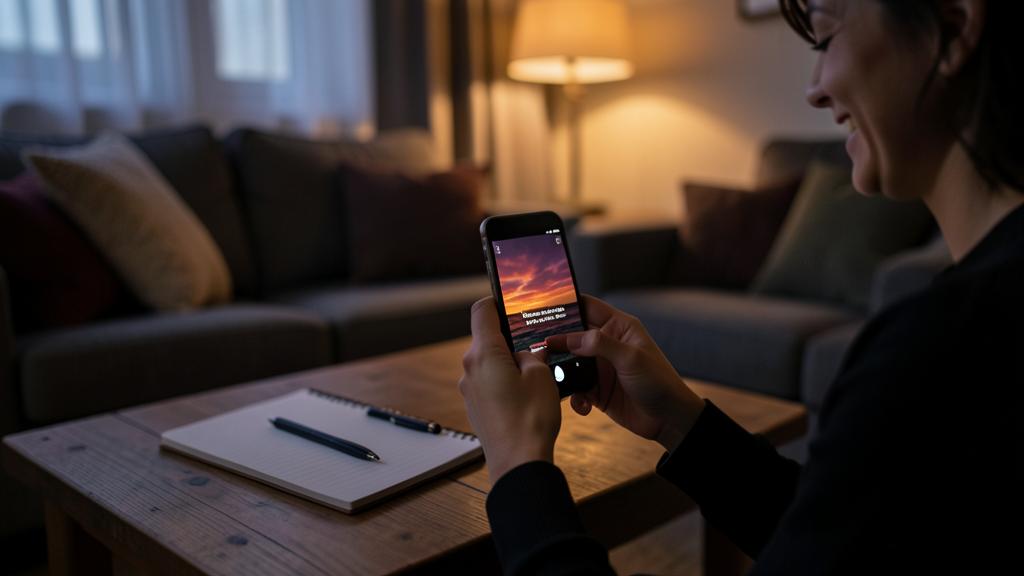
You upload a sunset photo to an AI tool and describe it as “a golden sunset over a quiet beach, feeling peaceful and nostalgic.” The AI might suggest captions like “Golden hour, golden memories” or “Where the sky meets the sea, and time slows down.” You then tweak these to add your personal touch, like “This sunset made me think of our last summer trip—how time flies!”
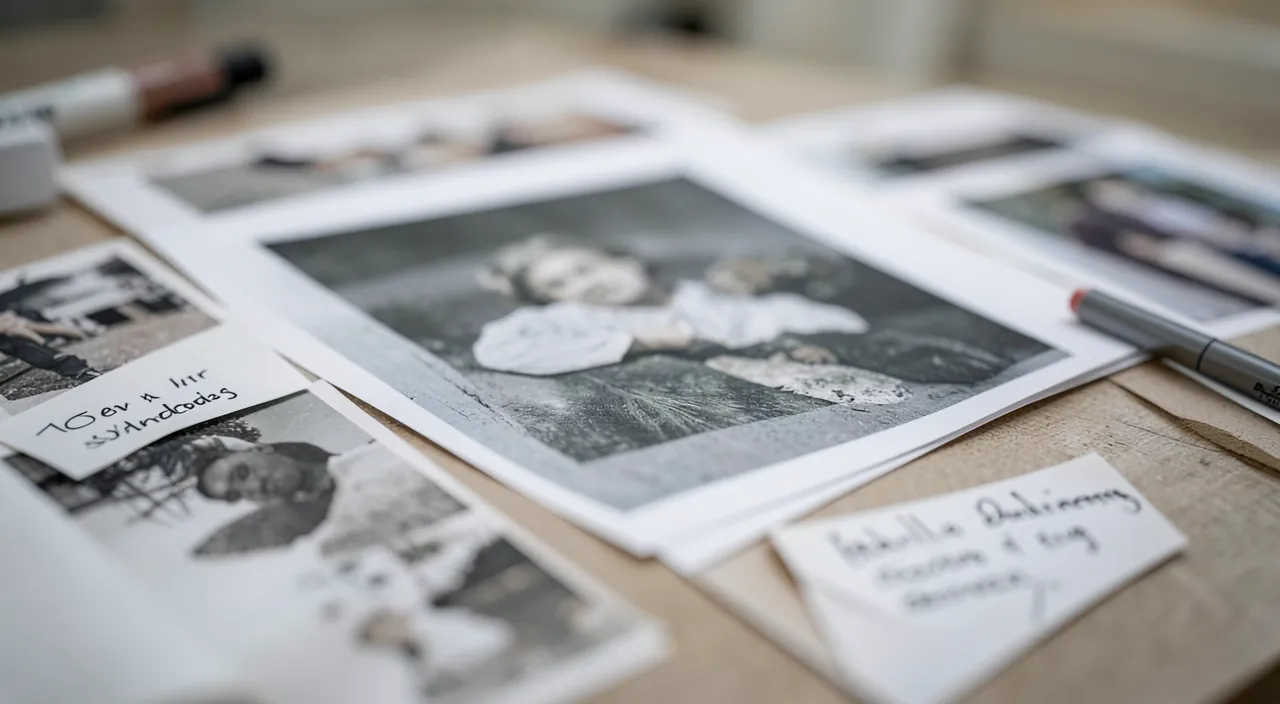
How to get good personalized captions
For AI to really help you without your captions sounding « manufactured, » here’s the method. DESCRIBE your photo well: the more context you give to AI—what the photo shows, the atmosphere, the place, the moment, the emotion, the occasion—the more its proposals will be accurate; a rich description gives better captions. SPECIFY the tone and style: clearly state what you want: « a poetic caption, » « something funny, » « short and understated, » « inspiring without being cliché »; the tone is everything; guide AI to your register. ASK for several proposals: ask for several ideas at once; you pick, combine, get inspired; choice stimulates creativity. ALWAYS personalize: don’t paste a generated caption as is; take it with YOUR words, add your touch, your humor, a personal detail, the true emotion; that’s what makes the caption authentic and yours. Use AI as a SPRINGBOARD: often, AI’s proposals restart your own inspiration, and you end up writing your version; that’s perfect; AI unlocks, you create. STAY authentic: a caption must sound like you; avoid overly generic, clichéd, or impersonal formulas that AI can produce; your followers appreciate your voice, not a generic text. VERIFY quotes and references: if AI suggests a quote or reference, check it’s accurate and properly attributed (AI can invent or misattribute); a false quote makes a bad impression. ADAPT to the platform and audience: a caption is thought according to where you publish and for whom; adapt the tone and length; AI can help, but you know your audience. Don’t OVERUSE: not all your captions need AI; sometimes, a simple and sincere phrase from you is better than a worked caption; keep it natural. KEEP the fun: captioning a photo is also a moment of expression; AI is a help, not an obligation; if inspiration comes on its own, all the better. In summary: describe your photo well and specify the tone, ask for several proposals, but always personalize with your words and your touch, use AI as a springboard for your own inspiration, stay authentic, verify quotes, adapt to your audience, and don’t overuse. AI unlocks and inspires you; the caption that looks like you, you make it.
- DESCRIBE your photo well: the more context, the better the captions.
- SPECIFY the tone and style you want (poetic, funny, etc.).
- ASK for several proposals to pick, combine, or get inspired.
- ALWAYS personalize: add your words, humor, and personal details.
- STAY authentic: avoid generic or clichéd formulas.
- VERIFY quotes and references suggested by AI.
- ADAPT to the platform and audience.
- Don’t OVERUSE AI—sometimes, a simple phrase is best.
- KEEP the fun: captioning should be enjoyable.
The right use: AI as an inspiration trigger, not as the final pen. The best way to use AI for your captions is not to ask it for THE perfect caption to copy-paste, but to use it as a TRIGGER that restarts your own creativity. Here’s why this nuance changes everything. The problem with a caption pasted straight from AI is that it often sounds « manufactured »: a bit too smooth, a bit generic, sometimes clichéd, and above all, it doesn’t look like you. But a caption is your voice accompanying your image; your loved ones, your followers recognize your way of saying, your humor, your sensitivity; an impersonal caption breaks this link. The right approach: ask AI for several ideas (by well describing your photo and the desired tone), not to choose one to copy, but to be INSPIRED. Very often, by reading the proposals, something happens: an idea half-pleases you and makes you want to rephrase it in your own way; a word triggers another; an angle makes you think of a personal sentence; in short, AI unlocks your own inspiration, and you end up writing YOUR version, much better and more authentic than any raw proposal. That’s exactly the goal: AI gets you out of the blank and primes the pump; you bring the final touch that hits the mark. A few reflexes to play this game well: take the proposals as raw material to knead, not as a finished product; pick a bit here, an idea there, and combine with your own words; always add something personal—a detail only you know about this moment, a true emotion, your own humor, a wink to those who follow you. It’s this little extra soul that turns a generic caption into a caption that looks like you. Two practical complementary tips. First, if AI suggests a QUOTE or reference, always check it’s accurate and correctly attributed before using it: AI sometimes invents quotes or attributes them to the wrong person, and nothing makes you look more amateur than a beautifully phrased quote falsely attributed. Then, don’t forget that the best caption isn’t always the most worked: sometimes, a simple, short, and sincere phrase from you—or even a few words, a raw emotion—is worth a thousand times better than a sophisticated caption; don’t let AI push you to overwrite. Keep it natural and fun: captioning a photo is a moment of expression, not a chore to delegate. Used as an inspiration trigger rather than a replacement pen, AI helps you find the words when they’re missing, while preserving what matters most: your authentic voice.
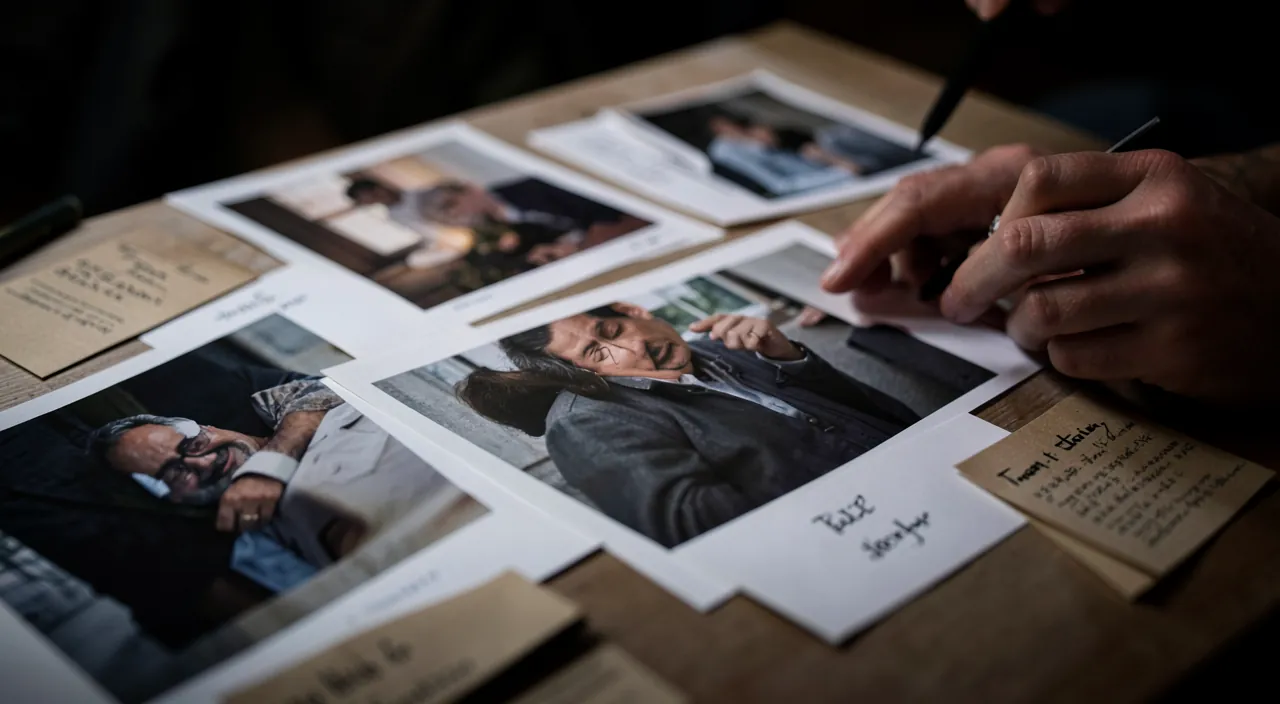
Authenticity and small precautions
AUTHENTICITY above all: a caption expresses your voice and your feelings; a generated caption can sound impersonal, generic, « not you »; always personalize to preserve your authenticity, which is what your loved ones and followers appreciate. INVENTED quotes: AI can suggest false quotes, or attribute a phrase to the wrong person; always check any quote or reference before using it; a false attribution makes a bad impression. CLICHÉS: AI sometimes produces very conventional formulas, seen a thousand times; beware of clichéd captions; prefer the original and the sincere. The RISK of uniformity: if everyone uses AI for their captions, posts start to look alike; your personal voice sets you apart; cultivate it rather than blending into the generic. Don’t OVERWORK: sometimes, you look for a perfect caption when a simple phrase would suffice; don’t let the tool push you to overdo it; naturalness and simplicity have charm. The RIGHT tone: make sure the caption fits the photo and the moment; a caption offbeat compared to the image sounds false; AI doesn’t « see » your photo (unless the tool analyzes the image), it relies on your description; you ensure coherence. PRIVACY: be careful what you describe to AI and what you publish; don’t share too personal information in a caption, and think about what your photos and captions reveal publicly (our guides on protecting your privacy). Respect for PEOPLE: if your photo shows other people, respect them in the caption (agreement, benevolent tone); don’t publish remarks that could embarrass or hurt. Keep the HAND: you are the author of your posts; AI helps, but the final choice, the tone, the message are yours; take responsibility for what you publish. The PLEASURE of expression: captioning is expressing yourself; don’t lose this pleasure by delegating everything; AI helps when words are missing, but the expression remains yours. In summary, the precautions: preserve your AUTHENTICITY (always personalize), verify quotes (AI invents them), avoid clichés and uniformity, don’t overwork (simplicity has charm), ensure coherence between the caption and the photo, be mindful of your privacy and the respect of the people shown, and keep control of your posts. AI is a friendly help to find the words; but the caption that touches is the one that carries your sincere voice. Stay yourself: that’s what makes the difference.
Warning: a generated caption can sound impersonal or contain a false quote—always personalize, and verify quotes before using them. Two pitfalls await the use of AI for your captions, and it’s easy to avoid them by paying attention. The first, the most common: the lack of AUTHENTICITY. A caption is your voice accompanying your image; it’s that little personal word that creates the link between you, your photo, and those who follow you. But a caption produced by AI and pasted as is often sounds « manufactured »: a tone a bit too smooth, formulas already seen, a lack of that little personal spark that makes you recognizable. Your loved ones, your followers feel the difference between a sincere phrase that comes from you and a generic interchangeable text; and in the long run, impersonal captions weaken the authentic link that makes sharing so charming. The solution is simple: never publish a generated caption without making it yours. Take it with your words, add your touch, your humor, a personal detail about this moment, the true emotion you feel; or better, use AI’s proposals as a simple trigger to write your own version. It’s this extra soul that turns a generic caption into a caption that looks like you. Also beware of CLICHÉS that AI readily produces (those « inspiring » phrases seen a thousand times): often, a simple and sincere phrase from you is infinitely better. The second pitfall, more insidious: INVENTED quotes and references. AI loves suggesting quotes to embellish a caption, but it has two flaws: it can outright INVENT a quote that never existed, or attribute a real phrase to the WRONG person (an author, a celebrity who never said it). And nothing makes you look more amateur—or discredits you more—than a beautifully phrased quote falsely attributed, spotted by someone who knows the real source. The rule is therefore: NEVER take a quote or reference suggested by AI without verifying it. A quick search is enough to confirm that a quote is authentic and correctly attributed; in doubt, don’t use it, or rephrase your caption. Two additional points of vigilance, more general. COHERENCE: AI generally doesn’t « see » your photo, it relies on your description; make sure the caption really fits the image and the moment, because a caption offbeat compared to the photo sounds false. And PRIVACY: think about what you describe to AI and especially what your caption reveals publicly—avoid sharing too personal information, and respect the people who appear in the photo. None of this should discourage you from using AI, which is a friendly and effective help to find the words when they’re missing: it’s a light and low-risk use. The message is simply to keep the right reflex: AI suggests, you personalize and verify. By preserving your authentic voice and controlling quotes, you benefit from AI’s inspiration without its missteps—and your captions keep what gives them value: your sincerity.
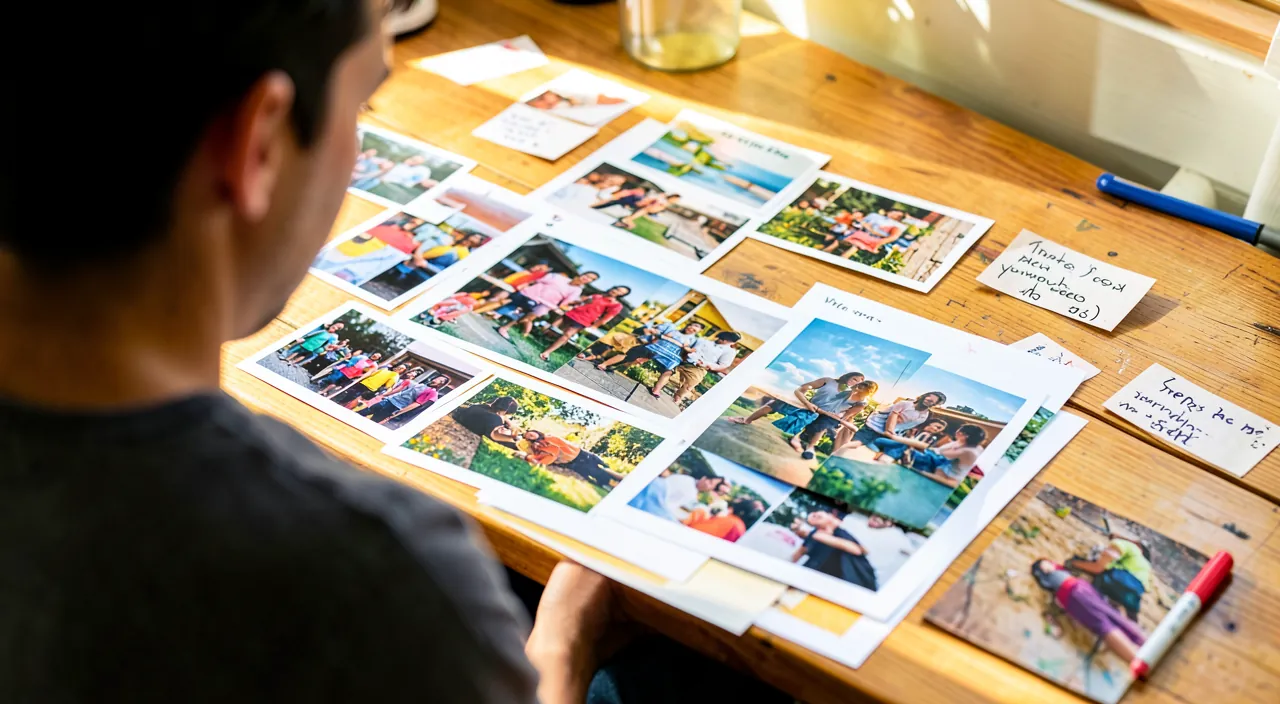
Frequently asked questions
Can AI see my photo to suggest a caption?
It depends on the tool: some AI can analyze an image you show them, others rely solely on your description; in all cases, your description remains precious for an accurate caption. Let’s clarify. AI that ANALYZE the image: some tools are capable of « looking » at a photo you provide and identifying its content (what is shown, the general atmosphere); in this case, AI can suggest captions based on what it « sees »; it’s practical, but keep in mind that its interpretation of the image can be imperfect or miss the meaning or emotion that YOU see in it. AI that rely on your DESCRIPTION: many assistants (especially purely textual ones) don’t see your photo; they base themselves entirely on what you DESCRIBE to them; in this case, the quality of the caption depends directly on the richness of your description. Why your DESCRIPTION remains essential (in both cases): even an AI that sees the image doesn’t know the CONTEXT or the EMOTION—what this moment represents for you, the story behind the photo, the tone you want to give; these elements, that only you know, are precisely what makes a good caption; always give them to AI. What to DESCRIBE for a good caption: what the photo shows, but especially the ATMOSPHERE, the EMOTION, the OCCASION, the CONTEXT (where, when, with whom, why it’s special), and the TONE you want; the more you say, the more the caption is accurate and personal. The PRACTICAL tip: whether AI sees your photo or not, always take the habit of well describing the atmosphere, the emotion, and the context to it, and specifying the desired tone; it’s this human context, more than the raw visual content, that gives the best captions. PRIVACY: if you show a photo to an AI, keep in mind privacy issues (your images are personal); prefer trusted tools and think about what you share (our guides on protecting your privacy). In summary, some AI can analyze your photo, others rely solely on your description; but in all cases, your DESCRIPTION of the context, the atmosphere, and the emotion—only you know them—remains essential to obtain an accurate and personal caption. Always richly describe your photo and specify the desired tone, whether AI sees it or not; it’s what you bring, more than what AI perceives, that makes a good caption. And be mindful of your privacy if you share images.
Will my captions look alike if I use AI?
They risk looking alike and sounding generic IF you paste AI’s proposals as is; but if you personalize them with your voice, your captions will remain varied and authentic. It all depends on your use. The REAL risk: AI tends to produce « average » and conventional formulations; if you simply take its raw proposals, your captions will have this generic tone and may look alike (and look like those of everyone who does the same); that’s the pitfall to avoid; a succession of « AI » captions not reworked loses in personality and variety. The SOLUTION: personalize: for your captions to remain varied and look like you, the key is to never publish them as is; take each proposal with YOUR words, your tone, your humor, a personal detail; or better, use AI as a trigger to write your own version; thus, each caption carries your unique voice, and the risk of uniformity disappears. Techniques to VARY: vary the tones you ask AI for (poetic, funny, understated depending on the photos); anchor each caption in the specific context and the emotion unique to each photo (which is necessarily different each time); add your personal touch to each one; and don’t use AI systematically—sometimes, write directly from yourself. The PERSONAL voice: what distinguishes your captions from each other and from others’ is YOU—your way of saying, your humor, your sensitivity, your references; cultivate this voice; AI must serve it, not erase it. The REASSURING observation: well used (as inspiration to personalize), AI doesn’t make your captions uniform; on the contrary, it can help you VARY by suggesting angles you wouldn’t have thought of, which you then appropriate; it’s the « copy-paste » use that uniformizes, not the « inspiration » use. In summary, your captions risk looking alike and sounding generic only if you paste AI’s proposals without reworking them; by systematically personalizing them with your voice, your tone, and the context unique to each photo, they will remain varied and authentic. The key is to never publish a generated caption as is: use AI as inspiration, bring your touch, and cultivate your personal voice. Thus, AI enriches and varies your captions instead of uniformizing them; it’s you who make the difference.
Is it « cheating » to use AI for your captions?
No, it’s not « cheating »: using AI as inspiration help to find the words is a legitimate and harmless use; the essential is to keep your authenticity and stay yourself. Let’s destress. Why it’s NOT cheating: seeking help to find the right words is as old as writing; we get inspired by quotes, ask a loved one’s opinion, seek inspiration; using AI to get unstuck facing a blank or find a caption idea fits into this natural approach; it’s a tool to help expression, like a thesaurus or a quote collection; there’s nothing reprehensible there, especially for such a light and personal use as a photo caption. What REALLY matters: the issue isn’t « AI or not AI, » but the AUTHENTICITY of the result; a caption remains yours if it carries your voice, your sincere feeling, your message; whether you found the inspiration alone, in a quote, or via AI, what matters is that the caption authentically expresses something of you; AI that helps you better say what you feel doesn’t betray your authenticity, it serves it. Where would the PROBLEM be: the only awkward case would be to publish totally impersonal and generic captions that don’t look like you at all, to the point of losing all authenticity and misleading about who you are; but it’s not AI itself that’s the problem, it’s the lazy use (pasting without personalizing); used as inspiration to personalize, AI poses no honesty problem. The right PERSPECTIVE: see AI as a friend who whispers ideas when you’re stuck; you remain the one who chooses, personalizes, and publishes; it’s your expression, simply helped; there’s no need to feel guilty. The ADVICE: use AI without complex to inspire and unstick you, but always keep your personal touch so your captions remain authentically you; that’s what matters, much more than the question of whether you were helped. In summary, no, it’s not cheating to use AI for your captions: it’s a legitimate use of an expression aid tool, without stakes, comparable to seeking inspiration elsewhere. What matters isn’t whether you were helped or not, but that your captions remain authentic and look like you; so use AI without complex as a source of inspiration, while keeping your voice and your personal touch. Stay yourself, and AI is just a welcome helping hand—not a cheating.
What to remember
AI helps find captions for your photos by generating, based on the description or atmosphere of the image, several ideas adapted to the desired tone—poetic, funny, understated, inspiring. It’s a precious and friendly help to get unstuck facing a blank, find inspiration, vary registers, and save time. But a generated caption can sound generic and impersonal: AI doesn’t replace your personal touch, your voice, and the true emotion you want to convey. The right use is to see AI as an INSPIRATION trigger, not as a final pen to copy: ask it for several ideas (by well describing your photo, its atmosphere, its context, and specifying the tone), not to choose one to paste, but to restart your own creativity; very often, the proposals give you the desire to write YOUR version, more authentic. The golden rule: never publish a generated caption as is; always personalize it with your words, your humor, a personal detail, the sincere emotion; it’s this extra soul that makes it yours. Two precautions to keep. First, verify QUOTES and references: AI invents them or attributes them to the wrong person, and nothing discredits more than a falsely attributed quote; a quick verification is necessary before any use. Then, preserve your AUTHENTICITY: avoid the clichés that AI readily produces, and remember that the best caption isn’t always the most worked: often, a simple and sincere phrase from you is worth a thousand times better than a sophisticated text. Also ensure coherence between the caption and the photo (AI generally doesn’t see your image, it relies on your description), and your privacy (be careful what your captions reveal, and respect the people shown). If you personalize, your captions won’t look alike and will remain varied; it’s the « copy-paste » use that uniformizes, not the « inspiration » use. And no, it’s not « cheating »: using AI to find the words is a legitimate and light use, comparable to seeking inspiration in a quote or from a friend; what matters isn’t whether you were helped, but that your captions remain authentically you. So use AI without complex to unstick and inspire you, while keeping your voice, your touch, and the pleasure of expressing yourself: captioning a photo is a moment of expression, not a chore to delegate. The inspiration can come from AI; the caption that touches, the one that carries your sincere voice, is always you who make it.

Want to master AI and make it a real asset in your daily life? Our training courses accompany you at your own pace.
Leave a Reply
You must be logged in to post a comment.