
More and more talk about « decentralized » social networks : alternatives to dominant large platforms, promising more control, less dependence on a single company, and a different way to design online exchanges. What are they really about? In what way do they differ from classic networks? Is this the future of social networks, or a niche for insiders? Without technical jargon, here’s what you need to understand about this new wave: decentralized social networks, their promises, their limitations, and what they could change.
Centralized vs. Decentralized: The Difference
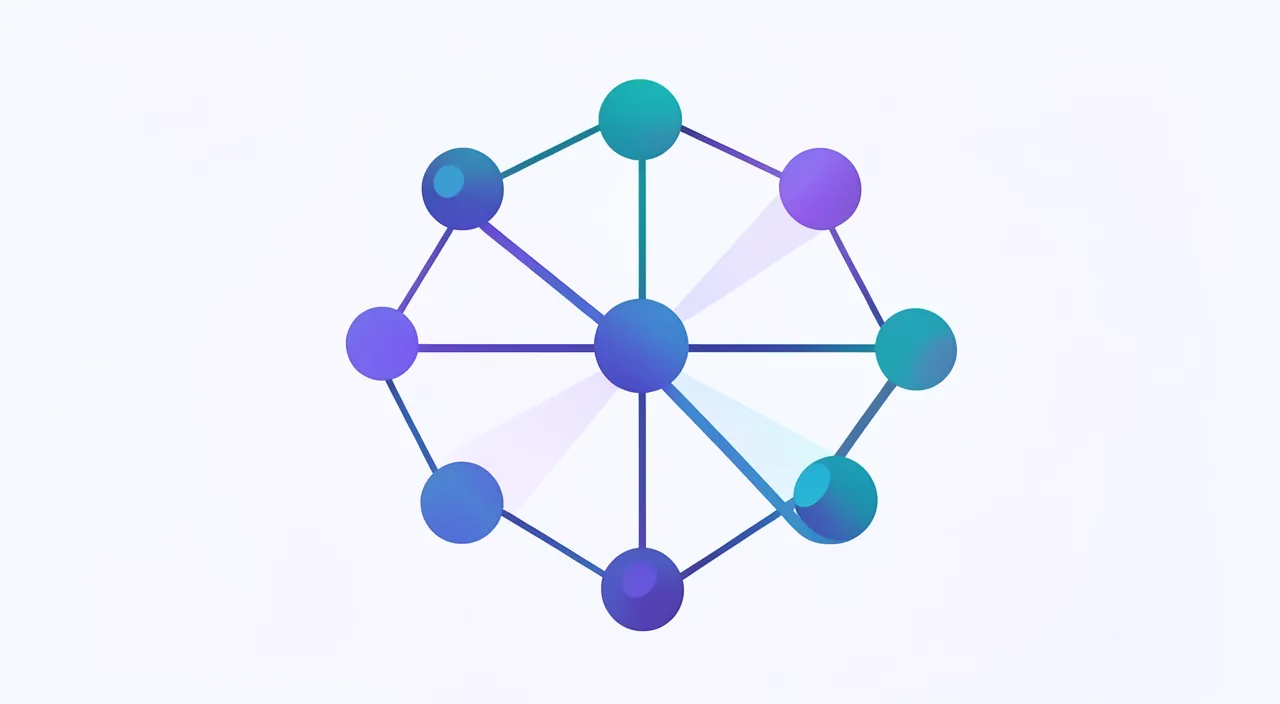
To understand decentralized networks, start with classic social networks (the dominant large platforms): they are CENTRALIZED, meaning controlled by a single COMPANY that owns the platform, manages the data, defines the rules, decides what to promote, and monetizes it (often through advertising and data exploitation — our privacy guides). You use the service, but the company has full control: it can change the rules, the algorithm, moderate, or suspend accounts, and your data and audience « belong » to it in a certain way. Decentralized networks offer a different model: instead of a single company controlling everything, the network is distributed among multiple independent actors (distinct « servers » or communities that communicate via common standards). Concretely, this means: no control by a single entity, more DISTRIBUTED governance (each community can have its own rules), and theoretically more CONTROL for users over their data and experience. The underlying idea: reduce dependence on a few giants, give power back to users and communities, and offer an alternative to the dominant model (advertising, data exploitation, opaque algorithms). This is a seductive vision for those critical of large platforms: less concentration of power, more transparency, less commercial exploitation. Understanding this fundamental difference — control by a single company versus a distributed network among multiple actors — is key to grasping what decentralized networks seek to change, and why they interest those who want another way to experience social networks.
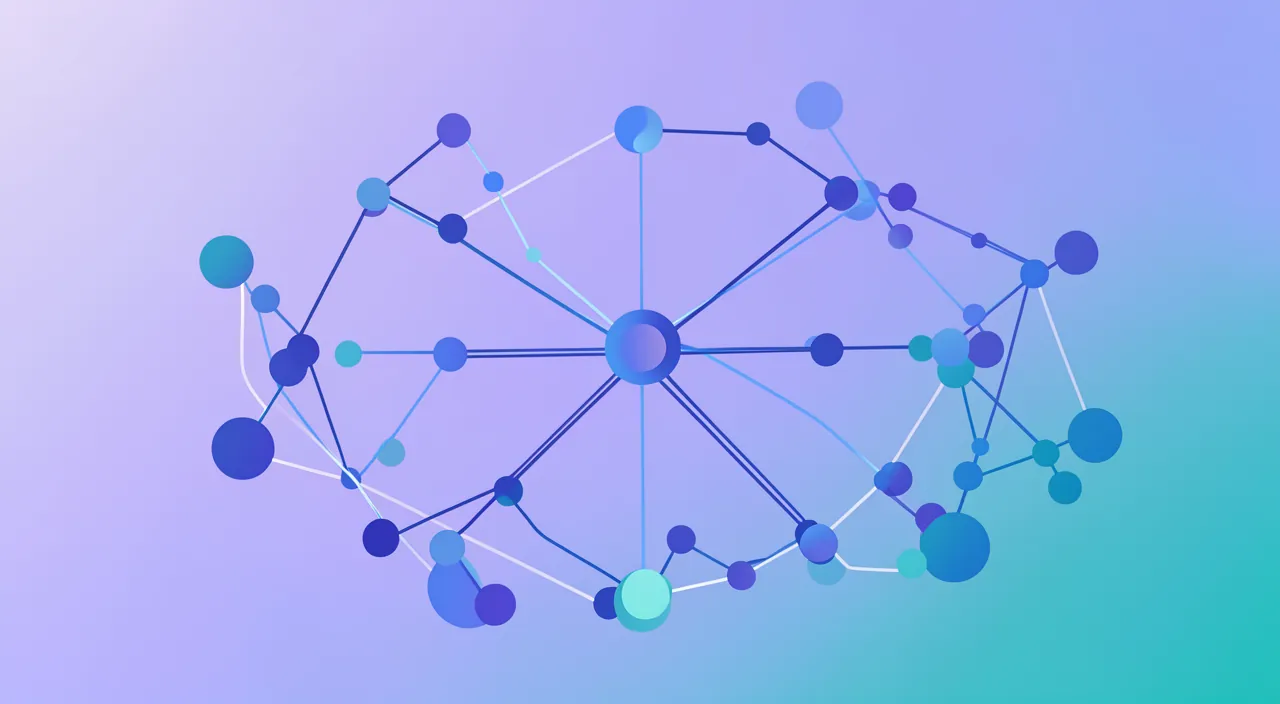
Decentralized networks split control among many servers instead of one company. This means users have more say over their data and rules, but it’s harder to moderate content or grow a big user base.
Mastodon, a decentralized network, lets users pick their own server (like “mastodon.social” or “tech.lgbt”). Each server sets its own rules, but users can still interact across servers. Unlike Twitter, no single company controls the whole platform.
Promises and Limitations
THE PROMISES of decentralized networks are real: more CONTROL for users (over their data, experience), less DEPENDENCE on a single company and its decisions, more DISTRIBUTED governance and moderation (each community has its own rules), potentially less commercial EXPLOITATION of data and opaque algorithms designed to capture attention, and resistance to censorship or unilateral platform changes. For those tired of the dominant model, it’s an attractive alternative. BUT it’s also important to see the LIMITATIONS and challenges for a balanced view: the COMPLEXITY — decentralized networks are often more complex to understand and use for the general public (choosing a server, understanding the functioning) than classic « plug-and-play » platforms; the CRITICAL MASS — a social network is only valuable by the people who are on it; decentralized networks, being newer and niche, have fewer users than the giants (the interest of a network depends on who you find there); the MODERATION — distributed governance also poses questions (who moderates? how to fight against problematic content without central authority? the balance between freedom and moderation is complex); and the MATURITY — these networks are still emerging, sometimes less technically mature, in evolution. So: decentralized networks carry an interesting vision and respond to legitimate criticisms of large platforms, but they face real challenges (accessibility, critical mass, moderation, maturity). Neither idealize them (they have their own difficulties) nor reject them (they explore important avenues). Where does this lead? The future is uncertain: these networks could remain a niche for informed users, develop, or influence the evolution of large platforms — no one knows precisely (beware of categorical predictions — our guides when AI invents for critical thinking). This is a movement to FOLLOW, which raises good questions about what we want from social networks without being able to say if it represents « the future » or an alternative among others.
- Complexity: Harder for average users to set up and use.
- Critical mass: Fewer people mean less value.
- Moderation: No central authority makes rules harder to enforce.
- Maturity: Still developing, with potential technical issues.
The right approach. If the topic interests you, approach decentralized networks with CURIOSITY but without idealization: they respond to legitimate criticisms of large platforms (power concentration, data exploitation, opaque algorithms), and explore interesting avenues (more control, less dependence on a single company). You can discover and test them yourself to form your own opinion. But keep REALISTIC expectations: they are often more complex to handle than classic platforms, have fewer users (a network is only valuable by the people who are on it), and face their own challenges (moderation, maturity). Do not idealize them as a perfect solution, but do not reject them outright. And whatever the network — decentralized or classic — the right approach remains the same: prudence about what you expose, privacy protection, critical thinking towards content (our privacy guides, accompany children on social networks). The real interest of decentralized networks may be less about whether they will replace giants than about nourishing a reflection on what we expect from social networks: more control, less exploitation, other ways of exchanging. Following this movement with an open and critical mind enriches this reflection without succumbing to hype or rejection.
A broader reflection on social networks
Beyond the technical question, the emergence of decentralized networks is part of a broader and salutary REFLECTION on our relationship with social networks and digital platforms. It raises good questions: do we want a few companies to control such a large part of our exchanges and attention? How to manage our DATA and privacy on these platforms (our privacy guides)? How to escape algorithms designed to capture attention at the expense of well-being sometimes? How to reconcile freedom of expression and moderation? These questions go beyond the technical choice of a decentralized or centralized network: they touch on our collective relationship to the digital, the concentration of power, digital sovereignty (our digital sovereignty guides), and what we want from our online spaces of exchange. Decentralized networks are one of the possible answers, among other evolutions (regulation of platforms, user awareness, new models). Individually, regardless of the platform, one can adopt a more REFLECTIVE attitude: consciously choose the networks you use and how, protect your privacy, keep a distance from their hold on attention (our concentration guides, reduce your digital footprint), and not passively submit to platforms. In summary, decentralized social networks offer an alternative to the dominant model of large centralized platforms: instead of control by a single company, a network distributed among multiple actors, promising more control for users, less dependence and exploitation. This vision is interesting and responds to legitimate criticisms, but it faces real challenges (complexity, critical mass, moderation, maturity): neither idealize nor reject. Their future is uncertain — niche, development, or influence on large platforms. Beyond the technical aspect, this movement nourishes a salutary reflection on what we expect from social networks and our relationship to digital platforms. A subject to follow with curiosity and critical thinking, which invites everyone to a more conscious and chosen use of networks, whatever they are.
Be careful: neither idealization nor rejection — and the right approach applies to all networks. Keep a balanced view of decentralized networks: do not IDEALIZE them as a perfect solution (they have their own challenges: complexity of use, fewer users, moderation questions without central authority, technical maturity still evolving), but do not REJECT them either (they respond to legitimate criticisms of large platforms and explore important avenues). Their future is uncertain: beware of categorical predictions in either direction (our guides when AI invents for critical thinking). Above all, remember that regardless of the network — decentralized or classic — the right approach of PRUDENCE remains the same: be careful about what you expose (once published, content can spread), protect your privacy, be critical towards content and misinformation, be vigilant against scams, and accompany children (our privacy guides, accompany children on social networks). A decentralized network does not exempt you from these precautions; it may even, by its novelty and lesser central moderation, present its own risks. The real contribution of this movement may be less about choosing « the right network » than about nourishing a reflection on what we expect from social networks and a more conscious and chosen use: it is this reflection, more than the technical choice, that protects and empowers us in the face of platforms.
Frequently Asked Questions
What is a decentralized social network?
It is a social network that, instead of being controlled by a single COMPANY (like the classic large platforms, called « centralized »), is distributed among multiple independent actors (distinct servers or communities that communicate via common standards). This means: no control by a single entity, more DISTRIBUTED governance (each community can have its own rules), and theoretically more CONTROL for users over their data and experience. The idea is to reduce dependence on digital giants and offer an alternative to the dominant model (advertising, data exploitation, opaque algorithms). This is a seductive vision for those critical of large platforms: less power concentration, more transparency and control.
Will decentralized networks replace the large platforms?
No one knows, and it’s important to be wary of categorical predictions. These networks carry an interesting vision and respond to legitimate criticisms, but they face real challenges: complexity for the general public, fewer users (a network is only valuable by the people who are on it), moderation questions, and evolving technical maturity. Their future is uncertain: they could remain a niche for informed users, develop, or influence the evolution of large platforms. Neither idealize (they have their own difficulties) nor reject (they explore important avenues). This is a movement to follow, which raises good questions about what we want from social networks, without being able to say if it represents « the future » or an alternative among others.
Should you leave the large platforms for a decentralized network?
It’s a personal choice with no single answer. You can explore decentralized networks out of curiosity to form your own opinion, but keep realistic expectations (complexity, fewer users). Perhaps the main thing is not to choose « the right network » but to adopt a more REFLECTIVE approach to networks, whatever they are: consciously choosing which ones to use and how, protecting your privacy, keeping a distance from their hold on attention (our privacy guides, concentration guides). Whatever the network, the right approach of PRUDENCE remains the same. The decentralized movement mainly nourishes a salutary reflection on our relationship with platforms: it is this reflection, more than the technical choice, that matters most for a conscious and responsible use: it is this reflection, more than the technical choice, that matters most for a conscious and responsible use.
What to take away
Decentralized social networks offer an alternative to the dominant model: instead of being controlled by a single COMPANY (large centralized platforms that manage everything: data, rules, algorithms, monetization), they distribute the network among multiple independent actors communicating via common standards. Their PROMISES: more CONTROL for users, less DEPENDENCE on a single company, more DISTRIBUTED governance, less commercial EXPLOITATION and opaque algorithms — a response to legitimate criticisms of giants. But also REAL LIMITATIONS: complexity for the general public, fewer users (a network is only valuable by the people who are on it), moderation questions without central authority, evolving technical maturity. Neither idealize (they have their own challenges), nor reject (they explore important avenues). Their future is uncertain — niche, development, or influence on large platforms: beware of categorical predictions. Regardless of the network, decentralized or classic, the right approach of PRUDENCE remains the same: be careful about what you expose, protect your privacy, be critical, be vigilant against scams. Beyond the technical aspect, this movement nourishes a salutary REFLECTION on what we expect from social networks and our relationship to digital platforms (power concentration, data, attention, sovereignty). The real challenge may be less about choosing « the right network » than about adopting a more conscious and chosen use: a subject to follow with curiosity and critical thinking.
Want to understand and master the technologies that change your daily life? Our training programs enlighten you.
Leave a Reply
You must be logged in to post a comment.