
The «quantum computer»: While it is often talked about as a revolution that will change everything, the subject remains shrouded in mystery and impenetrable jargon. What exactly is a quantum computer? How does it differ from a classical computer? Will it replace your PC? Should you be worried? Without equations or technical jargon, here is an accessible explanation of the quantum computer: what it is, what it could bring, where we are really at, and why it will not replace your desktop computer.
Another way to calculate (explained simply)
To understand the quantum computer, start with the CLASSICAL computer (the one you use): it processes information in the form of «bits», which are either 0 or 1 — like switches that are either off or on. All its immense power comes from the ultra-fast manipulation of billions of these 0s and 1s. The quantum computer works on a RADICALLY different principle, exploiting strange properties of physics at the particle scale («quantum physics»). Without getting into the technical details: where a classical bit is either 0 or 1, the quantum equivalent (the «qubit») can, in a certain way, explore MULTIPLE possibilities AT THE SAME TIME. This very counter-intuitive property theoretically allows a quantum computer to solve certain types of problems in a way and at a speed inaccessible to classical computers. The often-used image: while a classical computer would try out possibilities one by one (even very quickly), a quantum computer could, for some problems, explore them «in parallel» in a way that is otherwise impossible. This is what makes its revolutionary potential for extremely complex specific problems. A KEY point to understand from the start: the quantum computer is NOT a more powerful classical computer; it is a machine of a DIFFERENT nature, designed for specific types of calculations, not to replace your versatile desktop computer. Understanding this difference in nature (not just power) is key to not misinterpreting what the quantum computer is — and is not.
A quantum computer doesn’t just work faster than a normal computer. It uses a different way of processing information that lets it explore many possible answers at the same time, like taking multiple paths in a maze simultaneously. This makes it great for very specific, super complex problems, but it won’t help you browse the web or play games.
What it could bring, and where we are
What could a quantum computer be used for? Not to run your everyday applications (it is not built for that), but to solve certain SPECIFIC problems of immense complexity beyond the reach of classical computers: the simulation of MOLECULES and materials (for chemistry, drug discovery, new materials — a very promising field), complex problem OPTIMIZATION (logistics, finance), certain scientific calculations, and — a sensitive point — the potential ability to break certain current cryptographic methods (which have implications for security and cryptography: we are already preparing «quantum-resistant» encryption methods — our security guides). These potential applications are significant in their fields. BUT where are we really? This is the crucial point to keep your feet on the ground: the quantum computer is still a DEVELOPMENT technology, largely at the research and prototype stage. The technical challenges are ENORMOUS: these machines are extremely difficult to build and operate (they require extreme conditions, are very sensitive to disturbances, and qubits are fragile). We are far from powerful, reliable, and generalized quantum computers: real progress is being made but the path is long, and predictions on «when» quantum computing will live up to its promises are uncertain. You must be wary of both CATASTROPHISM (the idea that quantum computing will «break everything» tomorrow — especially security — is very exaggerated in the short term) and HYPE (spectacular announcements do not mean the revolution is here). The reality: a fascinating and promising technology in specific domains, but still emerging, with a concrete impact on the general public still far off and uncertain. It is a fascinating field to follow with a critical mind towards sensational announcements (our guides when AI invents for critical thinking).
The right approach. To understand the quantum computer without being impressed by the jargon or sensational announcements, remember two simple ideas. First: it is NOT a more powerful classical computer, but a machine of a DIFFERENT nature, designed for very specific types of calculations (molecular simulation, complex optimizations) — it will NOT replace your desktop computer, which remains much better for your everyday uses. Second: it is a technology still in DEVELOPMENT, at the research and prototype stage, with enormous technical challenges; we are far from powerful and generalized quantum computers, and the concrete impact on the general public is still far off. With these two ideas, you can approach announcements about the quantum computer with a critical mind: beware of catastrophism (no, quantum computing will not «break everything» tomorrow) as well as hype (a sensational announcement does not mean the revolution is here). The quantum computer is a fascinating subject to follow out of curiosity, but it does not change your current digital life or immediate concerns (your security rests on other solid, immediate foundations — our password manager, two-factor authentication guides). Understanding the big ideas without being carried away by the hype: that’s the right way to approach this emerging technology.
Imagine a pharmaceutical company trying to find a new drug. A quantum computer could simulate how millions of molecules interact in seconds, something that would take a normal supercomputer years. This could speed up drug discovery, but we’re still years away from having reliable quantum computers that can do this consistently.
Why it will not replace your computer
An important point to properly situate quantum computing: contrary to a widespread idea, the quantum computer will NOT replace our classical computers, and this for a fundamental reason: it is NOT designed for the same uses. Your computer (or phone) is a versatile machine, excellent for everything you do daily: browsing, writing, watching videos, playing, communicating. The quantum computer, on the other hand, is a specialized machine for certain very specific and complex problems: it would be inefficient, or even useless, for your everyday tasks. The future is therefore not a replacement but a COMPLEMENTARITY: classical computers will continue to do what they do very well (your everyday uses), while quantum computers, if they live up to their promises, will solve certain specific and complex problems that classical computers cannot handle — probably in specialized research and computing centers, not on your desk. You will likely never have a «quantum computer» at home; instead, you might one day benefit indirectly from its results (new drugs, materials, or services enabled by quantum computing). It is important to avoid misunderstanding: quantum computing is not «the future of your PC», it is a specialized and complementary tool for cutting-edge problems. In summary, the quantum computer is a machine of a RADICALLY different nature from classical computers, exploiting strange properties of physics to explore multiple possibilities and solve certain very complex problems (molecular simulation, optimizations, with implications for encryption) in a way inaccessible to classical machines. Its potential applications are significant in specific domains (chemistry, materials, science, security). BUT it is still an EMERGING technology, at the research stage, with enormous technical challenges: we are far from powerful and generalized quantum computers, the public impact is still far off, and you must be wary of both catastrophism and hype. Finally, it WILL NOT replace your computer: it is a specialized and complementary machine, not a more powerful version of your PC. A fascinating subject to follow with curiosity and a critical mind, understanding the big ideas without being carried away by the hype or fears: neither catastrophism, nor hype, but a clear interest.
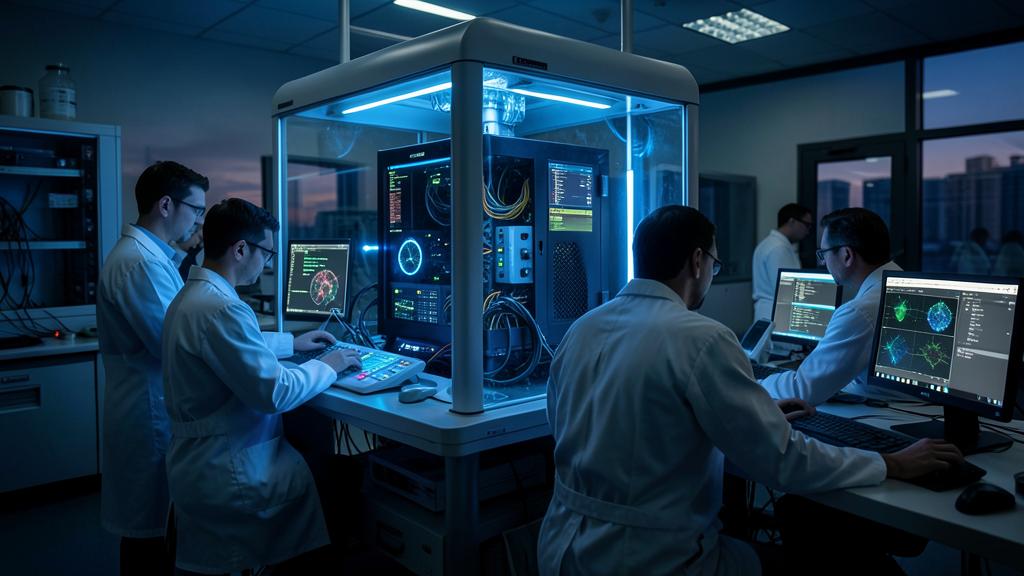
Be wary of catastrophism and hype, and do not confuse quantum computing with «a more powerful PC». Two common misunderstandings to avoid: first, the quantum computer is NOT a more powerful classical computer; it is a machine of a DIFFERENT nature, specialized for certain very specific and complex calculations (molecular simulation, complex optimizations), which will NOT replace your versatile computer — you will likely never have a quantum computer at home. Second, keep a critical mind towards announcements: the subject generates a lot of sensationalism in two directions. CATASTROPHISM — the idea that quantum computing will «break everything tomorrow», especially security and encryption, is very exaggerated in the short term (we are far from such machines, and quantum-resistant encryption methods are already being prepared — our security guides); your current security relies on solid, immediate foundations (our password manager, two-factor authentication guides), not threatened by quantum computing today. HYPE — spectacular announcements do not mean the revolution is here: quantum computing is still at the research and prototype stage, with enormous technical challenges, and predictions on «when» it will live up to its promises are uncertain. The reality: a fascinating and promising technology in specific domains, but still emerging, with a public impact still far off (our guides when AI invents for critical thinking). Follow the subject out of curiosity, understanding the big ideas without being carried away by the hype or fears: neither catastrophism, nor hype, but a clear interest.
Frequently asked questions
What is a quantum computer, simply?
It is a machine that calculates in a RADICALLY different way from a classical computer. Where a classical computer processes information in «bits» that are either 0 or 1, the quantum computer uses «qubits» that, by exploiting strange properties of quantum physics, can explore multiple possibilities at the same time. This theoretically allows it to solve certain very complex problems in a way inaccessible to classical computers (molecular simulation, optimizations). Key point: it is not a more powerful classical computer, but a machine of a DIFFERENT nature, designed for specific calculations — not to replace your desktop computer. Understanding this difference in nature (not just power) is key to not misinterpreting.
Will the quantum computer replace my computer?
No: it is not designed for the same uses. Your computer is a versatile machine, excellent for everything you do daily (browsing, writing, watching videos). The quantum computer is a specialized machine for certain very specific and complex problems: it would be inefficient, or even useless, for your everyday tasks. The future is not a replacement but a COMPLEMENTARITY: classical computers will continue to do what they do well, and quantum computers will solve specific problems, probably in specialized research centers, not on your desk. You will likely never have a quantum computer at home, but you might benefit indirectly from its results (new drugs, materials). It is not «the future of your PC».
Will the quantum computer break security and encryption?
This is a real long-term concern, but very exaggerated in the short term: a sufficiently powerful quantum computer could theoretically break certain current encryption methods, which has implications for security. But we are FAR from such machines (quantum computing is still at the research stage, with enormous technical challenges), and especially, «quantum-resistant» encryption methods are already being prepared to anticipate this possibility (our security guides). Your current security is NOT threatened by quantum computing today: it rests on solid, immediate foundations (strong and unique passwords, two-factor authentication — our password manager, two-factor authentication guides). Be wary of catastrophism on this subject: the quantum threat to encryption is far off and anticipated, not imminent.
What to keep in mind
The quantum computer calculates in a RADICALLY different way from a classical computer: instead of «bits» that are either 0 or 1, it uses «qubits» that, by exploiting strange properties of quantum physics, can explore multiple possibilities at the same time. This gives it the potential to solve certain very complex problems (molecular and material simulation for chemistry and drugs, optimizations, with implications for encryption) in a way inaccessible to classical machines. Key point: it is not a more powerful classical computer, but a machine of a DIFFERENT nature, specialized for specific calculations — it WILL NOT replace your versatile desktop computer (you will likely never have one at home; the future is about complementarity, not replacement). Where are we? It is still an EMERGING technology, at the research and prototype stage, with enormous technical challenges: we are far from powerful and generalized quantum computers, the public impact is still far off and uncertain. Be wary of both CATASTROPHISM (the quantum computer will not «break everything tomorrow»; the threat to encryption is far off and already anticipated; your current security rests on other solid, immediate foundations) and HYPE (spectacular announcements do not mean the revolution is here). A fascinating and promising technology in specific domains, to follow with curiosity and a critical mind: understanding the big ideas without being carried away by the hype or fears.
Want to understand and master the technologies that change your daily life? Our training programs will enlighten you.
Leave a Reply
You must be logged in to post a comment.