
Your test results arrive online, your vaccination record is digital, the prescription goes from the hospital to the pharmacy, and Mon espace santé brings it all together: health has become a matter of accounts and servers — for the best (the file is finally complete, shared among caregivers, no more repeated exams) and for the sensitive (no data is more intimate, nor more coveted). Using these services well, protecting them to the level of the stakes, exercising your rights, and spotting the scams that attach themselves: the guide to mastering online health.
Mon espace santé and the others: understanding the landscape
A tour of the household’s health accounts: Mon espace santé — the national digital health record (automatically created unless opposed): the medical file (documents submitted by caregivers — reports, tests, prescriptions — and by YOU: the medical profile filled out — treatments, allergies, medical history — serves exactly like the emergency card in our guides), the secure health messaging (exchanges with caregivers OUTSIDE of regular email — its great interest: our guides repeat it, medical information does not go through the ordinary mailbox), and the expanding sections (vaccination, directives): the tool is worth INVESTING — a complete file really helps in emergencies and consultations; the Health Insurance and mutual insurance companies online (reimbursements — and the data on healthcare consumption they reveal); the laboratories and hospitals (result servers — accounts created for each test, and sometimes forgotten: the cleanup of our guides’ dormant accounts applies — each forgotten health account is an open door); the appointment platforms (your history of consulted specialties says a lot — privacy settings can be checked there); and the health apps and connected devices (our guides — the boundary: PUBLIC services and caregivers are strictly regulated; commercial wellness apps sometimes live OFF your data: the two worlds do not deserve the same trust, nor the same data).
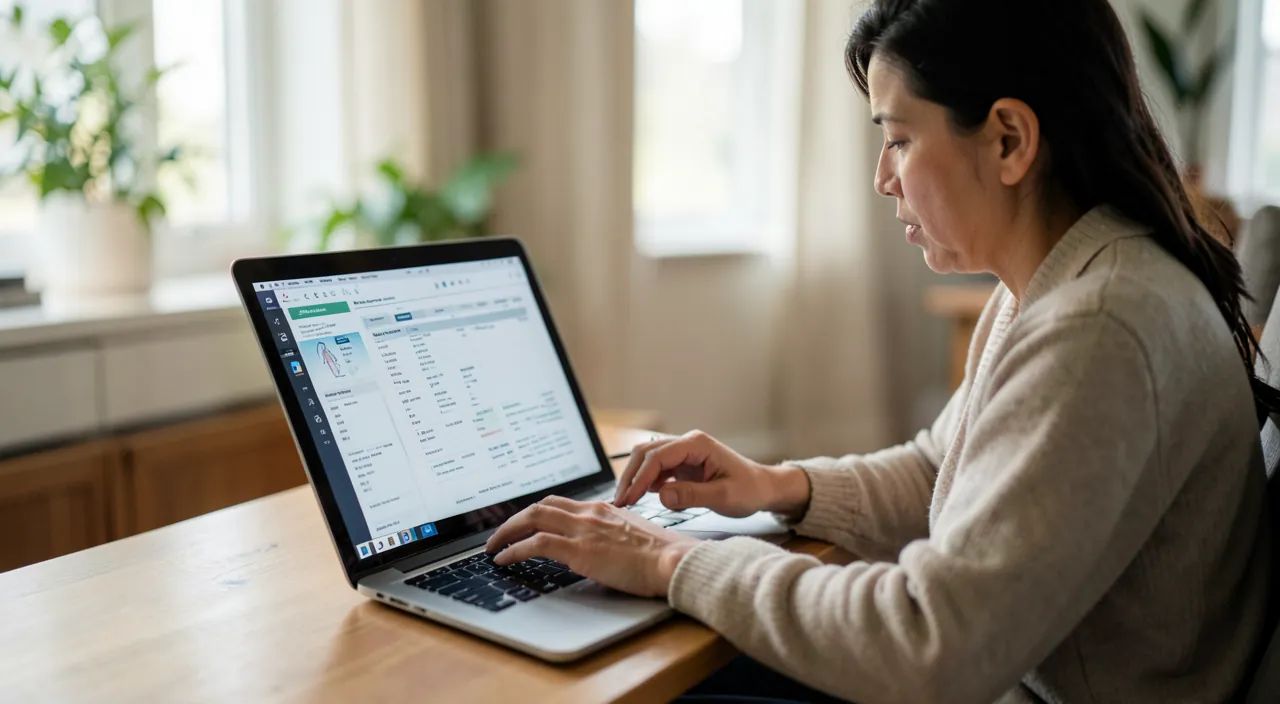
Protecting to the level: health accounts are critical accounts
The level of requirement aligned with sensitivity: the fundamentals squared — unique passwords (the manager — our guides: health accounts NEVER inherit a recycled password), double authentication wherever it exists (Mon espace santé, Health Insurance via FranceConnect — whose security is equal to that of the tax identifiers that carry it: the chain of our guides), and the armored recovery email (always it); the shared accesses thought out — the profiles of CHILDREN attached (managed by parents — normal), the caregiver of an elderly parent (official DELEGATIONS exist — the parent’s account used « to help » is done according to the rules: our guides on autonomy and proxies — and never the parent’s password carried in plain text), and the COUPLE: each has their own account (the medical file is individual by nature — even in the best marriages: medical privacy is not a lack of trust, it’s a right that protects everyone); the devices that access — health is consulted on YOUR locked devices (never the shared or public computer — our guides), and downloaded documents are stored encrypted (the report in our guides’ document vault — not in the bulk downloads); and the structural discretion — health notifications in discreet mode (the preview of the test result that appears on the locked screen placed on the meeting table: the setting of our guides’ notifications has one more reason here).
Health accounts need strong protection because they contain very personal information. Use unique passwords, enable two-factor authentication, and be careful about who has access to your account. Always check your devices and notifications to keep your data safe.
The right reflex. Fill out the medical profile of Mon espace santé (and the phone’s emergency card — our guides): current treatments, allergies, serious medical history, people to notify — the quarter of an hour that speaks for you in emergencies (caregivers consult — that’s the point: an empty file protects no one, a filled file can change everything); and do it AS A FAMILY: yours, your children’s, your elderly parent’s (with them — the delegation according to the rules): the household’s digital health is updated in one evening — and it’s the most useful evening of the entire guide.

Your rights over your health data (and how to exercise them)
The framework is protective — you just have to use it: the fundamental rights — access (YOUR entire medical file can be requested — at the hospital, from the doctor, from the platforms: the copy is a right, useful for second opinions and disputes), correction, restriction — and on Mon espace santé, the fine control: who sees what (professionals access according to their role — and YOU can hide documents, block a facility, consult the HISTORY of accesses: the traceability that answers « who looked at my file? »: consult it once, it’s instructive and reassuring), and the possible opposition (the space is closed — a right, with its coordination counterparts); the digital medical confidentiality — the same rules as in the office (the employer, the insurer, the bank have NO right to your file — the insurance questionnaire is the exception regulated by law, and the « right to be forgotten » for former patients exists for loans: inform yourself before over-declaring); and the commercial apps in the opposite regime — the wellness data (sleep, activity, cycle…) entrusted to private apps follow THEIR policy: reading before connecting (our guides — who sells what to whom: scandals of resale of cycle or mood data have occurred), minimal permissions, and the simple question before each sharing — « does this app NEED this data for the service I AM asking it? »: health is shared widely with caregivers, sparingly with merchants — the compass is in one sentence.
If you use a fitness app to track your sleep, check its privacy policy. Some apps sell your data to third parties. Always ask: does this app really need my sleep data to work? If not, don’t share it.
Scams in white coats: health phishing
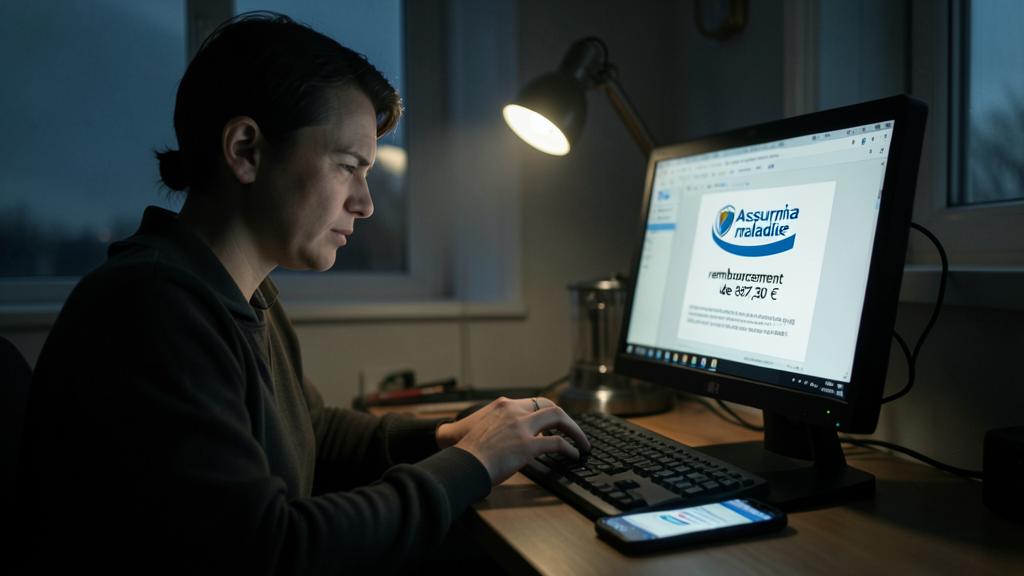
Health is a first-choice disguise for phishing (urgency + legitimacy + fear): the bestiary — the fake reimbursement (« your reimbursement of 87.30€ is available, confirm your bank details »: Health Insurance NEVER asks for details by email/SMS: it reimburses to the known account, period — any « reimbursement to validate » is a card theft in preparation); the fake Vital card (« your card expires, renew for 0.99€ »: the Vital card is not « renewed » online for payment: the classic of fraudulent SMS); the fake message from a caregiver (the link to « urgent results »: real results are consulted by opening the lab’s portal or health space YOURSELF: the rule of our guides, never by the link); the fake appointments and exploited medical deserts (fraudulent platforms that « sell » slots with specialists — appointments are not bought: only known and official platforms); and the medical phone scams (the « teleconsultations » that fish for Vital card + bank card — real telemedicine goes through established channels: your doctor, recognized platforms, teleconsultations reimbursed according to the rules): the cross-cutting defense does not change — the official channel opened by yourself, never the received link, and the social security number treated as a treasure (it is not given by phone or to exotic forms — it’s a major usurpation key: our guides); Beware of leaks — and of YOUR shares that serve as such. Health data leaks exist (laboratories, hospitals, mutual insurance companies hacked — the waves are documented): you can do nothing ABOUT IT in advance (except minimal accounts and cleanup of dormant ones) but everything AFTER — the received leak alert is taken seriously (passwords changed, phishing vigilance increased: leaked data feed TARGETED scams that are very credible — the fake advisor who knows your exams), and monitoring is installed (our guides). But the first leak often remains… yourself: results shared in photos in family groups, diagnoses discussed on social networks, health documents left in attachments (our guides email): the medical privacy of YOURS deserves the same care — especially that of children, whose file is entrusted to you, not given (the teen has the right to medical secrets — the law provides for it: respecting it is also teaching them to protect their own).
Frequently asked questions
Is Mon espace santé mandatory? Can it be refused?
It is created by default, but opposition and closure are rights (and fine masking exists between the two — often the best path: the useful tool, controlled). Before closing by principle, weigh the real use: the complete file saves medical time and redundant exams — mastery (access history, masking) answers most concerns better than absence.
The doctor asks me to send photos (wound, symptom): where?
Through health channels — the secure health messaging, the teleconsultation app, the practice portal: never by regular SMS/email if a secure channel exists (and if the practitioner only offers email, ask the question — secure messaging is THEIR obligation to equip, your request encourages it). And the medical photo taken for sending is deleted from the shared roll afterward (our guides family albums: synchronization does not have to expose your dermatology to the living room photo frame).
What to do with the health accounts of a deceased relative?
Heirs have access to the medical file under certain conditions (defined reasons — requests are made to the facilities and to Health Insurance with supporting documents), and accounts are closed via dedicated procedures (our guides digital succession — health has its own rules: medical confidentiality largely survives death). Anticipation helps here too: declared advance directives and trusted person (Mon espace santé hosts them) spare relatives from procedures in grief.
What to remember
Online health is lived on two legs: the full use (Mon espace santé invested — medical profile filled out, documents centralized, secure messaging for all medical exchanges, access history consulted — and the family evening that brings the household up to date) and the squared protection (unique passwords and 2FA on all health accounts, each with THEIR own account — including couples, official delegations for caregivers, documents stored encrypted, discreet notifications, dormant lab accounts closed). Rights are exercised (access, masking, traceability — and medical confidentiality that does not yield to the employer or commercial apps, served minimally), scams in white coats are thwarted by the channel (never the link — Health Insurance does not ask for anything by SMS, the Vital card is not paid for), and the first discretion remains yours — the health data of yours is not news to share. The health record has moved online: may it be better kept THERE than it ever was in the drawer.
A doubt about your security, a device to check or clean up? Our assistance service accompanies you step by step.

Your online health data: using well, protecting well
Leave a Reply
You must be logged in to post a comment.