
« Thank you for sending a copy of your ID, » – the most common phrase in administrative life – and one of the most **dangerous**: the sent photo copy sleeps in mailboxes, servers, and folders for years, and every leak is a ready-to-use identity theft kit (credit in your name, phone lines, accounts – the administrative nightmare that lasts for years). Digitally watermark, send through the right channels, store encrypted, refuse wisely: the complete guide to the ID document in the digital age.
Understand the risk: what a simple copy really allows
Why so many precautions for « just a copy »: the copy of the ID is the key to identity theft – combined with some data (address, IBAN – often leaked together), it opens up consumer credit in your name (the typical damage: credit agencies with light checks – you discover the debt with bailiff’s calls), phone lines (and the misuse of YOUR number – our guides on that), fraudulent accounts and rentals (your identity used to defraud others – the troubles come back to you), and diverted procedures; the sources of leaks – rarely targeted theft: your copies sleep in mailboxes (yours and those of the recipients – our guides on hacked mail reveal years of attachments), the servers of the services that collected them (regular massive leaks – agencies, platforms, employers), and the rental files passed down the line; and the cruel asymmetry: sending takes ten seconds, proving the theft takes years (the burden of contestation lies on the victim – files, complaints, bank filings to be lifted): each avoided, watermarked, or properly sent copy is an insurance policy – prevention is everything here, the remedy almost nothing.
A copy of your ID can be used to open credit, phone lines, or fake accounts in your name. Once leaked, cleaning up the mess takes years of paperwork and stress. Preventing leaks with watermarks and secure storage is much easier than fixing the damage later.

The watermark: the reflex that changes everything
The central defense, simple and underutilized: the watermark – the note placed ACROSS the copy, on the information area (without obscuring readability for the legitimate recipient): « Copy provided on [date] to [recipient] for [usage] only » – the copy becomes unusable for opening credit elsewhere (the entity that receives a watermarked copy for another usage rejects it – and the fraudster knows: he throws it away and looks for a non-watermarked one); the tools – the official state watermark service (free, online – search for the official watermark of ID documents – the public tool made for this), annotation functions on the phone (semi-transparent text diagonally on the photo/scanned copy – our guides on annotation: thirty seconds once the gesture is learned), and dedicated apps; the application rules – the watermark goes on ALL copies that leave (rental, online bank, subscription, employer – without exception: the legitimate recipient is never inconvenienced), the date and usage SPECIFIC (not just « copy » – it’s the specificity that neutralizes), and the copy in just sufficient quality (readable, not artistic: high definition only serves fraudsters); and the little extra: noting WHO received what and when (a line in a note – the registry that, in case of theft, directs the investigation towards the leak: « only X and Y had this copy »). A thirty-second gesture, systematized – and your identity stops being a consumable that trails behind.
A tenant sends a watermarked ID copy to their landlord for a rental agreement. Later, a fraudster tries to use the same copy to open a credit card. The bank rejects it because the watermark shows it was already used for a rental, exposing the fraud attempt.
The right reflex. Before sending, ask the legitimacy question – many requests for ID are abusive or lazy: the merchant, the sports club, the classifieds site, the hotel Wi-Fi that « requires » the card generally have no right to it (legitimate cases are defined: bank and insurance – verification obligations – , employer, rental, operators, administration): ask « What legal obligation grounds this request? Would another piece suffice? » – politely, firmly (our guides on letters help formulate): half the requests evaporate, and the other half accept the watermark without hesitation. Your identity lends itself with justification – it does not give itself to any random form.
Sending and storing: the channels and safes
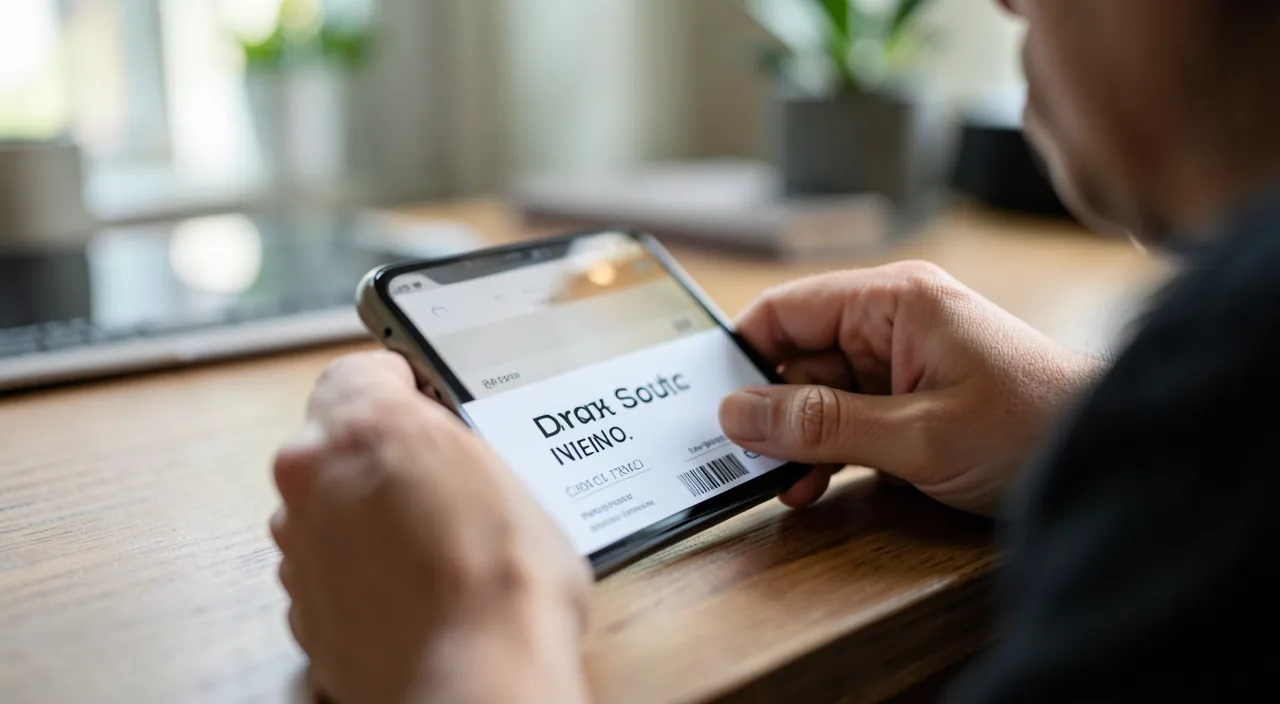
When the copy must go – the hierarchical channels: the secure deposit of the service first (the client area of the bank, the administration platform, the HR portal – the document deposited IN the system, not as a free attachment – it’s meant for it, with the corresponding protection obligations) ; the restricted access link next (the document in your cloud, shared with the named recipient, with expiration and revocation – our guides on sharing: the link that dies is better than the attachment that sleeps forever with the other) ; the email last – watermarked ALWAYS, and deleted from the « sent » folder after (our guides on inbox: the email is not a safe – purging your ID copies in your emails, sent and received, is the most profitable security cleanup: search for « ID card », « passport » in your inbox – the result always makes you shiver) ; on the personal storage side – the copies of your documents (useful for travel, emergencies – our guides) live ENCRYPTED: the password manager (the documents section – encrypted, synchronized, the good safe), locked notes, or encrypted folders – never the clear photo on the phone (our guides on stolen phones reveal the identity with the rest) nor the raw cloud storage ; and on the paper side – the stray photocopies are destroyed (the shredder or careful scissors – the trash delivers whole identities – our guides remind us for shipping labels, the ID card deserves worse). The circulation of your identity is thought of as a flow AND a stock – both are managed.
The digital identity that arrives (and the theft that is treated)
The two horizons: the good structural news – the official digital identity (our dedicated guides: France Identité and the European digital wallet) gradually replaces the photocopy with selective disclosure (proving age without giving the date of birth, justifying identity without a trailing copy – the attribute presented rather than the document given) : adopt these mechanisms as soon as they are offered (the QR code verification rather than the copy – each use is one less copy in the wild), while keeping the fundamentals (the phone that holds your identity is fortified – our guides) ; and if theft strikes – the signals (unknown credit inquiries, relays for ignored debts, unexplained bank rejections, mysterious phone lines) : the structured response – the immediate complaint (identity theft is a crime – the receipt is your shield for all disputes), the written contestation of each entity one by one (the credit is not yours – the complaint-backed contestation – our guides on letters), the consultation of your bank files (the checkable and contestable filings – the Banque de France for incidents – the right of access that reveals the extent), the reporting on the official platform, and the organized patience (our guides on the chronological dossier – identity theft is won piece by piece: each letter, each receipt counts) : it’s long, it’s winnable – and it’s exactly the chore that today’s watermark saves you from in three years.
Digital identity tools like QR codes let you prove who you are without sharing a copy. If your identity is stolen, you’ll need to file complaints, contest fraudulent accounts, and check your credit reports. It’s a long process, which is why preventing leaks with watermarks is so important.
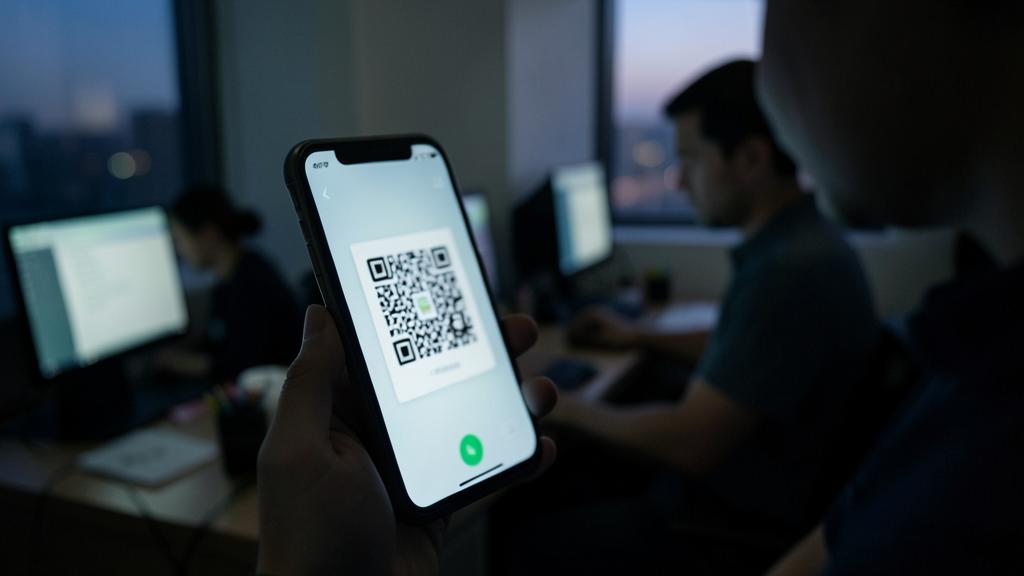
Watch out for disguised collectors. The request for ID is also a bait for phishing: the fake administrative site that « verifies your identity » (our guides on fake sites – their true business is harvesting documents), the « support » that asks for the card to « unlock your account, » the phantom employer in the fake recruitment (the recruitment scam that collects CVs, ID, and IBAN before disappearing – the trap for job seekers: no legitimate recruiter asks for the ID before a real hire), the buyer of classifieds who demands « proof of identity » (never – our guides on marketplaces) : the cross-cutting rule – the ID is only shared with a verified counterpart, through a chosen channel, with a watermark – and any urgent, unusual, or early request is a signal, not a formality. The document that proves who you are deserves that the request be verified.
Frequently asked questions
They ask for both the front and back of the card and a selfie with the card: normal?
It’s the standard for remote identity verification (online banks, regulated platforms – the selfie proves the bearer is alive and present) : legitimate for regulated actors, via THEIR secure process (the app or verification provider – not by email) . The same mechanism demanded by a dubious site or stranger is a fraudulent collection – the selfie-with-card stolen is the fraudsters’ key: it only happens in an official process you initiated.
The owner demands my full file by email: how to protect?
The rental file is legitimate (and its composition is regulated – the list of required documents is fixed: the Health Insurance Card or bank statement, for example, are not required) : watermark everything (each document with « rental file [address] [date] »), use the certified rental file tool when possible (the verified file without sending originals – the official tool made for this), and purge the emails after the decision. The cautious future tenant is not a bad candidate – he’s an adult.
What to put on your phone for travel: copies or originals?
The two levels of our travel guides: the physical originals on you (distributed – never all in one place), and the copies ENCRYPTED on the phone (the manager’s safe – accessible offline: the lost passport is recreated ten times faster with its copy), plus a copy accessible to a trusted family member staying at home. The clear photo in the photo album is the bad compromise: visible to any app authorized to access photos, and to the unlocked thief.
What to remember
The ID copy is a circulating identity theft kit – and its control lies in four disciplines: the systematic watermark (date + recipient + usage, across – the free official tool or thirty seconds of annotation: the copy becomes unusable elsewhere), the legitimacy questioned (half the requests have no foundation – ask about them), the chosen channels (secure deposit or expiring link rather than attachment – and purging your email inbox: search for « ID card, » shiver, clean up), the encrypted storage (the manager’s safe, never the clear photo – and shredded paper). The arriving official digital identity will do better (prove without giving) ; identity theft, it is fought by complaint and dossier – long-term: the whole point is to never get there. Ten seconds of sending against years of contestation: the watermark has never had a better argument.

Any doubts about your security, an appliance to check or clean? Our support service guides you step by step.
Leave a Reply
You must be logged in to post a comment.