
The bell that rings to show who is ringing, the camera that watches the garage, the eye on the living room during holidays: domestic cameras have become commonplace—affordable, wireless, and installed in ten minutes. But a camera is a double-edged object by nature: poorly chosen or improperly set up, it exposes exactly what it was meant to protect—pirated feeds from cheap cameras fuel entire websites, and the law strictly regulates what can be filmed. Choose safe, install legally, set up securely: the complete guide to well-installed family video surveillance.
Choose a camera that doesn’t spy on you
The founding paradox: the surveillance object itself is the most surveilled object—criteria that separate the safe from the sieve: end-to-end encryption—the stream readable only by YOU (the king criterion: cameras compatible with « Secure Video » from the Apple ecosystem guarantee this structurally—our HomeKit guides—and serious actors display it; the €20 camera that streams to opaque servers is an open window into your living room, literally: entire streams of poorly configured low-cost cameras are viewable online—it is documented, massive, and avoidable); the established and maintained brand—security updates for years (the orphaned camera with eternal flaws is worse than no camera—our abandoned objects guides); the storage in your hands—local (card, base, NAS—the stream that doesn’t leave your home), or encrypted cloud storage with known costs (the subscription is clear before purchase—our guides: the camera whose history becomes paid is the economic trap of the aisle); the strong authentication of the account that controls it (two-factor authentication available—and enabled: the camera account is a critical account); and the possible local operation (the camera that works without the manufacturer’s cloud survives outages and shutdowns—the criterion of our connected home guides, decisive here). The grid comes down to one question for the seller or the product sheet: « Who can technically see my images, and what happens if your company disappears? »—good answers exist, starting from mid-range.
A good home camera should only let you see the footage, not strangers or hackers. It should get security updates, store videos safely, and work even if the company goes away. Cheap cameras often do the opposite.
A family in Paris installed a €25 camera from an unknown brand. Within weeks, their living room appeared on a website showing hacked feeds. The camera had no encryption and used default passwords. A €150 model with HomeKit Secure Video would have prevented this.
The law: what your camera can film (and what it can’t)
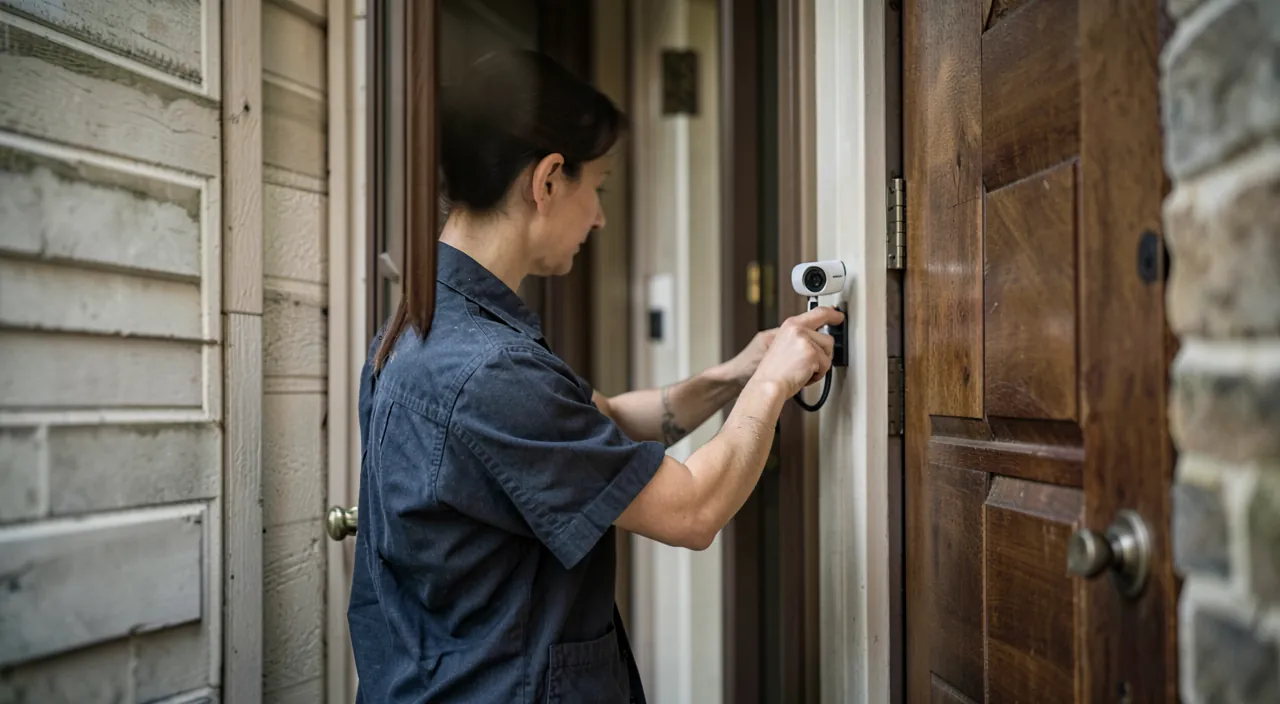
The law is clear and misunderstood: at home, all is well—interior of your domicile and private property can be filmed freely… towards third parties (the family, too, has rights: see ethics below); the absolute limit: the space of others and public space—the external camera must not capture neither the street (beyond the strictly necessary immediate approach), nor the neighbor’s garden, nor the common areas of a condominium (agreement of the condominium is required for these)—the doorbell camera that embraces the sidewalk and the opposite door is a common offense—specific tools exist precisely for this: the masking zones (the exclusion zones drawn in the app—the street blacked out, the neighbor masked: mandatory settings for all external cameras, ten minutes that avoid neighborhood disputes and complaints); the people who work at your home—the domestic employee (childcare, helper, regular artisan) must be informed of the cameras (and continuous filming of someone at their post is not allowed—labor law enters the living room: honest information is the rule, the hidden camera is a crime); and the recording of sound, more regulated than the image: the recording of conversations without consent is a distinct offense—the microphone of the cameras is set with conscience. The civic summary: your security stops where the privacy of others begins—and modern settings allow exactly this demarcation.
The right move. Do the five-setting audit on each existing camera—twenty minutes that seal everything: 1) the default password changed (the original sin of hacked cameras) and two-factor authentication enabled; 2) firmware updated (and automatic updates checked); 3) masking zones drawn (the street, the neighbor); 4) useful notifications set (person detection rather than motion—no more alerts for cats and branches, our notification guides); 5) family sharing proper (who has access, temporary guests revoked—and the camera on the guest network if it’s not from a trusted ecosystem—our Wi-Fi guides). A camera configures like a safe—because it is one.
Useful installation: the placements that really protect
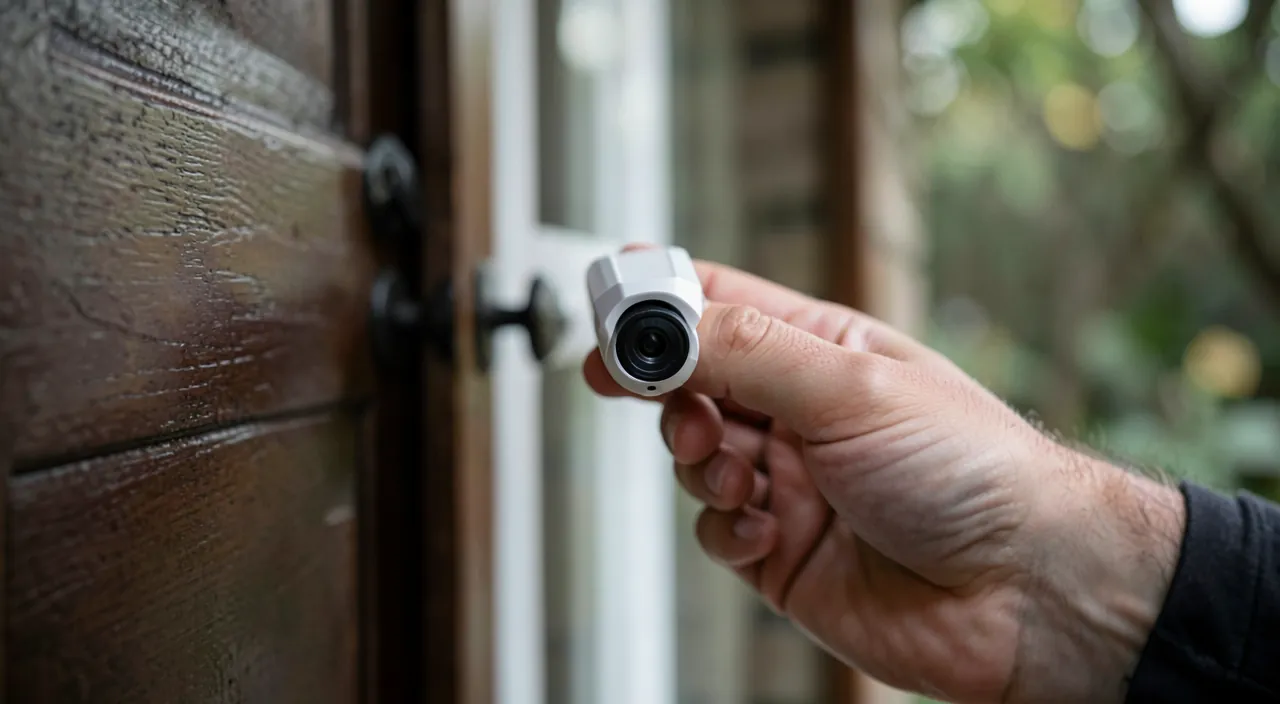
Real security before the gadget: the profitable placements—the video doorbell first (the entrance is the strategic point: visible deterrence, monitored packages—our delivery guides—, filtered telemarketing without opening, the remote intercom « I can’t come » that simulates presence); secondary access next (the garage, the back door—the real points of intrusion), the interior last and with conscience (the living room filmed continuously interrogates—interior cameras with physical shutter or programmatic deactivation when the household is present reconcile: the vacation camera, not the daily one); the height and angle (out of reach, overhead shots avoided, night lighting thought—night vision is worth what the lit scene is worth); the information sign for places with passing traffic (the guesthouse, the entrance to a space—informational signage is required as soon as third parties are captured); and the integration into the system—the useful automations (alert when the household is ABSENT only—family geolocation that arms/disarms: our guides—and the light that deters better than recording), the active deterrent siren and remote dialogue, and the complementarity with the rest (motion detectors, alarm—camera witnesses, locks prevent: video is the witness of the system, not its wall). And the honest wait: against burglary, the camera deters and documents (the images serve investigations and insurance—export quickly after an incident): it doesn’t stop anyone: the solid door remains the solid door.
Family ethics: who watches whom?
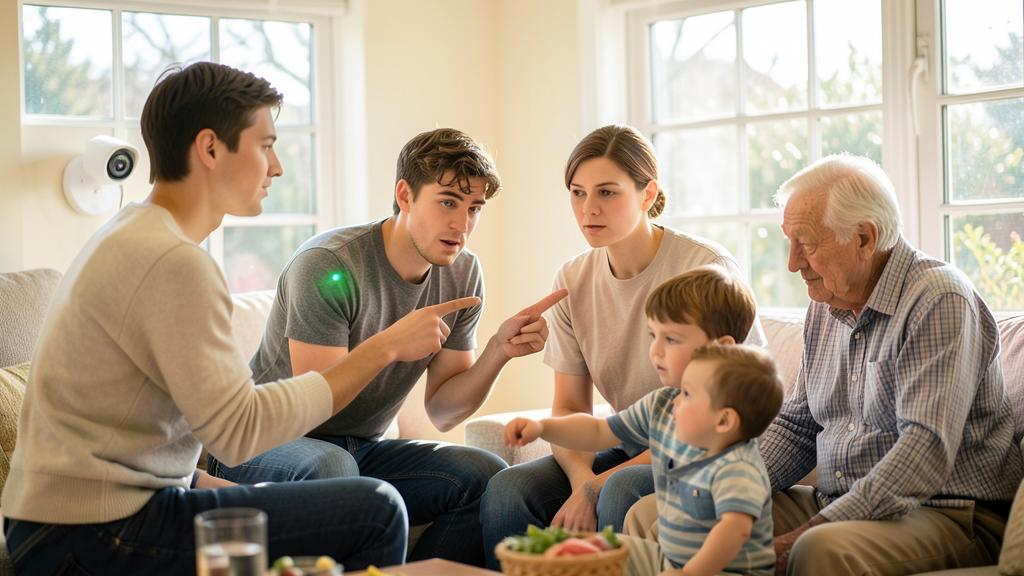
The topic not discussed at the smart home aisle: domestic cameras also watch the family—the rules of a healthy home: total transparency—everyone knows where the cameras are and who can watch (the hidden camera at the family home is a breach of trust before it’s a legal problem—and regarding teens, a legitimate casus belli); bedrooms, never (including those of children—babysitters have their dedicated babyphones, in the parents’ bedroom at night: the security listen-in is not a permanent camera in a child’s room as they grow—the right to privacy grows with them); the supervised sharing—checking the house is not following everyone’s comings and goings (the history that traces the schedule of a spouse or teen is a deviation—the shared location consented to by our guides is the right tool for coordination, the camera is not a family pointer); employees and guests informed (already said, never enough); and the elderly, delicate and precious—the camera in a frail parent’s home is discussed with them (the benevolent guardianship of our guides: motion sensors without images often do better and more respectfully—the camera is accepted for fall zones or by request of the interested party, not by default)—surveillance technology in a family is a moral contract—written nowhere, respected everywhere, or the home turns into a panopticon—the exact opposite of a home.
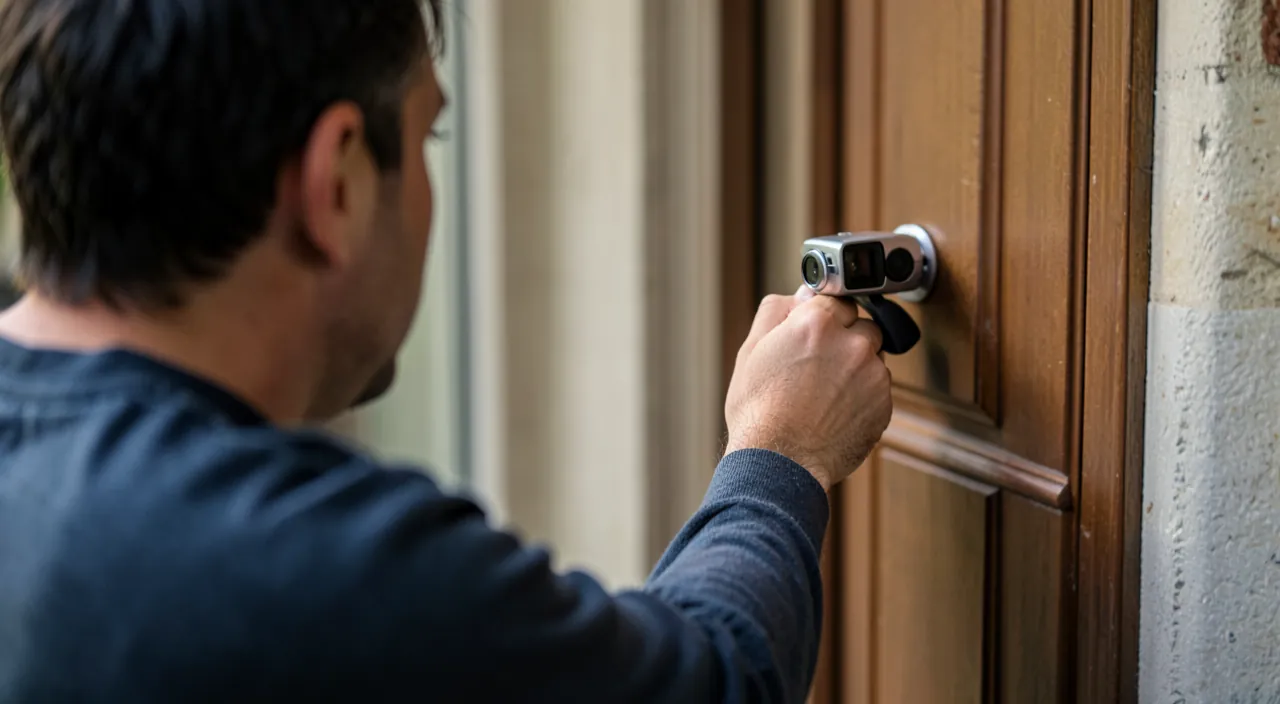
Beware of a hacked camera account—the black scenario, and its prevention. Real cases show: a compromised camera account (reused password + no two-factor authentication, the usual mix—our guides) gives an unknown person eyes AND voice in your home (the speakers of the cameras have been used to terrorize families—it has happened, it is documented): prevention hinges on fundamentals—a unique password for the camera account, two-factor authentication, unknown connection alerts activated, firmware updated, and minimal shared access; the alert signals—a camera moving alone, access indicators outside your consultations, voices—impose immediate cutoff (power), changing the password from a healthy device, verifying sessions, and reporting. The camera is a connected eye: who holds the account holds the eye—secure the account as you secure the door.
Frequently asked questions
Fake camera or low-end entry-level camera?
Neither: the fake is recognizable (and offers no proof when the time comes), the dubious low-end exposes more than it protects. The good baseline: a brand-established doorbell or camera on sale or refurbished (our guides)—credible deterrence, exploitable images, secure stream. On a tight budget: the motion detector lighting and serious lock protect more per euro than any camera.
My burglary footage: what to do to make it useful?
Export them IMMEDIATELY (cloud storage and card rotation overwrite—saving sequences is the top priority), verified timestamps, and submit them with the complaint (they serve—identifications and series cross-references are real). Do not post them yourself on social media (« Who recognizes this thief? » exposes to defamation and harms the investigation): justice first, virality last.
What to film during holidays—and how to manage remotely?
The holiday kit: armed access on person detection, notifications on both phones of the couple, sober consultation (the evening ritual—not the anxious permanent stream), the trusted neighbor informed (real presence beats the camera—our absence guides—and it’s him we call if a serious alert arises, not the return theft), and presence simulations (programmed lights). The camera reassures especially the one who is leaving—it’s already a lot: peaceful holidays are worth the installation.
What to remember
The domestic camera protects under three conditions: chosen safely (end-to-end encryption, maintained brand, managed stream, two-factor authentication account—opaque low-cost is an open window), legally installed (its property only—masking zones for the street and neighbors, employee and visitor information, microphones with conscience, condominium consultation), securely set (five-setting audit, person detection, minimal access, quick export after incident). Added to this are clarity (it deters and documents—the solid door prevents) and family ethics: total transparency, never bedrooms, consultation that checks the house without tracking their own—home is not a panopticon. Properly placed, the camera keeps its place: a reliable, discreet witness, looking out—never sideways.
Any doubts about your security, an appliance to check or clean? Our support service guides you step by step.
Leave a Reply
You must be logged in to post a comment.