
« What are we eating tonight ? » — the question that comes up every day, along with the tired routine of the same three dishes. Cooking apps promise to answer it: thousands of recipes, ideas based on fridge contents, weekly menus, and shopping lists that write themselves. Promise kept? Mostly, provided you choose the right tools and adopt a couple of habits that change everyday cooking. This guide gets you back in the kitchen, phone clean and inspiration restored.
What cooking apps change in the kitchen
Their contribution comes in four services: inspiration — fresh ideas when you’re stuck, by ingredient, season, diet, or craving; step-by-step — guided recipes, sometimes in video, that reassure beginners and ambitious dishes; organization — planning weekly meals and generating the corresponding shopping list, the duo that really reduces mental load; and adaptation — adjusting quantities for guests, converting measurements, filtering for allergies and diets. Cooking doesn’t become magical—it becomes organized—and that’s already huge.
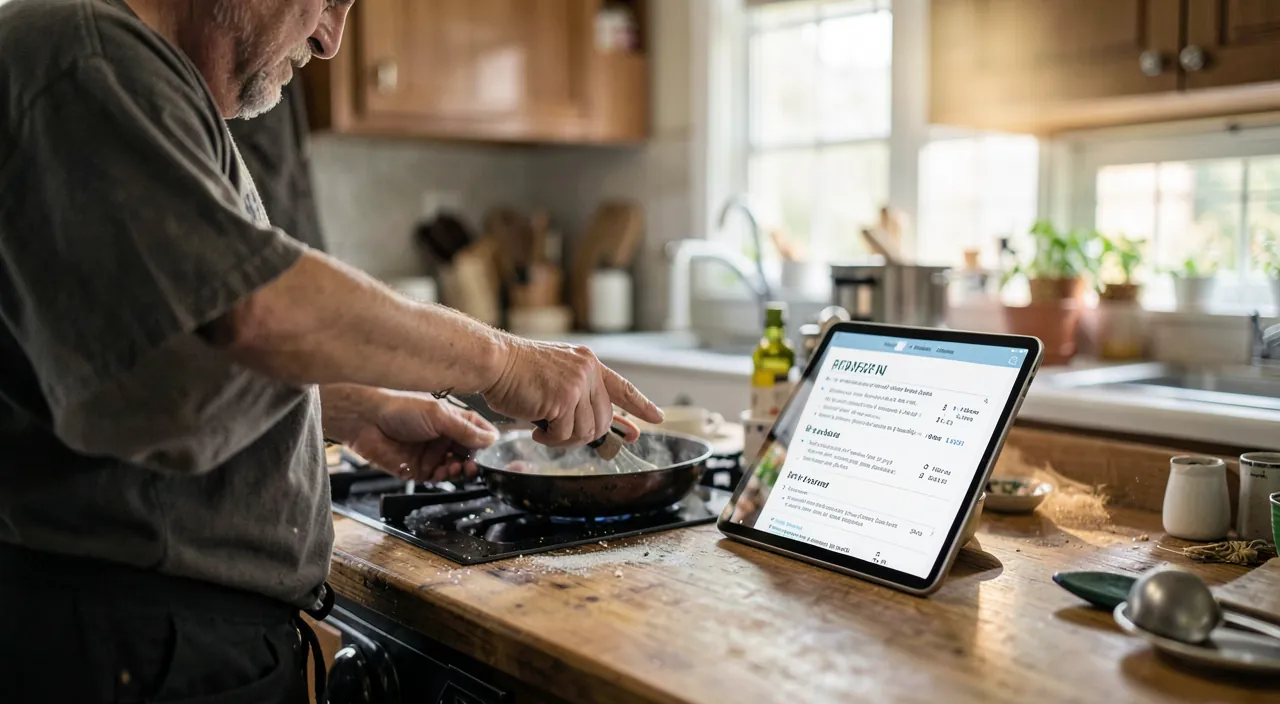
Cooking apps help you plan meals, find recipes, and organize shopping. They don’t cook for you, but they make the process easier and less stressful.
You have 3 zucchinis, 200g of chicken, and 100g of feta left. Instead of throwing them away, you enter these ingredients into the app, which suggests a recipe like “zucchini and chicken feta bake.” You save money and reduce waste.
The winning duo: weekly menus + shopping list
If there’s only one use to remember, it’s this one. The principle: choose all at once, on the weekend, the meals for the week—the app generates the aggregated shopping list (no more back-and-forth or forgotten items), and every evening, no existential question: the menu is decided, the ingredients are there. The cascading benefits: less daily mental load, less waste (you buy what you’ll cook), fewer expensive backup meals, and a more varied diet—since you choose with a clear head rather than starving at 7:30 PM. Fifteen minutes of planning, a week of peace.
The right reflex. Build your favorites notebook: every successful recipe approved by the table goes in. In a few months, you have a personal repertoire of sure bets—the weekly planning then becomes a game of composition between tried-and-true favorites and a new recipe to test. The end of « what are we eating ? » AND of monotony.
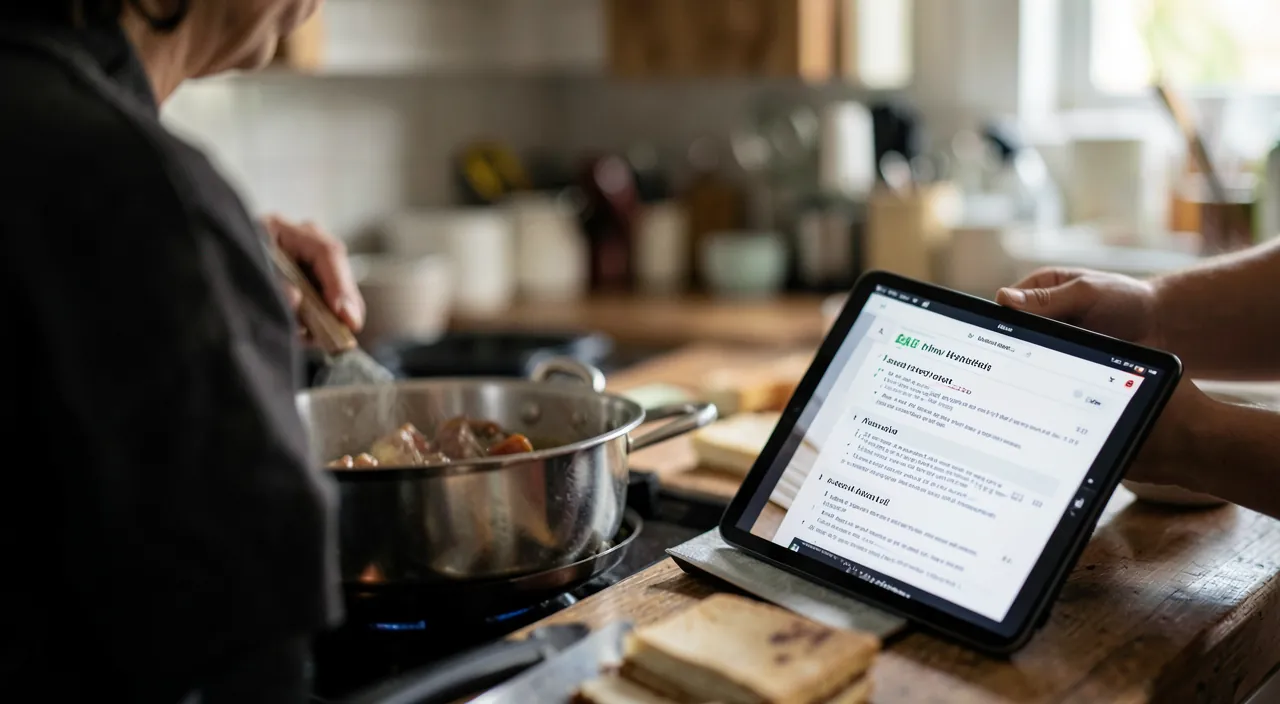
Cooking with what you have: anti-waste
The other valuable use: search by ingredients. Three tired zucchinis, leftover chicken, half a pack of feta? You enter the ingredients, and the app suggests possible recipes. This anti-waste reflex truly saves money—leftovers become dishes instead of ending up in the trash—and unleashes creativity: you discover combinations you’d never have tried. AI assistants excel at this exercise: describe your fridge contents and constraints (« quick, no oven »), and let the ideas come.
In the kitchen: the phone as an assistant
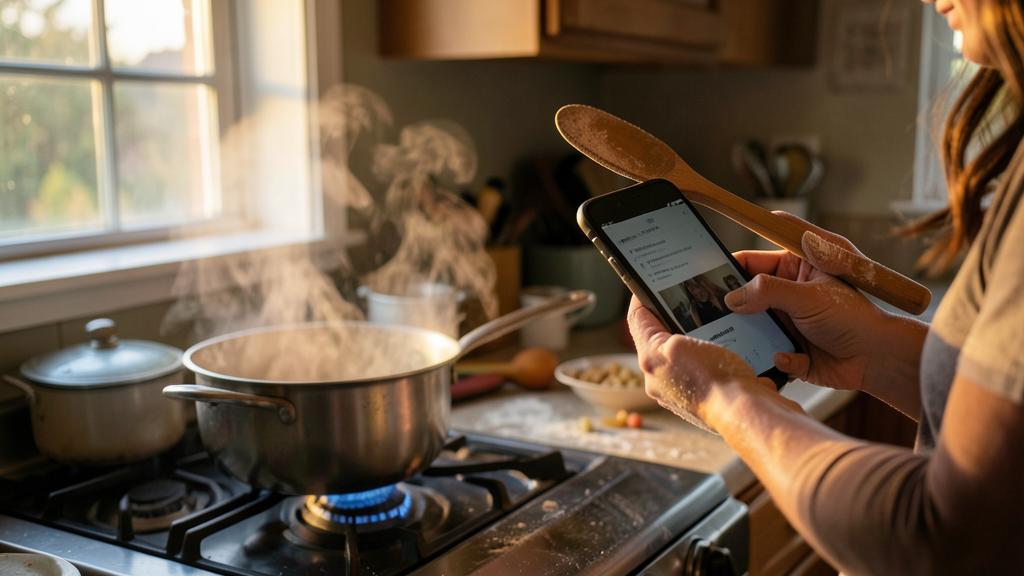
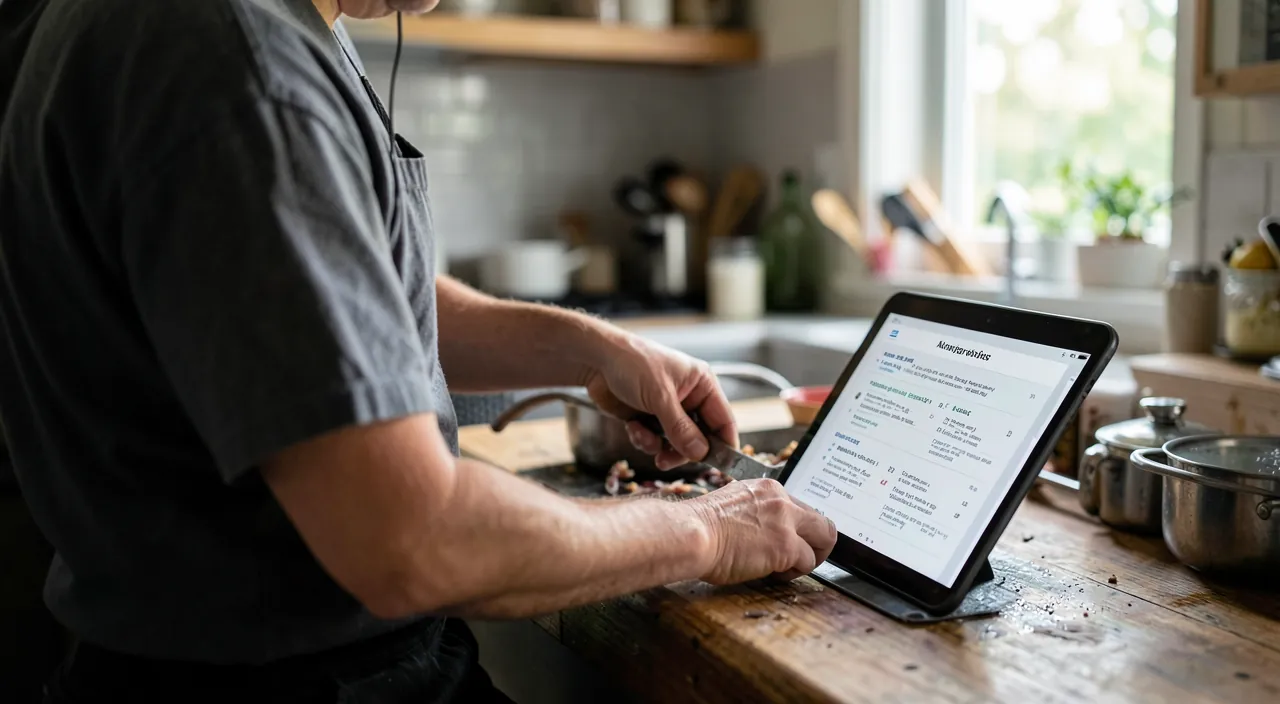
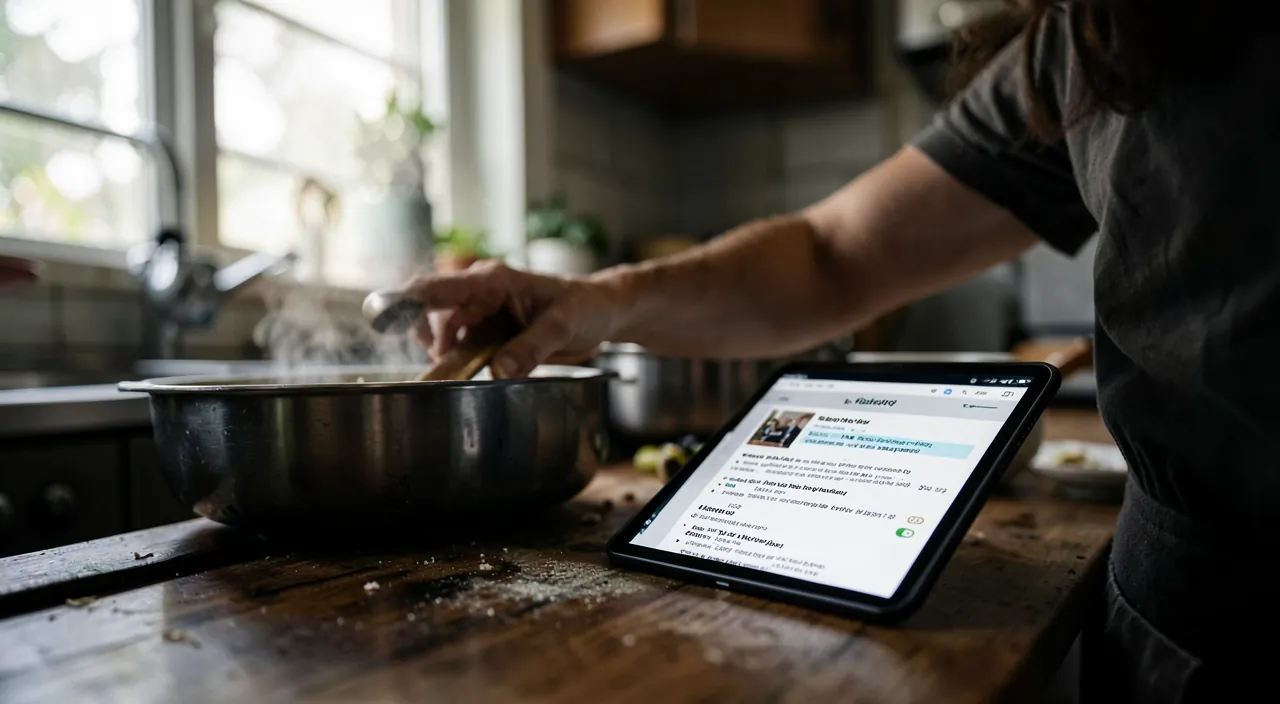
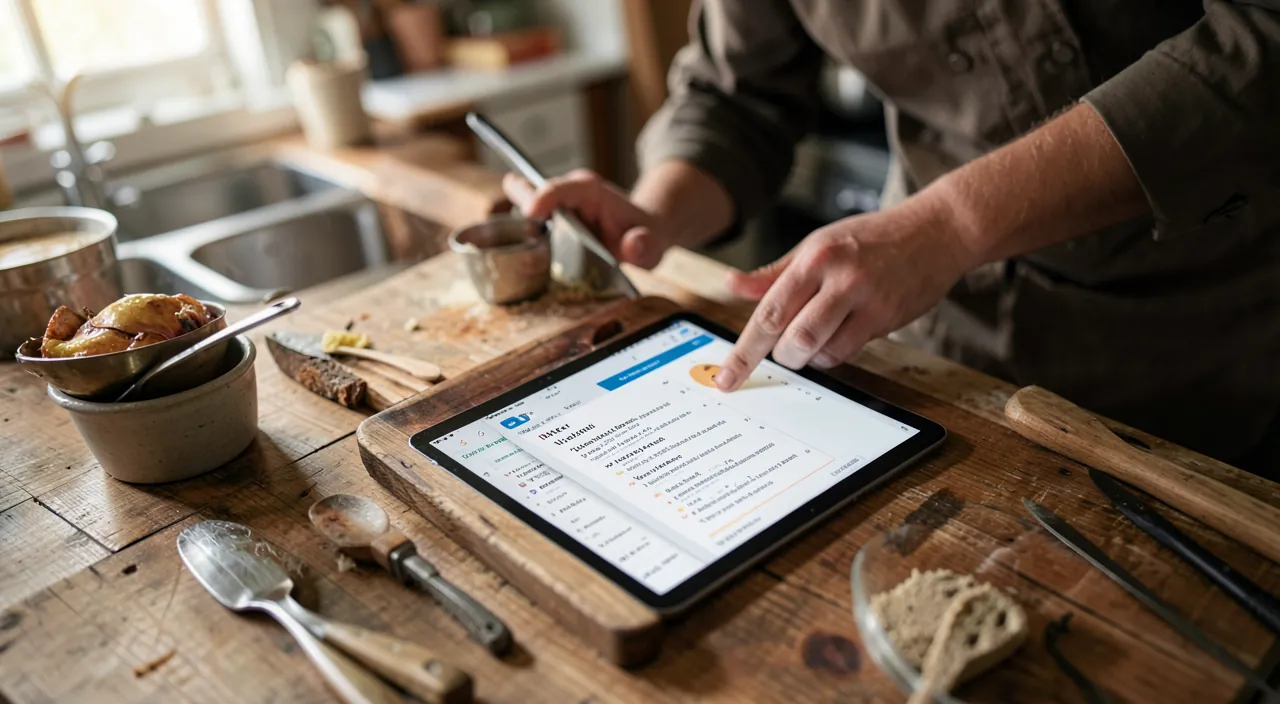
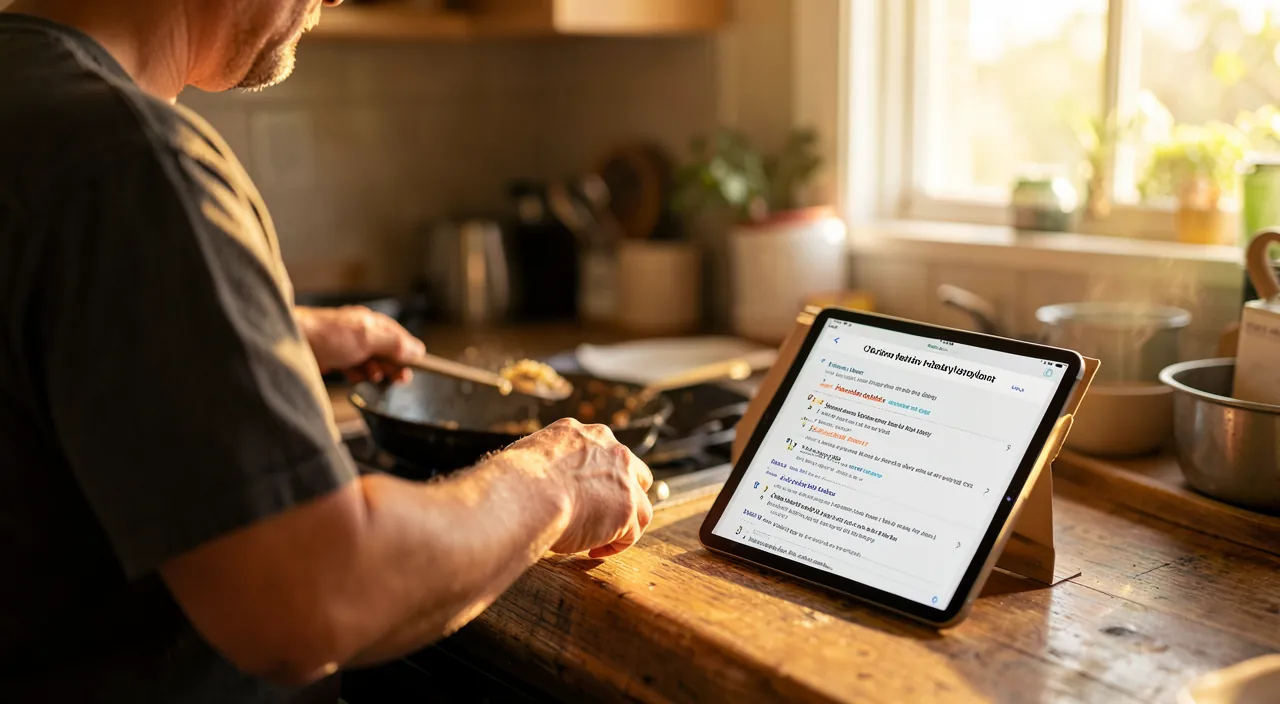
During preparation, a few comfort tricks: the « active screen » mode offered by many recipe apps prevents the screen from locking—no more unlocking with floury fingers; voice timers (« Hey Siri, set a timer for 8 minutes ») control cooking hands-free, and multiple named timers can run together (pasta AND gratin); step-by-step voice reading exists on some apps. A stand or a corner of the counter protected from splashes, and the phone becomes a real kitchen assistant.
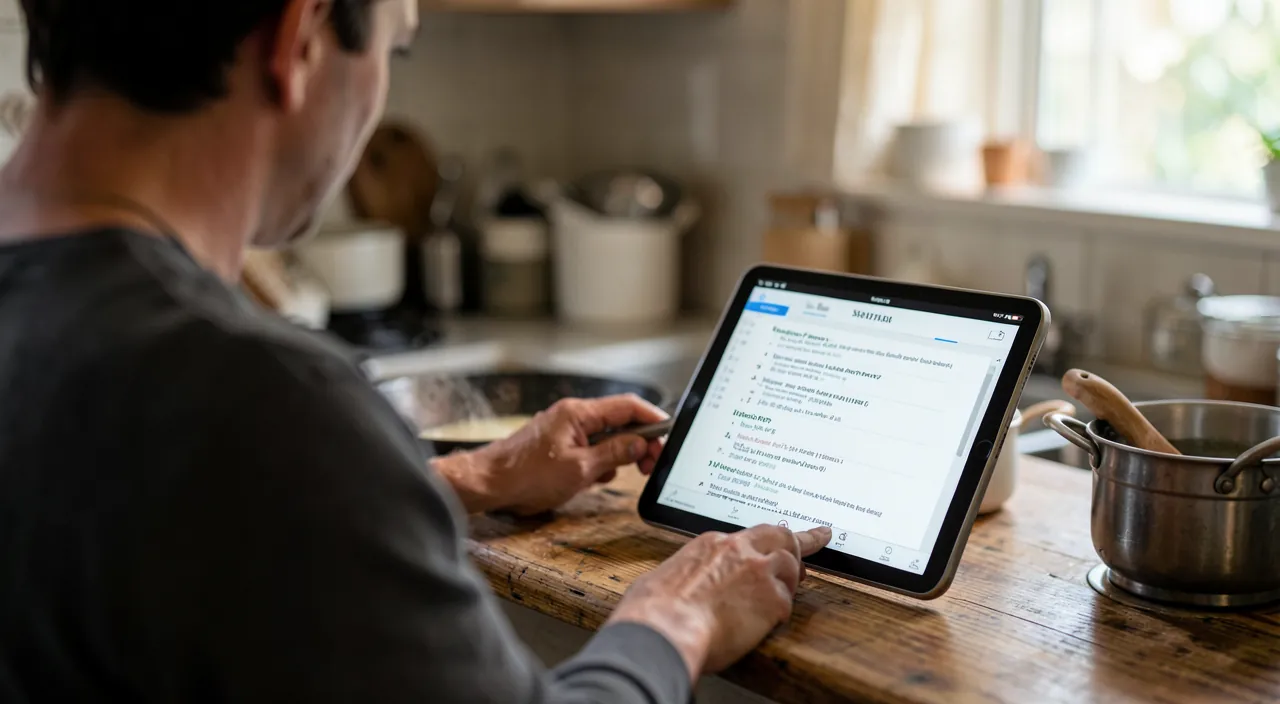
To sort. The quality of online recipes is uneven: questionable proportions, missing steps, misleading photos. Trust recipes rated and commented—comments flag pitfalls (« double the seasoning », « 20 more minutes in the oven ») and are worth their weight in gold. And for diets or allergies, always check ingredients yourself: app filters help but guarantee nothing.
Frequently asked questions
Which app to choose?
The one whose recipe database matches your cooking (family, vegetarian, quick, international…) and whose ergonomics you like—try two or three. The key is less the app than the duo of menus + shopping list, which many offer.
Are AI apps worth it?
To improvise with fridge contents, adapt a recipe, or unlock ideas, yes—it’s even one of the most convincing daily uses of AI. Keep your chef’s judgment on far-fetched suggestions.
How not to abandon planning after two weeks?
Stay modest: plan 4-5 dinners, not 21 meals; draw mainly from your tried-and-true favorites; keep one « free » evening for leftovers or the unexpected. Planning that lasts is flexible planning.
What to remember
Cooking apps don’t do the cooking—they do better: they eliminate what made it burdensome. The duo of weekly menus + automatic shopping list reduces mental load and waste; searching by ingredients turns leftovers into meals; the favorites notebook builds your repertoire of sure bets; and in the kitchen, active screen and voice timers make the phone an efficient assistant. Add sorting by comments for quality, flexible planning to last—and the question « what are we eating tonight ? » finally gets its answer: it’s planned, it’s bought, and it’s good.
Want to leverage digital in your daily life?
Leave a Reply
You must be logged in to post a comment.