
What is this plant? Why are its leaves turning yellow? When should you water it, repot it, prune it? Whether you have a balcony, a vegetable garden, or a few indoor plants, gardening raises a thousand questions—and apps can answer them. Identify a plant from a photo, diagnose a disease, receive maintenance reminders, learn the right gestures: the smartphone becomes a precious gardening companion, accessible even to beginners. Here’s how apps can help you garden and care for your plants, and how to use them well.
How apps help with gardening
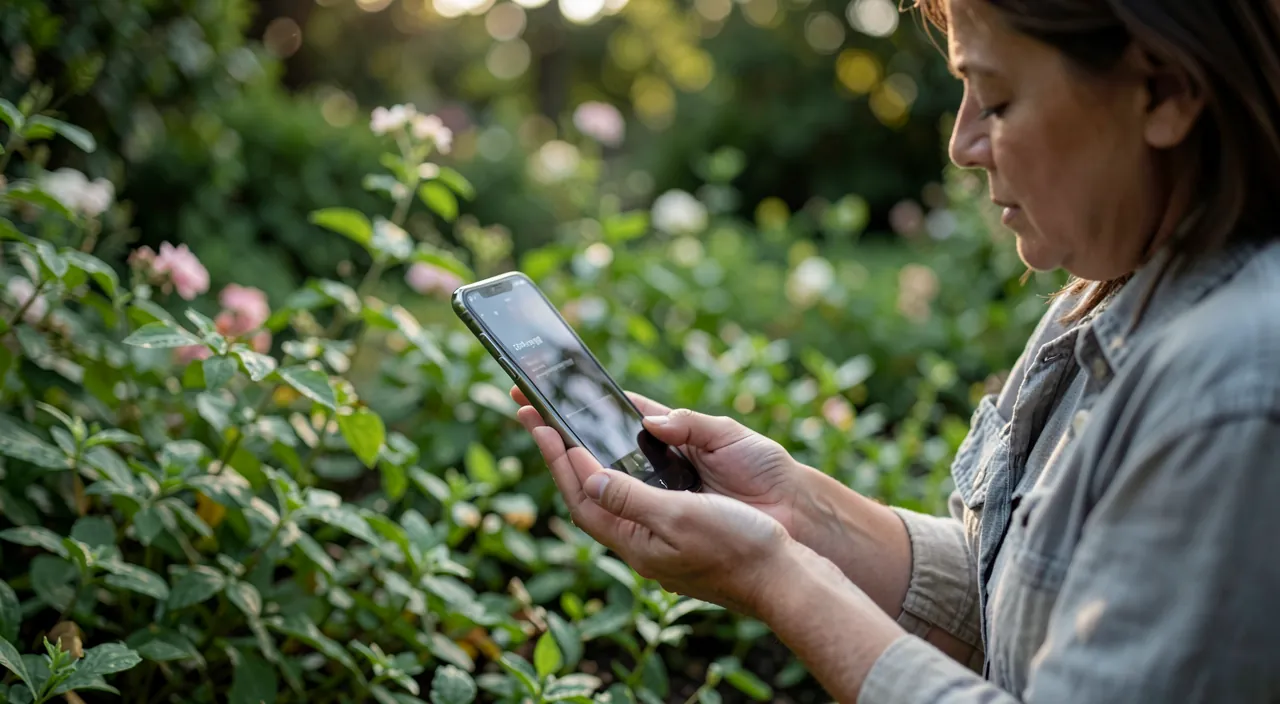
Gardening apps gather tools that answer the concrete questions you ask while gardening. Here’s what they generally allow (depending on the apps). **IDENTIFY** a plant: take a photo of a plant (in the garden, on a walk, an unknown indoor plant), and the app tells you what plant it is; magical and very practical for knowing what you have or recognizing a flower encountered on a walk. **DIAGNOSE** a problem: yellow leaves, spots, wilting plant? Some apps identify the disease, pest, or issue (lack of water, excess, deficiency) from a photo and suggest solutions. Receive **CARE TIPS**: for each plant, indications on watering, light, soil, pruning, repotting; gardener’s knowledge at your fingertips. **REMINDERS**: some apps remind you when to water, fertilize, or perform a certain action; practical for not forgetting (especially for indoor plants that are neglected). **LEARN**: guides, articles, tutorials on gardening techniques, seasons, crops. **PLAN** your vegetable garden or garden: what to plant, when, how to associate crops. Track your plants: keep a “journal” of your garden, note your plantings. Some apps are also **COMMUNITIES**: exchange with other gardeners, ask questions, share. Who is it useful for? **EVERYONE**: **BEGINNERS** find reassuring support (identify, understand, be guided step by step); the more **EXPERIENCED**, practical tools (diagnosis, reminders, planning). Whether you have a large garden, a vegetable garden, a balcony, or just a few green plants, there are apps adapted to you. What you need to understand: these apps **DEMOCRATIZE** gardening; they make knowledge and tools accessible to everyone, which previously required experience or books; they make gardening more accessible, less intimidating, and help you succeed. The key idea: gardening apps answer the concrete questions you ask (what is this plant? why is it doing poorly? how to care for it?) thanks to photo identification, diagnosis, tips, and reminders; they turn the smartphone into a precious gardening companion, accessible to beginners and experienced gardeners alike. A tool to learn, succeed with your plants, and enjoy gardening.
Gardening apps help you identify plants, diagnose problems, and get care tips. They make gardening easier for beginners and more efficient for experts. The key is to use them as a guide, not a replacement for your own observations.
Imagine you have a potted plant with yellow leaves. You take a photo with an app, and it tells you the plant is a peace lily (Spathiphyllum) and suggests you might be overwatering. The app reminds you to check the soil moisture before watering again. This helps you save the plant without needing a gardening expert.
How to use gardening apps effectively
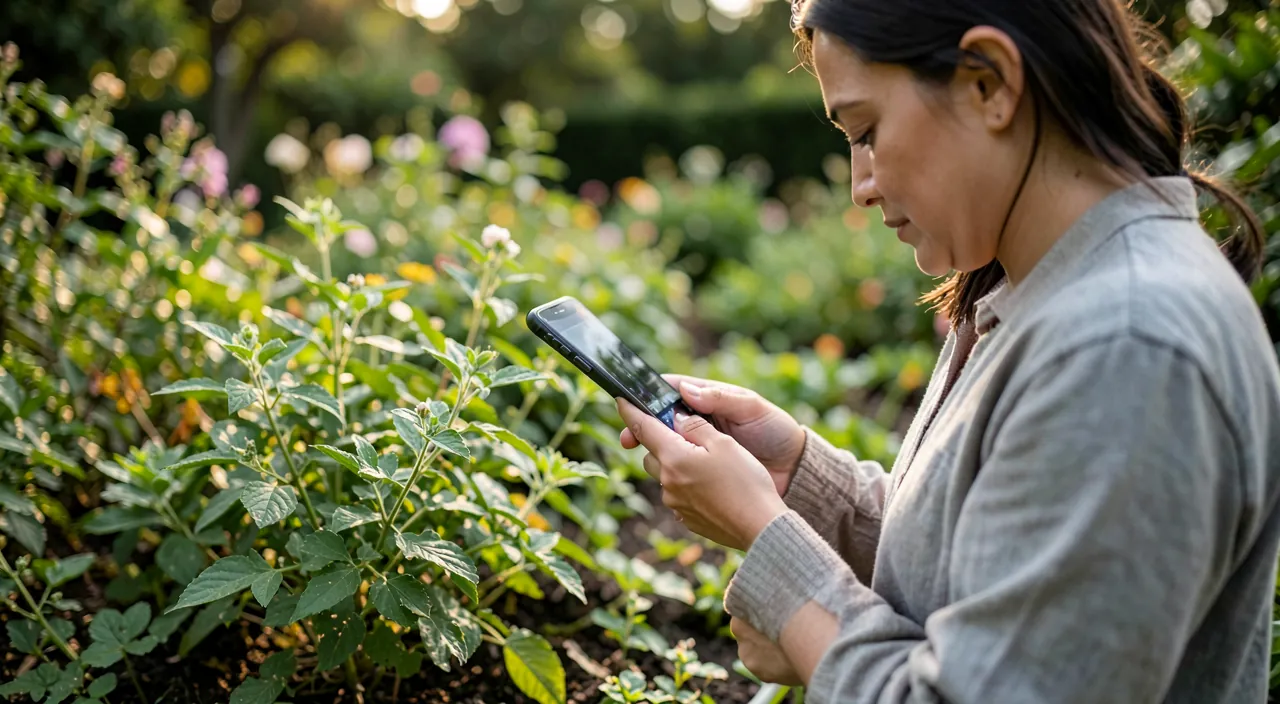
Here’s how to get the most out of gardening apps. **Use PHOTO IDENTIFICATION** — the most appreciated feature: photograph a plant to know what it is; practical for identifying a plant received as a gift, a wildflower, or a “weed”; for good results, take a clear, well-lit photo showing the plant well (leaves, flower if possible). **Diagnose PROBLEMS** — if a plant is doing poorly (yellow leaves, spots, wilting): photograph the problem to get a diagnosis and solution ideas; cross-check with your own observations (are you watering too much? enough light?). **Follow CARE TIPS** — consult the needs of each plant (water, light, soil); adapt to your situation (the same plant doesn’t have the same needs depending on the climate, season, exposure). **Activate REMINDERS if useful** — to not forget to water (especially indoor plants); but keep common sense (a generic reminder doesn’t replace observing YOUR plants: touch the soil to see if it’s dry!). **LEARN with the guides** — take advantage of articles and tutorials to progress (techniques, seasonal calendar, crop associations in the vegetable garden). **Exchange in COMMUNITIES** — if the app offers them: ask other gardeners your questions, share your successes and concerns; mutual aid among enthusiasts is precious. A few TIPS: keep a CRITICAL MIND — apps are HELPS, not absolute truths; identification and diagnosis can be WRONG (especially on imperfect photos or similar plants); cross-check, observe, and for a serious doubt (a toxic plant, a serious issue), verify elsewhere. **ADAPT** to your context: tips are often general; your climate, soil, and exposure matter; local experience (a gardening neighbor, a nursery) remains valuable. **OBSERVE** your plants: the app helps, but nothing replaces REGULARLY looking at your plants (leaf condition, soil, growth); the best gardener’s tool is still their eye. **COMBINE** sources: apps, books, gardener’s advice, experience; gardening is learned in many ways. A word on CAUTION: if you garden to EAT (vegetable garden, foraging), NEVER rely solely on an app’s identification to consume a wild plant, mushroom, or berry—a mistake can be dangerous; in case of doubt about edibility, an expert’s opinion is essential (our guides caution with apps). In short, using gardening apps effectively: identify your plants by photo, diagnose problems, follow care tips adapted to your context, activate useful reminders, learn with guides, and exchange in communities. But keep a critical mind (they can be wrong), adapt to your situation, and above all OBSERVE your plants: the app is a companion, your eye and common sense remain essential. And never consume a wild plant based solely on an app.
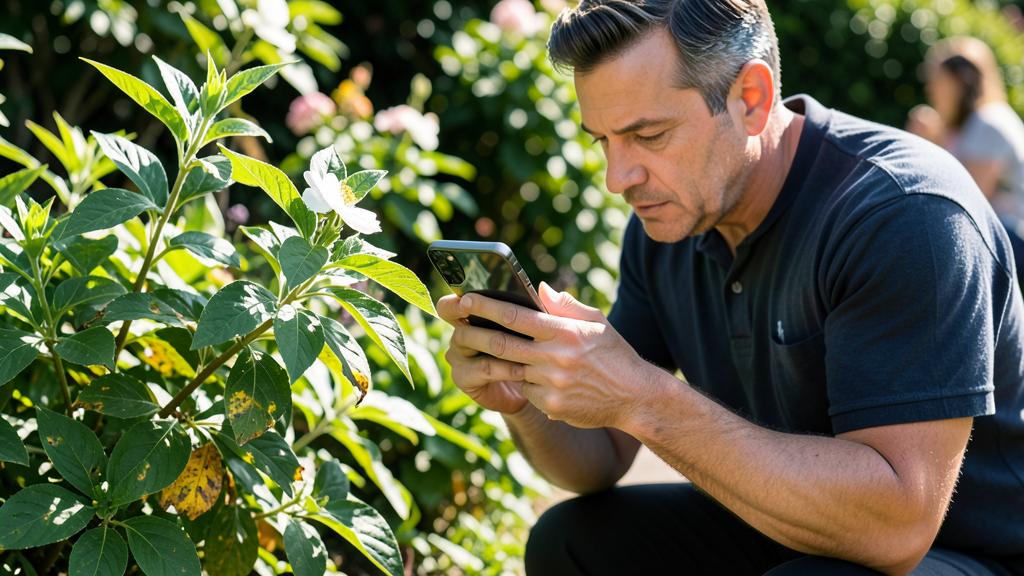
**The right reflex.** Gardening apps are a fantastic companion, provided you see them as HELPS and not absolute truths. Take advantage of their strengths: **PHOTO IDENTIFICATION** (photograph an unknown plant— in the garden, on a walk, received as a gift—to know what it is; take a clear and well-lit photo showing leaves and flower), **DIAGNOSIS** of problems (photograph yellow or spotted leaves to understand what’s wrong and get clues), **CARE TIPS** (water, light, soil for each plant), and **WATERING REMINDERS** (useful especially for indoor plants that are forgotten). But always keep a CRITICAL MIND: identification and diagnosis can be WRONG (especially on imperfect photos or similar plants); cross-check, and for a serious doubt, verify elsewhere. **ADAPT** the tips to YOUR context: they are often general, while your climate, soil, exposure, and season matter a lot; local experience (a gardening neighbor, a nursery) remains valuable. And above all, **OBSERVE** your plants: the app helps, but nothing replaces regularly looking at your plants (leaf condition, soil—touch it to see if it’s dry rather than blindly following a generic reminder!); the best gardener’s tool is still their eye. An ESSENTIAL PRECAUTION: if you garden to eat (vegetable garden, foraging), NEVER rely solely on an app’s identification to consume a wild plant, berry, or mushroom—a mistake can be dangerous; in case of doubt about edibility, an expert’s opinion is essential. Combine sources (apps, books, gardener’s advice, experience), and make gardening a learning pleasure. Well used—as a guide companion, not an infallible oracle—these apps democratize gardening and really help you succeed with your plants, beginner or initiated.
A companion to green up your daily life
Beyond the features, gardening apps contribute to a broader pleasure: reconnecting with plants and nature, even in the city. A few thoughts. **ACCESSIBILITY**: gardening could be intimidating (where to start? how not to kill your plants?); these apps remove the barrier, guide beginners, and give confidence; they make the pleasure of growing accessible to everyone, even without experience or a “green thumb.” **CONTINUOUS LEARNING**: gardening is an endless knowledge; apps help you progress, understand your plants, learn from your mistakes; a pleasant enrichment. The **LINK** to nature: taking care of plants (a flower-filled balcony, a few green plants, a small vegetable garden) does you good; it’s soothing, rewarding, and reconnects you with the living; apps support this precious link, especially in an urban environment. **DAILY GARDENING**: identifying a flower on a walk, understanding why your plant is doing better, succeeding with your seedlings; these small pleasures are amplified by digital tools. The **BALANCE** between digital and nature: paradoxically, these apps use digital technology to bring us closer to nature; the important thing is to keep the essential in the garden (hands in the soil, observation, patience); the app accompanies, it doesn’t replace direct contact with plants. The **MEASURE**: gardening is also a school of patience and observation; don’t let the app cut you off from this sensitive relationship (looking, touching, smelling); it’s a tool, the garden is the experience. In short, gardening apps are a precious companion to green up your daily life: they answer concrete questions (identify a plant, diagnose a problem, know how to care for it), thanks to photo identification, diagnosis, tips, and reminders, and make gardening accessible to everyone, beginners included. To enjoy them: use these tools, but keep a critical mind (they can be wrong), adapt to your context, observe your plants with your own eyes, combine sources, and never consume a wild plant based solely on an app. At the bottom, these apps use digital technology to bring us closer to the living: they democratize the pleasure of growing, guide beginners, and enrich gardening. But the essential remains in the garden—the hands in the soil, the attentive eye, patience. A good digital companion, at the service of a very real and rooted pleasure: that’s how these apps help you green up your daily life and care for your plants with confidence and joy.
**Warning: identification can be wrong—never consume based solely on this—adapt the tips, and don’t forget to observe.** Important points. **FAILIBLE IDENTIFICATION, ESPECIALLY FOR EATING**: plant identification apps are practical but **CAN BE WRONG** (similar plants, imperfect photo); it’s harmless for an ornamental plant, but **DANGEROUS** if you garden to **EAT**: NEVER consume a wild plant, berry, leaf, or mushroom based solely on an app; a confusion can be toxic, even fatal; in case of doubt about edibility, only an **EXPERT’S** opinion (mycologist, pharmacist for mushrooms, experienced gardener) counts. **TOO GENERAL TIPS**: the care indications of apps are often generic, while reality depends on YOUR climate, soil, exposure, and season; don’t follow them blindly (“water every 3 days” is worthless if your soil is already moist); adapt to your context and cross-check with local experience. **FORGETTING TO OBSERVE**: the trap would be to replace observation with the app: nothing beats REGULARLY looking at and TOUCHING your plants (is the soil dry? are the leaves okay?); a generic watering reminder doesn’t know the real state of YOUR plants; the best gardener’s tool is still their eye and common sense. Other points: beware of apps that push you to **BUY** constantly (fertilizers, products—common sense and simple gestures often suffice), keep a critical mind about diagnoses (cross-check), and be careful with **TOXIC** plants (for children, pets: an app can help identify them, but verify seriously). Gardening apps are excellent **HELPS**, provided you don’t blindly trust them: they can be wrong (never consume wild plants based solely on them!), their tips must be adapted to your context, and they don’t replace your observation. Use them as a guiding and teaching companion, keeping your common sense, critical mind, and—for everything that is edible or can be toxic—the opinion of a real expert. Thus, they enrich your gardening without ever putting you in danger or cutting you off from essential contact with your plants.
Frequently asked questions
How to identify a plant with an app?
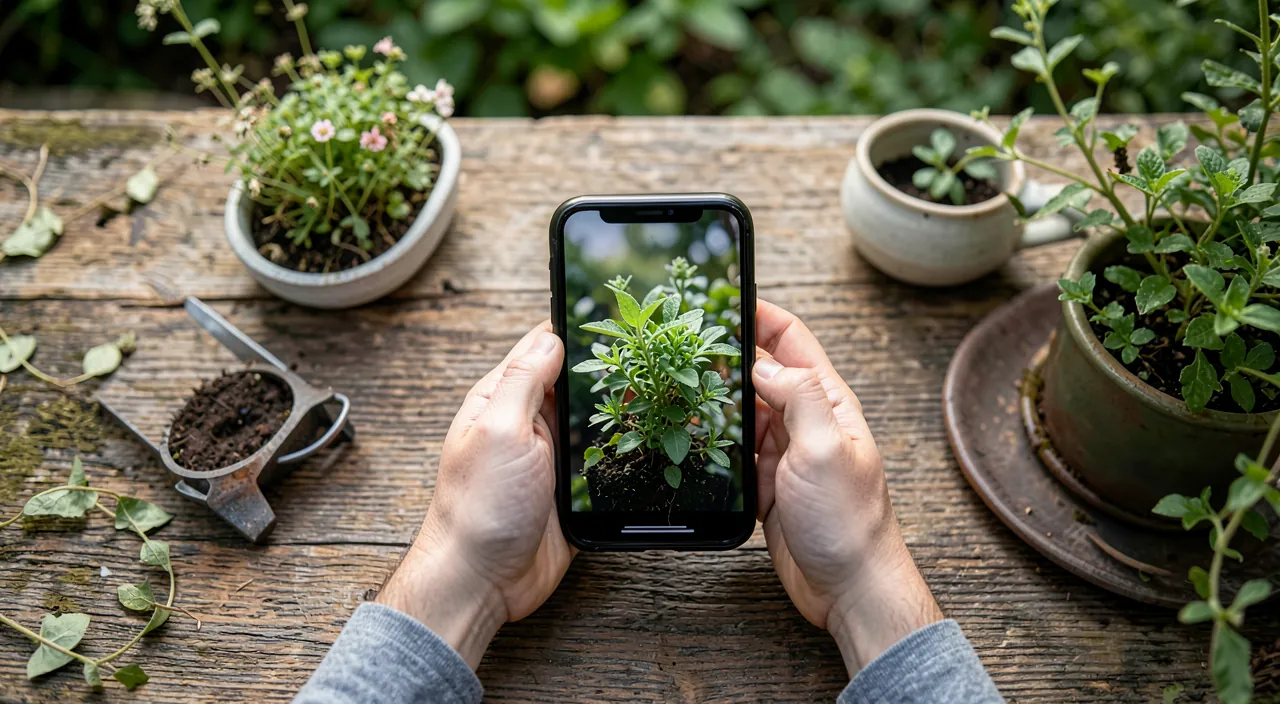
This is one of the most appreciated features: take a **PHOTO** of the plant with an identification app, and it tells you what plant it is. Practical for recognizing a plant received as a gift, a flower encountered on a walk, an unknown indoor plant, or a “weed.” For good results, take a **CLEAR**, well-lit photo clearly showing the plant (ideally the leaves AND the flower if it has one, sometimes several angles). The app then offers an identification, often with information about the plant and its care. However, beware: identification can be **WRONG**, especially between similar plants or on an imperfect photo; consider it as an indication to cross-check, not an absolute certainty. And above all, NEVER rely solely on this identification to **CONSUME** a wild plant, berry, or mushroom: a mistake can be dangerous; in case of doubt about edibility, an expert’s opinion is essential. For an ornamental plant, identification by app is a practical and fun tool; for everything that is edible, caution and expertise take precedence.
Are these apps suitable for beginners?
Yes, perfectly: they are even particularly useful for beginners. Gardening can be intimidating (where to start? how not to kill your plants?), and these apps remove the barrier: they identify your plants, explain how to care for them (water, light, soil), diagnose problems, remind you when to water, and offer guides to learn. It’s reassuring support that gives confidence, even without experience or a “green thumb.” They democratize gardening by making knowledge accessible to everyone, which previously required experience or books. Tip for beginners: start simple (a few easy plants), use the app to understand their needs, but also learn to **OBSERVE** your plants (touch the soil, look at the leaves)—the app guides, your eye completes. Keep a critical mind (tips must be adapted to your context, and the app can be wrong), and don’t hesitate to combine with other sources (advice from a nursery, a gardening friend). With these tools and a little patience, gardening becomes accessible and rewarding, even when starting from scratch.
Can you trust the plant disease diagnosis of apps?
As a help, yes; as an absolute truth, no. Apps that diagnose plant problems (yellow leaves, spots, wilting) from a photo are useful for **ORIENTING**: they suggest a probable cause (lack or excess of water, disease, pest, deficiency) and solution ideas. But they can be **WRONG**, especially on ambiguous symptoms or imperfect photos. The right use: cross-check the app’s diagnosis with your own **OBSERVATION** (are you watering too much or too little? does the plant have enough light? is the soil healthy?) and your common sense. Often, plant problems come from simple causes (inappropriate watering, poor exposure) that observation reveals. For a serious or persistent issue, don’t hesitate to seek advice elsewhere: a nursery, an experienced gardener, a community of enthusiasts. The app is a practical starting point to understand what’s happening to your plant, but your observation and, if needed, human advice remain precious for making the right diagnosis and acting appropriately.
What to remember
Gardening and plant apps are a precious companion that answers the concrete questions you ask while gardening: what is this plant? why is it doing poorly? how to care for it? They offer: **PHOTO IDENTIFICATION** (knowing what plant it is), **PROBLEM DIAGNOSIS** (understanding yellow leaves or spots), **CARE TIPS** (water, light, soil), **REMINDERS** (watering, especially for indoor plants), guides to **LEARN**, planning, and sometimes **COMMUNITY** support. They democratize gardening: useful for **BEGINNERS** (reassuring support that gives confidence) and experienced gardeners (practical tools), for a large garden, a vegetable garden, a balcony, or a few green plants. To use them well, remember that they are **HELPS**, not absolute truths: identification and diagnosis can be **WRONG** (cross-check, especially on imperfect photos); tips are often general and must be **ADAPTED** to your context (climate, soil, exposure, season); and nothing replaces **OBSERVING** your own plants (touch the soil, look at the leaves—the best gardener’s tool is still their eye, not a generic reminder). Combine sources (apps, books, gardener’s advice, experience). An ESSENTIAL PRECAUTION: NEVER consume a wild plant, berry, or mushroom based solely on an app’s identification—a mistake can be dangerous; for everything that is edible or can be toxic, an **EXPERT’S** opinion is essential. At the bottom, these apps use digital technology to bring us closer to the living: they make the pleasure of growing accessible to everyone, guide beginners, and enrich gardening—but the essential remains in the garden, hands in the soil, attentive eye, and patience. A good digital companion, at the service of a very real pleasure: use them with common sense and critical mind, and they will help you succeed with your plants and green up your daily life with confidence and joy.
Want to go further with your phone and apps? Our practical training courses are made for you.
Leave a Reply
You must be logged in to post a comment.