
Before buying a product, booking a hotel, or choosing a restaurant, people consult online reviews: it’s become a reflex. But can you really trust them? Unfortunately, some online reviews are FAKE: written to artificially inflate a rating, denigrate a competitor, or sell mediocre products. Blindly relying on stars can lead to bad surprises, even scams. Good news: you can learn to spot fake reviews and read them with a critical eye. Here’s how to detect fake online reviews and make more informed choices.
Why and how fake reviews exist
Understanding the phenomenon of fake reviews helps you avoid being fooled. WHY fake reviews exist: reviews heavily influence purchasing decisions; they therefore have great commercial value; some unscrupulous sellers are tempted to MANIPULATE them to sell more. TYPES of fake reviews: FAKE POSITIVE reviews: written (or bought) to artificially boost the rating of a mediocre product or service; FAKE NEGATIVE reviews: posted to denigrate a competitor; BOUGHT reviews: some sellers pay or reward people to leave good reviews; GENERATED reviews: fake reviews produced in bulk, sometimes by tools. How they are MANUFACTURED: by “review farms” (groups that produce fake reviews for payment), by customer incentives (a gift in exchange for a good review), or in bulk through automated means. THE STAKES for you: a mediocre product adorned with fake good ratings can disappoint you, even be a scam; a good product unfairly denigrated can make you miss out; blindly relying on reviews can therefore lead to bad choices. What makes DETECTION possible: fake reviews often have DETECTABLE characteristics (we’ll see them): generic formulations, extreme ratings, waves of publications, suspicious profiles. The role of PLATFORMS: review sites fight against fake reviews (detection, removal, purchase verification), but no protection is perfect; some still slip through. What’s the point of understanding? To KEEP a critical eye on reviews; to SPOT signs of manipulation; and to make more informed choices, without blindly trusting the stars. The main idea: some online reviews are FAKE — inflated to sell mediocre products, or posted to denigrate a competitor — because reviews have great commercial value. Blindly trusting the ratings can therefore mislead. But you can learn to spot fake reviews thanks to revealing signs (generic formulations, extreme ratings, suspicious waves of publications), and above all to read reviews with a CRITICAL MIND: not just looking at the overall rating, reading the reviews in detail, being wary of what seems too perfect or too unanimous. An informed consumer uses reviews as one indicator among others, never as an absolute truth.

Fake reviews exist because they can trick people into buying bad products or avoiding good ones. They’re often made by paid groups, automated tools, or people who get free stuff in exchange for good reviews. The key is to look for signs like vague praise, sudden bursts of reviews, or profiles that only leave one glowing review.
A cheap Bluetooth speaker on an unknown site has 500 five-star reviews all posted in the same week, with identical phrasing like “Best speaker ever!”. Meanwhile, a few one-star reviews mention poor battery life. This is a classic fake review pattern.
How to spot a fake review
Here are the signs that often betray fake reviews, and how to read them with discernment. Beware of EXTREME and unanimous ratings — a product with a perfect rating and ONLY glowing reviews is suspicious; real products always have a mix of reviews, including some criticisms; perfect unanimity is unnatural. Spot GENERIC formulations — fake positive reviews are often vague and enthusiastic without concrete details (“excellent product, I recommend!”, “perfect!”); real reviews mention specific details, both positive and negative points, and concrete use. Watch out for WAVES of reviews — many very positive reviews posted in a short time (a sudden wave) can betray a fake review campaign; check the dates. Examine the PROFILES — when possible, look at the authors’ profiles: a profile that has only left one review (glowing), or posts glowing reviews on unrelated products, is suspicious. Read the NEGATIVE and NUANCED reviews — critical or nuanced reviews are often the most INSTRUCTIVE and authentic; read them: they reveal the real flaws; a product with precise criticisms and honest responses inspires more confidence than a “perfect” product. Don’t just look at the overall rating — the average rating can be misleading; read the CONTENT of the reviews, the distribution of ratings, and what people actually say. Beware of the “too good” — a mediocre product at an unusually low price with perfect reviews should raise suspicion. Cross-check the SOURCES — don’t rely on a single review source; look at multiple sites, search for independent tests, detailed reviews (videos, articles). Check “VERIFIED” reviews — some platforms indicate if a review comes from a verified purchase; it’s a (imperfect) sign of seriousness. Use ANALYSIS tools — there are tools that analyze the reliability of a product’s reviews; they can help (with caution). Some TIPS: beware of the too-perfect and unanimous; read nuanced reviews (the most useful); and cross-check sources. In summary: beware of extreme and unanimous ratings, generic formulations, waves of reviews, and suspicious profiles; read especially the nuanced and negative reviews (the most instructive), don’t rely just on the overall rating, cross-check multiple sources, and keep a critical eye. Thus, you won’t be fooled by the stars anymore.
The right reflex. When faced with online reviews, adopt a simple principle: be wary of what is too PERFECT. Contrary to intuition, a product displaying a perfect rating and an avalanche of only glowing reviews is not reassuring, it is SUSPECT: in real life, every product, even excellent ones, receives varied reviews, including some criticisms; perfect unanimity and overwhelming enthusiasm without the slightest reservation often betray manipulation. The most useful reflex, therefore: never STOP at the overall rating, and go READ the reviews in detail — especially the NEGATIVE and NUANCED ones. These are, paradoxically, the most instructive and authentic: they reveal the real flaws of the product, the points to watch out for, the real experience of buyers. A product that has a few precise and honest criticisms inspires much more confidence than a “perfect” product with vague reviews. Exactly, learn to distinguish real from fake reviews: FAKE positive reviews are often GENERIC and lack details (“excellent product, I recommend!”, “perfect, nothing to say!”), while REAL reviews mention concrete details, precise use, strengths AND weaknesses. Also beware of a WAVE of very positive reviews published in a short time (check the dates), and, when you can, take a look at the authors’ PROFILES (a profile that has posted only one glowing review is suspicious). Finally, never rely on a SINGLE source: cross-check multiple review sites, look for independent tests, detailed reviews in video or article form; cross-reference before deciding. Treat reviews as an INDICATOR among others, never as an absolute truth. Being wary of the too-perfect, reading nuanced reviews (the most useful), spotting generic formulations, and cross-checking sources: with these reflexes, you see through fake reviews and make truly informed choices — instead of being guided by deceptive stars.
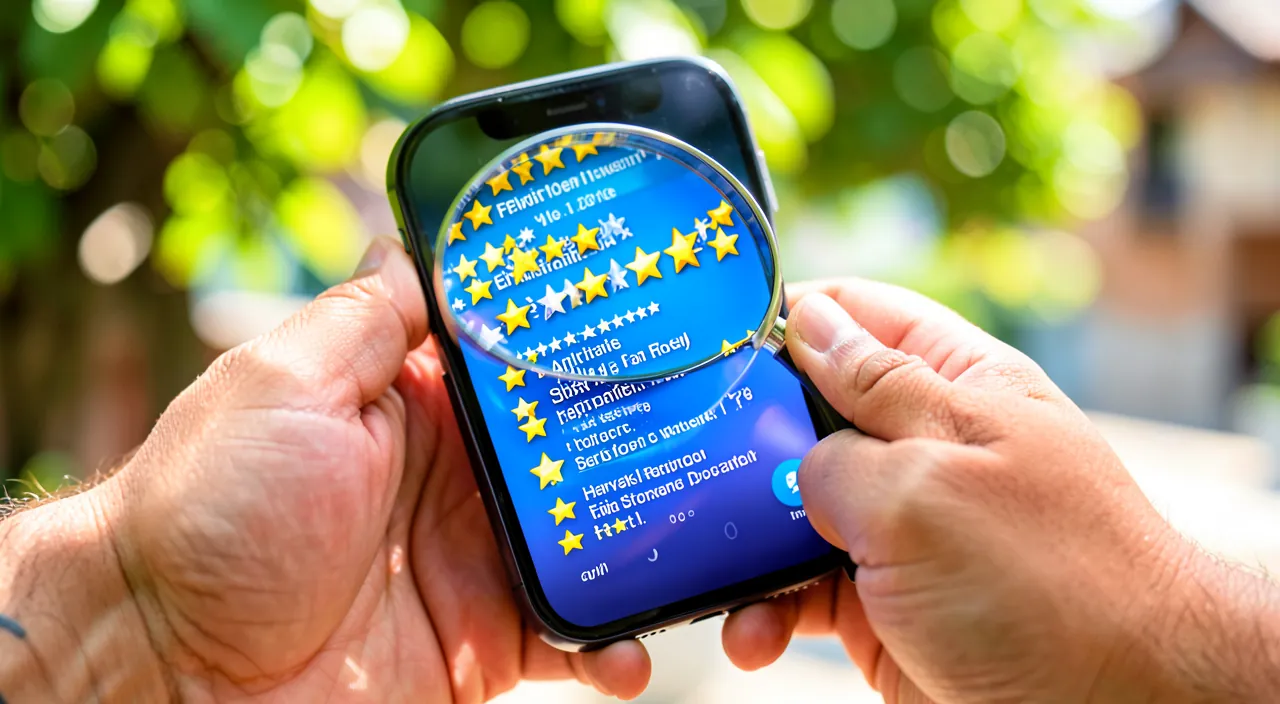
The limits and proper use of reviews
Reviews remain useful, provided they are used intelligently; here are the nuances and precautions. Not ALL reviews are fake: the majority of reviews remain authentic and useful; it’s not about rejecting everything, but keeping a critical eye; well-read reviews are a precious aid in decision-making. DETECTION is not infallible: you can spot suspicious signs, but you can’t be 100% sure a review is true or fake; fake reviews are improving; hence the importance of cross-checking and staying cautious, not relying on a single indicator. Review ANALYSIS tools: they can help estimate the reliability of a product’s reviews, but they are not perfect; use them as an additional indicator, not as a truth. The role of PLATFORMS: serious sites fight against fake reviews, but some still slip through; don’t assume a platform has filtered everything. Reviews MANIPULATED otherwise: also beware of reviews obtained through “gray” means (free samples in exchange for reviews, incentives), which are not necessarily fake but can be biased; a review in exchange for a gift is rarely totally objective. The CONTEXT matters: a single bad review in isolation doesn’t condemn a product; a coherent set of feedback (positive and negative) is more reliable than a single review; look at the general trend and its consistency. Cross-check with OTHER information: reviews are one element among others for deciding; supplement with independent tests, the seller’s reputation, the description, the price, your common sense. Beware of DOUBTFUL sellers and SITES: perfect reviews on an unknown site or a dubious seller should double your vigilance; it’s sometimes the sign of a scam (our guides on recognizing a fake online store). Don’t be PARANOID either: the goal is not to stop believing everything, but to read reviews with discernment; most purchases go well. Contribute HONESTLY: if you leave reviews, do so honestly (real reviews help other consumers). In summary: reviews remain useful but deserve a critical eye; detection is not infallible (cross-check the indicators and sources); beware of biased reviews (gifts in exchange for reviews) and dubious sites; look at the overall coherence rather than an isolated review; supplement with other information; and don’t fall into either credulity or paranoia. Well used, reviews help you; blindly followed, they mislead you.
Warning: “perfect” reviews on a dubious seller or site can hide a scam. Fake reviews are not just a nuisance for choosing a product; they are sometimes part of a real SCAM. Be particularly vigilant in a specific situation: when glowing reviews and a perfect rating are found on an UNKNOWN merchant site, a dubious seller, or for a product at an unusually low price. Scammers who set up fake online stores, or sell counterfeit or non-existent products, know that reviews reassure; they therefore create fake glowing reviews to give an appearance of seriousness and trust, and encourage you to buy. In this context, “too beautiful” reviews are not a sign of quality, but on the contrary a WARNING SIGNAL. Never rely solely on reviews to judge a site or a seller you don’t know: instead, check the site’s real reputation (through independent research, reviews about the seller itself outside its own site), the presence of reliable legal and contact information, the site’s security, and beware of abnormally low prices and too-good-to-be-true offers (our guides on recognizing a fake online store). Another trap to know: reviews obtained through “gray” means that are not totally fake but BIASED — for example, reviews left in exchange for a free product, a discount, or a gift. These reviews are not necessarily false, but they are rarely objective: a person who received the product for free is naturally more lenient. Keep in mind that not all flattering reviews are equal. The general rule: never take reviews as an absolute truth, and double your caution whenever a site or seller is unknown to you, or when an offer seems too advantageous. A truly reliable product or site is judged on a set of consistent elements (nuanced and credible reviews, reputation confirmed by independent sources, transparent information, security), never on an avalanche of perfect stars — which, on a dubious seller, should instead make you flee. Fake reviews can be a scam backdrop: always keep your critical mind, especially when faced with the unknown and the too-beautiful.
Frequently asked questions
How to know if a review is fake?
You can never be 100% sure, but several signs help spot probably fake reviews; it’s the accumulation of clues that matters. The most revealing signals. GENERIC content: a fake positive review is often vague and enthusiastic without any concrete details (“excellent product, highly recommended!”, “perfect, nothing to say!”); on the other hand, a real review mentions precise details, concrete use, strengths AND weaknesses. EXTREME rating and unanimity: beware of a product with a perfect rating and ONLY glowing reviews; a real product always receives varied reviews, including criticisms. SUSPICIOUS wave: many very positive reviews posted in a short time (check the dates) can betray a coordinated fake review campaign. The author’s PROFILE: when the platform allows it, examine the profile; an account that has left only one review (glowing), or posts glowing reviews on unrelated products, is suspicious. REPETITIVE style: several reviews that look strangely similar (same phrases, same enthusiasm) may come from the same source. The “too good”: perfect reviews on a mediocre product or at an abnormally low price should alert you. Also beware of fake NEGATIVE reviews (denigration of a competitor): a very negative, isolated, and vague review among credible positive reviews can also be suspicious. The right method is not to judge a review in isolation, but to look at the WHOLE: the overall coherence of the feedback, the presence of nuanced and detailed reviews (good sign), the distribution of ratings. And above all, CROSS-CHECK the sources: don’t rely on a single site; compare on multiple platforms, look for independent tests. There are also tools that analyze the reliability of a product’s reviews, useful as an additional indicator. In summary, to spot a fake review: beware of the generic, the perfect unanimity, suspicious waves, and dubious profiles; prioritize detailed and nuanced reviews; look at the whole rather than an isolated review; and cross-check sources. No single clue is proof, but their accumulation puts you on the right track.

Can you still trust online reviews?
Yes, provided you read them with DISCERNMENT rather than blindly trusting them: reviews remain a precious aid, despite the existence of fakes. You shouldn’t fall into the opposite extreme and reject all reviews: the vast majority of them are authentic and reflect real experiences, and they constitute useful information for deciding — much more than nothing. The problem is not the reviews themselves, but giving them BLIND trust, by only looking at the overall rating. The right approach is to use them as one INDICATOR among others, with a critical mind. Concretely: don’t stop at the average rating, read the content of the reviews (especially the nuanced and negative ones, often the most instructive), beware of what is too perfect or unanimous, spot signs of fake reviews, and cross-check multiple sources (different sites, independent tests). By doing so, you benefit from the richness of authentic reviews while avoiding the traps of fakes. Also keep in mind that serious platforms fight against fake reviews (detection, purchase verification), which reduces their proportion, even if no protection is perfect. And always supplement reviews with other decision-making elements: the product description, the seller’s reputation, the price, your common sense, and your real needs. In short, the trust to be given to reviews is neither total nor zero: it is CRITICAL. An informed consumer doesn’t ask “can I believe this review?” but “what do all the reviews, read with discernment and cross-checked with other sources, tell me?”. Used this way, online reviews remain a formidable tool for making informed choices; it’s only when you blindly trust them that they can mislead. So yes, trust reviews — but with a lucid and verified trust, not blind faith in the stars.
Are negative reviews more reliable than positive ones?
Often, nuanced and negative reviews are indeed more INSTRUCTIVE and sometimes more authentic than glowing reviews; they deserve special attention, without taking them literally. Here’s why they are valuable. First, fake reviews are mostly POSITIVE (to boost a rating and sell); critical reviews therefore statistically have more chances of being authentic, as fewer fake negative reviews are made (except to denigrate a competitor). Then, negative and nuanced reviews reveal the real FLAWS and points to watch out for in a product, which glowing reviews gloss over; they give you a more complete and realistic image. A review that says “good product but beware of such point” is often more useful than a “perfect!” devoid of content. Finally, the way the seller RESPONDS to negative reviews is revealing: a seller who responds honestly and tries to solve problems inspires confidence. That said, you must nuance: not all negative reviews are reliable either. Some are FAKE negative reviews posted by competitors to denigrate; others reflect an isolated bad experience, a bad-faith customer, or a one-off problem (a failed delivery) unrelated to the product’s real quality; and a very vague or excessive negative review is as suspicious as a generic positive review. The right method: read negative and nuanced reviews carefully to understand the REAL flaws, but check if the same criticisms REPEAT among several people (a recurring and precise criticism is a real signal; an isolated and vague criticism is less so). Look for overall coherence rather than focusing on a single review, positive or negative. In summary, negative and nuanced reviews are often more instructive and statistically more authentic than positive ones: read them carefully, they reveal the real flaws; but keep your discernment, as they too can be fake or reflect an isolated case. It’s the general trend and the coherence of the feedback that matter, more than a single review.
What to remember
Consulting reviews before buying is a good reflex, but some online reviews are FAKE: inflated to sell mediocre products, posted to denigrate a competitor, or bought — because reviews have great commercial value. Blindly trusting the stars can therefore lead to bad choices, even scams. The good news: you can learn to spot fake reviews and read them with discernment. The central reflex: be wary of what is too PERFECT (a perfect rating and unanimous glowing reviews are suspicious: a real product always receives varied reviews), and never STOP at the overall rating — read the reviews in detail, especially the NUANCED and NEGATIVE ones, often the most instructive and authentic (they reveal the real flaws, and fake reviews are mostly positive). Spot the signs of fake reviews: generic formulations without details, waves of positive reviews published in a short time, suspicious profiles (a single glowing review, glowing reviews on unrelated products). Never rely on a single source: cross-check multiple sites, look for independent tests, look at the overall coherence rather than an isolated review. Be particularly vigilant when “perfect” reviews are found on an UNKNOWN seller or site, or for a product at an abnormally low price: it’s sometimes the backdrop of a scam; don’t judge the seller solely on its reviews, but verify its reputation through independent sources. Also beware of BIASED reviews (left in exchange for a gift or discount), rarely objective. Keep the right balance, however: most reviews remain authentic and useful; it’s not about rejecting everything (paranoia) or believing everything (credulity), but using reviews as one INDICATOR among others, with a critical mind, supplementing them with other information (seller’s reputation, description, price, common sense). And if you leave reviews, do so honestly, to help others. By reading reviews with discernment — wariness of the too-perfect, reading nuanced reviews, spotting fakes, cross-checking sources — you see through the manipulations and make truly informed choices, instead of being guided by sometimes deceptive stars. Reviews are a precious tool: provided you read them with a critical eye, never blindly.

Doubts about your security, an appliance to check or clean? Our support service guides you step by step.
Leave a Reply
You must be logged in to post a comment.