
The dream home at a bargain price, available just on your dates, with a charming owner who only asks for a deposit by bank transfer « to secure it »: every summer, thousands of families discover upon arrival an address that doesn’t exist, a property belonging to someone else, or a lock that will never open. The vacation rental scam is exploding with demand—ghost listings, stolen duplicates, fake booking sites. Protect your vacation before booking it: here are the checks that expose fake ads, and the payment rules that make scams impossible.
Anatomy of a fake ad
Ghost ads follow a surprisingly stable recipe: a too-good-to-be-true property—stunning photos, prime location, 30 to 50% below the local market price (the bait that bypasses reasoning: « you have to act fast »); stolen photos—taken from legitimate ads, agency websites, or decor magazines: reverse image search (right-click on the photo → search for the image, or the equivalent tool on mobile) finds them in thirty seconds elsewhere, under a different name, in another city—the most profitable test in this entire article; miraculous availability—free on the most in-demand dates when the entire neighborhood is fully booked; a rushed and distant owner— »currently abroad, » impossible to reach by phone but very responsive in writing, with a story that justifies the urgency and direct payment; and the shift off-platform—the classic move: the ad is on a known site, but the « owner » quickly suggests continuing by email or messaging « to avoid fees »—precisely where all protections disappear. A single one of these signals warrants investigation; two or three together signify a scam.

Verify before paying: the quarter-hour that saves your summer
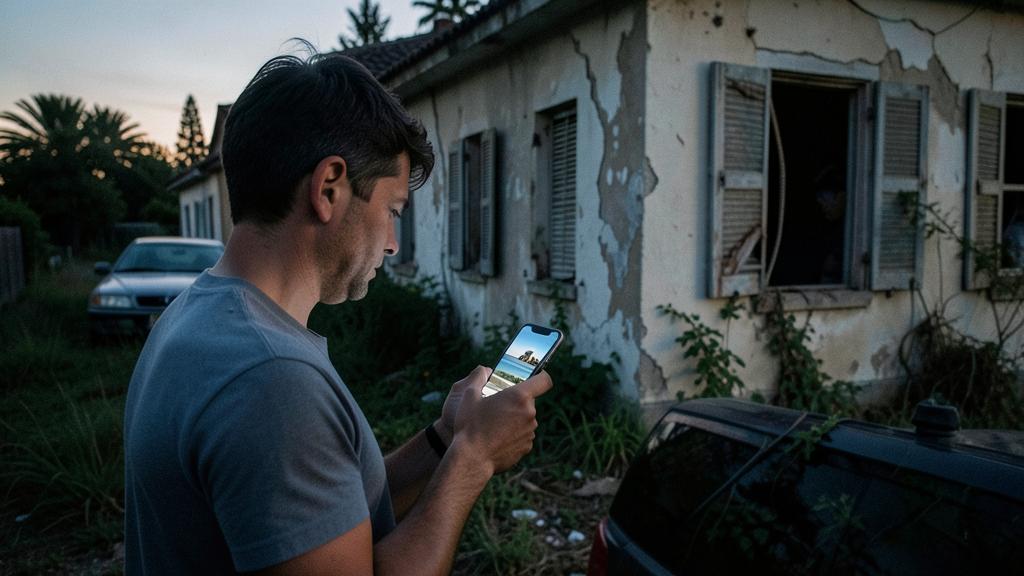
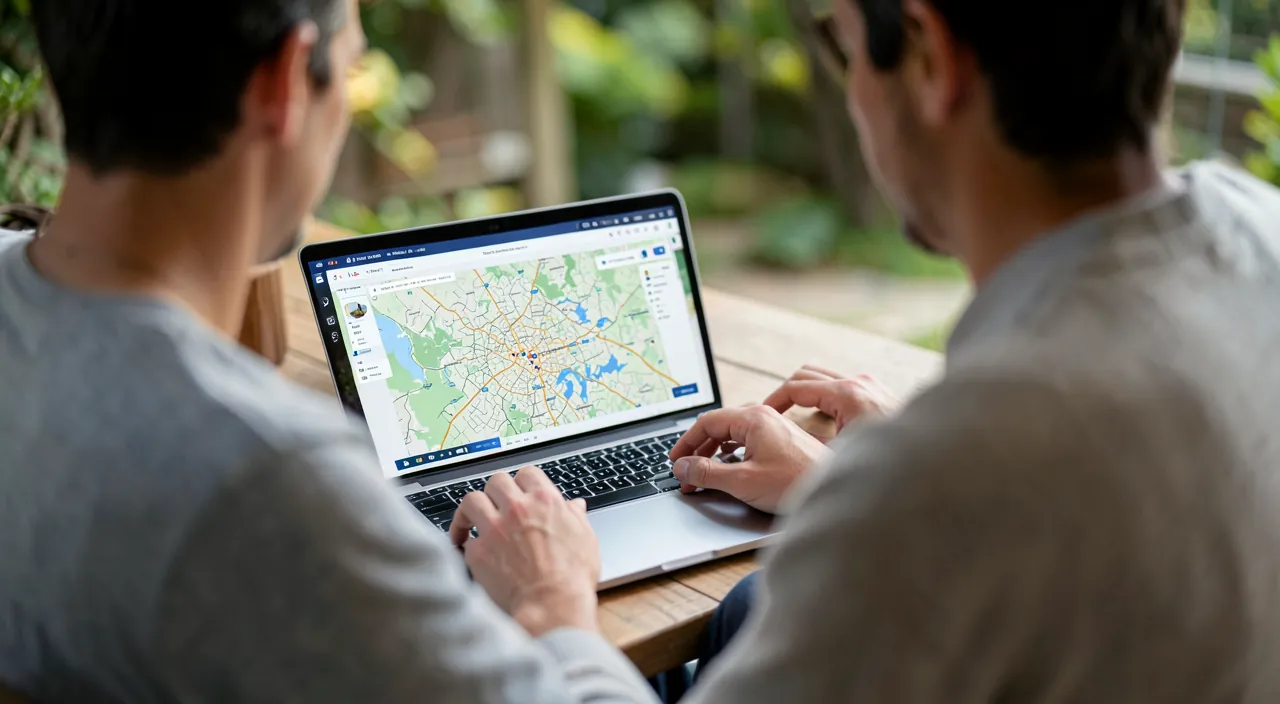
Before any payment, a five-point check: 1. The photos—systematic reverse image search (photos found elsewhere under a different name = run away); 2. The address—ask for the exact address (a real landlord provides it) and verify it on online mapping views: does the house exist? Does it match the photos (gate, facade, surroundings)? Is the « 300 meters from the beach » claim true?; 3. The owner—a real phone call (the scripted scammer avoids spontaneous conversation: ask detailed questions—local shops, parking, how the water heater works—the real owner answers immediately, the fake one recites or dodges); 4. The online trace—the name + address in a search engine: competing ads for the same property under different names, scam reports, rental registries (mandatory registration number in many tourist towns—ask for it); 5. The reviews—on platforms, a history of old, detailed, and time-spread reviews is hard to fake: a profile created last month with no recorded stays raises suspicion, especially combined with a rock-bottom price. Fifteen minutes total—against a vacation and a deposit.
The right reflex. Ask for a video tour of the property: three minutes of live video— »show me the terrace and the view, the kids’ room »—that the property holder does willingly and the scammer never (they don’t have the keys to the property they « rent »). A categorical refusal or a series of excuses are worth all investigations. It’s become a common and perfectly accepted practice: no serious landlord takes offense, especially for a reservation worth thousands of euros.

Fake rental ads use tricks like too-good-to-be-true prices, stolen photos, and fake urgency. Always check the photos, address, and owner’s details before paying. A real owner will answer your questions and provide proof of the property.
A family in Nice found an ad for a « luxury villa near the beach » for 40% less than the local average. The photos matched a real property in Marseille. The « owner » asked for a bank transfer to « secure » the booking. After a reverse image search and a phone call where the « owner » couldn’t answer basic questions about the property, they realized it was a scam.
The payment: where everything is decided
Checks reduce the risk; the payment method eliminates it—or consumes it. The rules: on a platform, you never leave the system—full payment via the platform’s system (the money is held and paid to the landlord after arrival: that’s the entire protection), and any request for direct payment « to save on fees » is an immediate disqualification—the fee IS the insurance; for direct rentals (classifieds, word of mouth—perfectly legitimate and often advantageous): a real written seasonal rental contract (full identity, property address, dates, price, conditions—official templates exist), a reasonable deposit (20-30% earnest money, never the full amount months in advance), and a traceable and contestable payment method—the credit card offers the best recourse; never, under any circumstances: international cash transfers, gift cards, cryptocurrencies, or bank transfers to an IBAN whose country doesn’t match the property or the owner (a Breton gîte paid into an account at the other end of Europe raises a simple question—ask it, and listen to the quality of the answer). The classic bank transfer, irreversible, is reserved for thoroughly vetted landlords—never for yesterday’s impulse buy.
On-site and upon return: the last traps
The scam doesn’t stop at booking: upon arrival, a property far below the photos (size, condition, « imaginary sea view ») is documented immediately—photos and videos dated from the first hour, report to the platform within dispute deadlines (often 24-48 hours): blatant non-compliance entitles you to recourse, but the window is short—don’t « let the vacation pass » before claiming; the security deposit—prefer a bank hold or deposit via platform over a blank check or cash, demand an inventory (even a summary, even in shared photos) upon arrival AND departure: abusive deposit deductions thrive on lack of proof; and upon return, in case of proven scam: bank opposition/dispute depending on the payment method, complaint (report the scam online), report to the platform and the sites where the ghost ad continues to trap others—your report takes down the ad for the next victims. Keep everything: ad (screenshot from booking—it will disappear), exchanges, contract, payment proofs—the file makes the recourse.
Beware of fake platform sites. Rising variant: the link received by email or messaging that perfectly mimics a major booking platform—same design, same ads—until the payment page, which collects money into thin air. The trap arrives via an ad posted elsewhere, a « reservation confirmation » to finalize, or a direct payment link. The countermeasure is mechanical: never pay via a received link—you open the official app or website yourself (favorite, typed address), find the reservation in YOUR account, and pay there. If the reservation doesn’t appear in your official account, it doesn’t exist—no matter what the link says.
Frequent questions
Is renting directly from the owner unreasonable?
Not at all—it’s often more advantageous and more personal: direct rental is the historic mode of vacations. It just requires the rigor that the platform automates elsewhere: complete checks, written contract, limited deposit, traceable payment. A serious owner provides all this willingly—it’s even how you recognize them.

The ad is on a major platform: am I automatically protected?
Protected by payment escrow, yes—AS LONG as everything (exchanges and payment) stays within the platform. « On-platform » scams precisely aim to get you out: direct payment, external link, email finalization. In the system: protected; out of the system: alone.
The owner asks for the full stay amount six months in advance:
This goes against customs (earnest money or partial deposit, balance due closer to or on arrival) and is a red flag—not necessarily a scam, but of unbalanced conditions. Negotiate a standard schedule; a rigid refusal on a « highly sought-after » property that demands everything, all at once, by bank transfer… you know the rest.

What to remember
The fake vacation ad is exposed in fifteen minutes: photos run through reverse search, address verified on maps, phone call with concrete questions, requested video tour (the test the scammer never passes), checked reviews and registration number. And it becomes harmless through payment: platform circuit fully respected, or direct—written contract, partial deposit, traceable method; never a money order, gift card, or transfer to the unknown, never payment via a received link. On-site, document early; in dispute, act fast, with proof in hand. The rock-bottom price and urgency are the two fuels of the scam—the verification and patience, its two poisons. Offer them to yourself: real vacations start with a booking that exists.


Concerned about your security, an item to check or clean? Our support service guides you step by step.
Leave a Reply
You must be logged in to post a comment.