
The online second-hand market is a thriving economy — millions of items finding a second life at affordable prices — and a hunting ground for a small minority of highly organized scammers: fake payments, fake carriers, fake buyers in a hurry, real items that don’t exist. The good news: their scenarios are known, repetitive, and a handful of rules are enough to buy and sell peacefully. Here’s the catalog of current traps — on the buyer’s side AND the seller’s side — and the reflexes that neutralize them all.
Buyer’s side: the too-good-to-be-true ad and the off-platform payment
The purchase scam relies on two unchanging ingredients. The bait: a price significantly below market (the console at half price, the recent smartphone sold cheaply, the unfindable item suddenly available) justified by a pressing story — moving, emergency, “first come, first served.” Basic checks: the seller’s profile (seniority, ratings, other ads — an account created yesterday with ten premium items is a red flag), the photos (a reverse image search reveals stolen photos from other ads — the tool is in your browser), and the consistency of the responses (the scammer avoids specific questions, refuses video or a photo with a dated paper). The diversion then — the heart of the scam: making you pay outside the platform: bank transfer “simpler,” gift cards, money transfer services, or a fake payment site mimicking the platform (the link sent via messaging). The rule that cancels everything: the payment stays INSIDE the platform, via its integrated system with buyer protection — a seller who insists on leaving the system tells you exactly who they are. A bank transfer to a stranger is a gift: irrevocable, untraceable for you, unrecoverable in almost all cases.

Scammers lure you with unrealistically low prices and urgent stories. They then try to make you pay outside the platform’s secure system. Never leave the platform’s payment system—it’s your only protection.
A seller offers a brand-new iPhone 15 for $300 (market price: $800), claiming they need quick cash for a move. They refuse video calls and ask for payment via Zelle. This is a classic scam—real deals stay on the platform.
Seller’s side: you’re also a target (and you don’t know it)
The big blind spot: sellers think they’re safe (“I’m not at risk, I’m the one receiving the money”) — and have become the preferred target. The dominant scenarios: the fake pending payment — a “buyer” outside the platform sends a fake email about a blocked payment (“the funds will be released upon shipment,” “confirm with the code received”): the email mimics the platform or a payment service, the item is shipped, the money doesn’t exist; the fake carrier — for a bulky item, the buyer offers “their” carrier and a “payment receipt” link that asks for… your bank card (“to receive the funds” — funds are NEVER collected by giving your card: anyone who asks for your number to PAY you is a scammer, no exception); the overpayment — a check or transfer above the price, with a request to refund the difference: the initial payment will be canceled (bad check, disputed transfer), your refund won’t; and the phishing for the code — “confirm your identity with the SMS code received”: this code actually validates a payment or a connection to YOUR accounts. The common thread of all these traps: making you act outside the official messaging and payment system — staying in the system cancels everything.
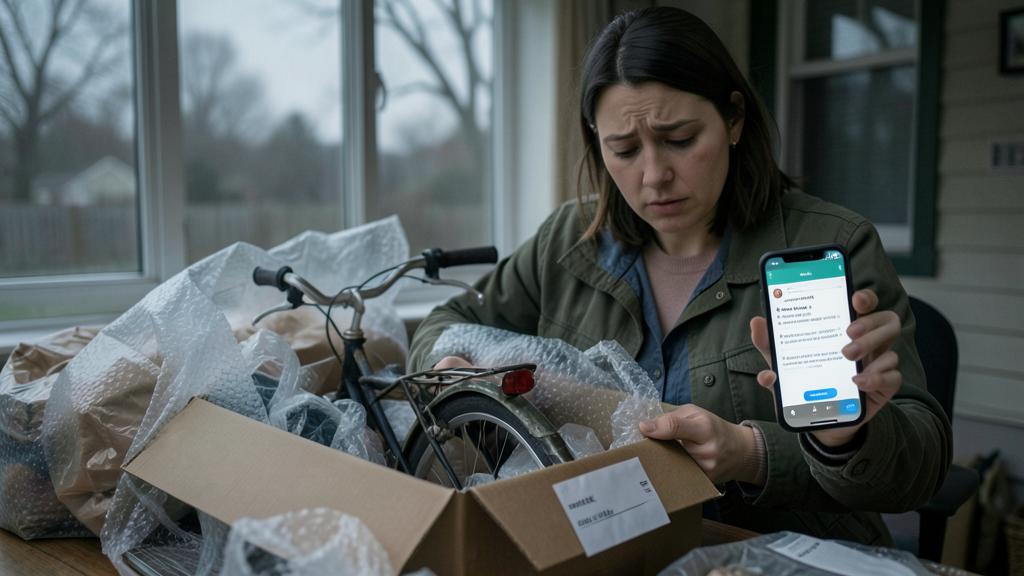
The right reflex. Adopt the three never rule, which fits on a sticky note and disarms 95% of scams on both sides: never pay or receive money outside the platform (no transfer, no link received in a message); never give your bank card number to RECEIVE money (it’s absolute nonsense — receiving doesn’t require anything); never share an SMS code with anyone (a received code is not to be shared — it validates something in your name). Display it mentally with every transaction — and pass it on as is to loved ones selling their first item.

In-person handover: the school of physical caution
For local and bulky items, in-person handover remains excellent — with its rules: public and busy place (café, train station hall, monitored shopping center parking — some police stations even offer transaction zones; never a deserted parking lot at night, and for valuable items, bring someone along); the item is tested — phone turned on AND unlocked (check it’s not locked to an account: ask for iCloud/Google disconnection in front of you — a still-linked device is unsellable, possibly stolen), computer booted, appliances plugged in; the payment is verified — cash checked calmly, or instant transfer confirmed on YOUR app (not on the buyer’s screenshot — fake transfer confirmations are a classic: the money exists when YOUR account shows it); and instinct has a say: a last-minute appointment moved to an isolated place, a buyer arriving in a group, unusual pressure — you cancel, politely, and leave. No item is worth a bad situation.
After the purchase: warranties, disputes, and real recourse
Even without fraud, second-hand items have disputes — knowing your rights calms the game: between individuals, the sale is binding — the item must match the ad (hidden defects can be contested, the description is binding: keep the ad and exchanges — systematic screenshots before the ad disappears); the platform’s protection (when the payment stayed there!) covers non-delivery and obvious non-conformity: open the dispute WITHIN the deadlines (often 48 hours to a few days after receipt — inspect the package immediately, photograph the opening of valuable items); with a professional seller disguised as an individual (multiple similar ads, new items), legal warranties apply — and the status is indicated; in case of proven fraud: report to the platform (profiles are quickly removed), file a complaint (online filing exists for fraud), report on the official dedicated platform, and contest the payment if a card payment is involved. Real recourse exists — under one constant condition: proofs (ad, messages, payment, photos) and speed.
Beware of leaving the messaging system. The pivot of almost all modern scams is the phrase “should we continue via SMS/WhatsApp/email?” — outside the platform’s messaging, no traceability, no protection, and free rein for fake payment links and fake carriers. It seems harmless (and honest users also suggest it): refuse by principle until the transaction is completed — everything that’s legitimate can be said and paid within the app. Leaving the system NEVER benefits the honest party — it only removes protections from you.
Frequently asked questions
The seller offers a video call to show the item: good sign?
Excellent sign — the scammer with stolen photos can’t show the item live with your name on a paper. The reverse also applies: for a major remote purchase, ask for a video call or a personalized dated photo — a categorical refusal speaks volumes.
A buyer wants to pay more than the price “to reserve”: why refuse?
Because no one voluntarily pays too much for a second-hand item: it’s the overpayment mechanism — initial payment meant to be canceled, refund of the difference that will remain, it, very real. Displayed price, platform payment, period: the sincere buyer doesn’t outbid themselves.
Are the platform protections really worth anything?
Yes — effective refunds for non-delivery and non-conforming items, under three conditions: payment stayed in the system, dispute opened within deadlines, proofs provided. Their limits: transactions taken out of the system (no coverage — that’s the whole point of scams that make you leave) and subjective disputes about wear and tear: hence the photos and questions BEFORE purchase.
What to remember
Online second-hand is safe for those who stay in the system: payment and messaging INSIDE the platform (leaving the system is the pivot of all scams), the three never rule (no external payment, no card to receive money, no shared SMS code), verified profiles and photos when buying, ignored “pending payment” fake emails when selling. In person: public place, tested and account-unlinked item, money confirmed on your own screen. In dispute: kept proofs, respected deadlines, quick reports. Scammers are neither numerous nor geniuses — they’re just organized around three or four scenarios you now know by heart: the second-hand market belongs to you again.
Doubts about your security, an item to check or clean up? Our support service guides you step by step.
Leave a Reply
You must be logged in to post a comment.